A New Day for Kah Tai: Bathroom Reopening Marks a Milestone for Port Townsend Parks
Public infrastructure opening brings city staff, cultural history and poetry together.
News by Rachael Nutting
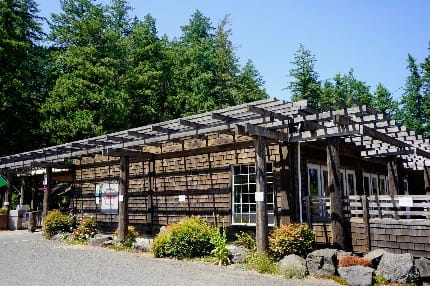
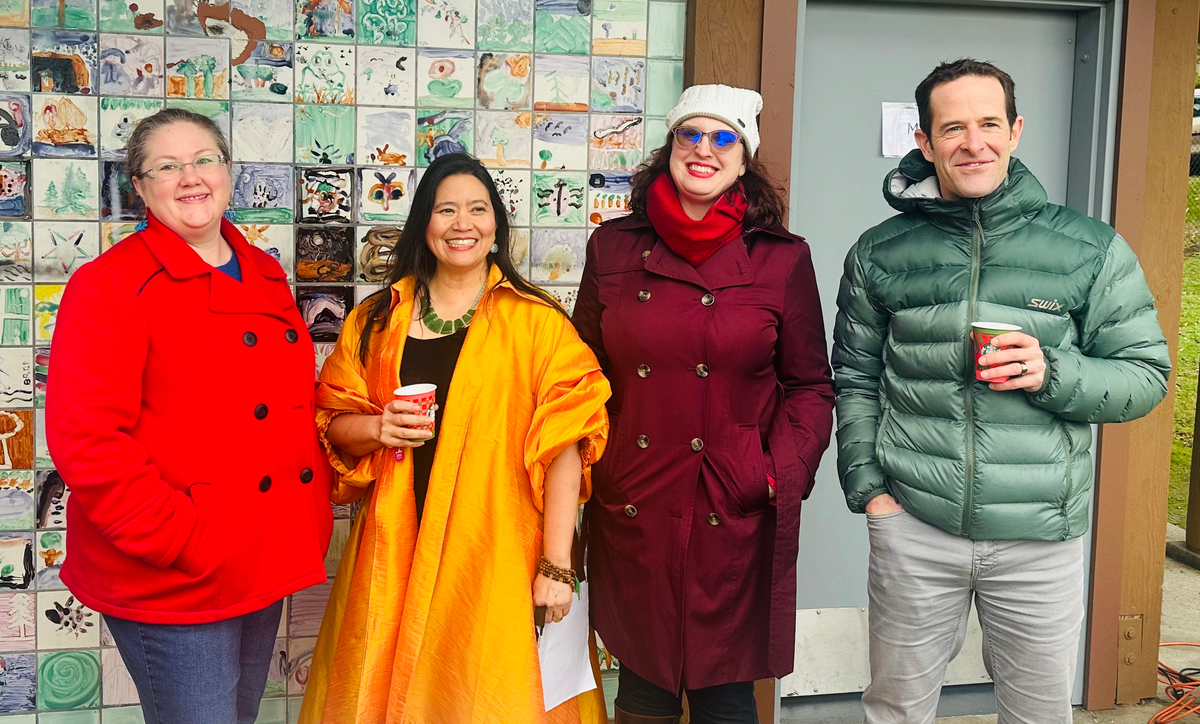
PORT TOWNSEND, WA — On a gray but dry Tuesday, January 28, 2026, a small yet significant ceremony marked a new chapter for Kah Tai Lagoon Nature Park. The reopening of the park’s public restroom facility, closed for two decades, served as the backdrop for Mayor Amy Howard’s first public address, framing the event as a symbol of community renewal and forward-looking stewardship.
Mayor Howard opened the proceedings, noting that the facility has been there just a little less time than she has been alive, the mayor shared her personal excitement for the project. She extended sincere thanks to city staff, acknowledging that while the council is the public face of such projects, they do not perform the actual work. “The fact that this work happened is a testament to our community looking to better times in the future,” Howard stated. She concluded her brief remarks with a candid reflection on the prolonged closure: “This was closed for 20 years? That's ridiculous. I'm so glad to see it change.”
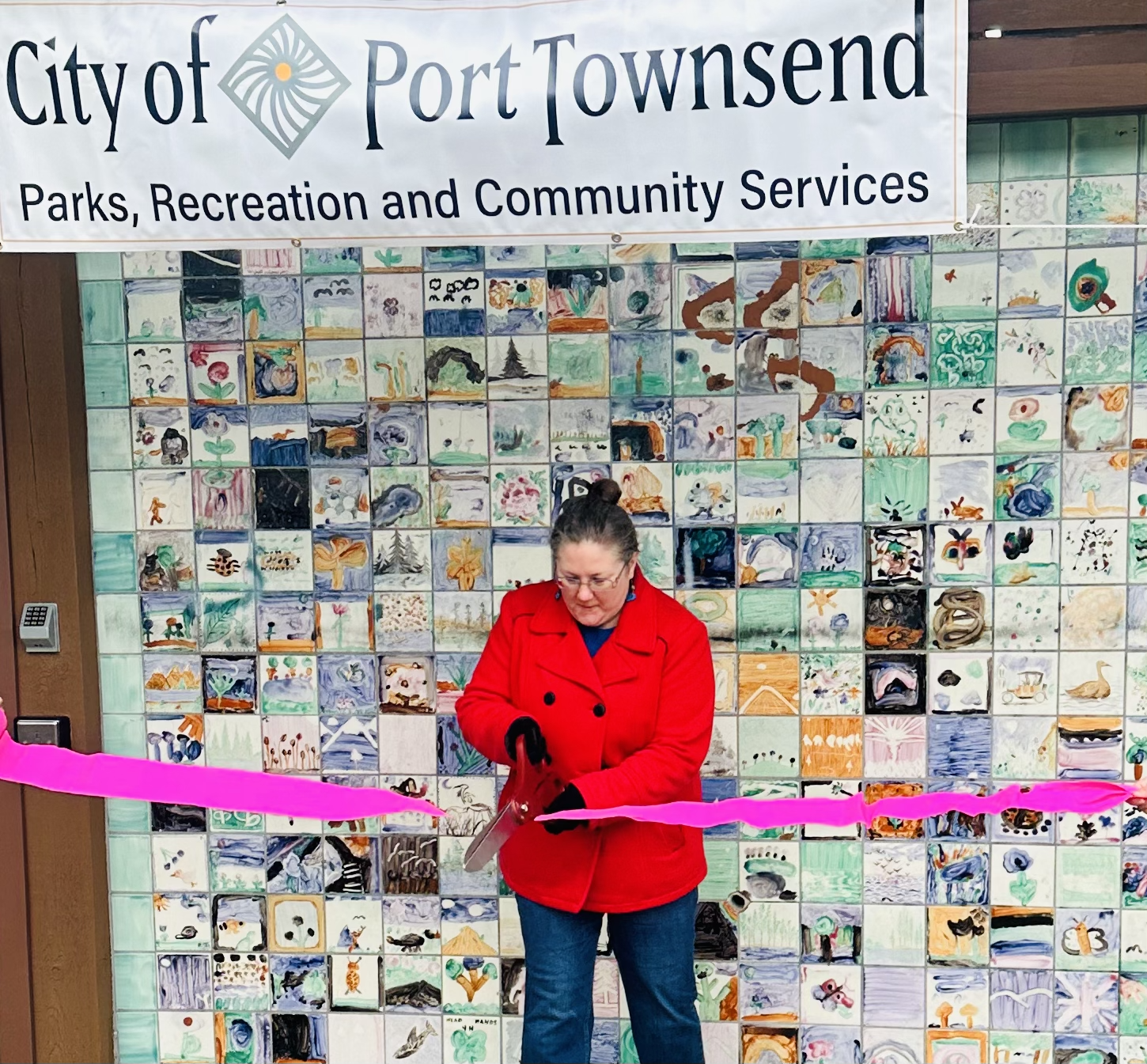
City Manager John Mauro followed, first leading a round of applause for the mayor’s inaugural speech. With a lighthearted tone, he began, “Who has to pee first off, because now you can, and I think that's exciting. After 20 years, it's been a long holding.” Mauro quickly shifted to gratitude, echoing the mayor’s praise for the city team. “We have the best team. We really, really do,” he said, broadening the definition to include parks caretaker Ed Mead, the Parks Board, the city council, and every community member in attendance. He recognized the collective effort required to reach this point.
Reflecting on recent challenges, Mauro described a strategic “holding pattern” post-COVID, a period marked by a return to basics. “We decided to get back to basics on the facilities and the parks and the things we have before we stretch out and think about the things we want,” he explained, crediting Facilities and Parks Manager Michael Todd for his pivotal role. This foundational work, Mauro suggested, is about “loving the people who love our parks.”
He then highlighted a key organizational evolution: the strategic integration of parks, facilities, arts and culture, and the library under the leadership of Community Services Director Melody Sky Weaver. He pointed to the existing Story Walk in Kah Tai Park as an early example of the collaborative potential of this new, holistic department.
Taking the microphone, Melody Sky Weaver thanked Mauro for his belief in the team. She opened with an amended quote from Cicero: “If you have a garden, a park, a library, you have everything you need . . . but I think you forgot one really fundamentally important thing: you need bathrooms.” Weaver emphasized that accessible facilities are core to the vision of making parks welcoming for everyone. She publicly thanked the staff members—Lisa, Rachel, Michael, Sean, Tommy, and Brian—whose direct work over the past year made the reopening possible and noted the restoration of artist Yvonne Pepin Wakefield’s accompanying artwork on the side of the facility.
Weaver encouraged the community to rediscover Kah Tai, describing it as the city’s “lungs,” a place for solitude, wildlife, and education through its updated interpretive signs. She noted the project’s significance as the city’s last grant from the state Recreation and Conservation Office (RCO) until a recent award for an accessible playground project to take place at the Camas Prairie Park, calling the day “a really exciting new day for us.”
The ceremony culminated with a poignant contribution from Port Townsend Poet Laureate Rufina Garay. For ten minutes, Garay captivated the audience’s attention with a story and an original poem composed for the occasion, delving into the deep historical and cultural significance of the Kah Tai Lagoon site, grounding the practical achievement of the day in the enduring story of the land itself.
Kah Tai Lagoon, originally a large, tidal salt marsh estuary, has a history marked by profound transformation and community-led preservation. For millennia, the S'Klallam people called this area "qatáy," meaning portage, using it as a crucial route to carry canoes between the lagoon and North Beach to avoid dangerous currents. In 1930, the construction of Sims Way first blocked its mouth. The most dramatic change came in the 1960s when the Port of Port Townsend, with the U.S. Army Corps of Engineers, filled over half the lagoon with dredge spoils from boat haven expansion, significantly altering its ecosystem.
In the late 1970s, proposed development on this filled land galvanized citizen action. Recognized as a top wildlife habitat, the area was saved through a landmark public-private effort. This culminated in a 1981 federal grant to purchase the land, creating a nature park protected in perpetuity for wildlife and passive recreation. Today, the 75-acre Kah Tai Lagoon Nature Park is a restored urban oasis, part of the čičməhán (Chetzemoka) Trail, which also honors S'Klallam history, and a premier birding site with over 200 species recorded.
The event, blending governance, practicality, history, and art, underscored a community-wide commitment to honoring its past while thoughtfully building its future.