Artist Makes Sasquatch Hunting a Public Adventure
[caption id align="alignnone" width="1080"]
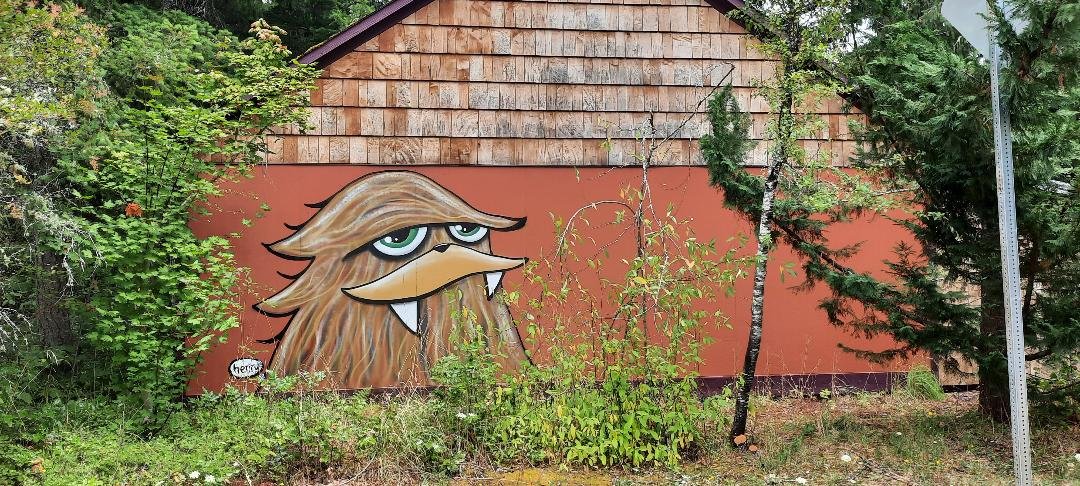
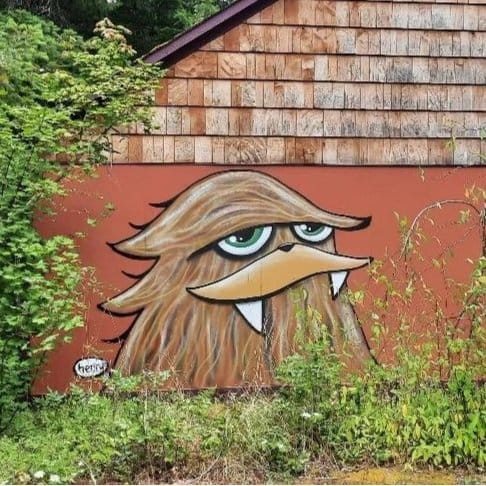
One of the One Thousand Sasquatch Heads can be found on a side street in Quilcene. Photo by Kathie Meyer [/caption]
Arts News By Kathie Meyer
Sasquatch reports are on the rise. Yes, there was an actual report of loud knocking attributed to the yeti at Fort Townsend State Park in late July, but thanks to Ryan Henry Ward, known as the artist “Henry,” there will be significantly more reports as time goes on. Henry’s latest goal is to complete his One Thousand Sasquatch Heads project in one year, and folks everywhere – Jefferson County property owners included – have been happy to help him achieve his dream.
[caption id align="alignnone" width="1024"]
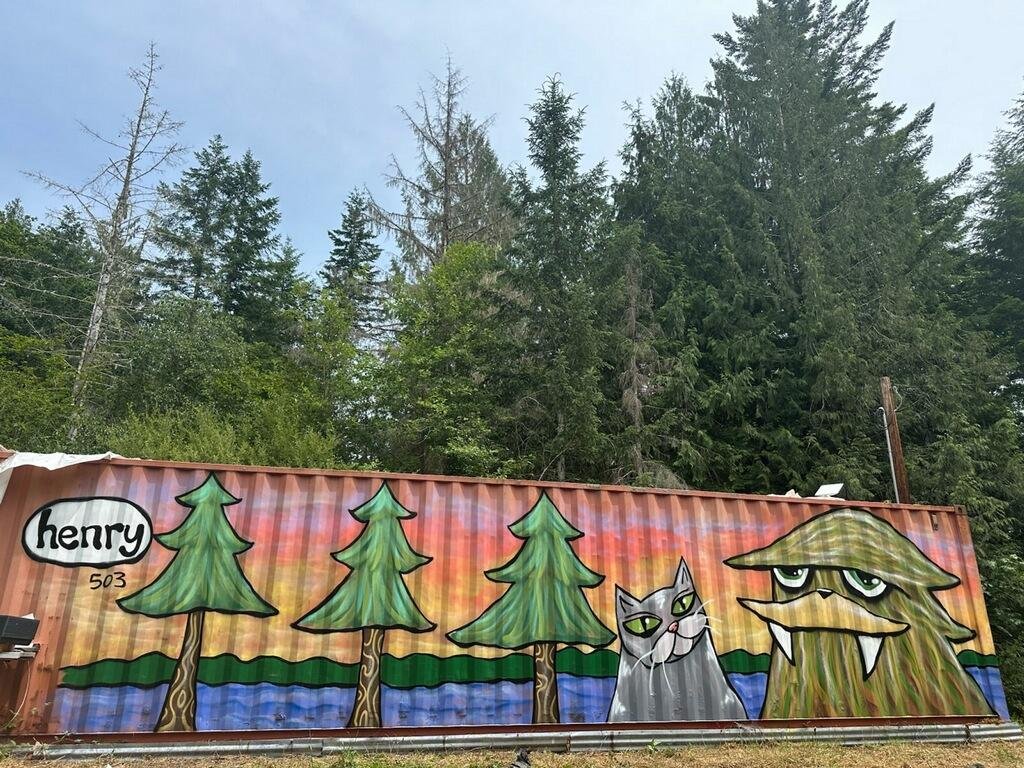
All of the Sasquatch murals and heads are different. Sasquatch head #503 is painted on a shipping container at Duckabush Mushrooms owned by Jason Maloney. Submitted photo [/caption]
He calls it a “vibrant, large-scale public art initiative.” Anyone could participate if they had a public wall, garage door, or other public space he could use as his canvas. Enrollment has ended, and Henry has been on the road ever since, making it all happen in between other gigs in Seattle, where he lives and usually works.
He blew through Quilcene, Brinnon, and other Olympic Peninsula spots last month, painting four. There is an unconfirmed rumor that one is included in the project in Port Townsend, but as of press time, this Sasquatch head remains elusive.
No worries. You’ll see one eventually. Maybe even without trying. These heads are everywhere, all over the Puget Sound region and beyond the Cascades, so keep your eyes peeled wherever you go because Henry is up to #675. In Quilcene, you’ll have to take a residential side street named after the USA’s first president to see one.
Farther afield in adjoining Kitsap and Mason counties, you might have a sighting in Suquamish or Lilliwaup and Shelton respectively. The Shelton mural is visible from the highway, but the Lilliwaup mural is in a private community, at the home of Christina and Jason Maloney, who also had murals done at their respective businesses – Christina’s office for Hood Canal Adventures and a shipping container at Duckabush Mushrooms, both in Brinnon. It took Henry only half a day to do all three, said Christina.
“It was a fantastic experience. It’s just amazing watching him work,” she said.
[caption id align="alignnone" width="1080"]
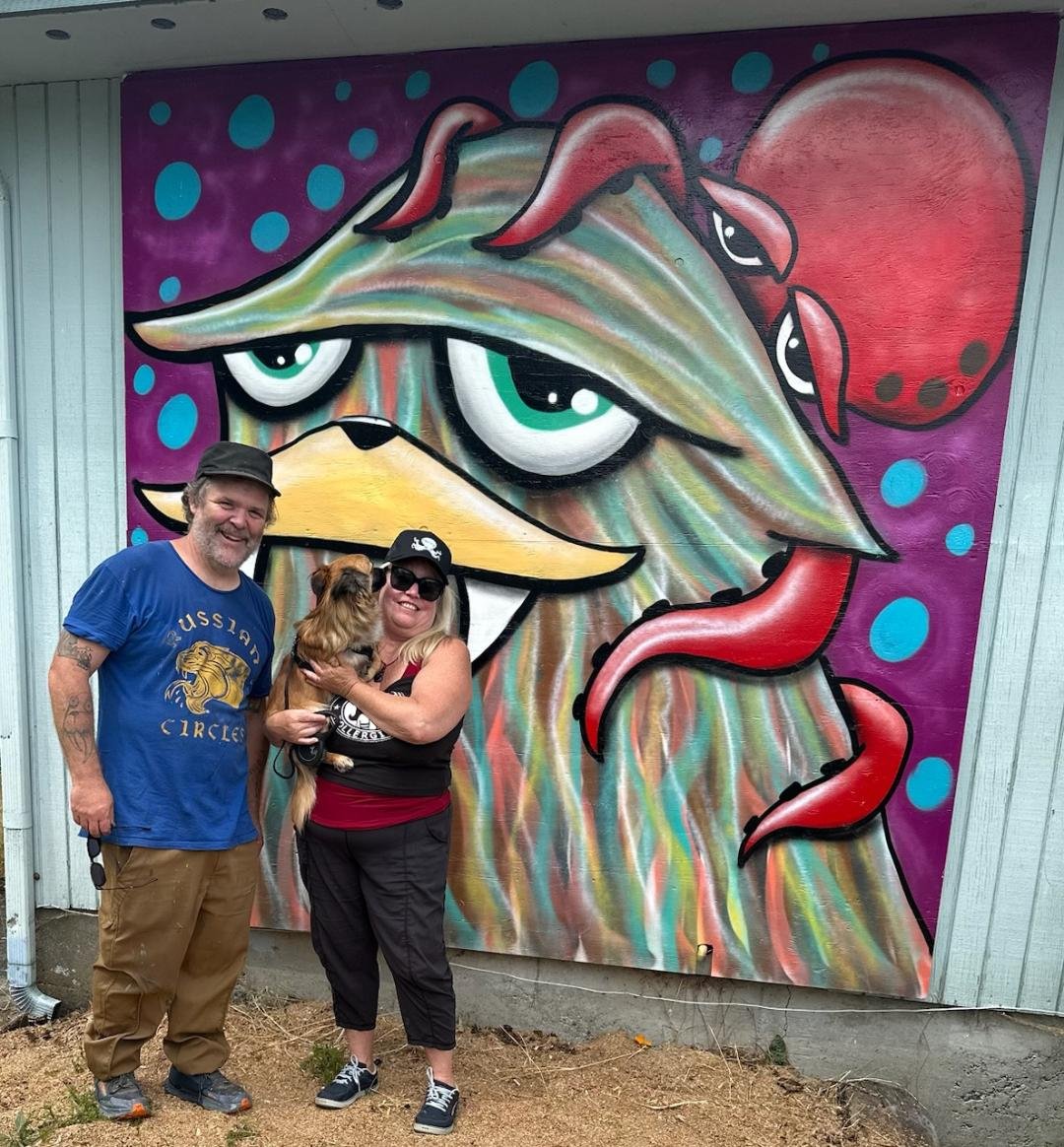
Ryan Henry Ward, the artist known simply as “Henry,” poses with the sasquatch head on Christina Maloney’s office for her business, Hood Canal Adventures. Submitted photo [/caption]
Beth Stroh-Stern echoed the sentiment. She also called the experience a good one, if only it had lasted longer. Henry was in and out in a flash at the Stroh-Stern Quilcene residence as well.
While the critics have never been terribly fond of his work, it obviously spreads joy regardless, which is the exact intent. Henry doesn’t work to please the critics. He works to make people feel good, and, unlike the Danish trolls (not to diss them, by any means), these murals are not expensive to create. Perhaps most importantly, they have found their way to our rural outposts, not always an easy thing for art to accomplish. Best of all, there is a distinctive Northwest aesthetic that resonates with people all over our wild corner of the country. When art intersects with the local consciousness, it’s a good thing, yes?
Let’s be clear though: these murals are “public” only in the sense that the public can see them. They are not publicly funded, nor do they exist on any official public art roster. Henry will tell you himself that he is not going to submit an application for anything. People usually seek him out for a mural, not the other way around.
That’s what Kerry and Donn Christianson did in Port Townsend in 2022. They knew of his work in Seattle and decided to commission one for a side of their house.
[caption id align="alignnone" width="1080"]
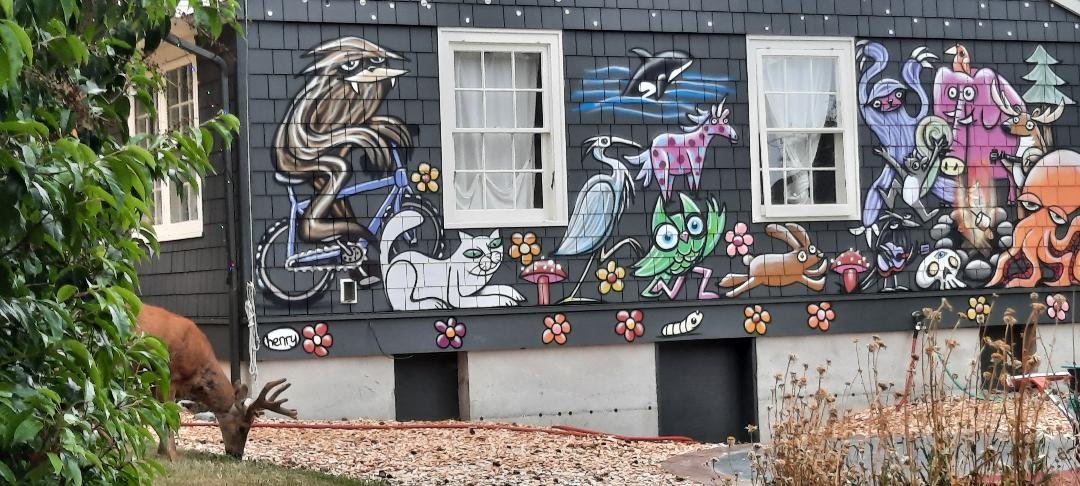
A local buck grazes near the imaginary animals of a Henry mural in Port Townsend. While this mural is not a part of Henry’s One Thousand Sasquatch Heads project, it is representative of his work seen all over Washington state. Photo by Kathie Meyer [/caption]
“We’ve always loved his art,” Kerry Christianson said. It is not a part of the One Thousand Sasquatch Heads project, but a great example of his work that one might glimpse while driving up 19th Street or walking on the public trail by their house.
Like his paintings, Henry’s life is larger than life, too. He rose from the ashes of addiction, Seattle homelessness, and mental illness almost 20 years ago, discovered his true self, and began to live the muralist’s life he was meant to live.
It’s imaginable that a Henry mural will become one of those things all Washingtonians of a certain generation will have an understanding of and fondness for telling about, like Boomers do of DB Cooper, only this story has a better, happier ending.
In January, Henry wrote on his Facebook page, “I can’t explain why, but there’s something satisfying in where repetition and getting outside and having adventures overlap fits my nature to perfection. I’ve told friends for years, I wish I could just drive around and paint Sasquatch heads. Then I woke up and realized I can.”