Baby Harbor Seal Reunited with Mom After a Trying Ordeal

[caption id align="alignnone" width="1753"]
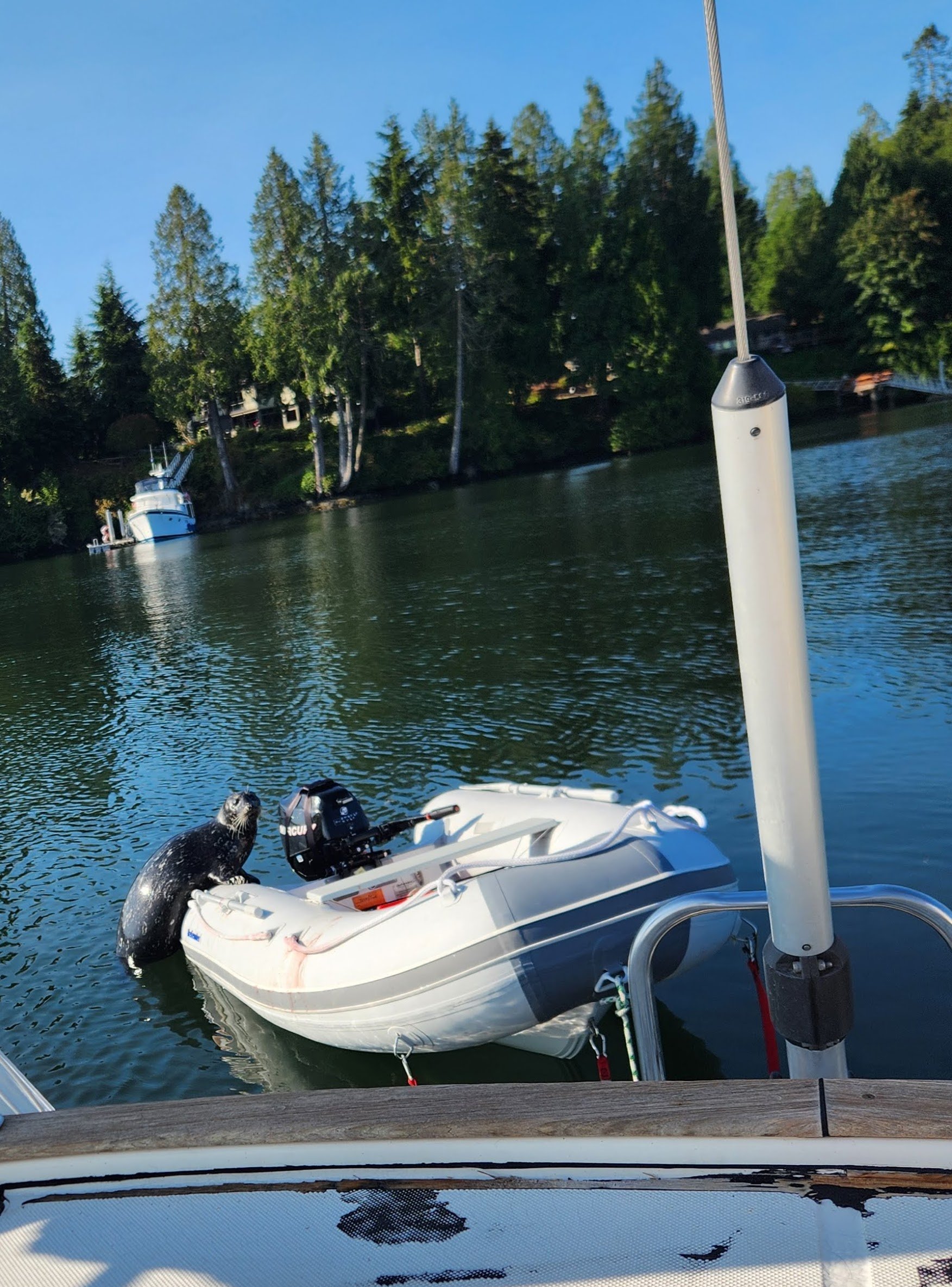
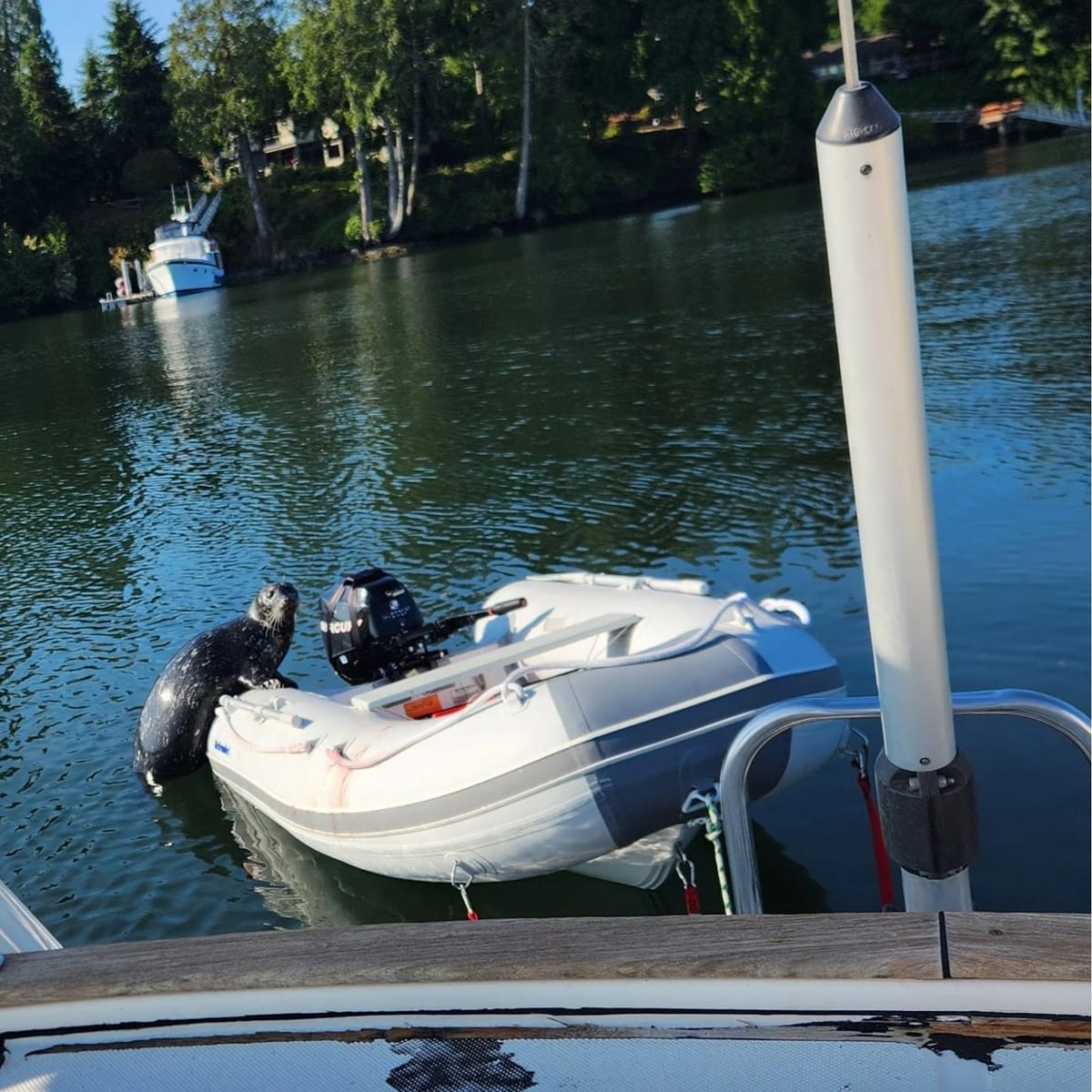
The worried mom trying to reach her baby. Photo courtesy of Rachel S. Imper [/caption]
News by By Rachel S. Imper, Friends of Fort Flagler
Living on the Quimper Peninsula, it’s not uncommon to find a baby harbor seal on shore. But no one expects to find one in their dingy. Yet that’s exactly what happened to Jeff and Sue Adams whose sailboat, Zephyrus, was moored in Ludlow Bay in the early morning of July 28. Fortunately, their baby seal adventure ended well.
The couple was sleeping on Zephyrus, when they were awakened just after 5 a.m. by unusual sounds outside. Jeff peered out a hatch and snapped a photo of what looked like a seal on the edge of their dinghy. Believing the sounds were just seals playing, Jeff and Sue went back to sleep.
Hours later, as Sue was pulling in their inflatable dinghy, she froze. Curled up inside the dinghy was a tiny seal, clearly just born. “It was a bit of a shock,” she said.
The Adams’ quickly realized what had likely happened. “We think the mother was giving birth on the dinghy when a wave came up and knocked her off,” Jeff explained. “The mother couldn’t get back in, and the baby couldn’t get out.”
Recognizing the importance of not disturbing the pup, the couple called for help, reaching Casey McLean, the executive director of SR3 (Sealife Response, Rehabilitation, and Research). SR3, in Des Moines, is the only dedicated marine animal hospital for all of Washington’s shorelines, and a key partner in the Marine Mammal Stranding Network. McClean quickly called volunteers to help.
[caption id align="alignnone" width="1875"]
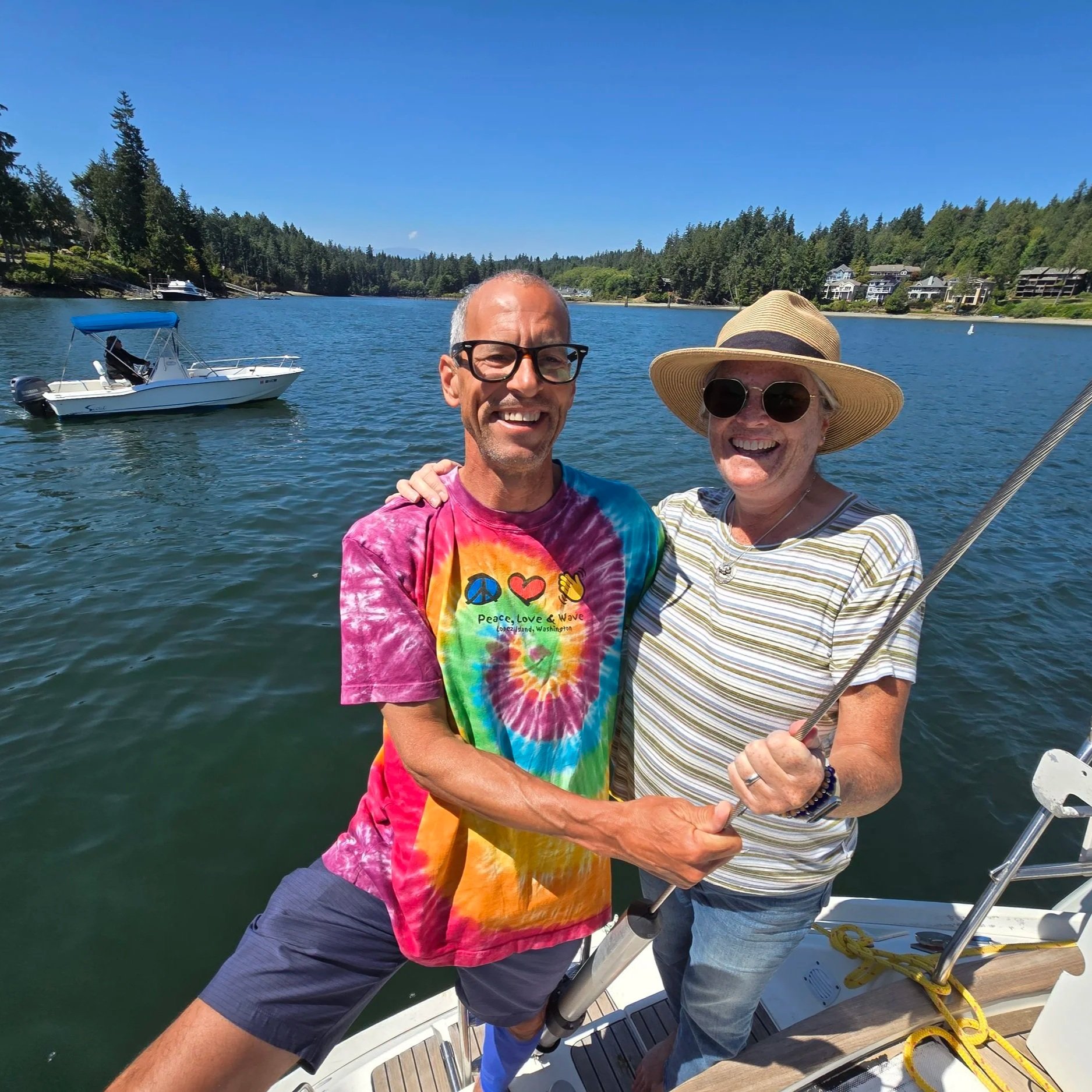
Seal Heroes Jeff and Sue Adams. Photo courtesy of Rachel S. Imper [/caption]
Deisy Bach of the Friends of Fort Flagler and Kelly Kingdon of the Port Townsend Marine Science Center—both trained seal rescuers—traveled to Port Ludlow. With the need to act fast, Kori Ward, the director of the Port Ludlow Marina took the two to the Zephyrus on her boat.
There, tied to the stern, was the inflatable dinghy with the newborn seal inside. Its mother could be seen nearby, swimming anxiously, vocalizing in distress; mother seals and pups recognize each other through their unique calls.
As the rescuers approached, the mother briefly lunged toward the dinghy to protect her baby. Using a towel, Bach attempted to lift the pup, but it was too heavy—a good problem to have. “She was a hefty, healthy little seal,” Bach said.
Ward helped and was able to lift the pup high enough to check the umbilical cord, which was dry and clean, so the two rescuers gently lowered the baby into the water.
Then came a tense wait. The pup circled the boat repeatedly before resting on the foil, a structure just beneath the outboard motor. The mother kept her distance, slapping her flippers on the water as a warning gesture. For nearly 20 minutes, the rescuers and the Adamses watched silently. Finally, the mother approached, and in one graceful dive, reunited with her baby. They swam off together with the pup clinging to her back.
“It was so touching that I think we all were holding back tears,” said Bach.
It was a heartwarming outcome. As harbor seal pupping continues through September the incident is a good reminder of what to do if you find a baby seal. Sometimes people find a baby seal alone and mistakenly think it is abandoned. But, as Bach says, “Usually the mother has just on off to feed, and she comes back. Caring people think they are helping by trying to rescue the baby, but most of the time, the babies do not live.” As Bach emphasizes, “The best thing to do if you find a baby marine mammal is to keep your distance, take photos and report as much information as you can to the Marine Mammal Stranding Network. The network can be reached at 360-385-5582 or by email at mmsn@ptmsc.org