Birders Flock to see Unexpected Feathered Friend

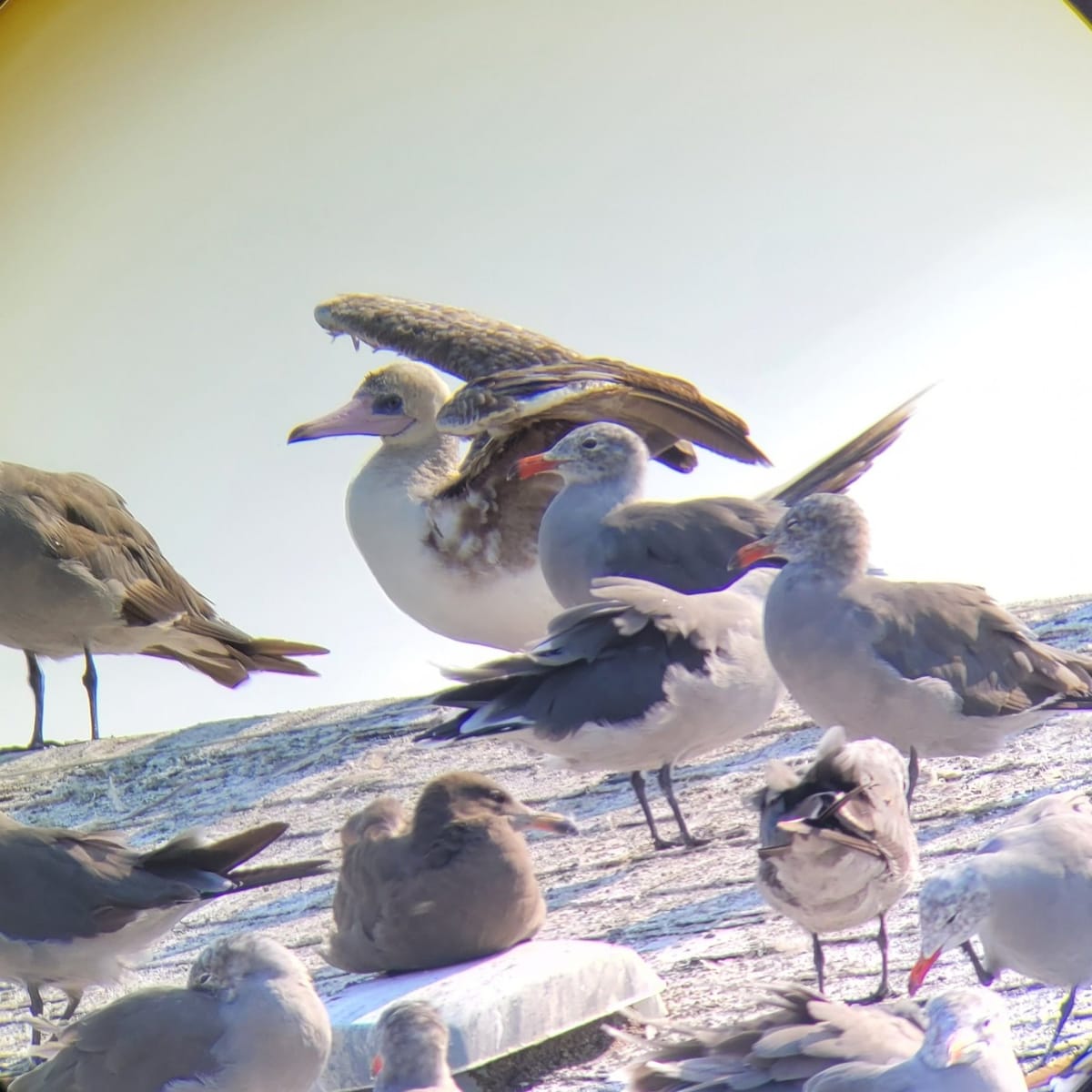
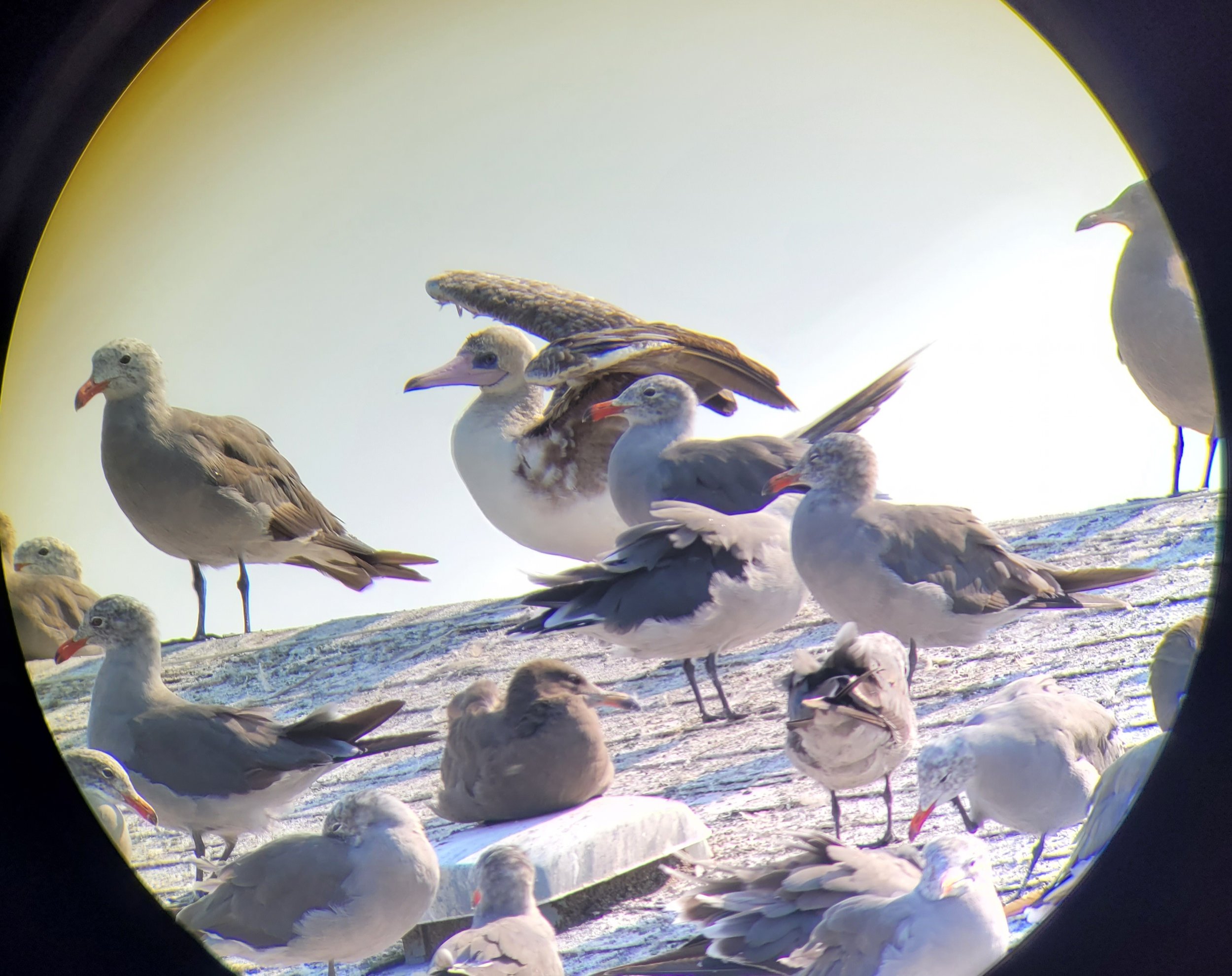
A visiting Red-footed Booby trying to blend in with the locals. Photo by Carolyn Woods [/caption]
Special to The Beacon by Carolyn Woods
[caption id align="alignnone" width="2558"]
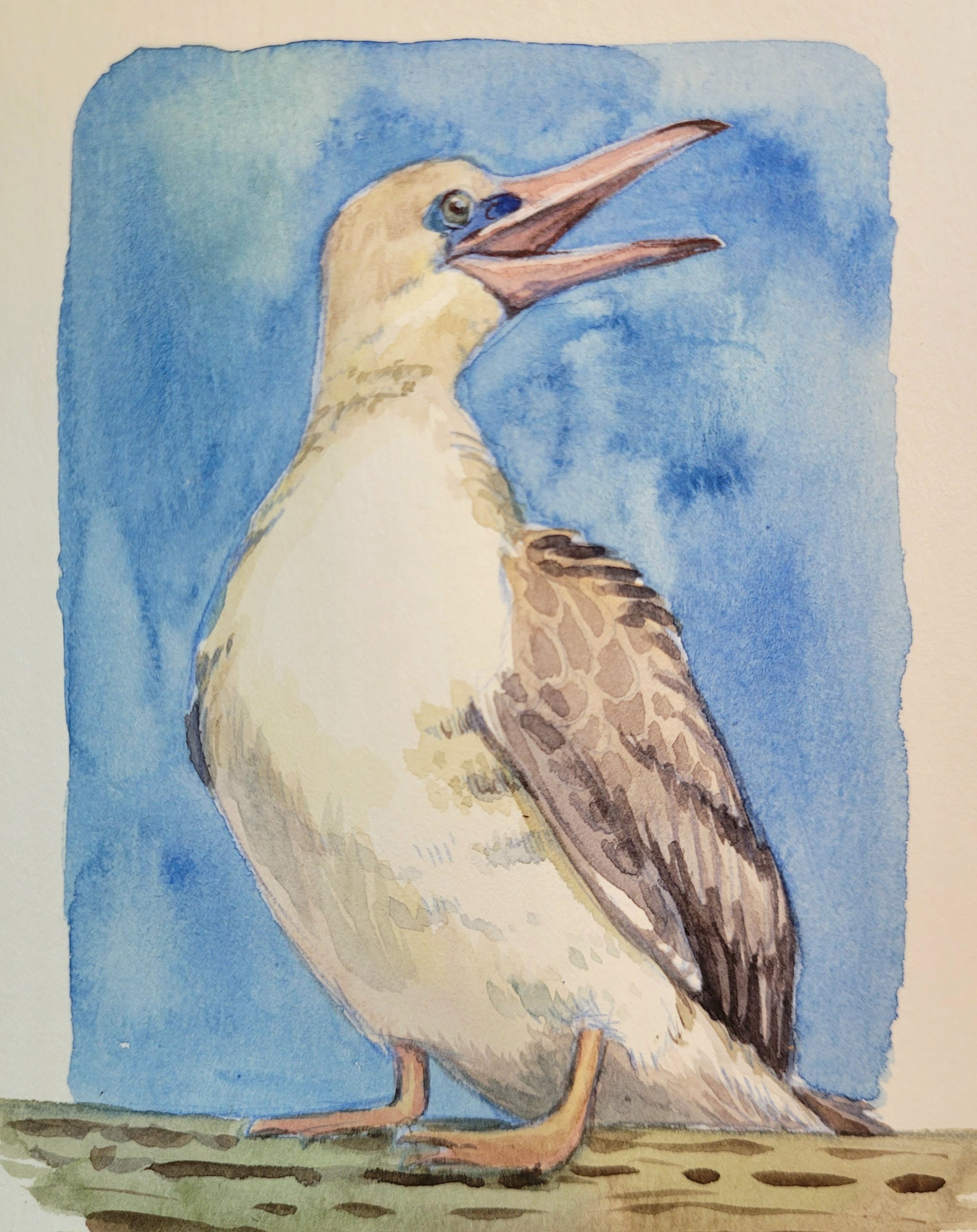
Watercolor by Carolyn Woods [/caption]
The Red-footed booby is the talk of the town! At least, it has been in the circles I run in. It's been so interesting learning more about these birds after having spent almost a week observing this wanderer and chatting with other birders on the pier at Fort Worden, as well as doing some reading. Here's what I've found out so far:
Red-footed boobies are in the family Sulidae, with other boobies and gannets - none of which are commonly sighted here in Washington; their native ranges are all thousands of miles south (boobies are mostly tropical ocean birds, nesting on islands and plunge diving for fish and squid) or east (gannets are found on the Atlantic coast of North America). Hence the excitement mixed with some concern to see this one so far north!
This individual was first sighted on the roof of PTMSC's aquarium building on the pier at Fort Worden State Park last Sunday (August 4th), and I've heard it was seen elsewhere on the water in Port Townsend the day before that and out in the Strait in the days before that.
I've been noticing it perched on the ridgeline of the roof, preening itself and resting amongst the Heermann's gull flock that's taken up its habitual summer residence here. On Thursday, I spent fifteen minutes watching it dive repeatedly in the water just off the pier, presumably hunting, but I wasn't able to see it with a fish. Boobies eat before flying off, so this isn't surprising, and it's a good defense against the gulls that were harassing it while it was in the air.
One of the highlights has been seeing the joy of other birders to find this species - I have talked to people who traveled from Seattle and Bellingham to see it, and they've been out every day with spotting scopes and telephoto lenses to get a better look at it. I've also heard lots of speculation on how it got here - from hitching a ride on a cargo container ship to getting blown in by a storm or joining the wrong flock of birds migrating north. I don't think anyone knows or that we'll ever have an answer to that mystery - it doesn't have any tag.
Wherever it goes next, it's sure to have more admirers until it gets back to its typical range - if people manage to spot it. Not knowing how long it will stay in Port Townsend is also part of the fun, and what inspired me to spend some time sketching it, which I like to do when getting acquainted with a new species. And despite the name, this one doesn't actually have bright red feet yet! Those don't come in until the bird is sexually mature, about three years old.
[caption id align="alignnone" width="756"]
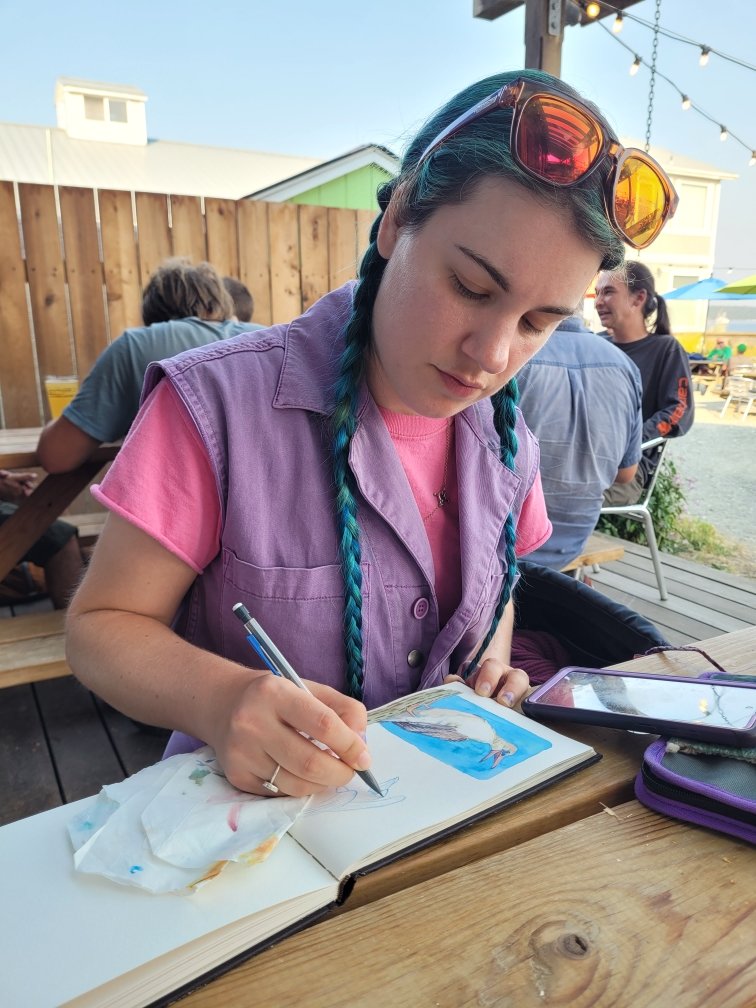
Carolyn Woods is a marine science educator and a watercolor artist. Photo by Trillian Spencer [/caption]