Chimacum Tech Program Empowers Students with Hands-On Learning

[caption id align="alignnone" width="3024"]
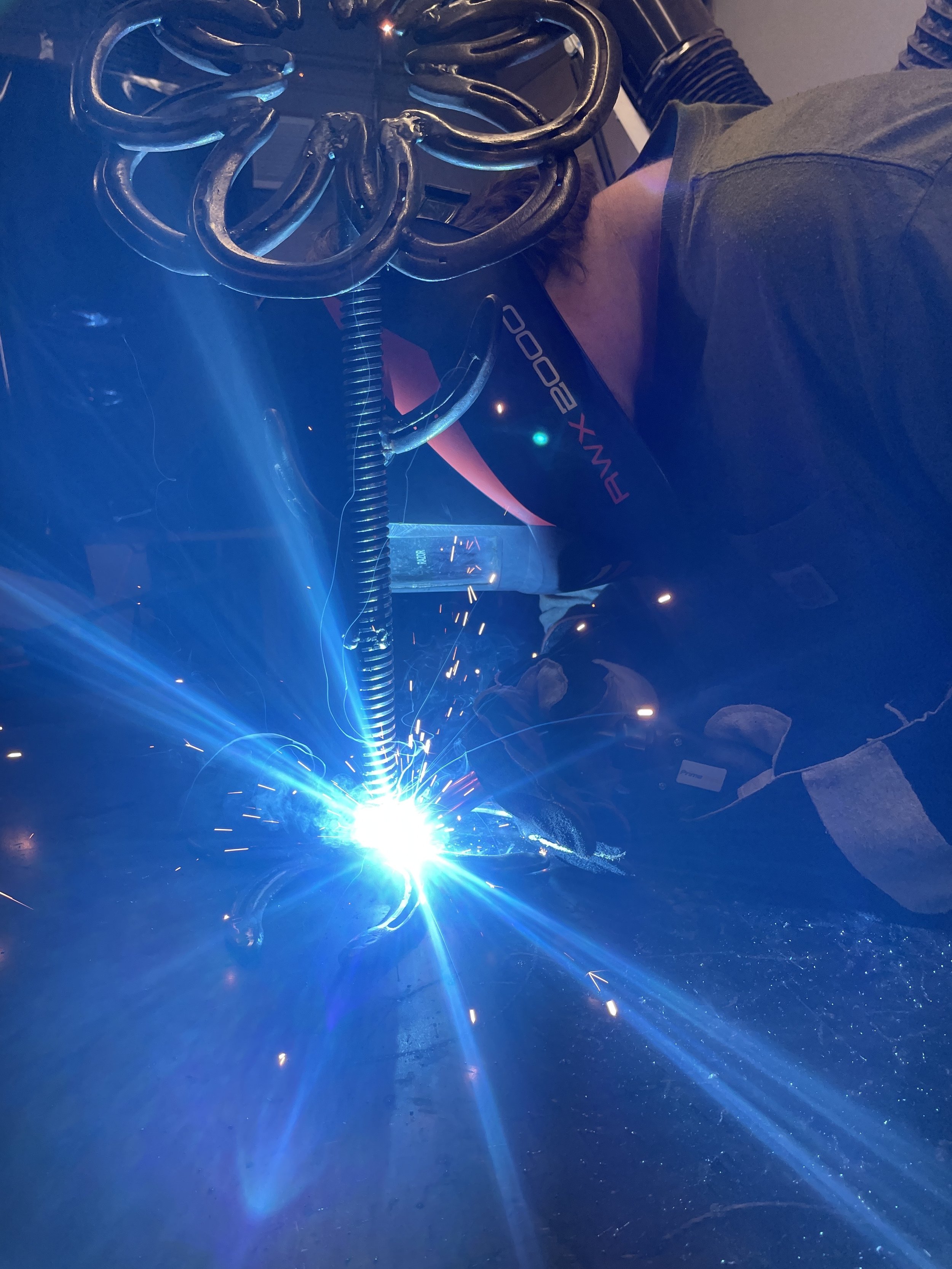
Photo by Daniel Evans [/caption]
News by Angela Downs
In room 109 at the Chimacum High School, students are quietly focused on an instructional welding video, but soon the students in the Chimacum Valley Tech - Construction Trades Program switch rooms, and everything becomes bustling and loud with saws and wooden boards cracking to the ground.
According to the East Jefferson County Workforce Development Report 2024, “25.1% of Jefferson County residents, aged 16-24 are not in school, not working and not in the military. This is 13% higher than the National average, 14.1% higher than Washington State average, 10% higher than Clallam County and 15% higher than Kitsap County.” This is called disengagement.
Kelley Watson, Career and Technical Education Director, and Pi-Alternative Learning Director in the Chimacum School District, is taking action to change these tides. With 18% of Jefferson County’s workforce in the trades, and an average salary of $63,397 a year, she sees incredible opportunity for students.
The Chimacum Valley Tech, half-day Career and Technical Education (CTE) Program, is thriving at full capacity in its first full year. With Watson's background in experiential education as the founding teacher of the maritime CTE programs in Port Townsend and the Maritime Academy Skills Center Public School Program at the NW Maritime Center, and the PT shop teacher for 9 years, the interdisciplinary pre-apprenticeship program is thoughtfully designed.
Watson also served on the Development Council for the East Jefferson County Workforce Development Report 2024, funded through the Jefferson Community Foundation, for a year and a half while working as a Career Connected Learning consultant.
Students learn shop safety, hand-tool use, power tool use, print reading and layout, framing, siding, roofing, finish carpentry, complete small projects, learn electrical, metal work and welding, job-ready skills, First Aid and CPR and OSHA certification, go on worksite tours, and gain people skills.
The Chimacum Tech Program is different from other CTE programs because it begins with 10th graders; most trades programs begin with 11th graders. Then, in the third year, the kids have the opportunity for work-based learning, an internship that is managed by the school and an on-site supervisor. Most of the 24 students in the program are enrolled at Chimacum High School, but two come in from Port Townsend, one from Quilcene, and two are homeschooled.
The Art of Construction
Lydia Vadopalas volunteered to lead the tiny home builds her first year with the program, and the next year became the shop assistant teacher. This year, she is a co-teacher. “I feel really excited about the art side of the class, because my background is more in furniture making than in construction. But I do love building things,” Vadopalas said. She works at the Community Boat Project, which is in partnership with the Chimacum School District to create a paid position for her.
“The school as a district is really supportive of this partnership, and the success that we're working together has brought for the school,” Daniel Evans, the program’s lead instructor, said.
Evans is a Professor of Construction Trades and Marine Transportation. He began his construction career at thirteen and later joined the Marine Trades in construction and captaining. His teaching career is in Experiential Adventure and at the high school level in Massachusetts, and in Career Choices. He is in his fourth year teaching at Chimicum High School.
Vadopalas is a strong example of the success that working together with the Community Boat Project has brought the school district. Without the increased student/mentor ratio, the welding course would not exist, which the students said has been their favorite part so far.
“Welding was a struggle at first, but with practice it became easier,” Ryan, 17, said.
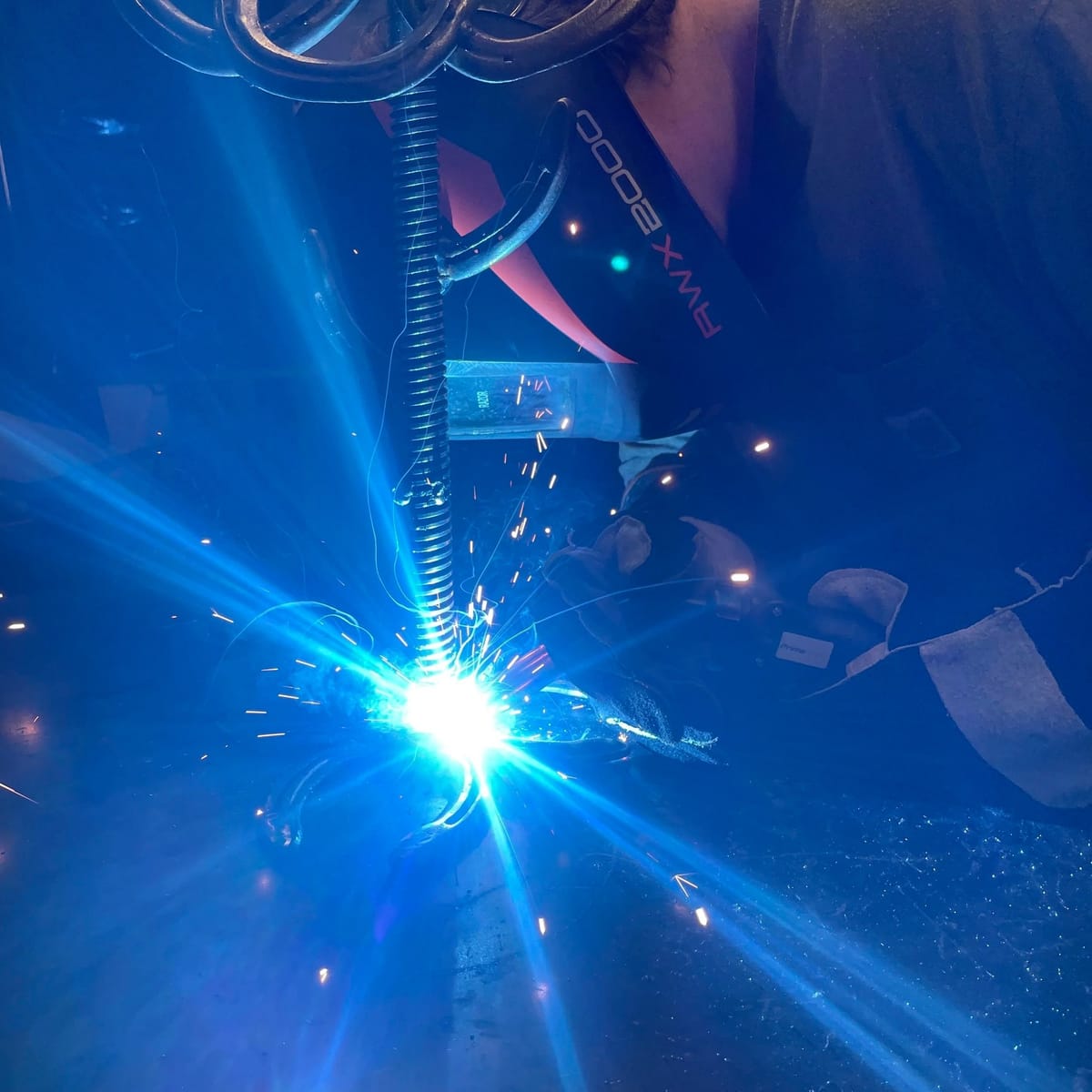
[caption id align="alignnone" width="1536"]
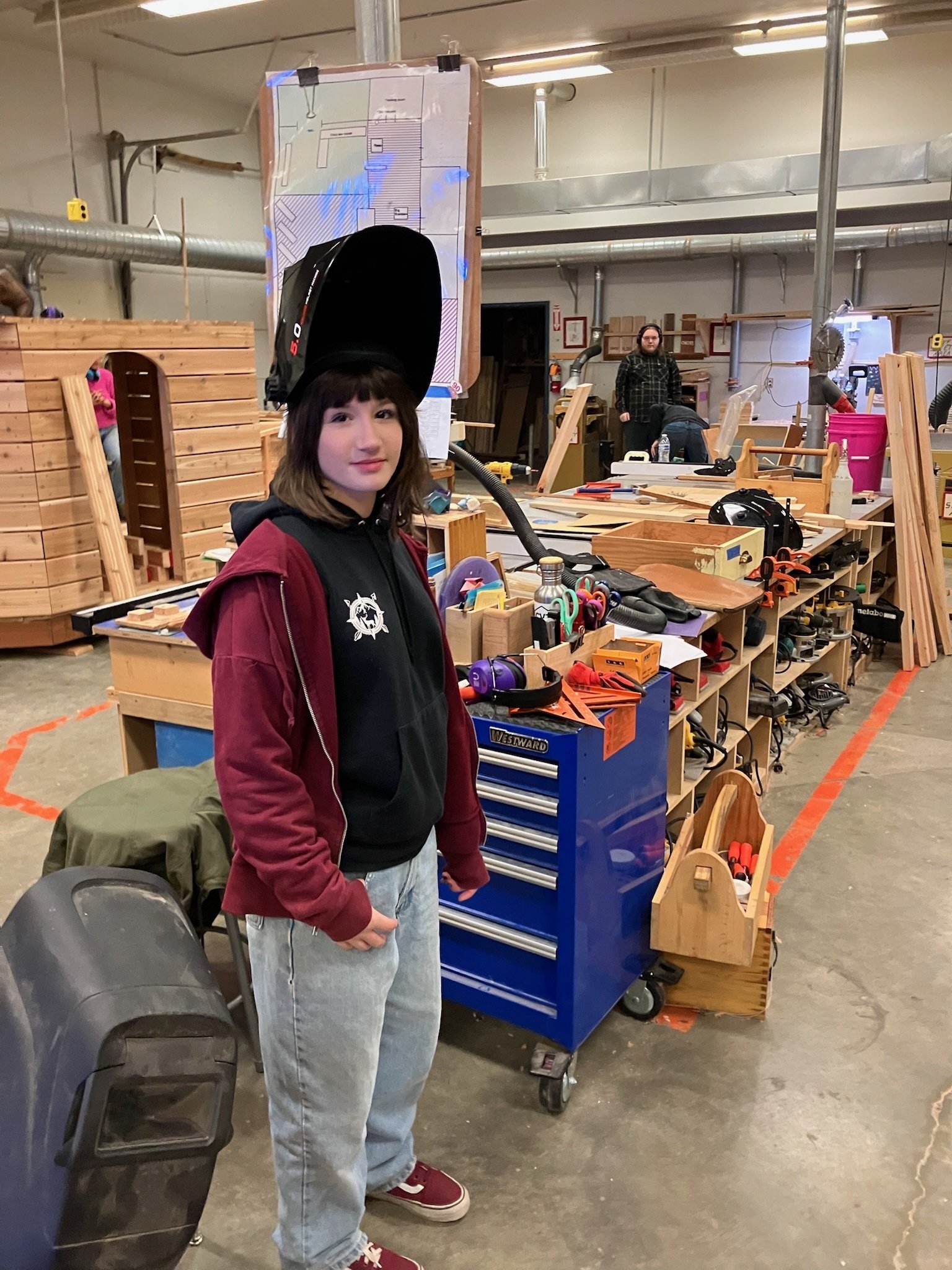
Student Sequoia Collins-Johnson getting ready to practice welding. Photo by Kelley Watson [/caption]
Sequoia Collins-Johnson, also 17, has been glad to learn the science of welding because she would like to specialize in truck engines when she graduates. She said, “The hands-on learning in groups has made learning easier. It’s helped my math with calculations and length. It promotes creativity, and doesn’t stop kids from doing what they like, it gives them opportunities they might not have had.”
Alan, 16, intends to go into the trades after school and opted into the program because he wanted to build a knowledge base for his future. He also said, “ Working with people develops social skills because you get to listen to others’ points of view and they share pointers.”
David Henry, 16, is happy to be a part of the program and said, “It helps with other classes because it keeps my energy up to be able to focus the rest of the day. And it feels relevant and is important information for future work demands. It’s not that much different than football,” he adds, “you’re in a group, making a plan, and then you carry it out.”
The program results in CTE, math, and art credits, with the Construction 101 class currently earning CTE Dual Credit - college credit with Olympic College. Everybody gets to create their own personal project that must include board footage calculations, cost estimates, and scale drawings to get it approved.
Group projects happen throughout the year. One of their group projects also fulfilled the class’s safety requirements; they built the lumber racks they now use in the yard. For the residential builds, they work on small sheds, one appearing in last year's parade. And they are currently working on “Adventure Ships”, wooden play structures for Chimacum Primary School for their youngest learners to play on at recess. These larger group projects give them something to work on that is outside of themselves.
Access and Support
In the past, students have had to travel to West Sound Technical Skill Center in Bremerton, presenting access challenges for kids in our community. Funding allocated to any student from Port Townsend, Chimacum, or Quilcene who leaves their district to attend West Sound is directed to the Skill Center. With this first year in action, the Chimacum Valley Technical program is keeping funding in the community where the kids are from, and giving more time to their learning without the two hours a day on the bus.
The program is incredibly well supported by people from the community. Carl's Building Supply and Arrow Lumber donate, volunteers from the Community Boat Project, the Port Townsend School of Woodworking, and the Northwest School of Wooden Boat Building come in and share expertise and curriculum. And their CET Board is full with people from the trades.
“I think it really speaks well of the community we're in, and that is full-throated support of developing vocational training in the areas that our community really needed,” Evans said.
Both the teachers and the sponsors want these students to succeed, and are excited to hire them after graduation. There are many potential, well-paying jobs waiting for kids who have completed the training and take up apprenticeships. Community members give the program directors feedback on what skills they're looking for, with most interested in hiring people with soft skills like communication, ability to show up and being a nice person.
Evans shared that a lot of the students attracted to the program are kids who haven’t fit well into typical lecture formats with their emphasis on note-taking and memorization. Often, they arrive with low self-esteem from their struggles and a resistance to accepting themselves as creatives and artists.
“We want to instill values about creativity and their ability to be a positive influence in the workforce,” Evans said. “I think every day we're giving them opportunities to disprove those limiting beliefs and self-doubt, rewriting their script. That can be difficult. You think it gets in the way of what we think is the learning for the day, which might be how to frame a wall. And it's really about trying to make good humans.”