Chlorophyll Corner: Beach Rose

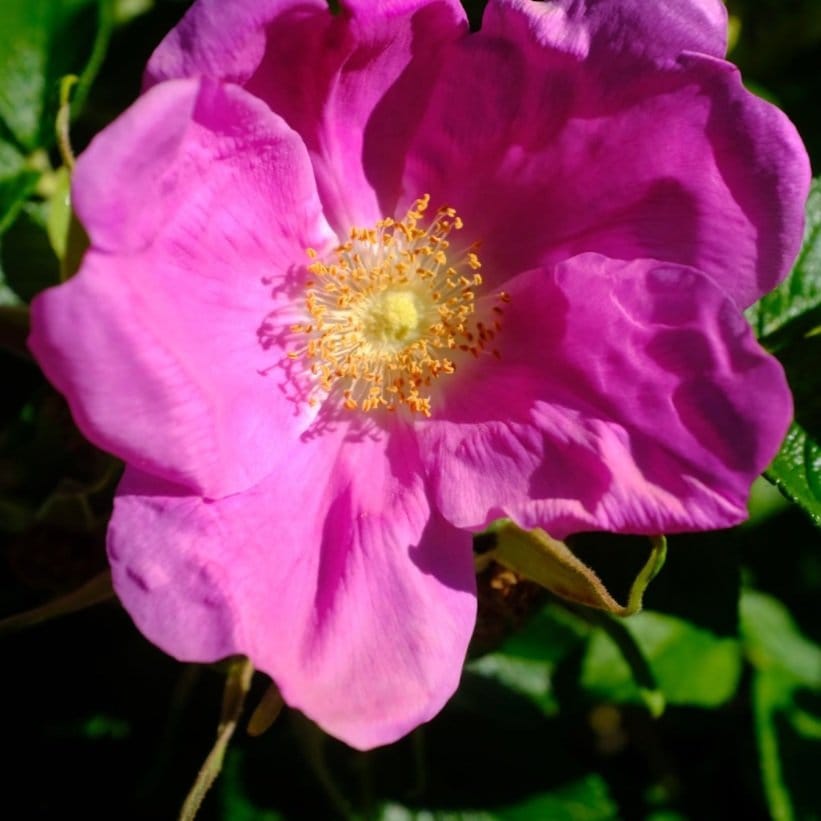
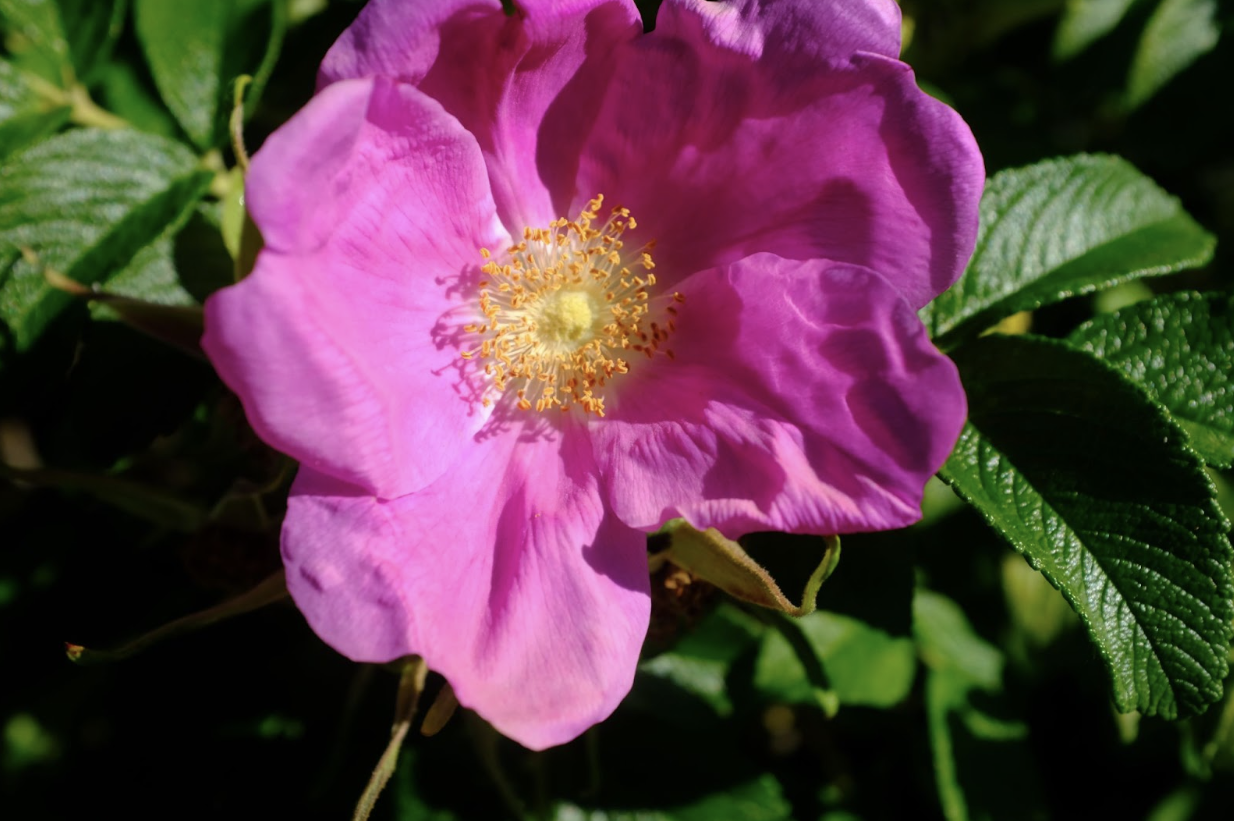
Beach Rose in bloom. Photo by Eden Blooms. [/caption]
A monthly ethnobotany column by Eden Blooms.
As we transition from Autumn, the season of decay and grief, into winter, the season of solitude and rest, I find myself yearning for a plant ally. Maybe you are feeling that too; I’ve heard many people around us expressing the weight of the world’s suffering bearing down on our collective shoulders. We all feel it - the tightness of our lungs and the deep, gut-wrenching waves of defeat. This full body experience mirrors Traditional Chinese Medicine (TCM) - fall symbolizes grief, often bringing up health concerns of the lungs and lower digestive tract. Winter, on the other hand, is linked to conditions of the kidneys, uterus, and bladder.
In TCM, emotions are intimately linked to organs and physical health, representing the birthplace of the mind-body approach to health and healing. This dynamic belief links how our emotions affect our health and vice versa. The One Health Model (OHM), like TCM, recognizes the connection between humans, animals, plants, and the environment, justifying the role of plant allies in our lives and their ability to support us physically, mentally, and spiritually.
As we move through the seasons, we prepare to retreat inwards to do our inner ancestral work - Beach Rose, known in Latin as Rosa nutkana, stands out as the plant yearning to heal our collective broken heart.
Beach Rose will lure you in regardless of the season. Their five bright pink heart-shaped petals bloom all summer long and sometimes into fall. Even now, a few roses are still appearing around town, standing with us through the season changes. This plant, like all rose family members, offers heat medicines from its leaves to the blossoms and fruit.
Along the stem, nodes form pinnate leaf stalks with serrated leaves that grow in groups of five. The cells making up those nodes also have the ability to grow into a thorn. Although thorns and leaves appear different, they are both extensions of the rose's ability to create food through photosynthesis, but the thorns have the unique ability to form a protective barrier.
Boundaries, like thorns, are an extension of our physical, mental, and spiritual health. They remind us that through grief and solitude, we are worthy of love in all of our forms. While the veil is thin this time of year, our unique internal work might feel overbearing at times, especially with the added weight of the world. You might have even forgotten how loveable you are, but the roses haven’t.
Beach roses thrive in salty air and rocky soil. Along the seashore, you’ll notice small game trails created by bunnies who use Beach Rose as a protective barrier from predators. Regardless of the season, I’m drawn to sitting with the Beach Rose, often using them as a protective barrier behind me while I utilize the sea as a container for my grief. As I sit with Beach Rose, I’m reminded of how boundaries are especially beneficial when I feel this tender and raw.
This is a great time of year to connect with Rose, especially when it comes to enjoying the fruit: Rose Hips. Harvesting Rose Hips can be tricky - they are edible, but the little hairs attached to the internal seeds can be a choking hazard for small children and a digestive irritant for people with IBS, Crohn’s, and other digestive conditions. It’s fairly accessible to source rose hips from people who have the right processing tools to remove all the hairs quickly, especially if you are planning on eating them.
Rose Hips are packed with Flavonoids (antioxidants, different size molecules), Vitamin C, pectin, and other constituents that have been studied for their reliable and consistent medicinal benefits. The pectins act as a thickener, which is great for jams, such as a rose hip cranberry jam, and sauces, such as a rose hip barbeque marinade. The pectins also show promising results in clinical trials to slow and stabilize cells that metastasize quickly, such as cancer and endometriosis. In clinical herbalism, Rose Hip capsules are taken as a preventative measure for people who have a family history of either of those conditions.
I harvest Rose Hips this time of year for topical use. After harvesting, I smash them in a jar so the internal seeds break open, allowing the seed oils to bind with a carrier oil. As an herbalist on a budget, I’ll usually purchase avocado oil from Costco or Grocery Outlet for my topical oils. You can go as far as to make a lotion, but I personally prefer anointing myself in rosehip oil from head to toe all year long as a self-care routine.
As the season shifts, let’s embrace the lessons and support offered by Beach Rose. There are so many ways to connect - go sit with her and tell her your sorrows, make a delicious edible sauce, make tea from any part of the plant, or simply envision her in your mind's eye - and always remember that you are loved and supported. Our journey through grief and healing is intertwined with the natural world, always reminding ust that we are never truly alone.