Chlorophyll Corner: Bigleaf Maple and the Art of Letting Go

[caption id align="alignnone" width="995"]
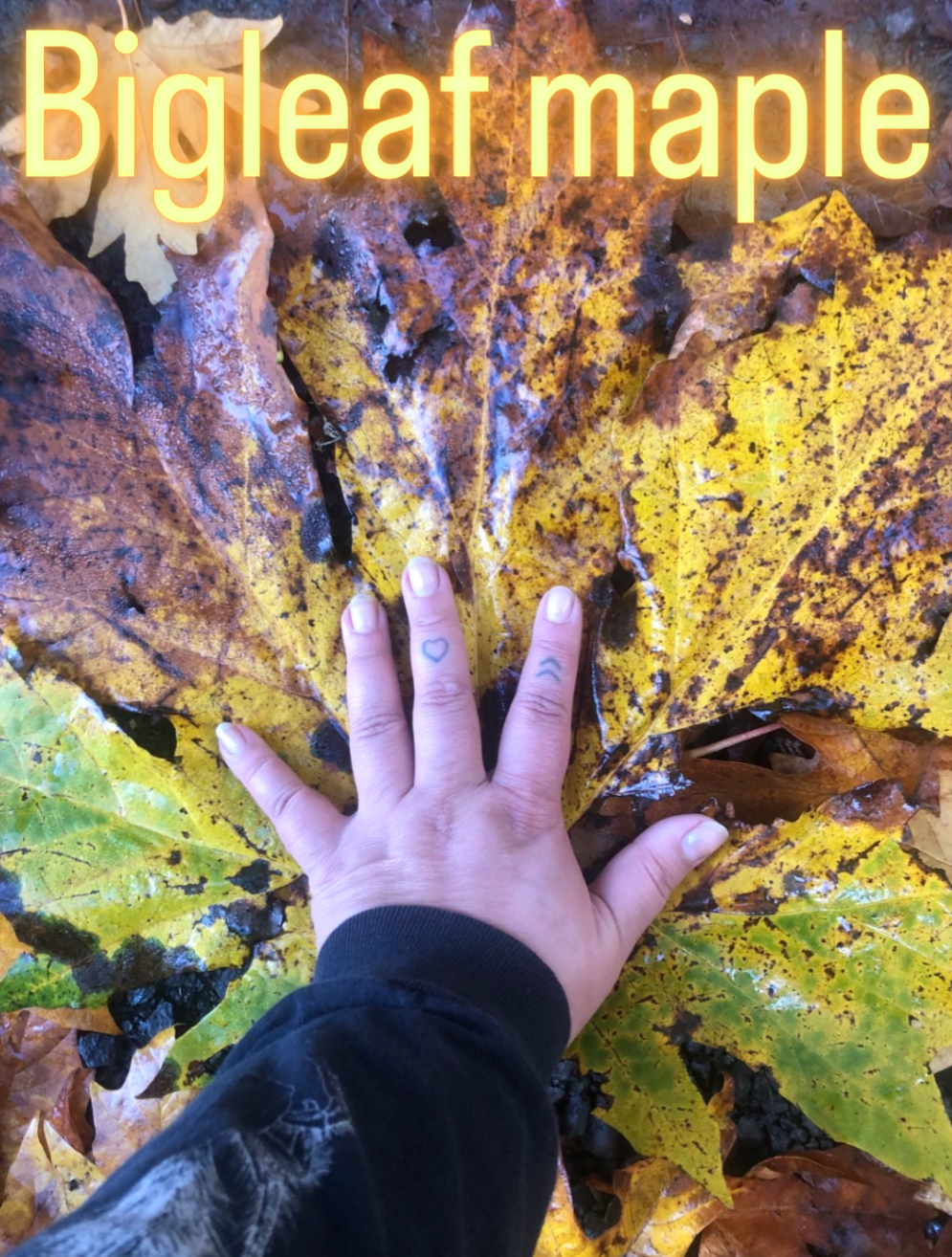
Photo by Jessaca Kéet [/caption]
Chlorophyll Corner is a monthly column by Eden Blooms that explores the cultural, ecological, and medicinal relationships between people and plants. Grounded in ethnobotany and the One Health model, it examines how traditional plant knowledge supports our access to land-based healing across diverse communities.
As Cascadia transitions from summer to winter, grey skies bring rivers of water while migrating birds take to the sky in v-formations. Taking a step outside, the crisp winds of the season change brush against our skin. Autumn settles in Cascadia and the forest glows with the golden fire of the Bigleaf maple (Acer macrophyllum).
Towering above sword ferns and salal, these deciduous giants unfurl their signature palmate leaves, which can grow larger than a child’s head. These giant leaves grow through the summer, providing cooling temperatures for the forest. As seasonal temperatures change, an internal clock goes off, initiating a blaze of color changes of yellow, orange, and crimson before releasing them to the forest floor.
Their falling leaves, often mistaken for debris, are in fact a gift: a quiet act of reciprocity that nourishes the soil, shelters insects, and signals the turning of the year. While many people choose to rake up the leaves, the ecosystem relies on the natural compost that results as the leaves break down in the soil.
In the language of science, the Bigleaf maple is a keystone species in Cascadian forests. Their broad canopies provide shade and moisture retention, while their bark offers homes for mosses, lichens, and licorice ferns. Many trees produce secondary metabolites that make their bark uninhabitable for other life in the forest, but not Bigleaf maple. Bigleaf maple welcomes all life in the forest, often resembling a skyscraper apartment building for forest creatures. Their seeds, known as “helicopters” or samaras, spiral to the ground, carrying the promise of new life.
Long before botanists named this tree, Coast Salish peoples called this tree cuʔtac in Lushootseed. For generations, they have honored this tree not as an object, but as a living being, one that offers wood for paddles and bowls, leaves for smoking salmon, and lessons in generosity. This Indigenous worldview, rooted in reciprocity, invites us to reconsider our relationship with the land. Rather than taking without thought, we are asked to give thanks, take only what we need, and return the generosity.
With their leaves resembling an outstretched hand offering support, the Bigleaf maple models this ethic. They draw nutrients from the soil, which eventually grow into leaves that return to the soil in the fall, feeding the nutrient cycle that sustains them.
The Bigleaf maple is full of lessons. In a world that optimizes productivity and permanence, the Bigleaf maple’s role in seasonal changes reminds us that it takes courage to slow down and let go. Their willingness to shed what no longer serves and their role as a forest super host teach us about adaptability and to trust the natural cycles around us.
As we approach the season of gratitude, let's look beyond the table and into the forest. Just as in the nutrient cycle, we cannot create community alone; the plants, animals, and humans around us make life possible. Bigleaf maple reminds us to slow down and ask - what can we give back? What can we release, like the maple, to nourish our community? Whether it’s to the animals, plants, or humans, there is mutual aid in giving with gratitude for all the things around us.
Whether you’re a child racing maple seeds to the ground or an elder recalling the scent of woodsmoke and wet leaves, the Bigleaf maple offers a lesson for all ages: that healing begins with relationship, and relationship begins with reciprocity.