Chlorophyll Corner: Depths of Winter Accompanied by Douglas Fir

[caption id align="alignnone" width="3072"]
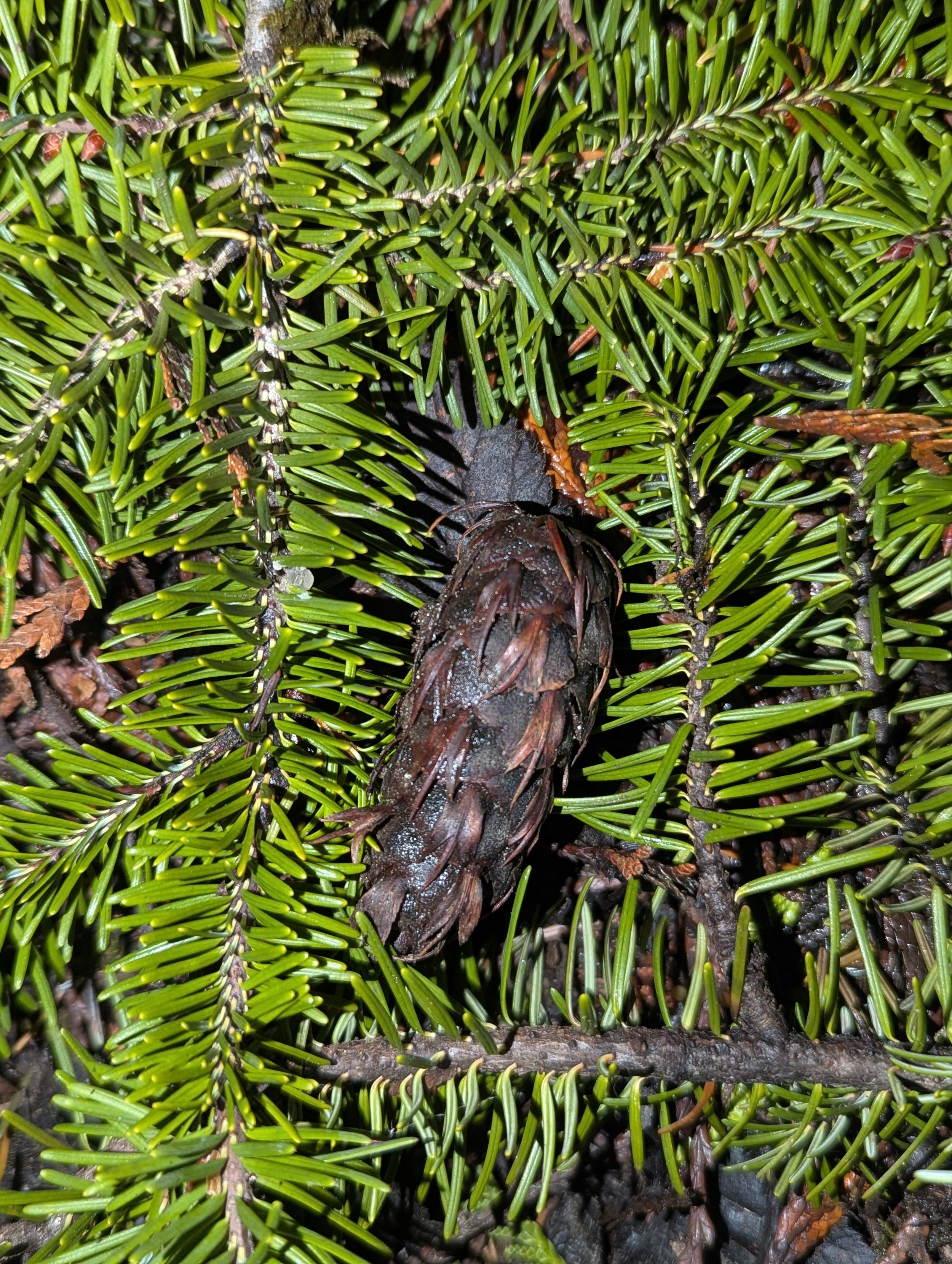
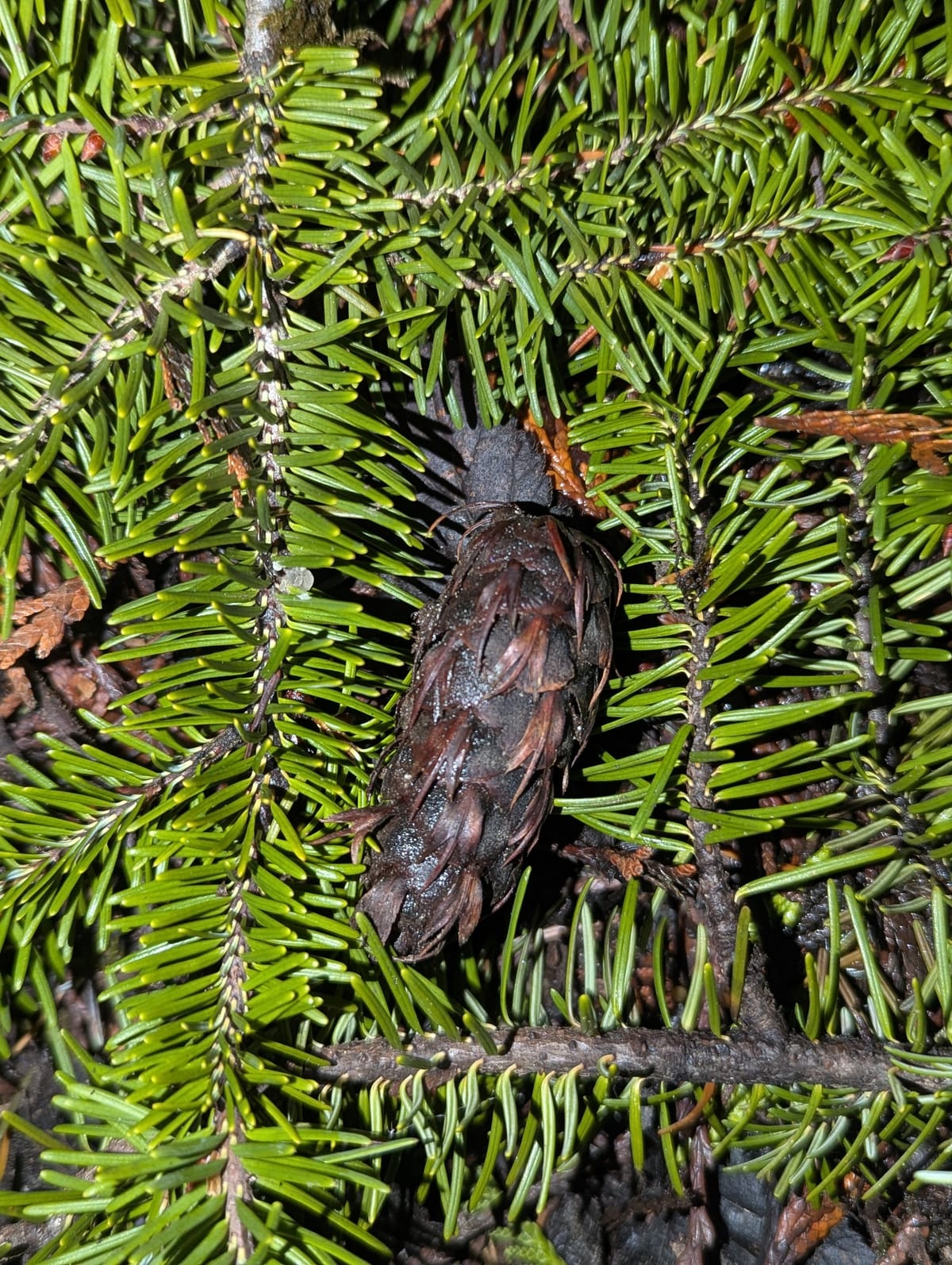
A Douglas Firs’ bottle brush needle display on branches as well as cone showing unique "mouse in house" cone. Photo by Eden Blooms [/caption]
Chlorophyll Corner is a monthly column by Eden Blooms that explores the cultural, ecological, and medicinal relationships between people and plants. Grounded in ethnobotany and the One Health model, it examines how traditional plant knowledge supports our access to land-based healing across diverse communities.
Soups simmer on the stove, the sound of rain on our roofs, and the scent of wood-burning stoves drifts through Cascadia. Winter has arrived, bringing the big grey skies and atmospheric rivers that soak our valleys. For many, the rain brought chaos, but for the trees, it brought life. As we settle into our bodies and prepare to hibernate, the towering evergreens come alive in the wind and rain. Among them, one iconic giant stands taller than the rest: the Douglas Fir, Pseudotsuga menziesii.
The Douglas Fir is the tallest and most common member of the pine family in Cascadia. These evergreen trees can live for thousands of years. Their bark begins smooth and brown, but with age, deep furrows form, giving them a rugged, groovy texture. Needles spiral around branches in a bottle-brush formation, and their cones carry a story.
Pinecone-bearing trees have thrived on Earth for more than 300 million years. Long before flowering plants and flying insects came into the picture, they relied on wind pollination. Their cones, sometimes lying dormant in soil for centuries, act like turbines drawing pollen inward with the breeze.
Douglas Firs are remarkably fire-resistant, thanks to their thick bark and resin blisters. Coast Salish tradition tells of a great forest fire when the Douglas Fir offered refuge to animals in its branches. Today, the cones still bear the marks of that story with tiny shapes resembling mouse tails and deer hooves peeking out, which make them uniquely indistinguishable from other pinecones.
The needles of Douglas Fir have a bright, citrus-pine flavor. Fresh lime-green tips in spring are the most delicate, but mature needles can be harvested year-round. Fir needle tea is rich in vitamin C, though heating can diminish its potency. Steeping needles in cool water creates a refreshing, pine-citrus drink often referred to as nature’s own Gatorade.
In the kitchen, Douglas Fir’s flavor adds a surprising twist. Pine needle scones with ginger or orange curd, shortbread cookies, or even a simple syrup can be made by layering cones or needles with sugar.
For generations, Coast Salish peoples have used Douglas Fir needles in basketry, many of which are beautifully displayed at the Suquamish, Makah, Burke and Tulalip Museums. Visiting these museums during winter break offers families and individuals a chance to learn, connect, and honor the artistry and traditions of the land’s original tenders. To this day, Coast Salish communities carry their basket weaving skills with pride as they weave a wide variety of baskets to gather foods, tell stories, prepare food, store household goods and even protect infants. The craftsmanship of these baskets and woven containers is truly extraordinary.
Douglas Fir resin has long been valued for its antimicrobial properties. Traditionally processed into salves or tinctures, it’s been used to fight infection and support immunity, but the resin should not be put directly on a wound. Luckily, someone doesn't have to ingest or apply topically to receive the medicine; one can simply take a walk in the forest after a rain for a widely studied healing tool known as Forest Bathing.
Forest bathing, or shinrin-yoku, is a Japanese practice of immersing oneself in the forest to restore mental and physical health. In Japan, the Forest Therapy Society has established research facilities and “Forest Therapy Roads” where scientists measure the effects of time spent among trees on blood pressure, heart rate, and mood. To practice, one simply slows down in a forest, walks gently, breathes deeply, notices the scents of pine and cedar, listens to birdsong, touches moss or bark and lets the body's senses guide you. This works because the resins, natural aromatics, are released into the air, similar to an essential oil diffuser, and as they enter the nose, bind to olfactory sensors in the brain. Studies have shown that when this happens, stress hormones are reduced, immunity is boosted, and it has even been shown to improve focus. Unlike hiking or exercise, forest bathing is about mindful presence, allowing the forest’s atmosphere to calm the nervous system and restore balance.
This winter, spend time with Douglas Firs, whether by making a wreath, decorating your home, steeping a tea, taking a walk in the woods, or simply hugging a tree. Douglas Firs remind us that in the darkest parts of winter, we are never truly alone. May the Douglas Fir be a beacon through the darkness and guide us to stand tall, weather storms, and always remind us that the forest is always here to hold us.