
Chlorophyll Corner: Ginger, A Versatile and Beneficial Rhizome

A monthly ethnobotany column by Eden Blooms.
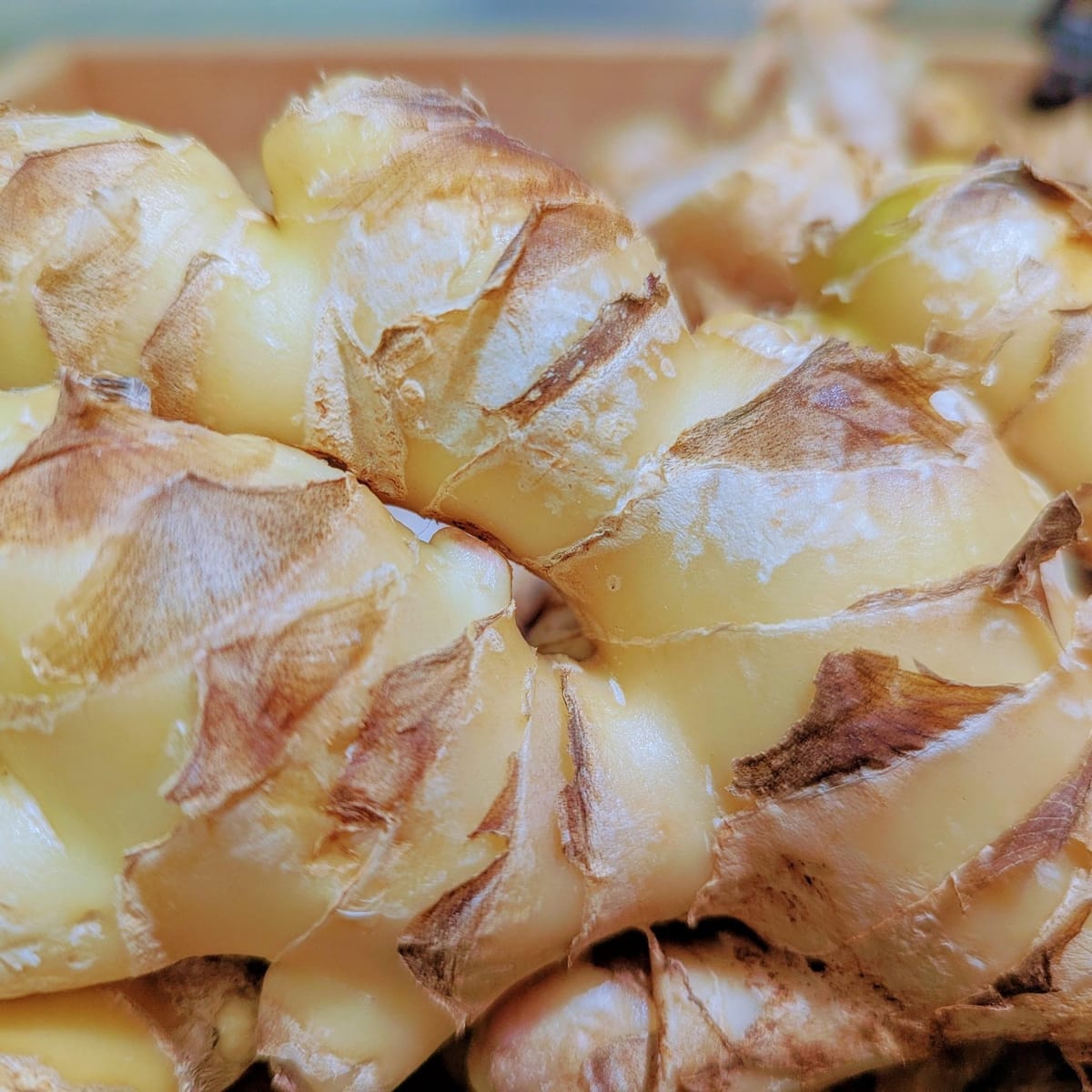
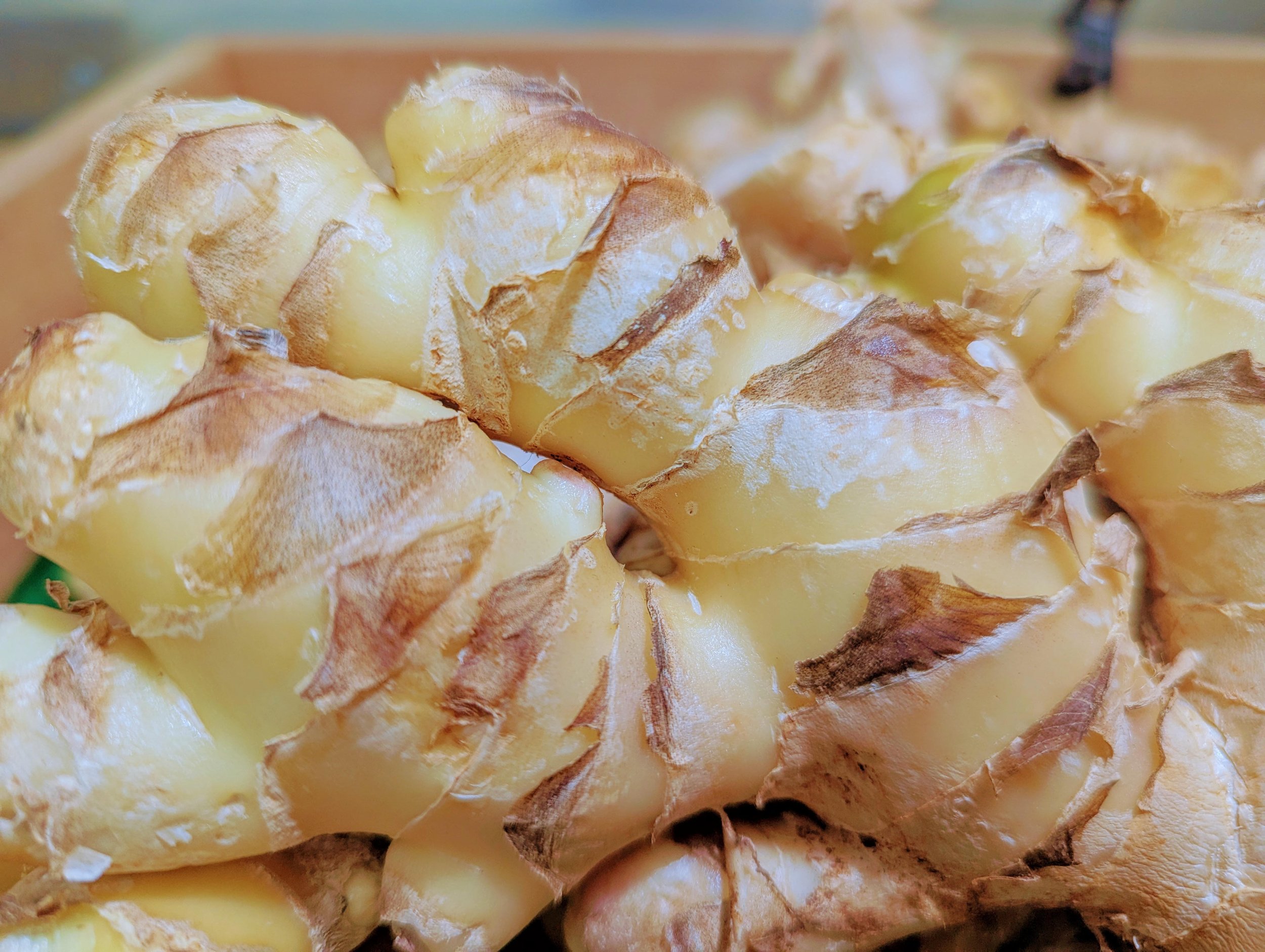
Peering out the window at the looming grey clouds, the dread has officially set in - the big grey is back. In the Pacific Northwest, we remind ourselves of the fresh smell after the rain clears and the cascading mountain peaks filled with spring flowers to get us through this season. Another antidote to this damp weather is the sunny disposition of a cup of ginger tea. This yellow-hued tuberous rhizome caught my eye at the Chimacum Corner Store. The giant chunks and pungent smell in the produce aisle will bring warmth and a smile to anyone who takes a moment to appreciate its beauty.
Ginger is one of the most commonly consumed dietary condiments in the world. Its versatility in the kitchen is unmatched, as it can be used fresh, dried, preserved, pickled, crystallized, candied, powdered, or ground. The spicy aroma of ginger is mainly due to ketones called gingerols, which contribute to its distinctive flavor. Ginger is a beloved ingredient in my kitchen from ginger scones with Douglas fir tips to ginger soda and cookies, this rhizome adds a unique and delightful twist to many recipes.
Ginger, scientifically known as Zingiber officinale, is native to Southeast Asia and belongs to the Zingiberaceae family, which also includes cardamom and turmeric. If you’ve seen ginger growing, it becomes quickly apparent that this plant is a true rhizome - a horizontal underground stem that shoots up leaves and flowers growing out of the nodes.
Originally thriving in the humid tropics, this perennial has adapted to various climates and is now grown in greenhouses worldwide, including the Pacific Northwest. This adaptability has allowed ginger to become a staple in kitchens and homes around the globe.
The use of ginger as medicine dates back over 5,000 years. At one point, ginger was worth as much as a sheep, highlighting its significance and desirability. After the fall of Rome, ginger continued to be sought after and was used as a preservative in sweets during medieval times. This practice led to the creation of some of our favorite cookies, including gingerbread.
Ginger is renowned for its myriad health benefits. The rhizome contains 115 bioactive constituents, with metabolites accumulating in the gastrointestinal tract, making it a powerful remedy for gastrointestinal distress - nausea, spasms, motion sickness, and gas. That accumulation adds to ginger's ability to feed your inner fire, making it a perfect warming addition to winter dishes and beverages.
Consider ginger one of your tools to fight off the pesky internalized dampness that often sets in during the colder months here.
Ginger has also found its place in folklore and magic as it’s considered a key ingredient in love potions and believed to be a magical catalyst. Eating ginger before working with magic was thought to increase one's inner magical energy, making each person's magic ability stronger. This belief in ginger's ability to enhance inner fire and energy adds a mystical dimension to its already impressive list of attributes.
Ginger, with its rich history, extensive health benefits, and versatile culinary uses, is truly a remarkable plant. Whether you're sipping on a cup of ginger tea to warm up on a cold day or baking ginger cookies to share with loved ones, this humble rhizome has a profound impact on our lives. Its ability to bring warmth, comfort, and a touch of magic makes ginger an indispensable part of our kitchens and hearts.