
Chlorophyll Corner: Oregon Grape, A Hero in Healthcare

[caption id align="alignnone" width="1080"]
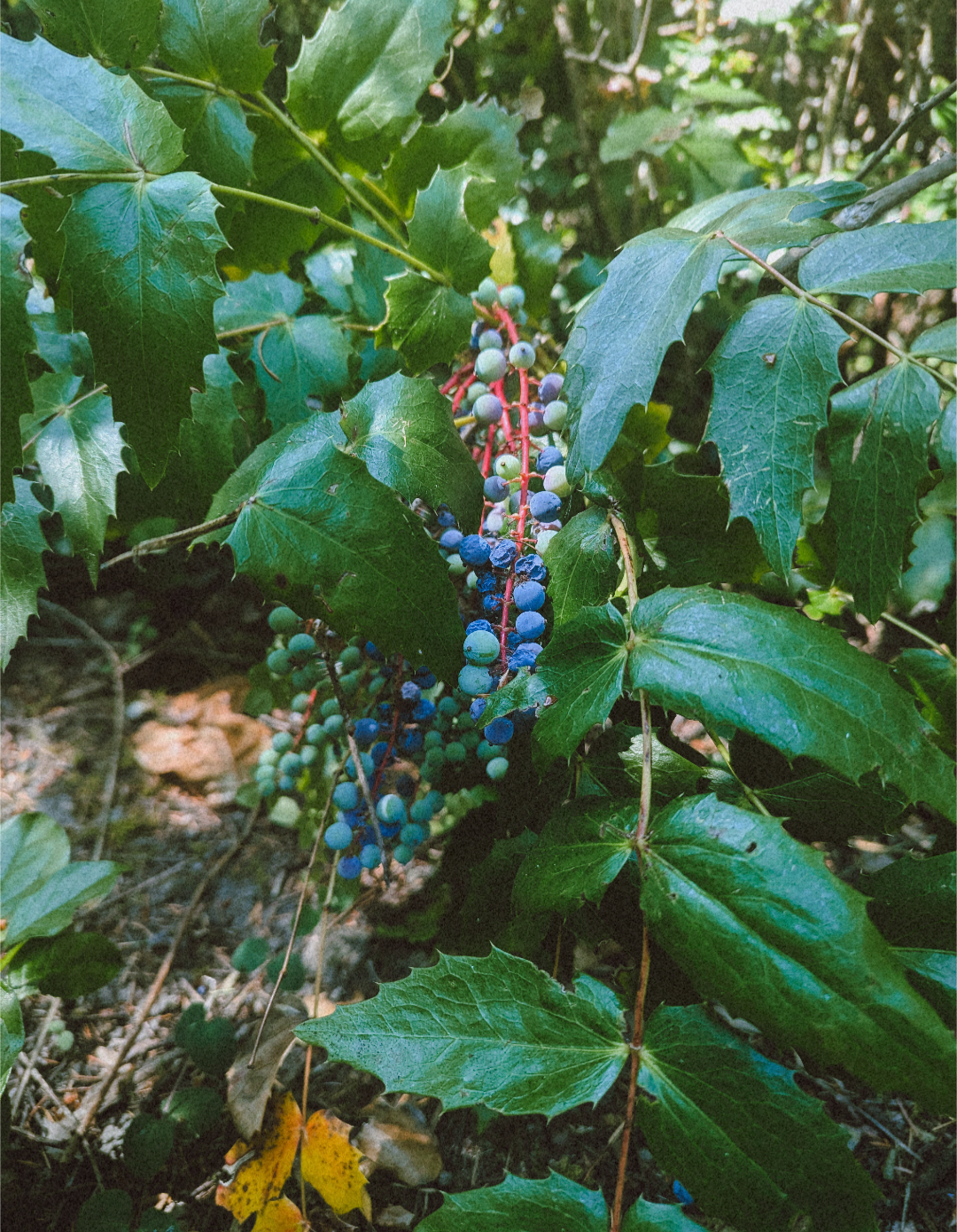
Photo by Eden Blooms [/caption]
A monthly ethnobotany column by Eden Blooms
Summer is afoot, calling us together to defrost our worn winter bones in the sun's golden rays and dive into the snowmelt-chilled waters of Cascadia. It's a time when both people and plants emerge from dormancy, leaning into vibrancy and community.
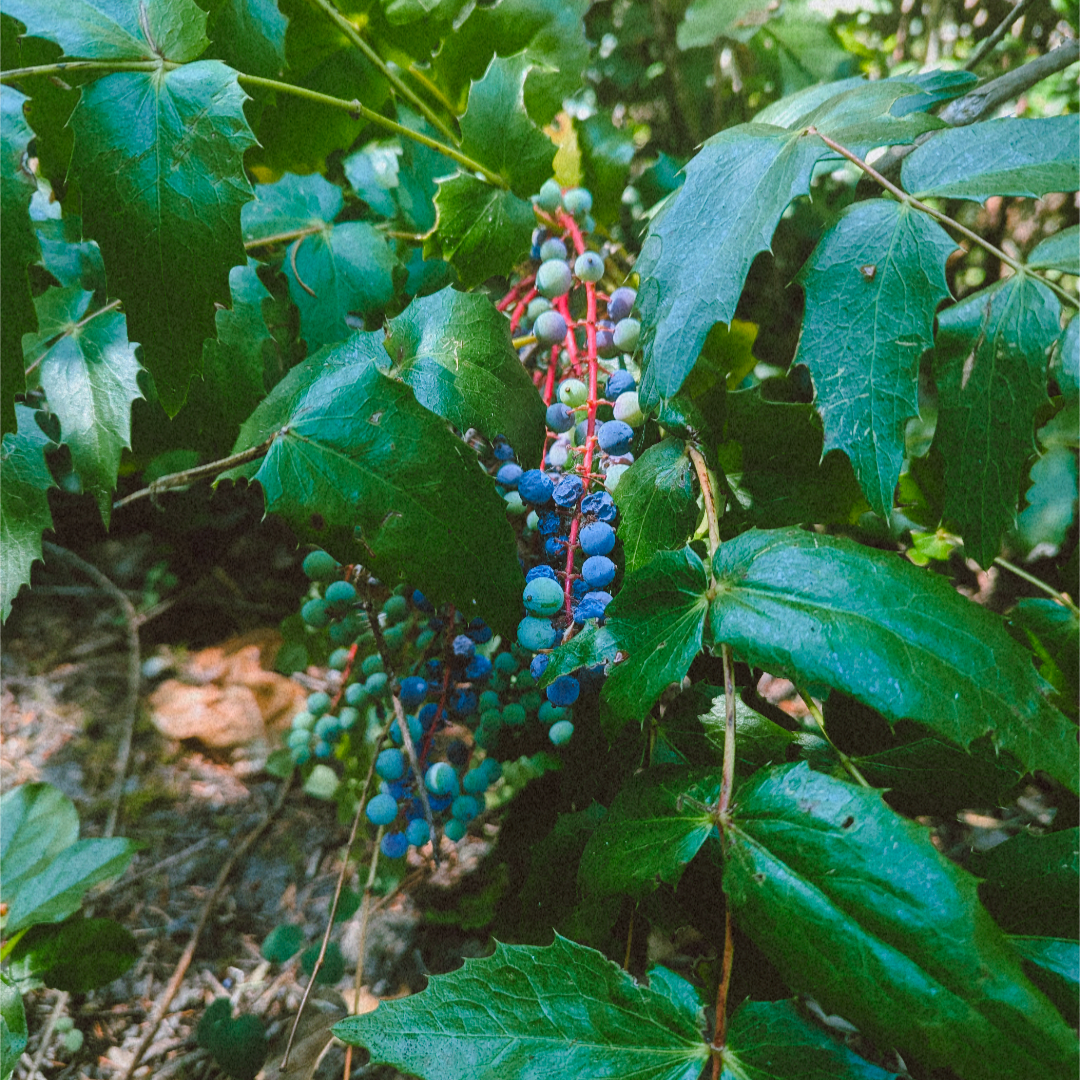
Between March and June, bursts of brilliant yellow flowers across forest floors and hillsides signal the prevalence of Oregon Grape. Cascadia is home to two main varieties: Berberis aquifolia, the tall Oregon grape, and Berberis nervosa, the low-growing counterpart. Historically classified under Mahonia, our evolving insights into plant DNA led to their recent reclassification under Berberis.
Oregon grape is recognizable by its spiny evergreen leaves which can sometimes get them mistaken for holly. The vibrant blooms lure pollinators such as painted lady butterflies, carpet moths, and a host of native bees, who feed on nectar in exchange for pollinating the blooms into deep purple oval-shaped fruits.
As summer peaks, birds and small mammals feast on fruit and utilize the dense groves as shelter and habitat. This completes a nourishment cycle that ties this plant closely to the region’s biodiversity and immense value in the landscape.
Beyond their ecological role, Oregon grape is also a medicinal powerhouse. One of its most celebrated compounds is berberine, a vivid yellow alkaloid visible when the bark is peeled back - though this shouldn’t be done casually. Oregon grape spreads rhizomatically, meaning it spreads via underground stems that grow outward in the soil. Since they spread this way, all individual plants in a grove are connected so damaging a single stem could jeopardize an entire stand.
Traditional Chinese medicine has leaned on this plant for centuries, and modern research is beginning to catch up. Berberine's bitter nature sparks liver and gallbladder function in our bodies. Studies out of China show that it binds to receptors on the tongue, triggering bile production which is an essential process for digestion and detoxification pathways.While this plant offers a wide array of medicinal benefits, its most promising potential lies in its antimicrobial capabilities.
As bacterial diseases are rapidly evolving, the rise of antibiotic-resistant diseases is triggering alarm bells for healthcare titans worldwide. There are many factors that have led to the antibiotic-resistance crisis. Through evolution, many bacteria strains possess internal pumps to expel antibiotics before they can take effect. This evolution is often linked to limited access to healthcare leading to the misuse of antibiotics which has forced clinicians to rely on stronger, prolonged antibiotic regimens just to overwhelm the bacteria’s defenses.
The global surge in multidrug-resistant infections is particularly troubling in the United States as public health infrastructure is dismantled, scientific research funding is shrinking, and systemic barriers to care are growing for everyone.Yet amid this complex and fragmented landscape, Oregon grape emerges as a symbol of possibility. Its active compound, Berberine, has demonstrated a unique ability to disrupt the bacteria's internal pumps, positioning it as a powerful ally in the battle against antibiotic resistance.
Imagine a future where healthcare is considered a human right and plant-based compounds complement pharmaceuticals - where care doesn't mean compromise, but synthesis. With adequate research and healthcare access, treatments that blend plant wisdom with modern science could help us combat disease and support the accessibility of holistic healing.
Oregon grape isn’t just another pretty plant along our walking path—it’s a fierce symbol of resilience, potential, and the quiet wisdom rooted deep in Cascadian soil.