Chlorophyll Corner: Osoberry, Cascadia's very own Groundhog

[caption id align="alignnone" width="3072"]
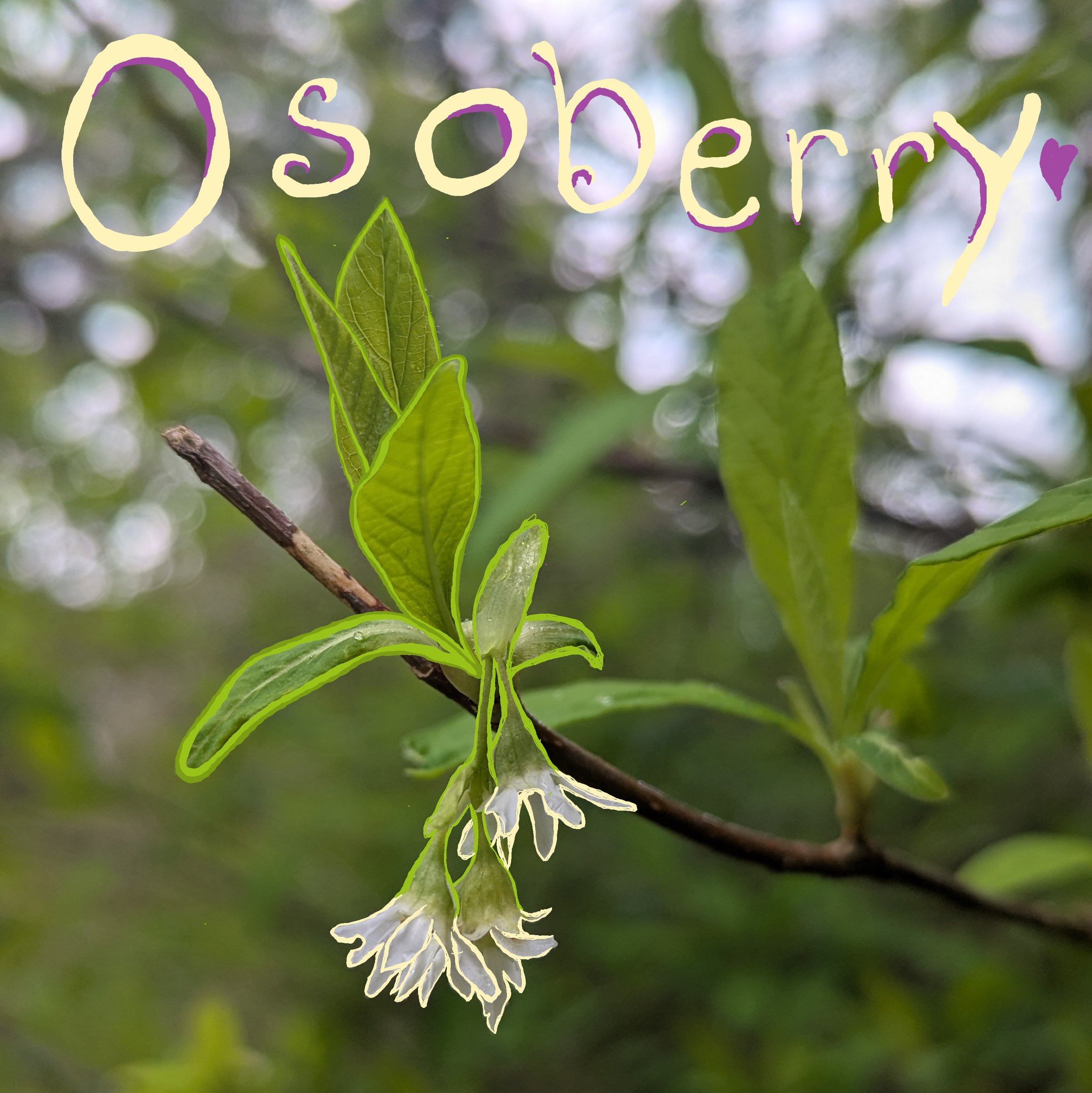
Photo by Molly Maverick, illustration by Eden Blooms. [/caption]
A monthly ethnobotany column by Eden Blooms.
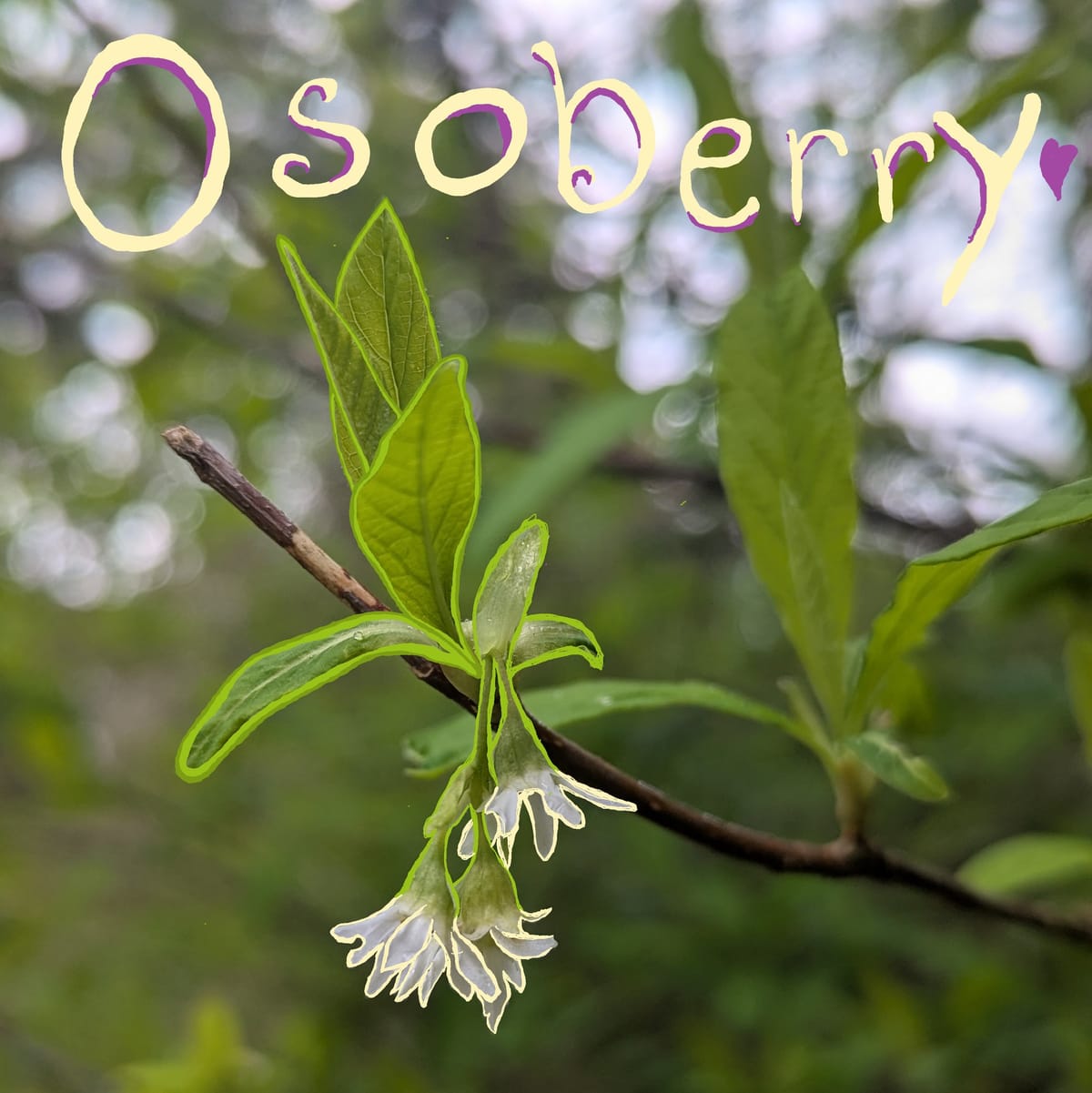
This week heralds the arrival of spring, stirring my senses awake alongside nature's reawakening from a deep slumber. Standing on a winding trail, I close my eyes and welcome the warm sunbeams brushing against my cheeks. With a deep inhale, I savor the crisp, clean fragrance left behind by the spring rain. A symphony of birdsong surrounds me—each melody proclaiming their love for this season and place. All life stirs from winter's long sleep; one white drooping flower along the forest edge stands proudly. This wondrous sight is Cascadias very own spring indicator plant- Oemleria cerasiformis, commonly known as Osoberry and sometimes referred to as Indian Plum.
Although there’s a very interesting history of relying on groundhogs to tell time, Osoberry is far more reliable. The simple oval leaves are one of my favorite tasty spring plants to sample along the trail. I love their distinct bitter cucumber flavor so much that one year I made a delicious wild yeast soda with them and you will always see me shoving the tasty leaves in my water bottle.
Osoberry is a tall shrub with multiple trunks coming out of one central location in the ground. The white elongated clusters of flowers each have 5 petals and 5 sepals visually alternating that form a cone shape. The male and female parts of plants are often found within the same flower to guarantee the success of pollination but this plant has the male and female parts on separate plants. This location difference requires pollinators to go from one plant to the other for the female flower to turn into the fruit.
“Your connection with nature is unique to you—it could mean incorporating more leafy greens into your diet, committing to a weekly brisk walk, or simply savoring the scent of a new flower each week until winter returns. ”
Once the flowers are pollinated, they mature into dropping plums that transition from a sunshine yellow-rich orange to a deep purple, indicating their high amount of the antioxidant anthocyanin. These plums are sweet and bitter with a slight similarity to the grocery store plums but with more of an astringent mouthfeel. Their flowers have a mutual relationship with months as their main pollinator, which is indicated by the scentless white flower that stays open at night.
In the years of early botanical science, plants were divided into families based on their visual characteristics and as science has advanced, we have been able to categorize plants by genetic material. Osoberry is a member of the Rose family which is a large, genetically diverse family divided into four subfamilies. Osoberry is a member of the Rose Family, within the almond subcategory.
For centuries, human bodies have evolved to eat in harmony with the changing seasons. Spring presents a perfect opportunity to reconnect with nature and our physical selves, as our organs awaken and expand, often craving higher nutrient intake during this time of renewal. This connection isn't just supported by decades of research into the human body—it is echoed in the rhythms of the natural world and the wisdom of diverse cultures. Nutrient-rich edible plants emerge along trails, and cultural practices such as spring fasting further illustrate the balance between ourselves, nature, and the traditions that unite us.
Living in harmony with nature can feel like a challenge in today’s fast-paced world. Here in Cascadia, we’re fortunate to be surrounded by abundant wildlife—a privilege we should never take for granted. Osoberry reminds us that connecting with nature is deeply tied to connecting with our truest, most authentic selves. As its delicate white flowers droop towards the earth, signaling spring’s arrival, it’s a perfect reminder to seek out a meaningful way to immerse ourselves in the natural world.
Your connection with nature is unique to you—it could mean incorporating more leafy greens into your diet, committing to a weekly brisk walk, or simply savoring the scent of a new flower each week until winter returns. Whatever form it takes, your bond with nature is uniquely you! Never let anyone make you feel like it’s not enough; we all deserve love and acceptance as our most genuine selves.