
Chlorophyll Corner: Salal Offers Endurance through Dark Times

A monthly ethnobotany column by Eden Blooms.
Growing up in Cascadia, I took for granted the abundant diversity of edible berries that grow around us. It wasn’t until I got older that I realized how blessed we are to live in a place that has been stewarded for thousands of years to produce the generous, abundant forests around us. Even in the wintertime, the forests are profound. Walking through a Cascadian forest this time of year, it’s hard to ignore the evergreen ground cover - Salal. Even through the harshest cold and winter storms, their simple waxy leaves never falter from a deep emerald green.
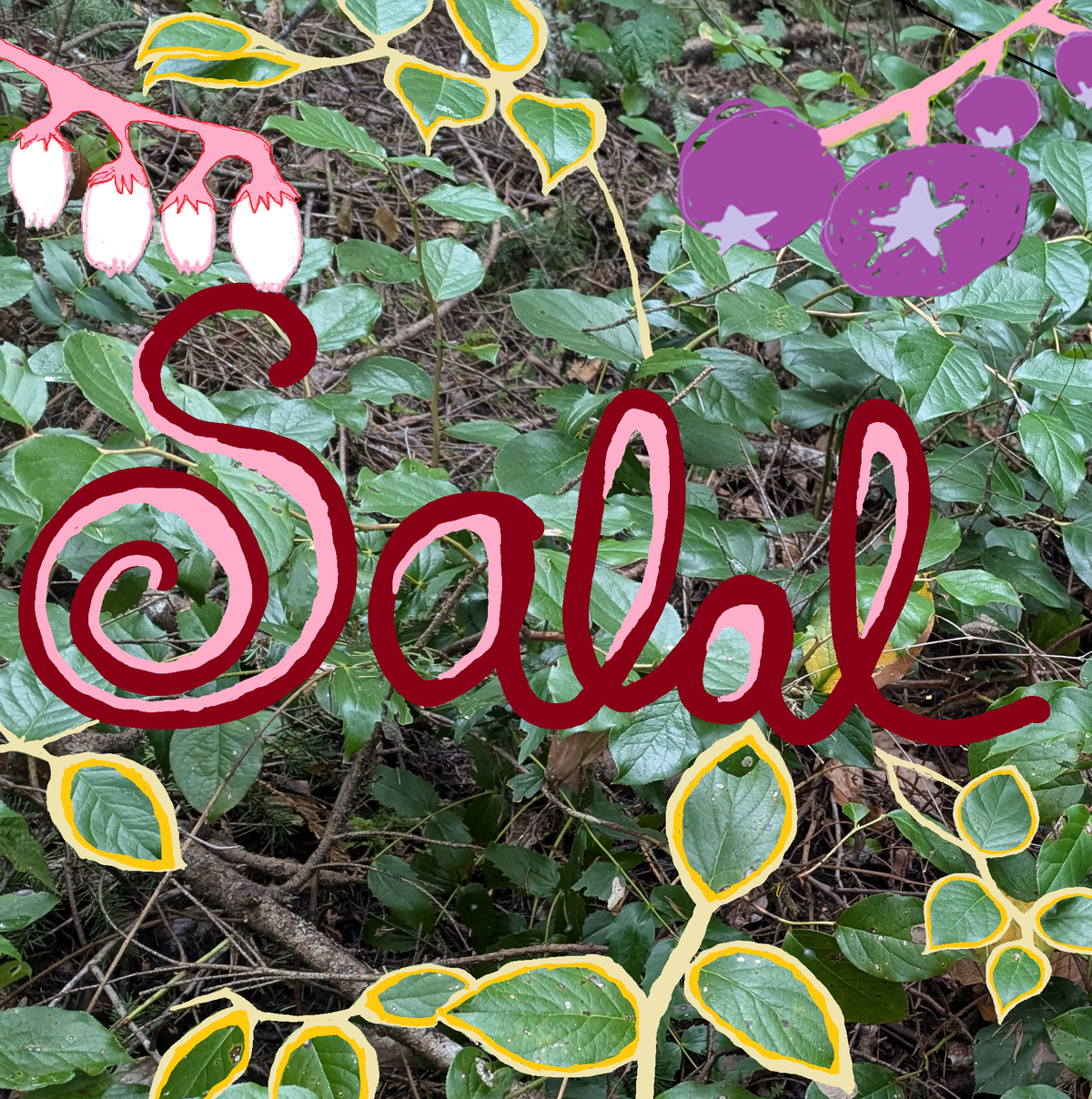
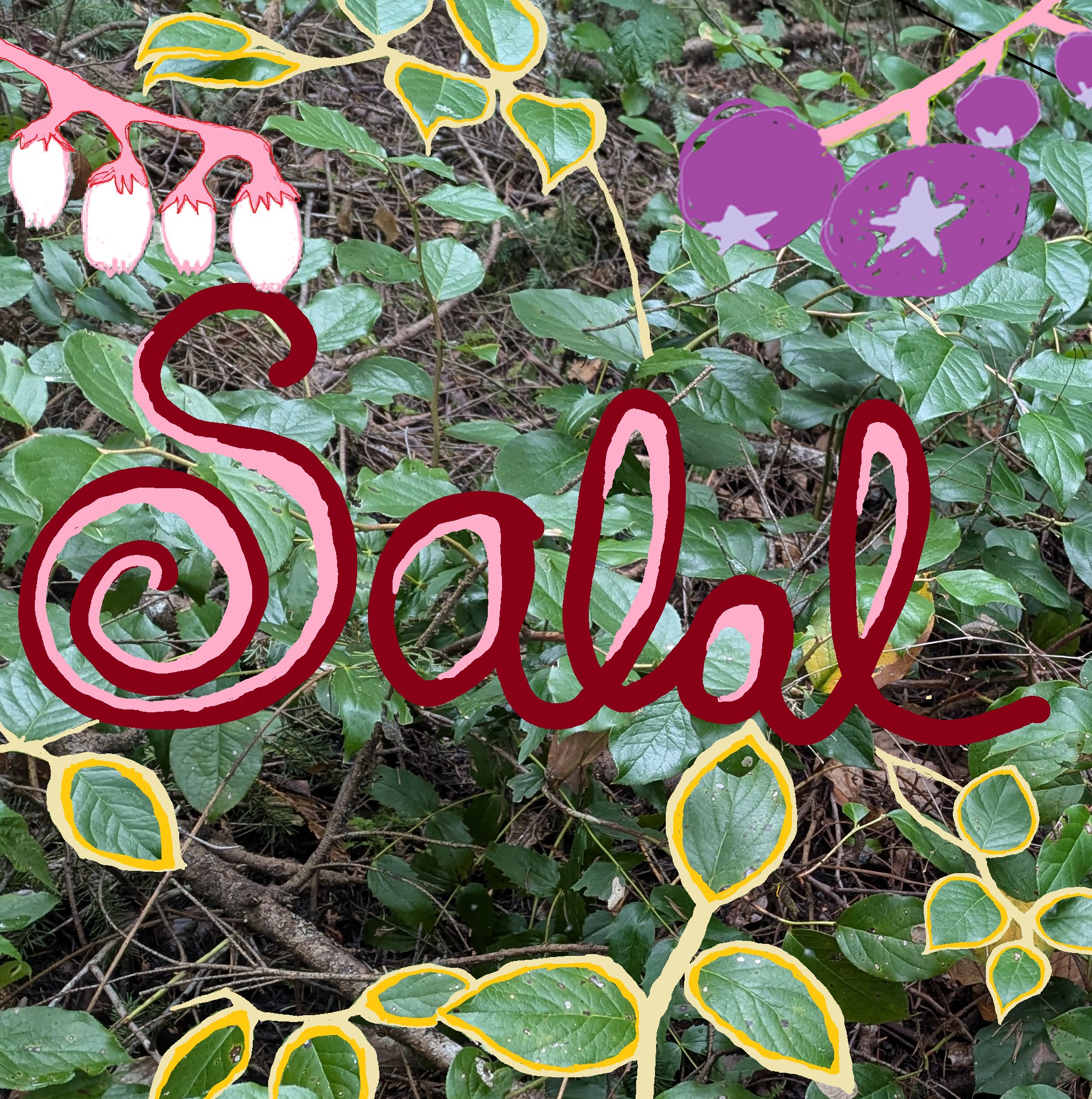
Gaultheria shallon, commonly known as Salal, is a dense, robust, thicket-forming shrub that is easily identified. This member of the Ericacea is related to other Cascadian plants such as the Madrona, Bilberry, Huckleberry, and Uva Ursi - each family member producing a fruit with a five-point star on the bottom. The stems form a zig-zag pattern where the leaves grow and change colors with the season transitions. During the flower phase, the stems are blush pink with a red hue turning to an indecent pinkish green once the flowers have turned to berries.
The flowers are white, bell-shaped with pink hues, a perfect dress for a fairy ball.
“As Salal withstands the forces around them, staying strong through the winter, we are reminded that it takes endurance to make it through the darkest time.”
Many members of the ecosystem benefit from this native plant. Once the flowers form in spring, the native solitary bees, hummingbirds, and butterflies gather around the Salal to enjoy their sweet nectar. They pollinate the flowers by extending their coiled feeders up into the small opening at the bottom of the flyer - all while artfully fluttering midair. Deer, whose ears adorably resemble the simple leaves of Salal, munch on leaves throughout the year like gardeners of the forest pruning back old leaves. Walking through Salal produces a loud rustling that echoes off the trees, making enough noise to indicate predators of the deer. Bears are also huge fans of Salal, as they emerge from their hibernation, the berries are there to greet them, often leaving behind giant purple poops for us to admire.
The mild, sweet and sour berries of Salal contain vitamins, minerals, antioxidants, omegas, and protein. The Coast Salish people have always revered the berries for their potent micro and macronutrient values, most often made into fruit leathers, which provided vital nutrients to help communities endure through the winter.
The term “antioxidant” has been exhausted and distorted by mainstream health gurus to the point it’s lost some of its significance. Nearly every plant contains antioxidants as they are integral to their molecular structure. Antioxidants aid the body by acting as scavengers for things such as environmental pollutants and stress hormones by capturing them to support one of the body's natural detox centers through urination.
Research illuminated that antioxidants have distinct affinities for different body parts and various types of free radicals. Some of these distinctions are visible to the human eye, revealed through colors. The deep purple color of Salal berries indicates the presence of anthocyanins, a type of antioxidant particularly beneficial for the cardiovascular.
As Salal withstands the forces around them, staying strong through the winter, we are reminded that it takes endurance to make it through the darkest time. Endurance does not come naturally as Salal does not grow alone - they grow in community. The tools we need to endure dark times and forces outside our control come from the plants, people, and environment around us because we are nature.