Chlorophyll Corner: Skunk Cabbage or Swamp Lantern?

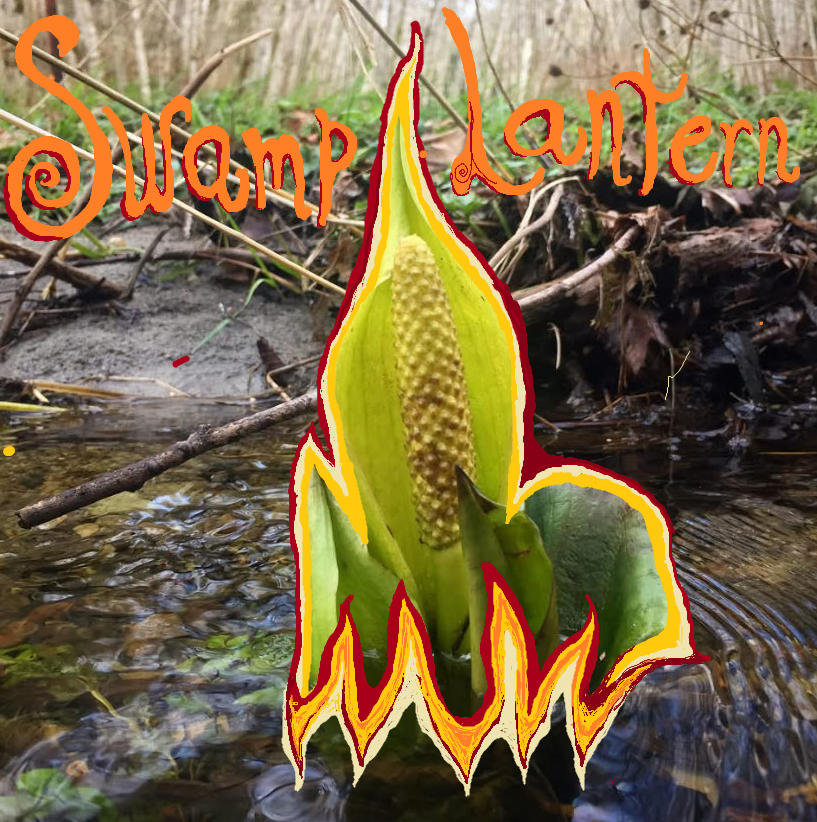
[caption id align="alignnone" width="817"]
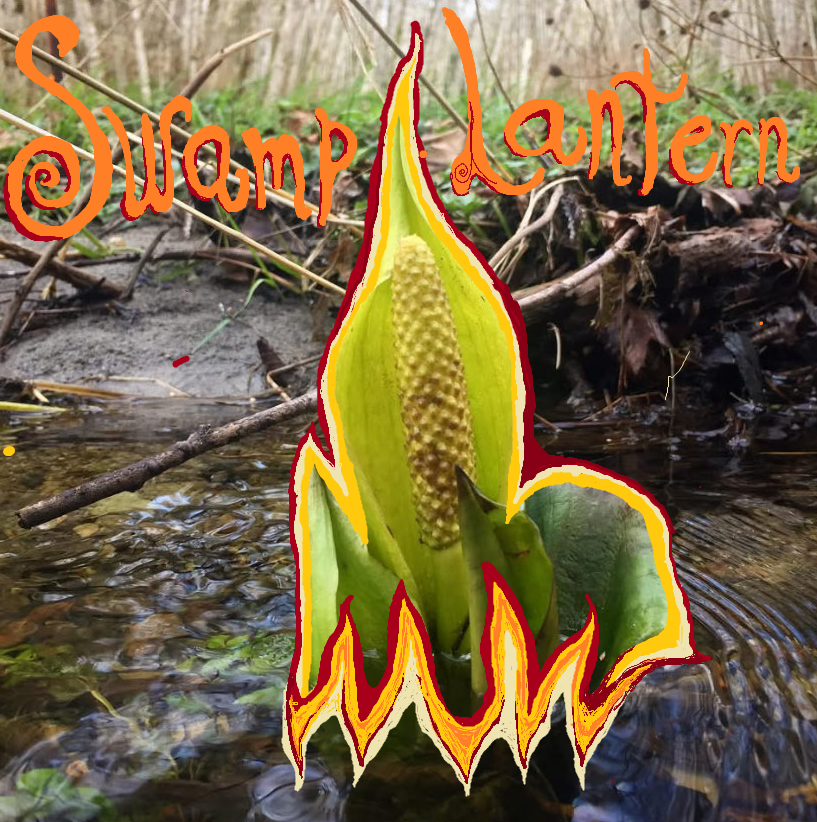
Photo by Molly Maverick, illustration by Eden Blooms. [/caption]
A monthly ethnobotany column by Eden Blooms.
For many who grew up in Cascadia, memories of elementary school field trips often include visits to wetlands, many of which were lowland wetlands. Among the various plants we encountered, none left quite as strong an impression as the pungent Lysichiton americanus, most commonly known as Skunk Cabbage.
The putrid smell of rotting flesh that permeates swampy forests is an evolutionary strategy to attract pollinators like beetles and flies. Rove beetles gather within the flowers to feed and mate, facilitating the transfer of pollen from one bloom to another.
Unlike flowers that produce nectar to attract pollinators such as bees and hummingbirds, Skunk Cabbage relies on its unique aroma—a smell that, while unpleasant to many, is cherished by this author. After moving to the peninsula, the absence of healthy lowland wetlands became evident by the lack of that familiar, comforting scent.
Wetlands play a vital role in the ability to sustain life on this planet. As the Earth's kidneys, wetlands filter pollutants and runoff before flows enter other bodies of water, such as drinking water, they are crucial to every level of the food web. Lowland wetlands, like the ones found inside low to mid-elevation forests, play a role in the salmon population as spawning habitats. The leaves of Skunk Cabbage contribute to this ecosystem by breaking down in autumn, acting as compost by enriching the moist soil with vital nutrients.
“The bright glow emitted by this plant has many people in Cascadia, both indigenous and of settler descent, questioning whether skunk cabbage is the best name. Many feel the name Swamp Lantern better represents this plant’s ability to rise like golden flames from the earth to warm their dark habits.”
From late February to May, I look forward to seeing the broad green rosette leaves unfurl around a vibrant yellow spathe emerging from the earth. The flower, composed of the spathe (a hood-like leaf) encasing the spadix (a knob-like structure), precedes the leaves. The early appearance of the flower begins by thawing the frostbitten ground through a process known as thermogenesis. Once the leaves feel safe to emerge, the spathe opens, inviting pollinators to enter. These bold and bright plants are older than dinosaurs and when their leaves are fully grown, they look prehistoric amongst the trees. They’ve had millions of years to evolve, so even though they lose their leaves annually, they can live up to 20 years!
Traditionally, Coast Salish people use the broad leaves to wrap salmon for cooking pits, to store food for short periods of time, and are folded into biodegradable cups. It’s widely known in both the animal and human world that you don’t want to eat the leaves because they contain glass-like crystals of calcium oxalate. The Coast Salish People's medicinal knowledge of this plant and its ability to treat respiratory illnesses and nerve conditions led to the advancement of the drug Dracontium to treat a multitude of conditions during the 1800s.
The bright glow emitted by this plant has many people in Cascadia, both indigenous and of settler descent, questioning whether skunk cabbage is the best name. Many feel the name Swamp Lantern better represents this plant's ability to rise like golden flames from the earth to warm their dark habits. This name change shifts the focus from its less admirable quality to highlighting its miraculous evolutionary ability to defrost the earth and remind us that spring is right around the corner. Although I used the names interchangeably for this article, I did so to ensure the common name drew your attention, moving forward I’ll only be referring to it as Swamp Lantern, and I hope you’ll consider doing the same.
Swamp Lantern reminds us that this is the time of year to start defrosting from our winter hibernation dens to prepare to begin blooming in just a few weeks. This past week, the time change took place which represents the societal recommendation to begin a shift in daily habits to better harness the energy of spring. I know I’m looking forward to every ray of sunshine, so I’m grateful for every reminder of spring's anticipated arrival.
If you would like to meet Swamp Lantern, please join me on Saturday, March 29th, at Anderson Lake to explore the spring marsh and lowland wetland located there. Register here: linktr.ee/build.community or email me directly at eeden.blooms@gmail.com