City and Library Union Negotiations Finalized


[caption id align="alignnone" width="1000"]

Photo courtesy of https://ptpubliclibrary.org/library/page/history-library [/caption]
News by Angela Downs
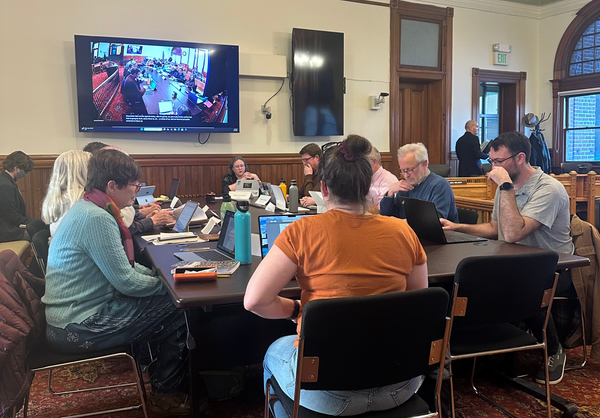
Over a year of negotiations came to completion on Monday, July 21, when a resolution for the collective bargaining agreement with City Council and city library employees, represented by Local Union NO. 589 of the International Brotherhood of Teamsters for General Government Employees, was approved.
In 2023, the employees of the Port Townsend Public Library voted to unionize. Their choice includes them as part of the labor movement of the greater library community, joining the Sno-Isle Libraries and Kitsap Regional Library in becoming union members.
History of the Library
[caption id align="alignnone" width="1000"]
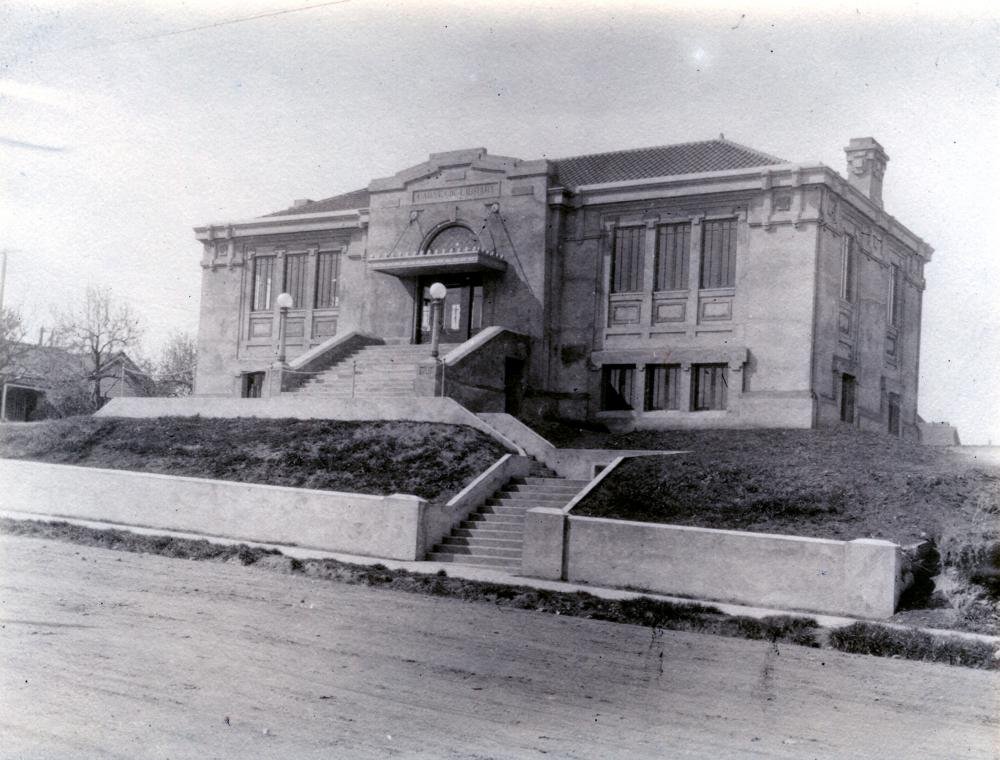
Photo courtesy of https://ptpubliclibrary.org/library/page/history-library [/caption]
The Port Townsend Public Library was born in 1898 through the vision of a small group of local women. Together, they created the Port Townsend Library Association. With a one-dollar-a-year membership, the library opened its doors to the public in the Central School, where the community center currently lives.
The need for a permanent home inspired the Library Association to reach out to the Carnegie Foundation for funding, and with the perseverance of Port Townsend locals, the original Carnegie building was constructed. Now 112 years old, it is one of the 2,509 libraries worldwide funded by the Carnegie Foundation between 1983-1929. Today, the Port Townsend Library is one of the 1,689 Carnegie libraries still in use and has the highest circulation of books per capita of all the libraries in Washington State.
In April 1911, the City Council voted for a free library with city support. The Port Townsend Public Library has three major volunteer support organizations: the Advisory Board of Trustees, the Library Foundation and the Friends of the Library. The library, city government and the community collaborate with these groups to develop plans for the library’s financial needs.
Funding the library continues to be a challenge
Melody Sky Weaver has been the library director for ten years. In January, she became the Community Service Director for the Creative District as part of consolidations aimed at keeping the budget for both the Library and the Parks and Facilities Department within limits. However, this is a separate action from the ongoing union negotiations.
[caption id align="alignnone" width="1000"]

Community Services Director Melody Sky Weaver, Photo Courtesy of the City of Port Townsend website [/caption]
Pre-union Library Assistants, who often fill tasks outside of their wage range, have felt frustrated and concerned about the library's dire financial state, which is used to justify what appears to be, by all accounts, the suppression of existing staff wages and advancement.
Library staffing makes up the majority of the budget (total, about 22% of operating expenses and 31% of total budget). Property tax levy, as the dedicated funding source for the library, restricts funding by any other source. The maximum growth this source has is 1% per year, “while inflation, cost of labor, materials and resources, and the like often far exceed 1%,” Weaver said.
“The contract has been approved, and library staff will soon be earning wages above the market rate of neighboring libraries,” Weaver said. “Internal pay equity is something the City has worked hard to achieve with our non-represented and represented staff.”
Teamsters 589 Union representative Bobby Driscal was the local representative involved with the unionizing process. “I would like to applaud Driscal for his representation,” said Weaver.
“There is a positive movement nationally and regionally for libraries unionizing as part of the labor movement of the time,” Weaver said. “It is very exciting for the library to be fully integrated into the City.”
Compromising takes time
The library, like all other non-police employees, is added to the Main Teamster agreement with the City. The Main Teamsters contract expired last year and needed to be renewed. The overall revamp began in late October 2024, before some of the library’s transitional matters, which began in 2023, had been finalized.
A contract can often take two or more years to finalize, and as a brand-new department, considerable importance has been placed on understanding how the library operates and how a union can best support it. Both sides have been careful with the transition from non-union to union.
Regular procedure for elected members for the Teamsters, called Shop Stewards, is to bring the information back for negotiations, to the membership for a vote.
Shop Stewards and Council Members spent time clarifying issues around particular articles for processing payments. They took a look at interim contracts for vacation and longevity, equitable approach and health and welfare.
Bob Braun is a professional Labor Negotiator for employers. He clarified this was a two-pronged issue.
First, they were in search of a resolution of the General Court House Contract which includes almost all of the City’s unionized members, excluding law enforcement and police. And secondly, labor issues regulated by Public Employee Regulations Commissions to resolve questions of if a group wants to be unionized.
“Being in support of how the library functions has included unraveling the details of standby pay, premium pay, and overtime pay,” according to Cynthia Shaffer, the City’s Director of People and Performance. With most of the Library’s employees being part-time, and the Teamsters’ contract not allowing for part-time employment, discussions were open to find suitable solutions.
“Both sides were respectful,” said Shaffer. “It took longer than we would have liked; we would have preferred finalization last year, but there was a lot to work through. The hope is by having really clear language, interpretation can be minimized. It’s about understanding the implications of clarity.”
The most complicated issue with the renewal contract was not the library’s transition into union status, but rather the agreements between on-call emergency response and standby employees and City management.
Emergency response is often maintenance and utility services for the Fresh Water Plant and Sewage Treatment. “Things are becoming more automated,” Braun said, “But it’s important that a human responds in emergency situations.”
Common understanding takes time and includes many reviews. “Over time, things change. It then takes time to rewrite in compliance with what is happening,” Braun said. But if not everyone agrees on what is changing and happening, and not every employee is at the table, it can take a long while to find a compromise.
“Compromise is not a one-way street,” says Braun, “The City cannot compromise to an extent that harms the structure of the city. Same with the Union. There are fundamental rights they cannot compromise on.”
The territory both sides have to work with is strict, but even so, Braun says there are most often settlements instead of disputes. Everyone is not perfectly happy. However, renewal will occur every three years, so settling is manageable when both sides have the unlimited right to open discussion when the time comes again.
“The City is representing the citizens, and the Unions are worthy representation to their constituents,” Braun said. “The City management is very very committed to the workers, and the workers are very dedicated to how serious and important their jobs are for the city. It has been a joy to work with them.”
Correction: an earlier version of this article stated that internal promotions changed the managerial structure of the Library. In fact, there have not been any recent managerial shifts. Also, an earlier version of this article stated that the Teamsters Union was a part of PERC. They are not, they are a seperate agency.