City Council Rejects AHPT Settlement
City Moves to Craft Counteroffer in Comp Plan Appeal


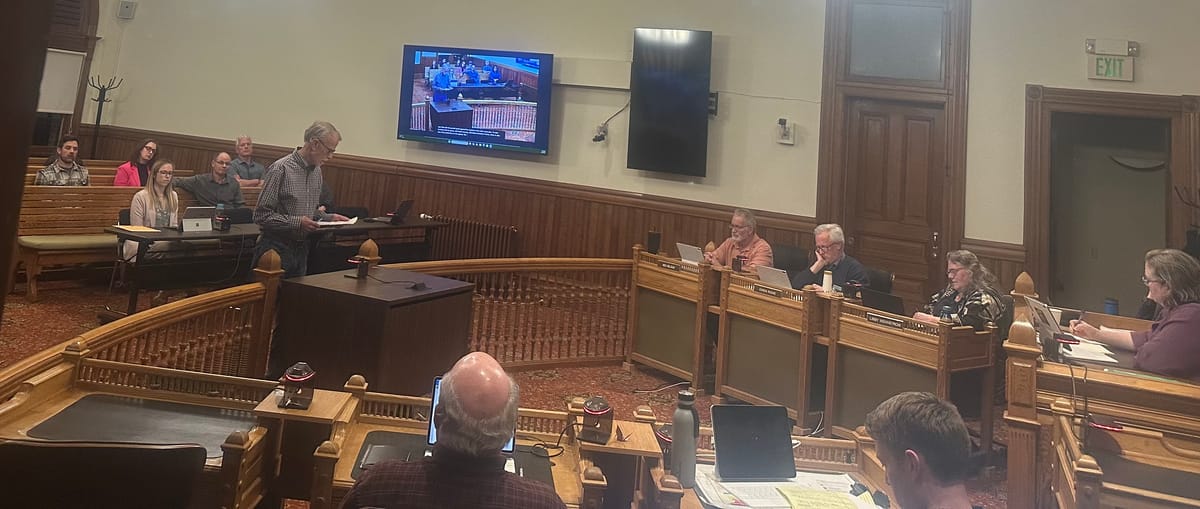
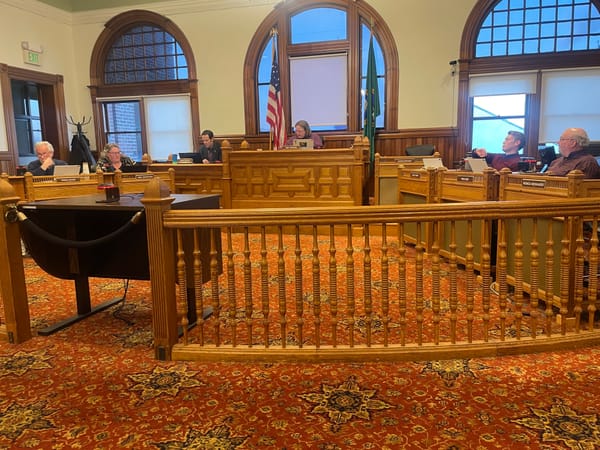
PORT TOWNSEND, WA— In a council meeting marked by tense deliberation and a clear desire to avoid years of litigation, the Port Townsend City Council voted on Monday to reject the settlement offer presented by Affordable Hometown Port Townsend (AHPT) on April 6. Instead, the council authorized the city manager to present a formal counteroffer, signaling a willingness to collaborate but refusing to halt the city’s 2025 Comprehensive Plan over what they termed a “non-starter” proposal.
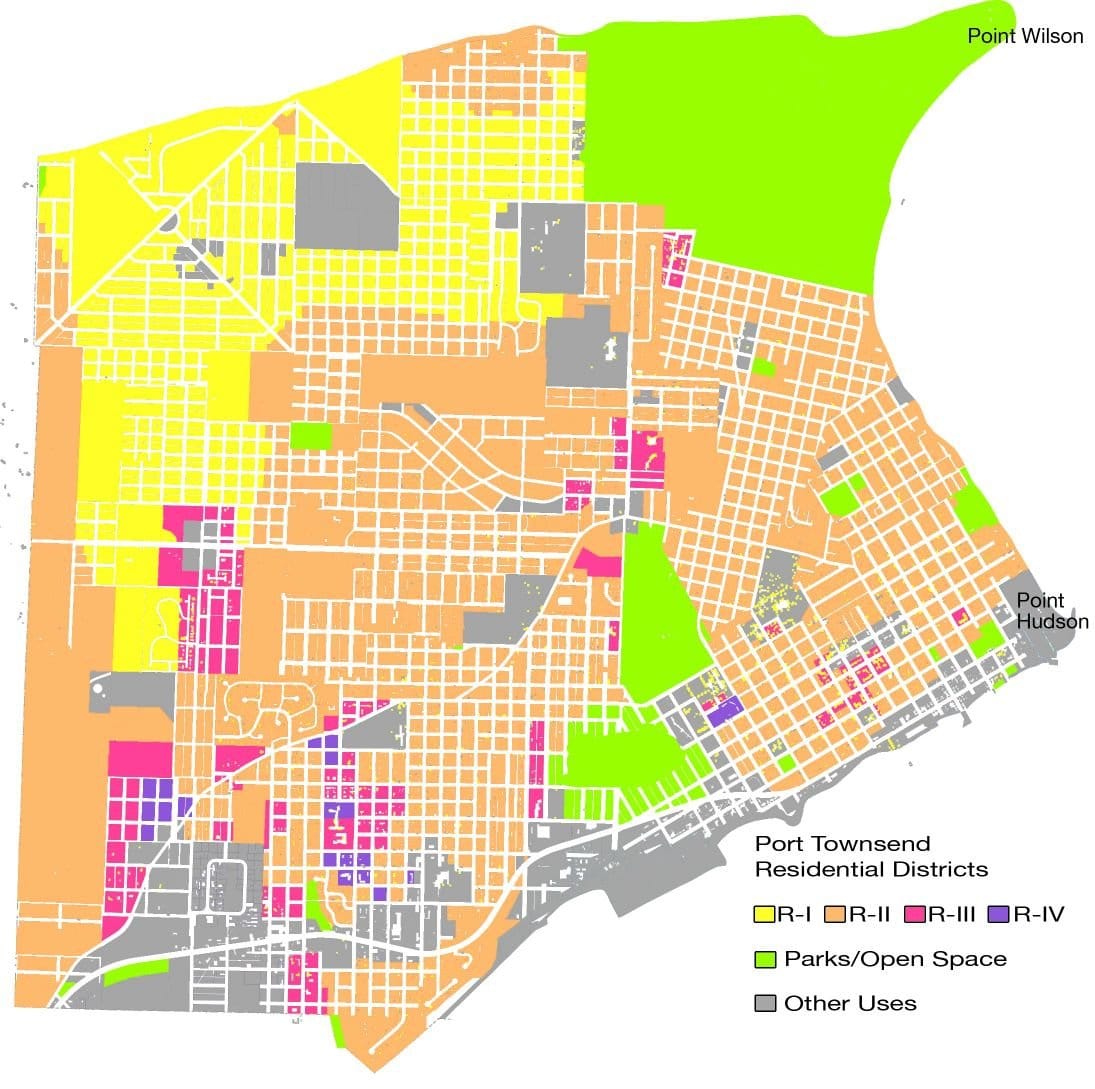
The dispute centers on AHPT’s appeal to the Washington State Growth Management Hearings Board regarding the City’s recently adopted 2025 Comprehensive Plan. The group argues the plan’s late-stage “upzone,” which expanded density into R-II zoning, was rushed and lacks enforceable guarantees for low- and moderate-income housing.
Following a staff presentation and a public comment period, which Mayor Amy Howard noted was "a judicial process" not legally required to include public input, council members heard testimony from residents.
Public Weighs In
John Watts, speaking on behalf of AHPT, read from the group’s settlement letter, emphasizing a spirit of collaboration. “AHPT supports greater density,” Watts said, “but combined with guarantees that some new units will, in fact, be affordable for middle and lower incomes… designed in a way that respects the character of existing neighborhoods.”
Resident Jaisri Lingappa offered a stark legal warning, citing an August 2025 ruling against Mercer Island. “The Growth Management Hearings Board is serious about holding cities to account for how they enable housing for each relevant income group,” she said. She accused Port Townsend of adopting a plan that makes the "same mistakes" as Mercer Island. Judy Krebs added that the settlement is a “conversation starter,” urging the council to enter a dialogue rather than proceed to a costly board hearing.
Council Deliberations
During council discussion, the primary tension became immediately clear: AHPT’s request for a full Environmental Impact Statement (EIS) would paralyze progress for up to three years.
Council Member Libby Wennstrom was the first to voice sharp skepticism. “The settlement says ‘quick resolution,’ but a full EIS process is 18 to 24 months minimum,” she said. “You are looking at 24 to 36 months before moving forward.” She also noted that the appeal challenges elements not even present in the plan.
Council Member Neil Nelson focused on efficiency, calling the appeal a “waste of staff resources.” Council Member Owen Rowe added a procedural caution, noting that AHPT’s offer sought a “stay” in the appeal rather than a withdrawal. “That litigation would remain over our heads,” Rowe warned.
Council Member David Faber provided a direct legal rebuttal to public comments regarding the Mercer Island ruling. “Mercer Island did the minimal possible zoning capacity. We did the exact opposite, 180 degrees,” Faber said. He warned that accepting AHPT’s inclusionary zoning demand without a market analysis would actually make housing more expensive. “It will make construction unfeasible for small-scale projects,” he argued.
Neighboring Comp Plans
Faber's reference to the Mercer Island case was pointed. In August 2025, the Growth Management Hearings Board ruled in Futurewise v. Mercer Island that the Eastside city had violated HB 1220 by lumping lower-income households into a single category and constraining growth to a small area. The Board ordered Mercer Island to complete extensive revisions by July 2026 or face sanctions.
“Aggregation concealed the reality that most of the land capacity the City identified as available to all low to moderate income segments will only be available for the moderate income segment at best,” The GMA Board noted during Mercer Island’s appeal process.
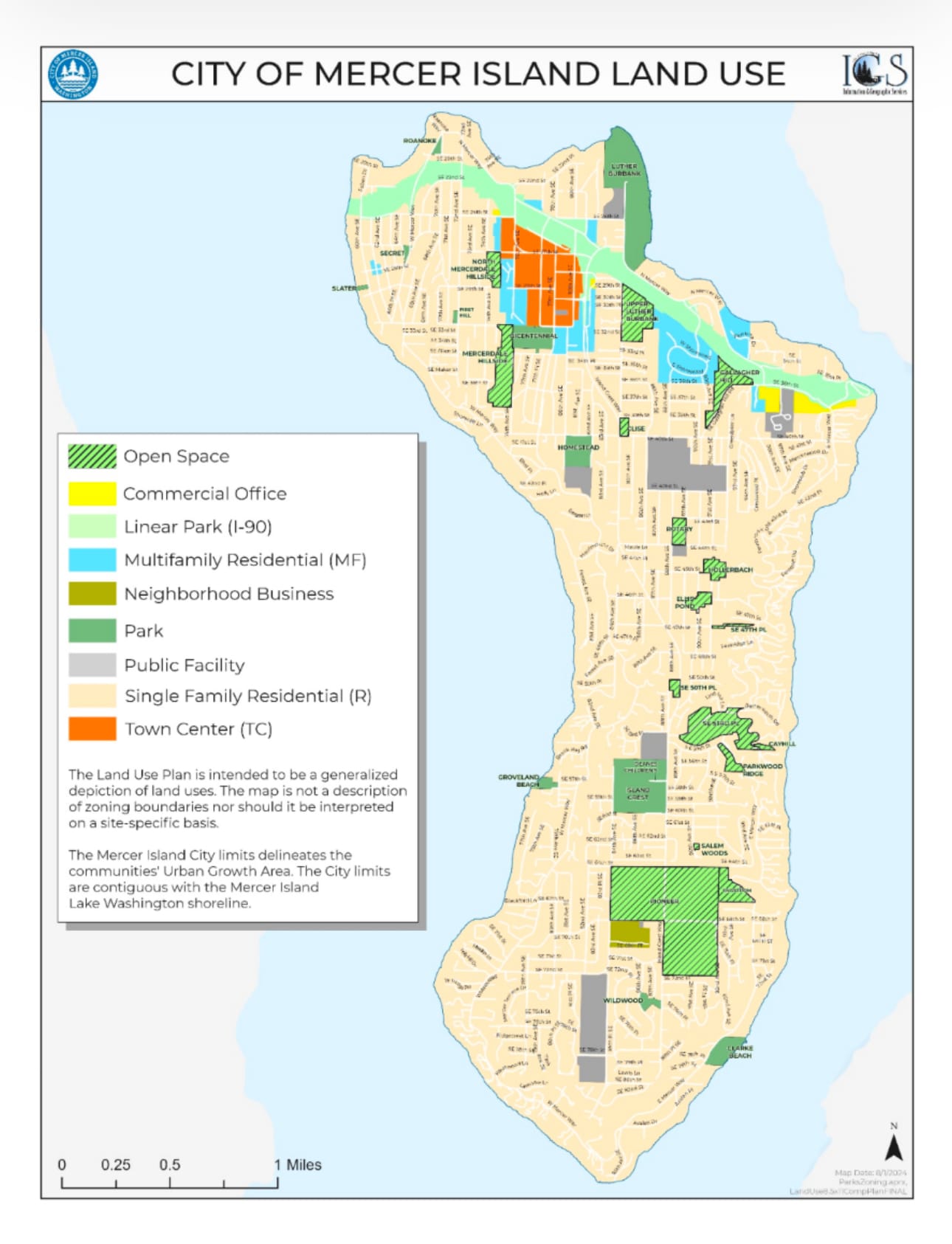
Alternatively, Port Townsend’s comprehensive plan greatly expanded multifamily housing possibilities throughout the city in R-II zoning.
Meanwhile, on our side of the Puget Sound, Bainbridge Island is learning the cost of delay. Already over ten months late on its own comp plan update, their city has been warned by a consultant that it is "behind the curve" and must take "bold" action. If Bainbridge reaches 24 months overdue, it risks losing a $720,000 state grant for aquifer recharge. It could face a "builder's remedy" that strips it of the ability to deny affordable housing projects.
The Racial Disparity Claim and Historical Irony
One of AHPT's central arguments in their appeal is that the City "failed to properly assess the racially disparate impact of past and future City housing policies," claiming that the Council's free-market approach could exacerbate existing inequities. It is a serious charge—one rooted in Washington's 2021 HB 1220, which requires cities to analyze and address racially disparate housing outcomes.
But the historical record cuts in an unexpected direction. For much of the 20th century, zoning was weaponized as a tool of segregation. From Portland, Oregon, to Richmond, Virginia, local governments used single-family zoning explicitly to keep Black families out of white neighborhoods. Restrictive covenants, minimum lot sizes, and outright racial zoning ordinances created the very patterns of exclusion that HB 1220 now seeks to dismantle.
Port Townsend is not immune to this history. Like most American cities, it has favored detached single-family homes while making multifamily housing difficult to build. The very upzone that AHPT seeks to pause, allowing sixplexes on lots, is the opposite of that exclusionary tradition. It is a deliberate step toward dismantling the zoning barriers that once locked lower-income and minority households out of entire neighborhoods.
The Current Outcome
The present council members unanimously voted to authorize the city manager to propose a counteroffer.
The counteroffer includes three specific commitments: a revision to the city’s land capacity analysis, including potential income banding; an inclusionary zoning study tailored specifically to the Port Townsend market; and a landlord-tenant protection study focusing on anti-displacement measures.
Crucially, the motion commits to keeping the process open, with “significant community involvement on the work of affordable housing instead of a closed-record judicial process,” Council member Faber said.
City Manager John Mauro stated in the press release the following day: "It's irrefutable that we are experiencing a housing crisis. There is no time to waste, and any delay to the City's 2026 work plan will keep us from working together on making progress on solving our housing crisis."
If the appeal continues to a hearing at the Growth Management Hearings Board, a final decision and order is expected on August 19, 2026. Throughout this process, the Comprehensive Plan remains in effect and is presumed valid.
Mayor Howard closed the topic Monday evening by reminding the public that if the case goes to the Growth Management Hearings Board, the public will lose visibility entirely. “That process is not public,” she said. “The conversation you just had tonight disappears.”