Community Water Access Proposal for New Kiosk Sparks Debate in Quilcene

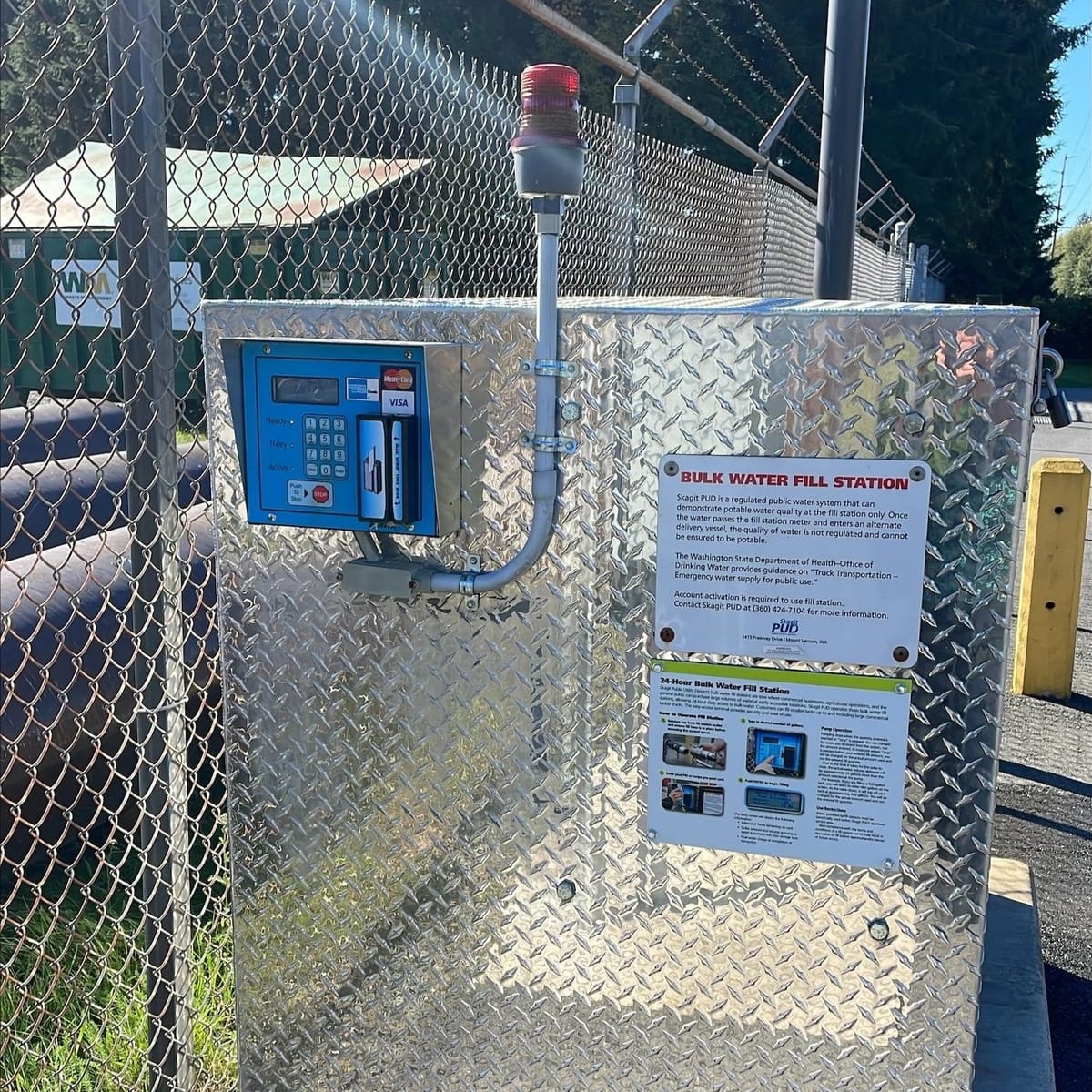
[caption id align="alignnone" width="1448"]
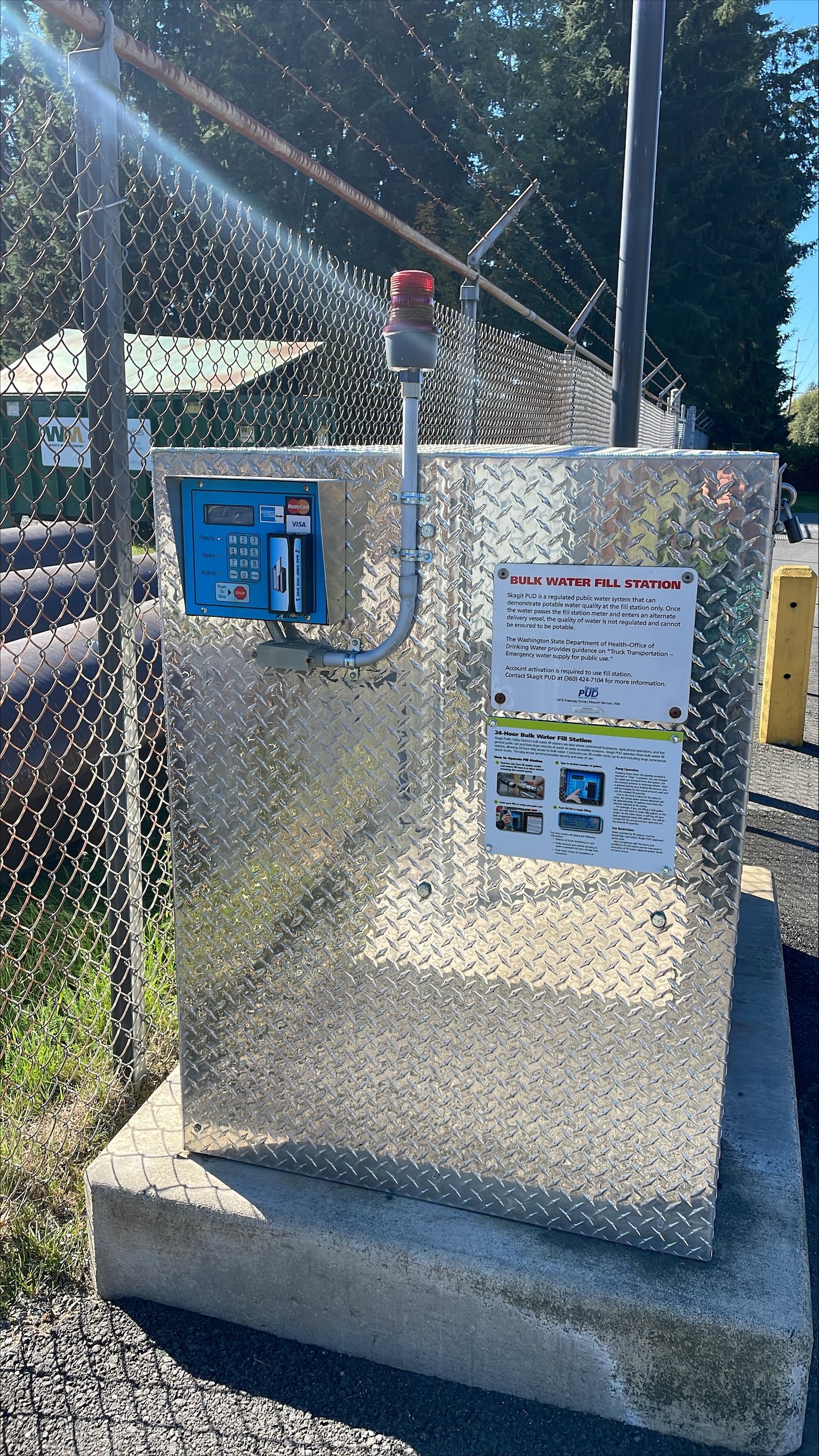
The proposed kiosk will possibly be modeled on this one that Skagit County installed. Photo Courtesy of Skagit County PUD [/caption]
News by Angela Downs
Water has always been a primary concern for our human needs, and with our rapidly changing times, we are in need of great consideration and conversation around this precious resource. Those living in the Quilcene watershed know this better than anyone as they witness drastic changes on the frontline of drought.
The Quilcene Campground water spigot broke in August. There was 200 ft of underground piping that was overdue for repair, and a spigot overhaul was needed. The repairs were completed in September and cost approximately $16,000.
While the campground spigot was in need of general maintenance, it had also been sustaining many years of heavy use by residents for drinking, cleaning, and gardening. With the spigot down, people were unable to meet their basic needs, and the county had to declare a need for access to municipal water.
The Department of Ecology has restricted surface water access in the area, and local people who have been using the campground spigot have reported that their raincatch systems are at all-time lows, with wells that are completely empty, salty, and contain sulfur as well as heavy sediment. They often haul 50-60 gallons of water a week, putting wear and tear on their trucks, dirt roads, and time allotments.
The county is designed to provide essential services, but it is not a public water provider. Their proposed solution has come from the Public Utility District (PUD), which is offering to build and monitor a public water kiosk near the Quilcene Community Center. The PUD is a community-owned, not-for-profit agency, formed by a locally elected board of commissioners. They provide electricity, water, internet, and sewer to local residents and businesses.
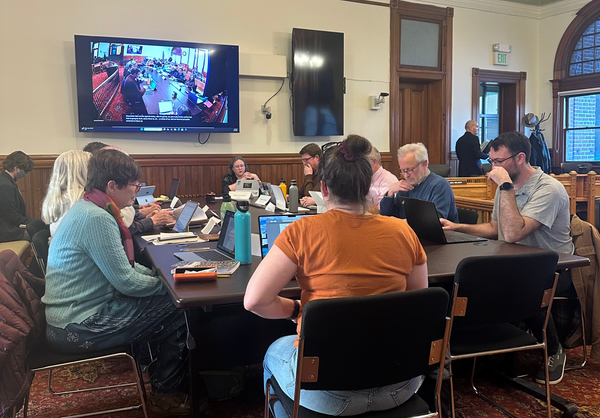
At the October 3 Public Infrastructure Fund (PIF) Special Meeting, Jose Escalera, the PUD Water Superintendent, presented the board and citizens with a proposal for the new kiosk. The proposal was for a filling station serving residential, recreational, and construction use, with anticipated use by logging operations.
Escalera used the Skagit PUD Minkler Roadsite kiosk as an example of the technology they intend to install. It would have a two-inch cam lock fitting, along with a three-quarter-inch fitting, similar to a regular hose fitting. The proposal is to place it near the Community Center, on Roberts Street, across from the church.
A motion was made at the PIF meeting to recommend a $180,000 grant from the county to the PUD for the filling station and system. This was based on the estimated $150,000 proposal with a 20% contingency.
Citizen comments raised concerns about the system being exclusionary for people without credit cards, fragile when the internet and the power go out and transactional rather than human-centered.
Guy Dobbins, a Quilcene resident and advocate for water access, said, “Last year, the campground paid $3,000 for water use by the public. This solution would cost $100,000 to $200,000. At that rate, this investment would take 33 to 66 years to recoup its costs. Why are we so committed to the idea of charging people for water that we’re willing to lose public money for decades in order to do that?”
“I know that we need a short-term solution to the water situation in Quilcene. I know that it's not good, but we really need some time and a chance to be collaborating more closely on this really, really intense issue,” said Ariel Page, a Quilcene resident with a background in sustainability and climate action.
Dan Toepper, Commissioner for Jefferson, PUD Number One, District Number Three, stated that if there are funds to subsidize residential water usage, they would be willing to include subsidy payment methods in the design. Escalera also confirmed the inclusion of backup, possibly solar, power sources in the next proposal.
Kevin Tate, the Skagit PUD Communications Lead, hasn’t received any pushback on the payment system they installed on their kiosk. “The prepaid card system has worked well because it's available 24/7,” Tate said. “We built three fill stations to serve property owners whose wells run dry and contractors needing water in bulk.” Tate also said that Skagit County was able to get state drought mitigation matching funds to help with construction costs.
Next steps include finalizing the design, engineering permitting, equipment, purchase, site, work and installation. The next opportunity to share input and see the water kiosk plans will be at the next PUD public meeting this month. They have not yet set a date, so please check their website for updates.
Editor’s note: Guy Dobbins is a contributer to the Jefferson County Beacon