Could the History of EMTs Point to Solutions for Today’s Insurance Crisis?
Levy-funded programs like Medic One save lives while training the country’s top EMTs, all without exorbitant fees for users.

News by Blanchard Alice
JEFFERSON COUNTY, WA - It was 1969, and as the United States celebrated landing a man on the moon, Seattle was beginning a quieter race that would also go down in history. There, a cardiologist and a fire chief teamed up to launch a pioneering effort that reshaped emergency medical care and set the stage for the modern EMS system we rely on today.
Before 1970, prehospital emergency medical care did not exist as we know it. Funeral homes or police were typically responsible for transporting the injured and ill to hospitals, but without trained responders and only limited first-aid supplies, many patients died on the scene or en route.
Additionally, those who experienced emergencies outside of cities were much more likely to die, and with the post-WW2 migration of city dwellers into suburbia, Americans were further away from hospitals than ever.
That distance created a stark contrast to the Vietnam War, where soldiers who suffered severe wounds in combat often survived longer than civilians back home who faced similar injuries. Immediate medical care in the field turned injuries that were once a death sentence into traumas that were treatable and survivable.
The solution, and the first group of emergency responders to train beyond basic first-aid, was the Freedom House Ambulance Service in Pittsburgh. These ambulances served the predominantly Black "Hill District" of Pittsburgh, and in addition to being the first of its kind in the country, the service was staffed entirely by Black paramedics.
In their first year of operation, they responded to almost 5800 callers and were credited with saving 200 lives.
Medic One: a potential solution to multiple problems
Following the example of Freedom House, a group of Seattle physicians partnered with the Seattle Fire Department, whose crews were already seasoned in rapid-response emergencies.
A class of 15 fire department personnel entered the inaugural paramedic training program, and on March 7, 1970, they became the first fire department paramedics in Washington and one of only a few teams in the country.
From the 70s on, Medic One has been a model for other systems internationally and has attracted top-tier paramedics, including many Jefferson County responders, due to its reputation for rigorous, physician-led training. A 60 Minutes piece covering the early days of the program described Seattle as "the best place in the world to have a heart attack."
Jefferson County residents have benefited greatly from proximity to this world-class training program, its research, and the implementation of advanced life-saving techniques and technologies.
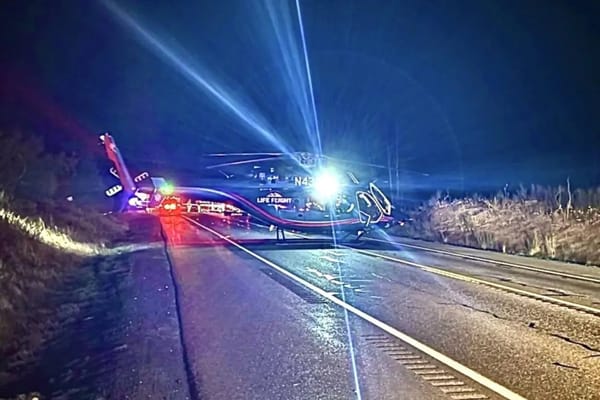
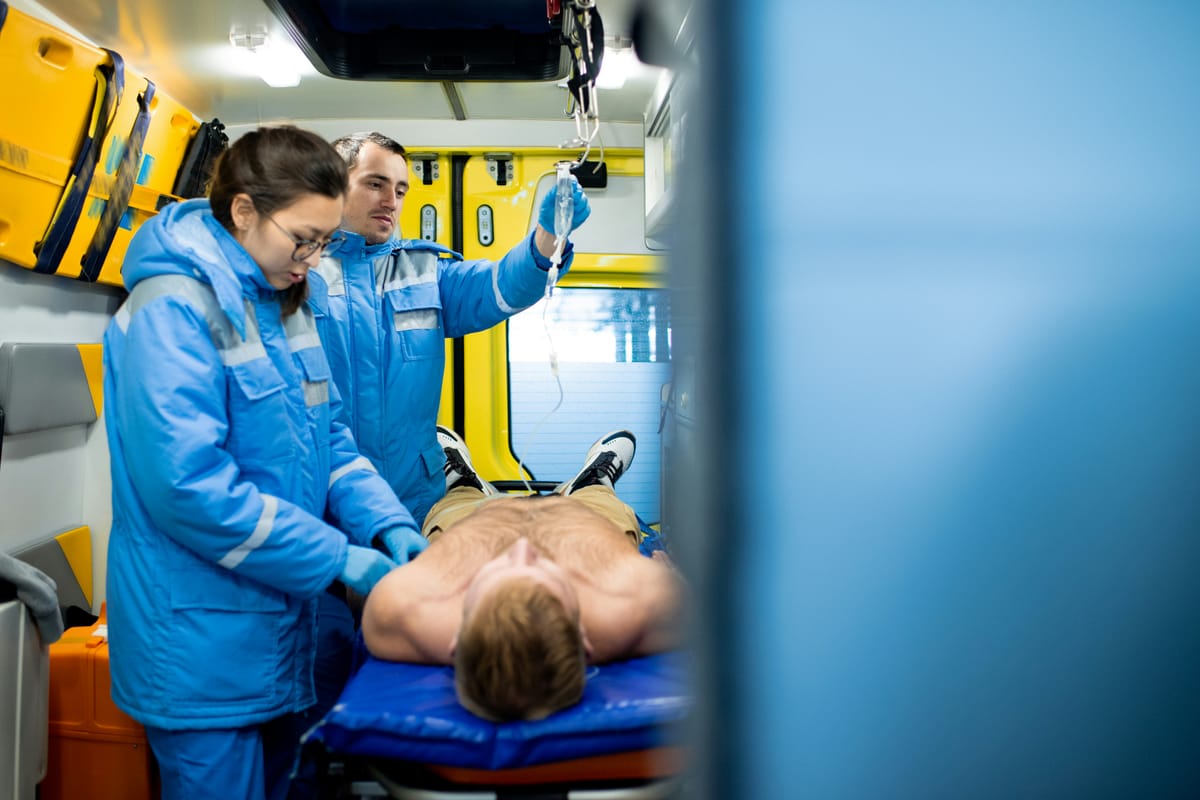
Medic One paramedics are trained to treat patients in the field the same way an emergency room physician responds in a hospital, meaning that for rural areas without a level 1 trauma center, paramedics who have been trained by Medic One might have received more training in emergency procedures than doctors.
"Whatever you do, don't call the ambulance"
Though we may be in one of the best places in the country to receive emergency medical care, many people are more concerned about the financial consequences of calling an ambulance than the mortal consequences of refusing care. With the expiration of the enhanced premium tax credits, millions of Americans are now struggling or unable to pay for insurance or emergencies, which they were able to afford last year.
On January 8, the House voted to extend ACA insurance subsidies 230-196, but it is unclear if it will have the support needed to pass in the Senate, or if Trump will sign a bill he opposes.
The administration's lack of a response to what many feel is an insurance crisis calls into question what states and counties could do to patch together partial solutions.
EMS by levy on the ballot
Much like how Seattle Medic One operates, over 80% of local Fire and EMS services are funded by a levy on property taxes.
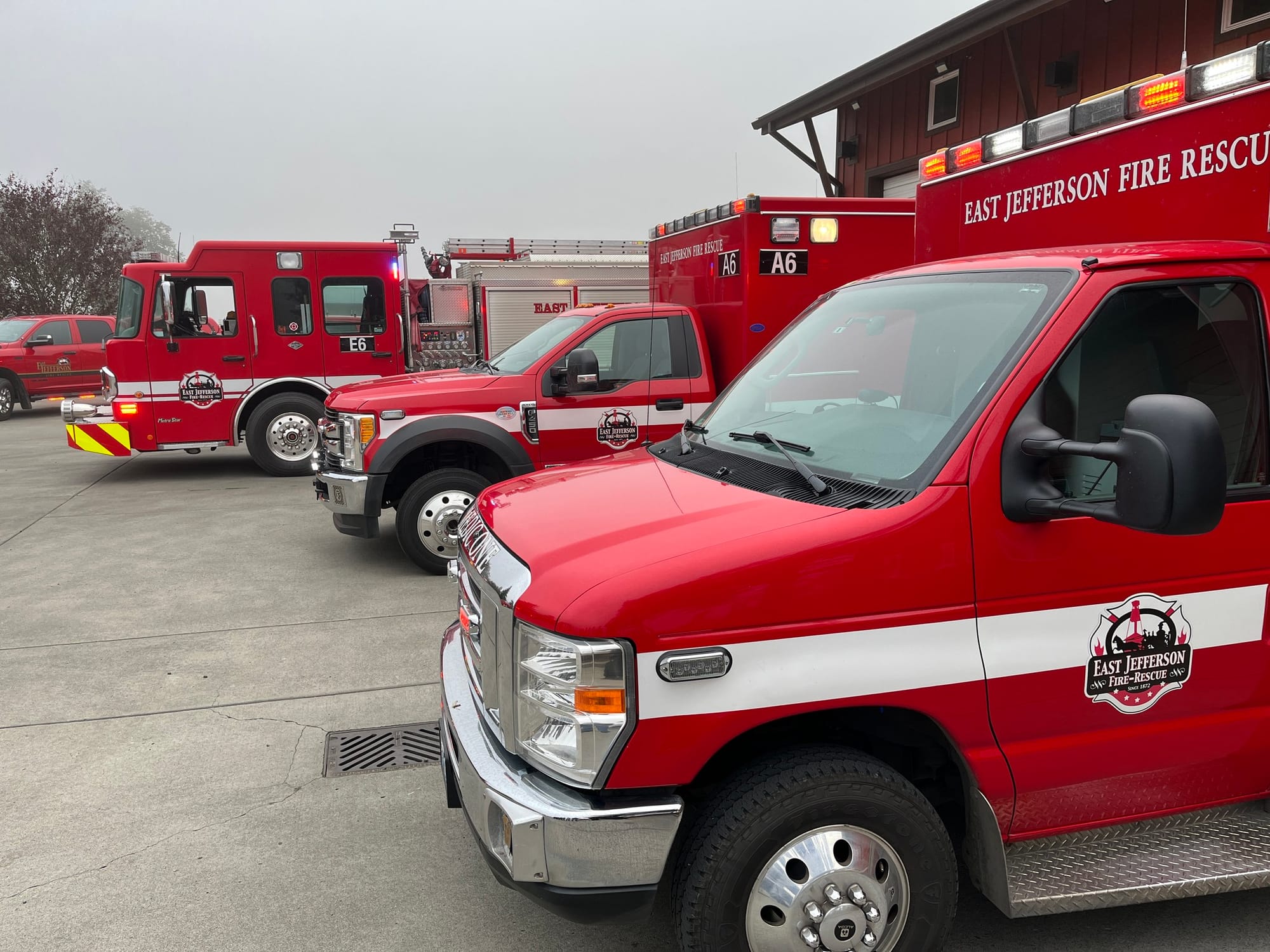
East Jefferson Fire Rescue (EJFR) is supporting measures on the February 10 ballot to raise the EMS levy cap and allow tax revenue to keep up with inflation and rising costs. Proposition 1 and Proposition 2, if passed, would restore the fire and EMS levies to $1.40 and $0.50 per $1000 of property valuation, respectively, and homes assessed at a value of $600,000 would see their annual tax increase by about $150 if both initiatives are approved.
It is unclear if the levy model could be expanded upon to cover more emergency services for Jefferson County residents, or what legislation would be needed to pay for a system similar to what we are familiar with for fire services.
Compared to the increase in healthcare costs many Americans are facing with insurance premiums, this is a much more affordable strategy for funding emergency medical services. Anyone who has taken a private ambulance is familiar with the notable difference in billing for the same services as those funded by a levy.
Unfortunately, which ambulance you end up in will determine your financial fate. Private ambulances tend to cover interfacility transportation, so even the short trip from the helipad of a hospital over to the emergency department can be costly. In contrast, many levy-funded ambulance services tend to be more affordable and practice soft-billing, where the provider accepts insurance payment as full settlement and writes off patient balances, and is unlikely to send the patient to a collection agency.
EJFR argues that without these levy changes, we are in an unsustainable situation, and with federal grants also running out, just as many are losing their health insurance, local residents need other options.
Locals caring for locals
Caton White, the President of Local 2032 of the International Association of Fire Fighters, believes programs such as the Community Assistance Referral and Education Services (CARES) make resources such as EJFR more efficient while helping the most vulnerable members of our community.
CARES fills in for a wide variety of needs that would otherwise tie up community resources or fall through the cracks. It recognizes that innocuous situations can turn into a pattern of emergencies when people are ill-equipped and looks to find more permanent solutions for community members whose lack of access to medical referrals, prescription coordination, food/housing support, counseling, medical equipment, and installation services causes them to be repeat callers.
"You name it, they just go and solve problems for people, and they fill in all of these gaps that we didn't even know existed between us and the hospital or us and the doctors' clinics," White said about CARES, "This program is one of the most impactful things that we have done in my time." CARES is almost entirely grant funded, White explained, but "this year is the first fiscal year where we're having to pull money out of our general budget to fund it because we're running out of grants."
While Americans have no current federal solutions to the health insurance crisis, and in Olympia, politicians are still exploring universal healthcare options like the Washington Health Trust, a local patchwork of programs, and the emergency responders who staff them are among the only safety nets remaining. "This is a free service, nobody is getting billed for any of this", White says about CARES.
Alongside tax-funded EMS and grant-funded programs like CARES, recent legislation SB 5480 which passed in July of last year, aims to limit the level of harm that can be done to vulnerable populations by banning collection agencies and providers from reporting medical debt to credit agencies, meaning your credit score can't be harmed by medical debt in the state of Washington.
The many unknowns will be a challenge for locals struggling to make a healthcare plan this year, but, regardless of circumstance, all residents can rely on highly trained paramedics arriving quickly in an emergency, simply in response to the 911 call for help. To borrow the vision statement of Medic One, "No one dies from a treatable medical emergency."