County Nearing Adoption of Regulations on Short-Term Rentals


[caption id align="alignnone" width="2500"]

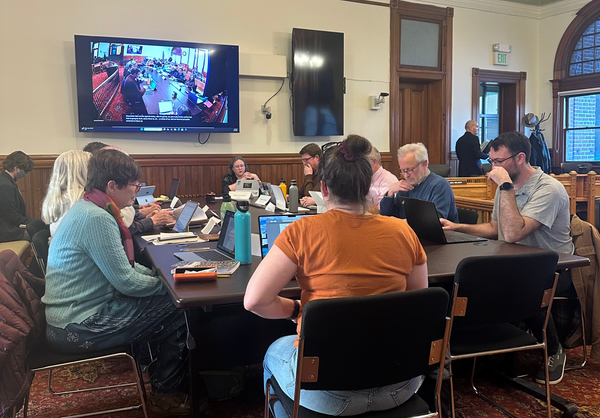
The public hearing before the BoCC is anticipated for 3/17/2025, 10:30 AM. Photo by Nhatt Nichols [/caption]
News by Scott France
Regulations on Short-Term Rentals (STRs) in Jefferson County have moved closer to adoption as the County attempts to find solutions to solve a severe shortage of affordable housing, reduce nuisance issues and maintain neighborhood stability.
“Communities that limit short-term rental housing see costs decrease,” said Cynthia Koan, a member of the Jefferson County Planning Committee.
Liz Revord, Director of Housing Solutions Network, said she is dismayed to see how many people who don't live here own short-term rentals in Jefferson County. “Many of these individuals don’t live in our community and aren’t invested in our community, unless you count the private investment, they profit off of in our community,” she said
[caption id align="alignnone" width="768"]

Liz Revord, Director of Housing Solutions Network. Photo courtesy of HSN. [/caption]
Residents and government officials in Port Townsend and Jefferson County regard local housing affordability as a crisis. In 2024, the County ranked as the second-least affordable county in Washington State, with rental vacancy rates between 0% and 1%.
As of the fourth quarter of 2024, the rental vacancy rate in the Puget Sound region had a vacancy rate of 5.1%, while the national rate in the United States stood at 6.9%, according to the U.S. Census Bureau.
Following a year of multiple public meetings and workshops, the Jefferson County Planning Commission voted at its public hearing on March 19 to send its final recommendations for restrictions on most STRs to the Board of County Commissioners. County staff will present these recommendations to the Board on March 3 at the Board’s regular meeting. The Board will hear public testimony on March 17, and then, on March 24, deliberate and take possible actions toward enacting new regulations.
The County is likely to adopt new regulations before the one-year moratorium on new STRs expires on April 7, according to Planning Commissioner Koan. Leading the list of recommendations is that the number of permitted STRs be capped at 4% of housing units. The cap could grow with the number of housing units created in the county. It is the first step in regulating and will be implemented by ZIP Code, allowing for a more even disbursement of STRs throughout the county. Two master-planned communities in the County - one in Port Ludlow and one in Brinnon -will not be included in this number and will not be subject to the regulations because they are legally classified as resorts.
The STR owner or operator must reside in Jefferson County and must be in the county during all active rentals. This was deemed necessary due to neighbors stating that when there is a nuisance or issue at a short-term rental, there are often vacant donors, and no way to address issues immediately.
All structures that were STR-permitted before the moratorium will be grandfathered in and will not have to abide by new regulations.
Finally, STRs will be inspected annually, and new permits will be valid for three years for those who do not have an owner/operator on site. The term limits will allow more people to try their hands at STRs, providing more of an equitable approach. This prevents a first-come, only served concept and will allow for more variety. If the STR is also located at a primary residence, then there are no time limits associated with the permit.
Enforcement of these regulations will fall to platforms like AirBnb and Vrbo, where STR operators list their properties. Every listing must have a permit, and the platforms must register with the county. “Nobody thinks this will completely solve this complex problem,” Koan said. “Commercial enterprises coming into residential neighborhoods raise the cost of housing, whether it is short-term rental or a bar or speakeasy in the home. Communities that limit short-term rental housing see costs decrease.”
The number of short-term rentals in Jefferson County led to a big pool of comments submitted to the County about nuisances that short-term renters brought to these neighborhoods, such as loud parties, parking and traffic congestion, and inappropriate driving and other behaviors. Such activity affects neighbors and other STR owners who ensure that their guests do not engage in such behaviors.
The regulations that the county eventually adopts will not apply to Port Townsend, which has its own regulations and short-term rentals.
To learn more about this, visit the county’s Short-Term Rental Page.