Court Congestion and Driving With Suspended Licenses
The Beacon is beginning our new Criminal Justice beat, where we will be breaking down aspects of the system along with reporting on the news.

News by Angela Downs
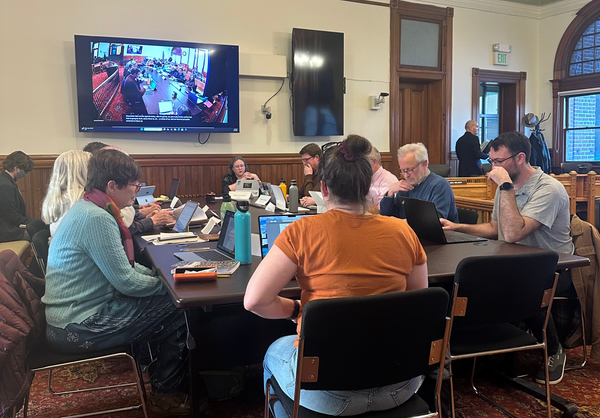
PORT TOWNSEND, WA — On January 21, Judge Mindy Walker presided over a District Court docket stacked with the usual cases of driving with suspended licenses, DUIs or negligent driving, and rescheduling cases while keeping them within speedy trial limitations.
Rural Jefferson County has very few cases of traffic fatalities, though the infractions that can lead to fatalities happen by impairment, speeding and distraction. According to the Washington Traffic Safety Commission, over half of fatal crashes involve drug or alcohol impairment, and deadly distracted driving is rising.
On January 21, a case charged twice for driving with a suspended license, resolved as an infraction with a fee reduction from $500 to $150, and the second dismissed. The outcome was based on the suspensions happening so many years prior and the evidence that the accused was indeed working to get their license. They left visibly relieved.
Most suspended licenses are enforced after failure to pay traffic tickets, court fines or related surcharges. These are considered third degree misdemeanors and can be punishable by up to 90 days in jail and/or a $1,000 fine. Licences are also suspended from accumulating too many traffic violation points, driving while not eligible or already having your license restrained, failure to appear in court or driving without insurance. A second degree gross misdemeanor can be punishable by up to a year in jail and/or a $5,000 fine. Driving under the influence (DUI/DWI) and habitual offenses will be 1st degree gross misdemeanors and mandate jail time.
Many of our institutions and systems are struggling with the burden of maintenance and updates, high caseloads, and understaffing. Routine court delays frequently result in cases dragging on for months or years. And in that time, people living with the stress of awaiting their sentencing can suffer tremendously.
We reported on a Speedy Trial case last year that highlighted the need for clarity on a complex and nuanced system. The case was complicated, the Judge ended with a statement to ask the Court of Appeals opinion on how to calculate these time discrepancies. But we learned that Speedy trials can be used as a tactic by both the prosecution and the defense.
The flexibility of rescheduling is essential for due process. Speedy trial laws are primarily to support the accused, protect them from the impact of waiting, and to limit the risks to evidence over time, impairing the accused's defense. But both the defense and the prosecution may be tempted to use these delays to increase the likelihood evidence is lost. A speedy trial violation by the prosecution results in a case dismissal. A strategy based system like this is open to leveraging constitutional rights and statutory deadlines. The risks of delaying too far are very high for both sides, but delays are most likely the system buckling.
This flexibility is freedom. On January 21, the defense pushed the status hearing for a case to the end of March. They need more time for their expert to get back to them. Having all the information available to present is a part of a fair trial. We will be attending to see what the expert brings to the table.