Court Rules in Favor of DNR in Last Crocker Timber Sale, Legacy Forest Defense Coalition Considers Appeal

[caption id align="alignnone" width="716"]
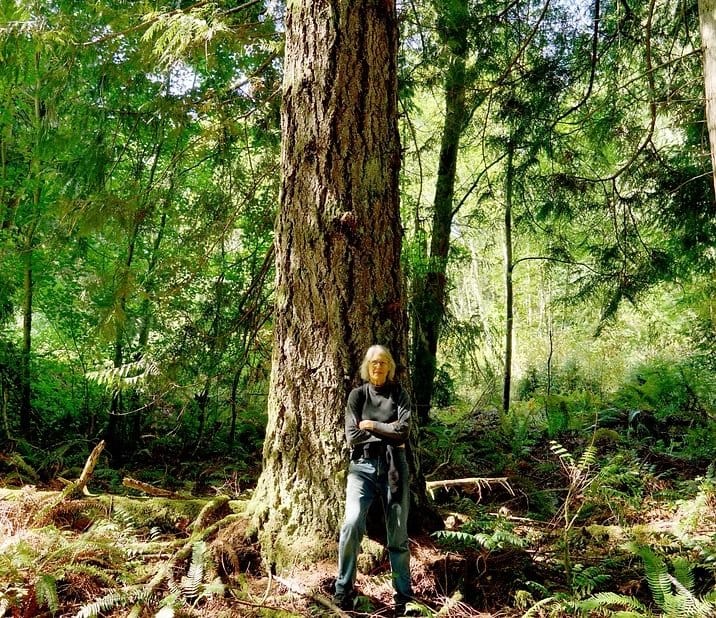
Image of Last Crocker forest courtesy of The Legacy Forest Defense Coalition website [/caption]
News by Angela Downs
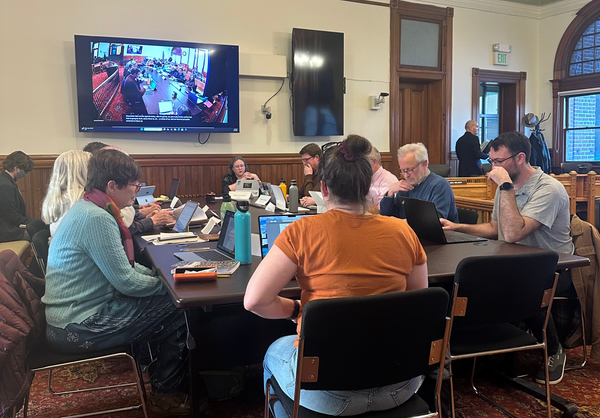
The “Last Crocker Timber Sale”, Legacy Forest Defense Coalition of Washington vs. The Department of Natural Resources (DNR) came before the court for the third time on Wednesday, April 7, to decide if there would be a ruling to approve or deny the timber harvest of 75 acres of potential old-growth trees. The original lawsuit was filed on December 7, 2023.
Legacy Forest Defense Coalition is maintaining parallel cases in multiple counties, such as Grays Harbor and Thurston Counties. The Jefferson County case was the furthest along in its course to resolution.
Legacy Forest Defense Coalition is a 501(c)(3) nonprofit working to protect the last 106,000 acres of unprotected Legacy Forests in WA, and hold DNR accountable for their 1997 commitment to restore old growth forests across 10-15% of state forestlands in Western Washington.
In December 2006, DNR published the Policy for Sustainable Forests, reading, “It has created a vision for forested state trust lands that will lead to healthier, more biologically diverse and structurally complex habitat—all this while enhancing the revenue-producing capabilities of these forests in support of public schools, universities, local hospital and library districts and other trust beneficiaries.” POLICY FOR SUSTAINABLE FORESTS
Superior Court Judge Brendon Mack stated that he prepared by reading through the two previous hearings, submitted remarks, and some of the ten-thousand-page document. He asked many clarifying questions to decipher if there was erroneous intent.
Policy for Sustainable Forests requires state trust lands to include 10%-15% “Old Growth Targets” in their landscape assessments, and that “DNR must periodically adjust acreages designated for inclusion in the sustained yield management program and calculate a sustainable harvest level” (Sustainable Harvest Calculation | WA - DNR)
Planning for ecosystem resilience with the next 70 years in mind, DNR must make decisions about which zones are most likely to become old growth. It is always uncertain if a forest will make it to the old growth stages, and in some cases, zones with younger trees are more likely to succeed, but this is hard to anticipate.
The goals of the State Environmental Policy Act (SEPA) include extending old growth and limiting isolated stands. Though preserving forests closer to old growth is often the right choice, some stands are surrounded by federally harvested land. The Last Crocker stand is an isolated stand of more mature trees.
Legacy Forest Defense Coalition argued DNR did not provide the required Forest Land Plan for the Last Crocker lot, and simply chose already protected zones to meet the strategically complex stands percentage requirements.
They stated to the court that Last Crocker is not protected but is strategically complex. Legacy included that DNR provided insufficient maps and gave no evidence why the chosen young stands were more likely to succeed.
The Legacy Forest Defense Coalition stated that DNR submitted no identification or strategy around selection, and they are only 1/8 of where they are meant to be in fulfilling their commitments.
DNR agreed they did not provide the Forest Land Plan, a more detailed management plan, but did provide a landscape assessment, stating that they do not have the resources or budget to provide a more detailed plan, and that SEPA makes allowances in planning assessments for organizations that lack resources.
“Mandated harvests on a sustainable basis are the only productive use of the land and provide necessary public revenue”, the defense stated.
DNR also conceded they have not submitted evidence as to why the younger stands are more likely to succeed into old growth than the older Last Crocker stand.
Questions of perspective and trust are relevant in holding agencies accountable for their relationship to land and revenue. Twenty years ago, the protection plan could not account for uncertain times of rapid change and the difficulty of weighing revenue.
It is common for agencies to win in court when there is no clear determination. DNR sufficiently convinced the court that they are on their path of commitment and will do what they plan over time. The Judge ruled in favor of DNR for the older sale of Last Crocker, but has paused future sales.
Peter Goldman, with the Legacy Forest Defense Coalition for this case, said it is possible they will appeal and call for negotiations. “It is difficult to convince the court to disagree with government entities,” Goldman said.
The Judge ruled to trust DNR’s discretion, but Legacy Forest Defense Coalition remains concerned that these are archaic policies written before a deeper understanding of climate change, and the public is unable to hold DNR accountable.
“DNR is speculating that with time, they will grow what we need in 50 years. But the Judge did not recognize compensation for what is lost now,” Goldman concluded.
Michael Kelly, the Communications Director with DNR said, “We’re pleased the court ruled for DNR and are awaiting the written order to be entered into the record. DNR is on track to meet its habitat goals under the Policy for Sustainable Forestry (PSF). At Commissioner Upthegrove’s direction, DNR is developing tools that will give us better data on the older, structurally complex forests on DNR’s land, which will inform our policies with an eye toward meeting the goals of the PSF even faster.”