Dove House Faces Federal Grant Funding Challenges

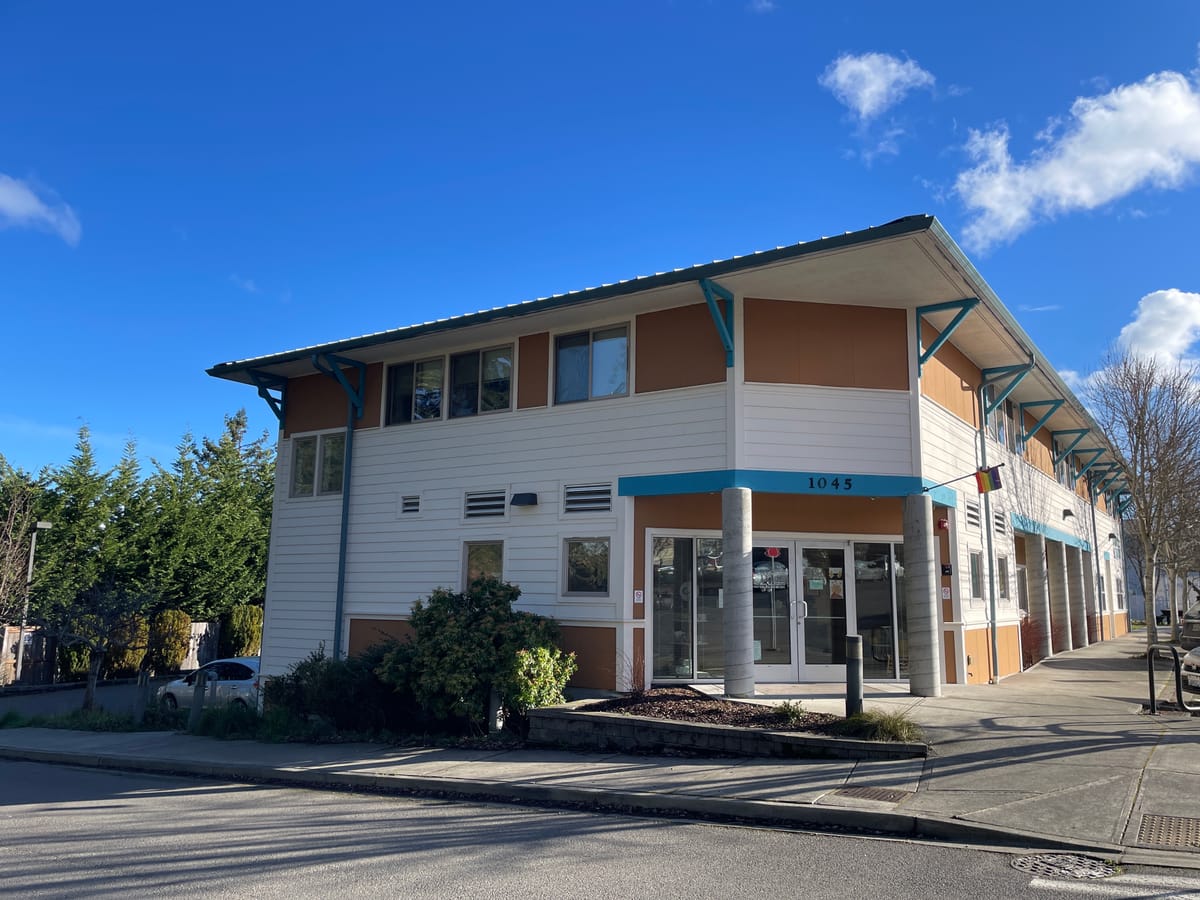
News by Angela Downs
The only Crime Victim Service Center in Jefferson County, WA, Dove House Advocacy Services, is facing funding loss from grant changes and lack of criminal fee collections.
Dove House provides shelter and trauma informed services for victims of domestic violence, sexual assault, and other types of crime. They also run Dove House Recovery Cafe, a place of connection for housing, education, employment, and social and health services.
Federal funding disappears
Beulah Kingsolver, the Executive Director of Dove House, is concerned over 2025 cuts to their funding and their ability to continue to support victims. “We have three sources of income [grants, foundations and then our community donors]. We do a couple fundraisers a year, but not a lot. Grants took a huge hit this year,” Kingsolver said in an interview with the Beacon in October, 2025, “We took about a $200,000 hit on July 1, 2025, with the funding cuts that were coming down.”
They also haven't had basic funding increases for years. “What that means is, as needs go up and costs go up, our funding has stayed the same,” Kingsolver said before asking, “How do you do the same services with less money?”
The complications continue as new rules for grants are applied, some rules are so specific that Kingsolver has not seen anything like it in her 20 years of victim services work.
Many of these new rules place Dove House out of grant eligibility. One grant required they agree that domestic violence and sexual assault is only a legal issue and not a social issue.
“That is strange. How would I agree to that? It's not true,” Kingsolver said.
Changes like these are coming down from the federal administration. One requires Dove House to work with ICE even though their status as a confidential service means they can’t work with ICE or the police without client consent.
Other new grant rules include only identifying people according to their gender at birth, which according to Kingsolver, is against Dove Houses values. “We haven't applied for these grants because we would not be able to do it truthfully,” said Kingsolver.
Many of the grants Dove House usually applies for each year couldn’t be found on the federal government's webpages, so they didn’t apply for any federal funding in 2025.
Victim assessment fees also down
Another major source of income for Dove House came from crime victim assessment fees. These fees are applied to convicted criminals and pooled at the national level. They are then given to states to distribute to victim service centers like Dove House. A 2023 change in mandatory fees to discretionary has impacted crime victim services across America in a big way.
The primary funding source for the federal Victims of Crime Act (VOCA) are these fees and assessments. Funds dropped from nearly $75 million in 2018 to approximately $17.8 million by 2024, with an anticipated 51.1% decrease for 2026.
In an attempt to reduce the burden of fees on criminals without financial means, Washington state legislation passed HB 1169 in 2023. The bill made crime victim penalty assessments discretionary. Courts are now prohibited from imposing the $500 felony/gross misdemeanor or $250 misdemeanor penalty assessment if the defendant is found to be unable to pay.
These fees would have otherwise gone to providing financial relief for victims with medical bills, mental health counseling, funeral costs, and lost wages.
There have been several bills introduced to make up for these funding losses. Approaching the issue from different angles, some bills create completely new avenues and others aim to increase the fees.
Washington HB 2457 focuses on emergency housing for domestic violence survivors. Its goal is for the Department of Commerce to establish a grant program to acquire or renovate housing units to use as emergency housing for individuals who are at risk from intimate partner violence.
“Among women who are unhoused, between 22 and 57 percent report that domestic violence was the immediate cause of their homelessness,” the bill reads. It is currently in committee for detailed review and analysis before moving to the floor.
Washington HB 2430, is also in committee, and proposes to increase the penalty assessment from $500 to $1,000 for felony or gross misdemeanor convictions, and from $250 to $500 for misdemeanor convictions. The court would order the defendant to provide to the court proof of any and all forms of income prior to the sentencing hearing. If the court finds that the defendant possesses substantial financial resources, they would be required to pay the increased crime victim penalty assessment.
When the assessments became discretionary in 2023, the state of Washington promised to create new funding sources. Prosecuting Attorney James Kennedy said that his office hasn't seen any proposed alternatives that don’t put an unattainable financial burden on criminals, many of whom are also victims of trauma and living in poverty.
In the meantime, the federal government introduced the Crime Victims Fund Stabilization Act of 2025 (H.R. 909) into the House in February, 2025. The bill requires civil monetary penalties collected from settlements and judgments in cases involving fraud and false claims against the federal government to be deposited into the Crime Victims Fund through 2029. H.R. 909 has been received in the Senate, read twice, and referred to the Committee on the Judiciary. The bill has passed the House and it remains to be seen if it passes the Senate.