Early efforts hope to better evaluate local homelessness

By Derek Firenze
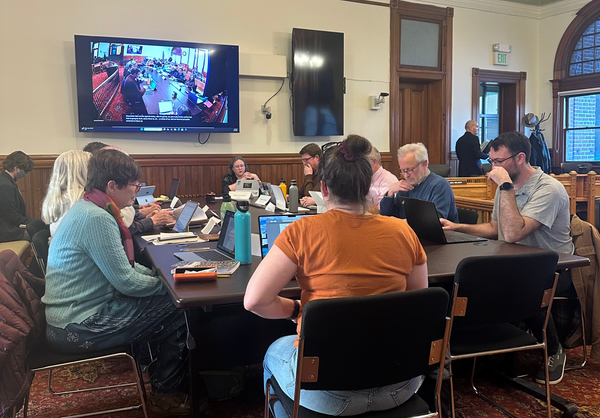
As temperatures begin to bottom out, the annual Point in Time count of the local homeless population is a top priority. Viola Ware, director of Housing and Community Development for the Olympic Community Action Program, better known as OlyCAP, has already been spearheading this year’s Point in Time count for months.
“I know that in Jefferson County, one of the concerns is making sure to take a very comprehensive picture,” Ware said.
Ware has taken part in the count in other cities in Washington since 2012. She now brings that wealth of experience here for her first count in Jefferson County. She’s already ahead of the game too as she began reaching out to the local network of housing providers and service organizations in November before the Department of Commerce had even begun providing guidance.
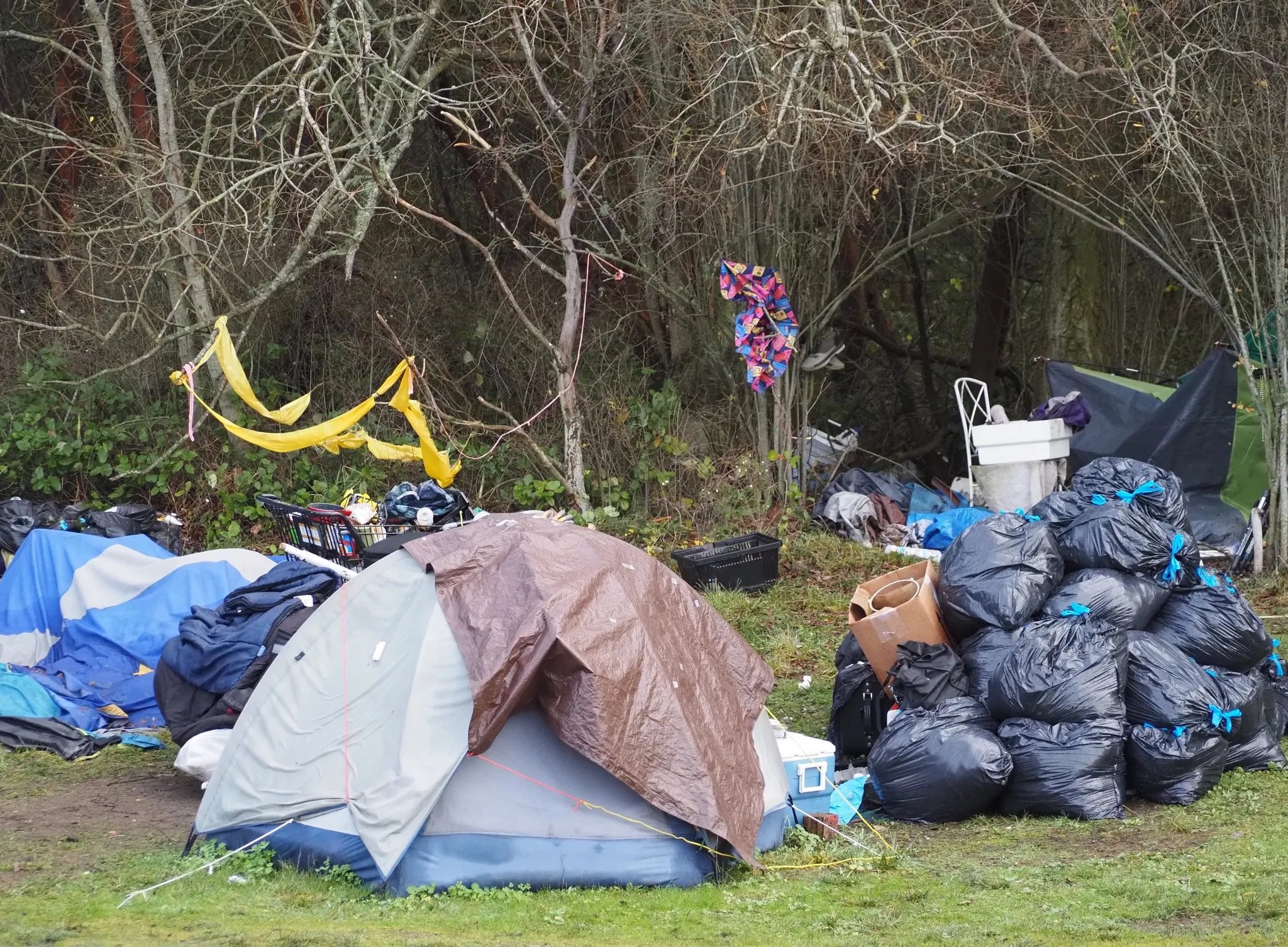
Communities that receive federal funding for homelessness are required to conduct an annual count of people experiencing homelessness on a single night. Because of the spread-out nature of rural living, however, Jefferson County allows a week to find out where people slept on January 30.
This year, Ware’s team includes people from Bayside Housing & Services, Dove House, Discovery Behavioral Health, Jefferson County Immigrant Rights Advocates, the LEAD Team, and more.
“We already have commitments from the Brinnon and Quilcene Fire Departments to consider hosting magnet events,” Ware said. Magnet events are stationary locations where people experiencing homelessness can come and be counted and receive services.
“Here in our lobby, we’ll have coats and maybe snacks; somebody can have a pot of chili that they’d like to serve people or lots of giveaways,” Ware said, describing the scene soon to come at OlyCAP’s Port Townsend office. “Just a place to come and get warm and see a friendly face and participate and the count but also maybe receive some services while you’re there too.”
There’s a good reason they wait until the worst weather to count, too.
“It’s so cold on that night that anybody who has a place to go utilizes it,” Ware said, noting that those couch surfing or staying in a shelter are not counted. “The people that are outside are the people that truly don’t have any other option,” she added.
To ensure as many people as possible are counted, Ware is gathering additional volunteers to help staff the various outreach and magnet events.
“Any volunteer is welcome to participate as little or as much and in any way that they are comfortable,” Ware said. “If somebody’s new, we have training. We have experienced people that will mentor them.”
“The data that’s collected from the Point in Time count is used to determine the amount of funding that comes to our area. It can also be leveraged as information as we apply for grants.”
— Viola Ware, director of Housing and Community Development for the Olympic Community Action Program
“If somebody wants to participate but doesn’t have the time, they can donate,” she added. “We can always use things we can give people as incentives or items to provide for our magnetic events like sleeping bags, warm jackets, socks, hand warmers.”
Volunteer engagement for this event has far-reaching consequences. The more people counting, the more people get counted, and funding for service providers like OlyCAP and Bayside is tied directly to those numbers.
“The data that’s collected from the Point in Time count is used to determine the amount of funding that comes to our area,” Ware said. “It can also be leveraged as information as we apply for grants.”
With Washington State facing a budget deficit that Gov. Jay Inslee estimates between $10 to $12 billion, funding calculations are even more crucial. But Ware insists it’s also important to approach it with consistency instead of a radical change.
“Part of my efforts here in this department is to shore up the data,” she said. While she made clear that when it comes to volunteers, it’s “the more the merrier,” her hope is not to fluctuate from year to year.
“If we do the same thing every year, hopefully we get the same amount of volunteers or similar and can stick to the methodology we set this year,” Ware said.
For the last four years, the numbers have fluctuated slightly but stayed around 130 or so with 132 persons counted as homeless in 2024. Before the pandemic, however, numbers changed dramatically. In 2019, there were 102 people counted in Jefferson County, but in 2018 there were only 59. Yet in 2017, 187 people were included in the count.
Ware hopes the decrease from 2017 to today shows that despite the ups and downs, the numbers indicate that more people are in housing. Ware pointed to one project in particular as an explanation.
“We had 7th Haven and threw 43 households into housing,” she explained. Of course, one apartment building doesn’t solve the housing crisis.
“The housing market is really troubling and the wait lists, or the wait times, or the times people stay in shelters have grown,” Ware said. “Back in 2012 shelter stays used to be 30 to 45 days, and then they extended it to 90 days, and now there is no deadline in most cases for people that are having to stay in shelters because there’s no places for them to go to.”
She added that the Caswell-Brown Village, the encampment on Mill Road which OlyCAP operates, only has one vacancy at the moment. She added that there are currently around 200 names on the organization's active cases list of those waiting for housing. That number varies from the Point in Time numbers as it includes folks who are staying in shelters hoping to find something permanent.
“We don’t necessarily exit people from that list while the Point in Time count is a one-day capture,” Ware said.
Those interested in volunteering to help capture the most complete picture of homelessness in Jefferson County can email Ware and her team at jeffcopit@olycap.org.