February 2, City Council Meeting: Preparing for Change and Not Repeating History

City Council news by Angela Downs
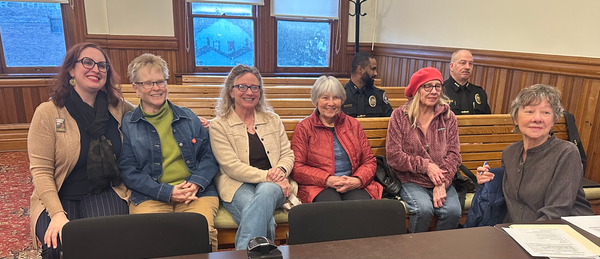
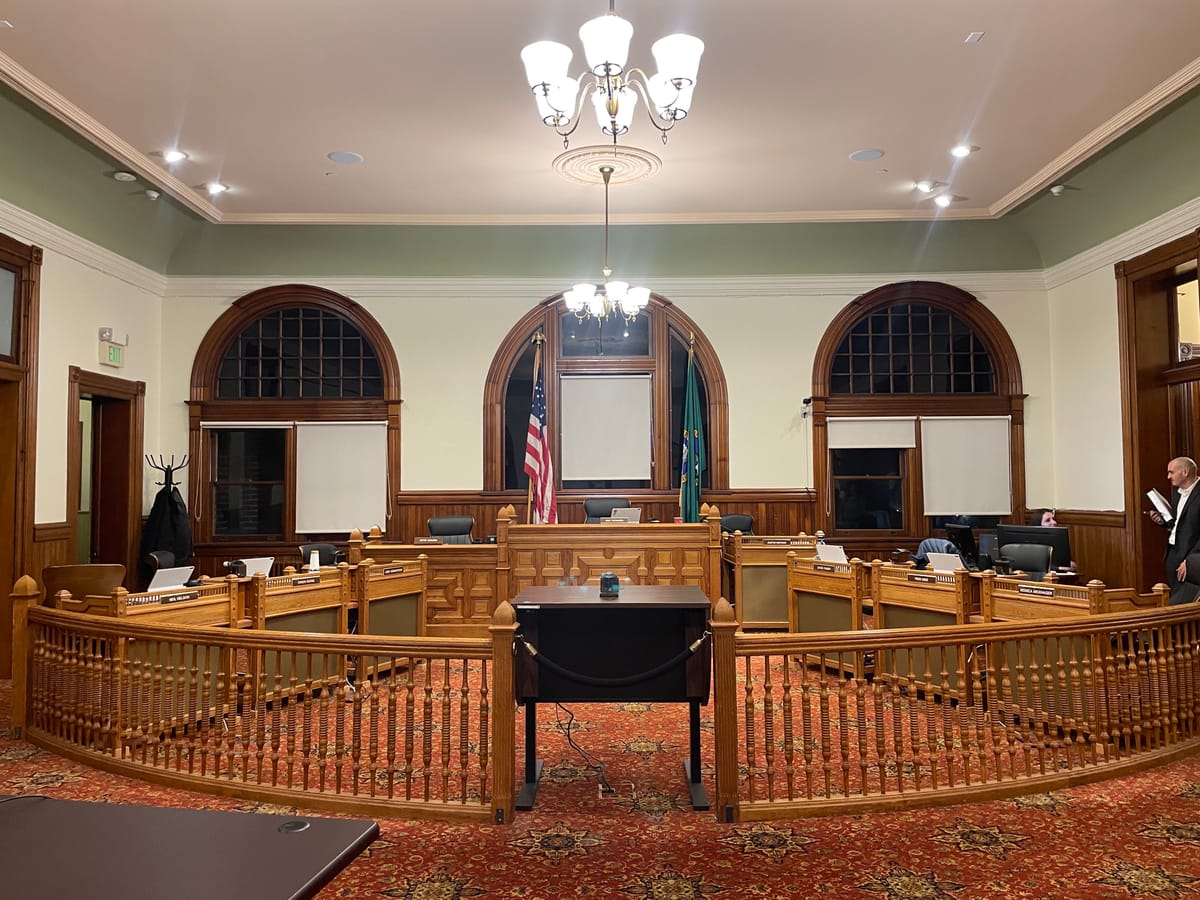
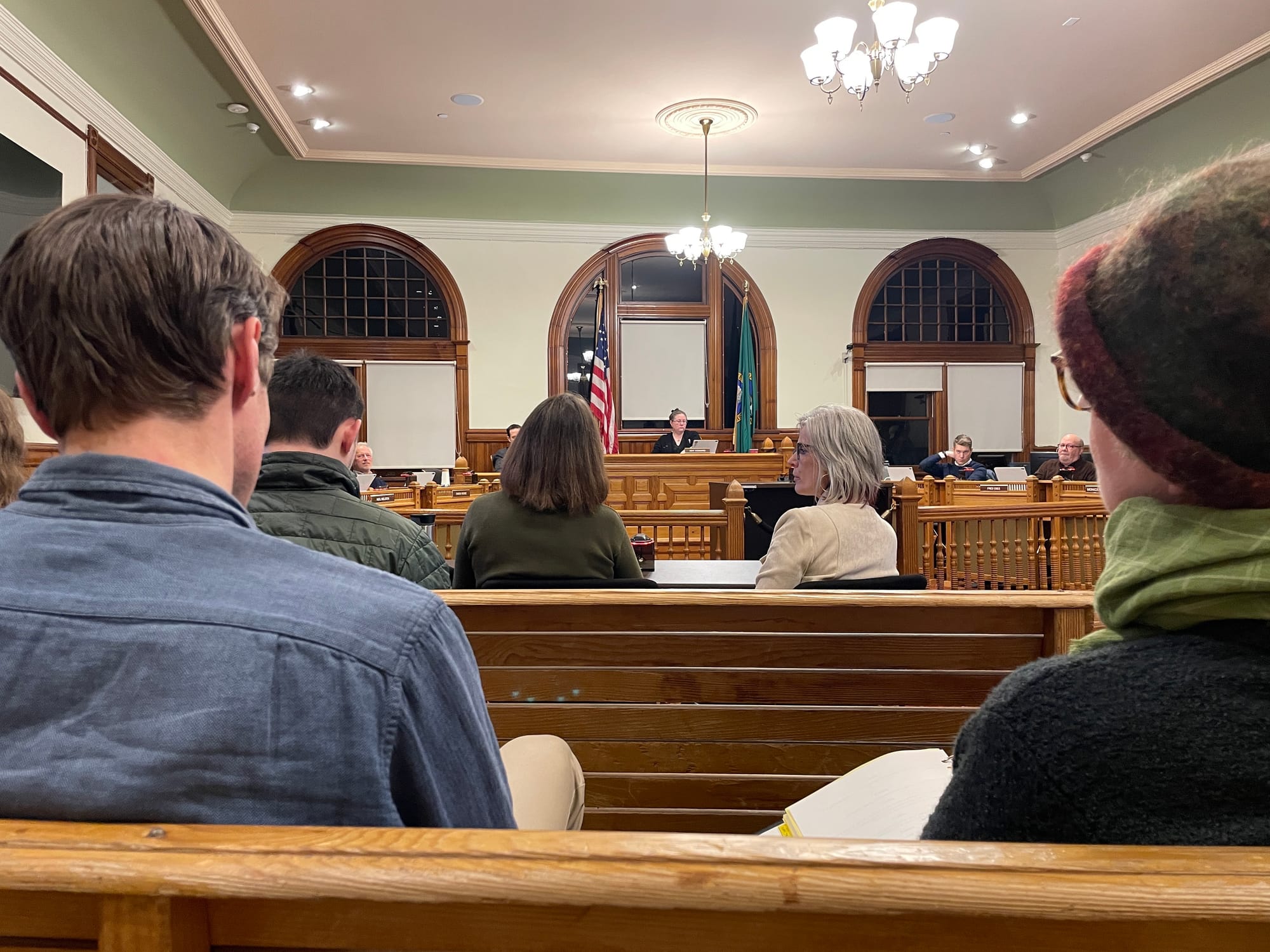
PORT TOWNSEND, WA — On February 2, the Port Townsend City Council held a meeting with two Executive Sessions, closed portions of public meetings to discuss confidential matters; one for current or potential litigations, and the second for the performance of public employees. In the open part of the meeting they had a Climate Action Committee brief and a landmark tree designation.
Cindy Jayne and Heather Dudley-Nollette represented the Climate Action Committee and opened the meeting with a briefing which highlighted the importance of including the people who do climate work in setting goals and determining how to accomplish those goals. They also emphasized the importance of the city and county cross-referencing their separate climate action plans, and including all relevant parties and systems to parse goals, agreements, and timelines.
City Manager John Mauro, announced the city received a 3 million dollar state grant and a low interest loan for sewer separation and street restoration, though more money is still needed for these projects. The city has also received 1.5 million dollars for waste water. There is also $349,000 from the Department of Natural Resources for an ecological restoration initiative for Sather and Bishop Parks for invasive plant removals and vegetation planting.
In public comments, John Watts asked city staff to clarify zoning changes and ordinances in their ongoing duty to make sure people have access to changes. City planner Emma Bolin clarified that the public can apply for a code interpretation if needed. Kellen Lynch encouraged council to look into commerce climate resilience funding for things like batteries and large scale solar. He suggested city council meet with Jeff Randall, the PUD commissioner, to discuss the changes for the Bonneville Power Administration, changing strategies and priorities to serve the Southwest of the country to meet AI data center demand, and to consider the end of our 16 year contract with them in 2028.
City staff and council members consulted with native people from the S’Klallam and Chimacum tribes for their perspectives on applying for a landmark designation for a tree that was used to execute native peoples. The tree is in the Camas Prairie golf park. Naomi Krienke, of the Chimacum and Quinalt, suggested a plaque in her native language to read “I see you, the spirit of my Chimacum ancestors.” Rosalee Walz, also Chimacum said, “It really isn’t so long ago. My grandfather’s time. A dark, thick time for Chemakum people, it is a part of our history.”
While council members stated that their initial response to the suggestion of designating this tree as a landmark might be seen as celebrating what had happened instead of it being educational, they all agreed it is always a mistake to cover history and this is the beginning of effective community consultation.
A Water Sewer Fund Split was approved, which will prevent cross utility subsidising, eliminate manual tracking work, simplify rate studies, and prepare for bond issuances in July. This splitting of utilities accounts is only for the back of house accounting systems and customers will see no change.
Finally, $5,000 from the Council Discretionary Fund was granted to the Production Alliance for their Connectivity Summit. The summit is March 27-29 at Fort Worden and the Jefferson County Fairgrounds. It is a weekend for strengthening community networks. The event is free, and all are welcome.