Feral Feelings: The Power of Triangles


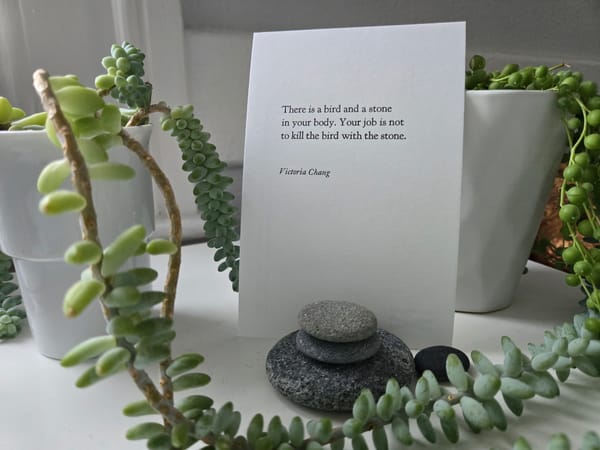
[caption id align="alignnone" width="1170"]

Image by Amber Autumn Leaves Huntsman [/caption]
Dear Feral Feelings,
How do I deal with my friend who won’t dump her boyfriend and end her shitty relationship? I’ve tried so hard to help her, and she says she isn’t happy, but she won’t end it. I’ve offered her a place to live, I’ve offered her money, I’ve logged dozens of hours as her “therapist” and tried to tell her what steps to take to leave and nothing. At this point, I’m just pissed when she comes to me with her complaints. I’m sick of listening to someone who won’t do anything to help herself.
-Fed Up
Dear Fed Up,
As I considered your question, I recalled points in my life where I’ve been every single person in this situation. I’ve been the frustrated friend, the stuck friend, and the partner the struck friend won’t leave. And I’ve seen people close to me occupy those roles interchangeably over time and experience. This, FU, is a triangle, and triangles are complicated. And powerful.
A triangle is a shape that represents perfection and stability. Throughout time, in all cultures, we see three-part processes and triptychs - the Holy Trinity, life-death-rebirth, mind-body-spirit, and the concept of beginning, middle, and end. The triangle is potent.
In relationships, triangles emerge everywhere. Mother, father, and child is an obvious example, but it’s not the only one. Some couples become throuples, friends group up in threes, and many other shades of three show up in the way people relate to each other. Some relationship triangles can enhance the health of a relationship, such as a therapist supporting a couple coming closer together. But other triangles can destroy relationships, which is sometimes exactly the point.
What you’re dealing with, FU, is a classic case of triangulation. In the example you’ve brought to me, every position in this triangle is difficult and painful.
It’s hard to feel like you can’t leave a partner, for any reason, and it’s hard to be the partner who may or may not know they’re going to be left. And, for the friend making that triangle shape with two people in a dissolving relationship, the role is fraught with the same stuckness the couple is experiencing. In fact, this is the primary function of triangulation - it detours the pain and anxiety of unaddressed issues through a third party to relieve tension between the two people in conflict. This kind of triangulation can also be a form of avoidance - instead of addressing the issue directly through action, your friend is passing on the emotional weight of her inaction.
It is very challenging to know what to do when you’ve been triangulated into a couple’s problems. Most of us, in an attempt to be a loving and supportive friend, listen and hold space when someone we love vents their relationship issues to us. Many of us, in an attempt to help our friend and/or relieve ourselves of our friend's complaints, guide them to fix the problem. Many times, our distressed friend states they want our help. And, over and over, we find that our distressed friend doesn’t, in fact, want to take the advice we offer.
What are we to do then? Say nothing? Or do we continue to offer advice they don’t take and become resentful? The latter, it seems, is where you’ve landed, FU. And it’s in this resentment that we are at risk for rupture and possible relationship loss with our friend. This kind of triangle is made to fall apart. It’s just a question of which edge is going to collapse first- your relationship with your friend or their relationship with their partner.
In my experience, a friend asking for advice in this way has rarely taken my advice. It’s said that advice is for the giver- offering solutions helps us ameliorate the anxiety of listening to problems. As a younger clinician, I offered a lot of guidance and found it ineffective at helping my clients change. What helped instead was standing out of the way, holding space, and letting them find their own solutions so they could take action when they were ready.
My advice, FU, is this: stop offering solutions to your friend. This might make listening to her stressful, which may mean you can’t listen to her as much. The hope here is that by taking yourself out of the triangle, she’ll confront the core issue with her partner. But that’s not a given- she may find other people with whom she can triangulate. Ultimately, that’s not your business, and neither are her relationships. We make other people’s problems our problems when we try to intervene. This isn’t your problem, FU, and you’re not her therapist. And, even if you were, offering a fix to her issues still wouldn’t work.
What we can do when our friends are stuck like this is love them. We can listen, we can hold them emotionally without offering advice. We can detach in a non-reactive way when we’ve had too much. We can communicate our boundaries around holding space for them, too. We can take our ruminating friend on a walk in the woods and form a healthy triangle with the forest. We can insert our own experiences into discussion and take the space we aren’t getting while our friend has taken up all the stage time with their problem.
There’s a lot we can do to love our friends and ourselves at the same time. The most important thing here is to check in with how you are feeling first and move from there. It’s on you, not your friend, to determine how much stress you can take in. And it’s on you, FU, to take yourself out of the triangle.
Amber Autumn Leaves Huntsman is a psychotherapist, poet, and Hedgewitch haunting our local beaches and estuaries.
Do you have a problem that you think Feral Feelings could answer? Send them to feralfeelings@jeffcobeacon.com