Food Bank Growers Cultivate Hope and Community Resilience Through Sustainable Gardening Initiatives

News by Angela Downs
Though there has been a 7% decrease in American farms between 2017-2022, there has also been a steady increase in sustainable and community gardening in America. While the decrease in farms is alarming for our food systems, Food Bank Growers (FBG) are part of the silver lining, donating 100% of the food they grow and glean to food banks, schools, senior centers, volunteers and more.
Port Townsend-based, they have gardens at every school in Port Townsend, offer all-age-friendly regenerative workshops, and are currently bolstering their Ecological Committee, a branch of FBG focused on nourishing the ties between social and ecological justice. Starting the new year, the organization set a new goal, “To keep growing food for our community, we must also plant hope for the future.”
[caption id align="alignnone" width="848"]
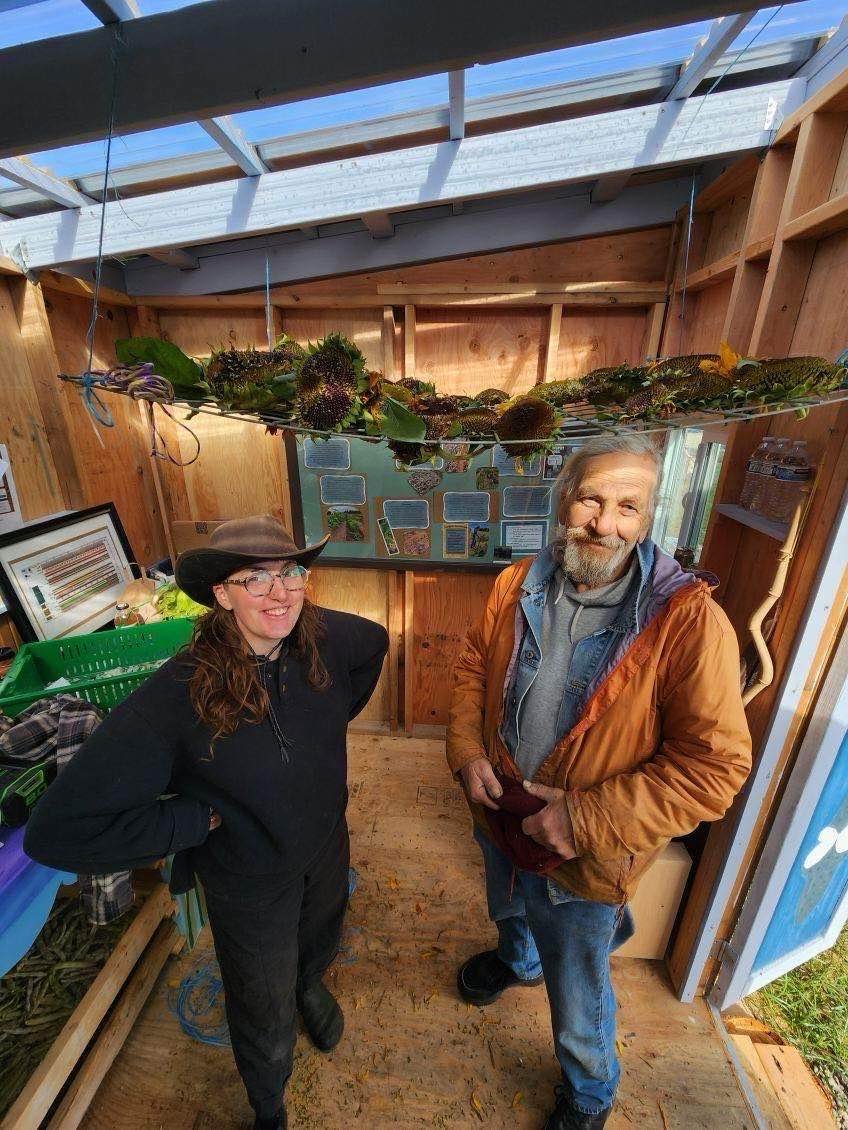
Gayle Petrick and Bear Belle. [/caption]
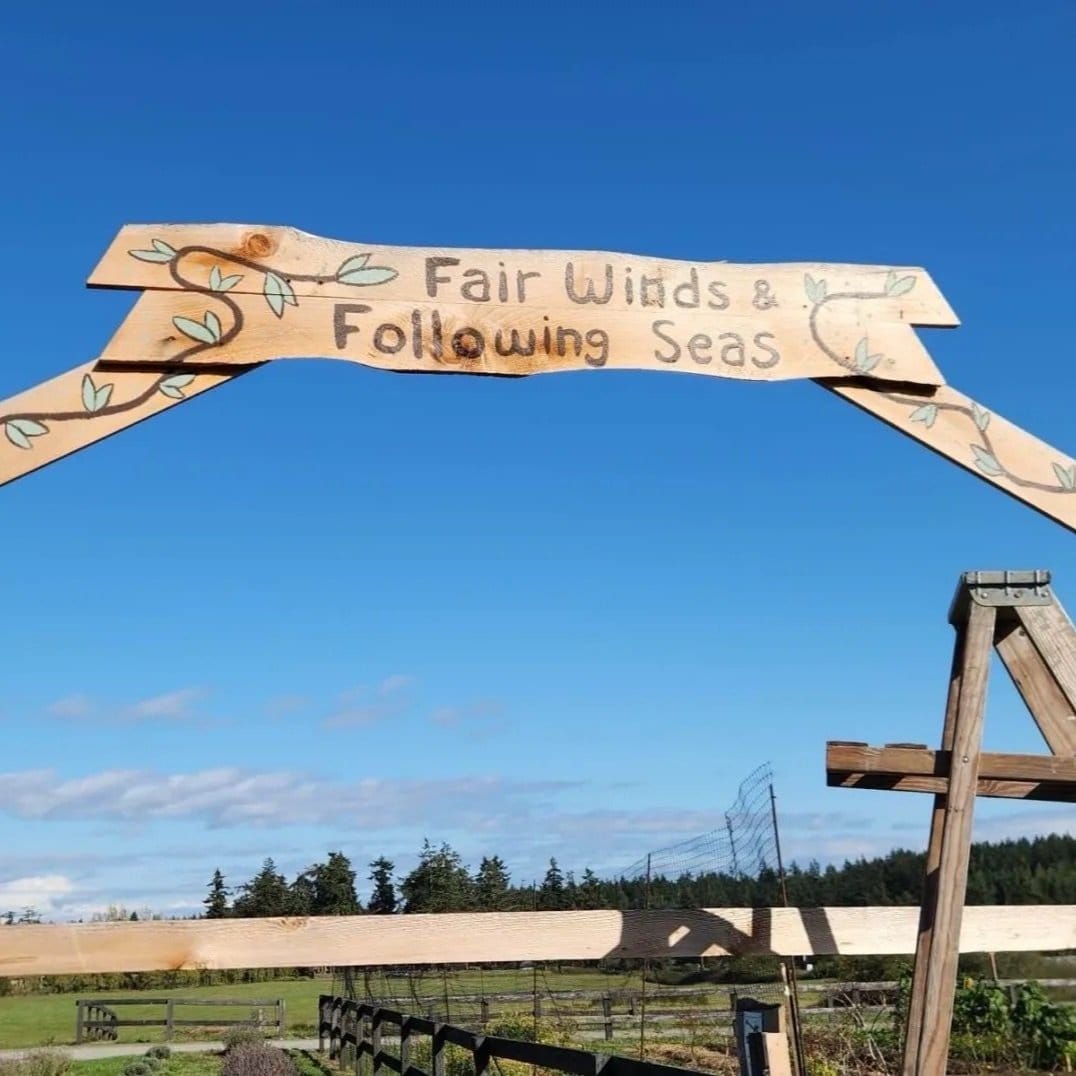
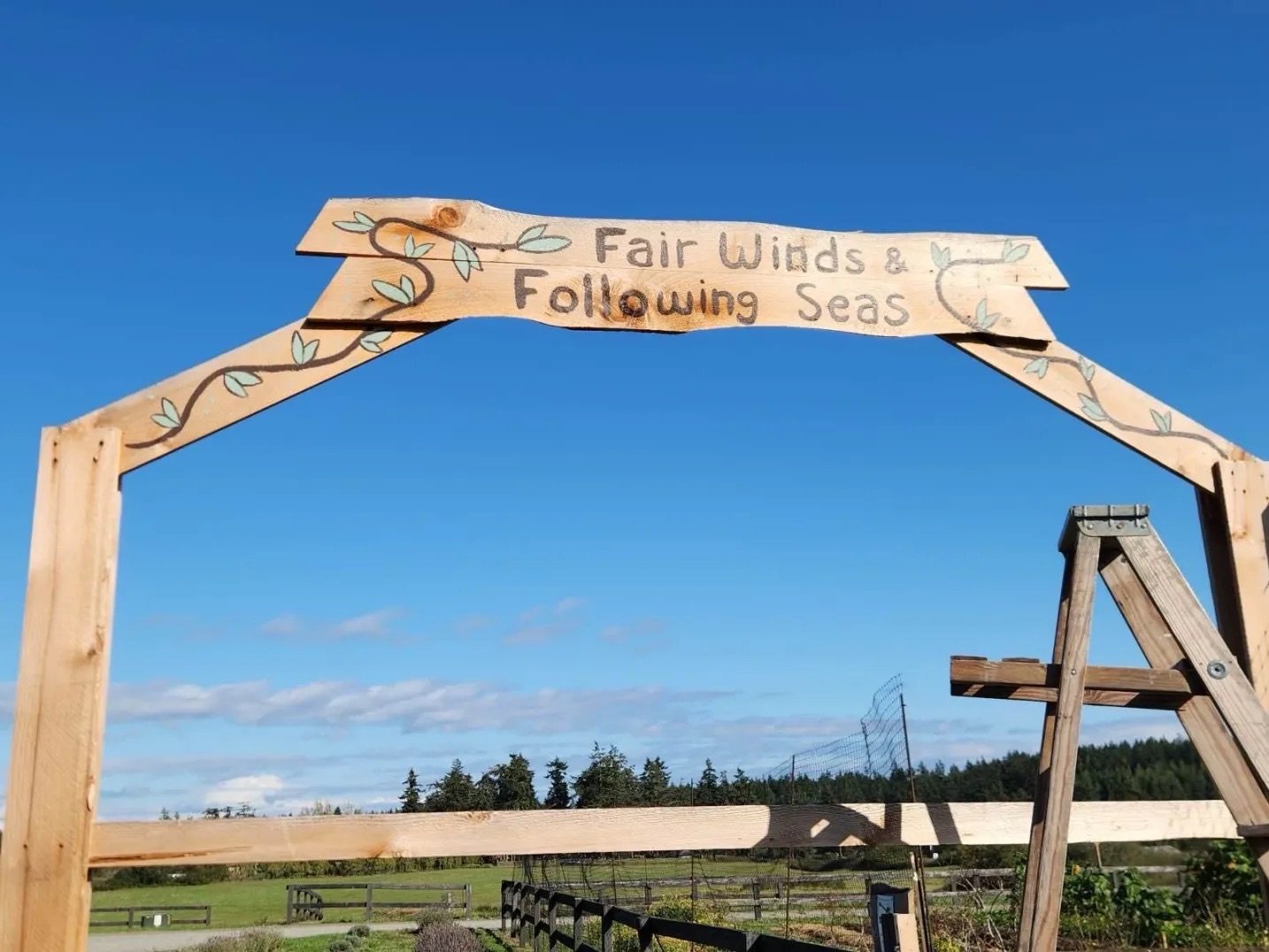
FBG adopted its first garden in 2012 at Port Townsend Mountain View Commons; they now have fourteen gardens, including Milly Lierman, Mary Hunt, and Gayle Petrick’s newly adopted regenerative garden at Fairwinds Winery. Inspired by the Fairwinds garden, Lierman, Petrick, and Vice President Bear Belle started the Ecological Committee together. As garden managers, Lierman and Petrick oversee the regenerative practices at the new Fairwinds garden, and the Ecological Committee guides and teaches regenerative practices. Regenerative in this context is a modern word, meaning the action of tending to land beginning with self and soil. It is the act of decolonizing the ecosystem through practices such as no-till, covering plants, hugelkultur beds (German raised beds made from organic material), and perennial gardens. “Regenerative practices prioritize healing the land by starting with the soil and ourselves. By practicing regeneration, we transform disrupted ecosystems into thriving spaces that nourish the land, our communities, and our spirits.” Belle said.
“Pause for a moment. Feel the air you breathe and observe the world around you. The plants exchanging oxygen with you and the water sustaining your body remind you that you belong to this Earth. Across generations, humans have nurtured the land, and now it’s our turn,” Belle said, “By growing gardens in schools, we can cultivate not only food but also stronger, healthier, and more resilient future generations.”
Each school garden has an FBG garden manager and a school-appointed Garden Co-ordinator who tends and teaches the children. The FBG offers action and resources to the student participants, providing important resources to combat suicide, the second leading cause of death amongst 10-14 year-olds according to the Nation Institute of Mental Health. With massive physical, emotional, and academic benefits to gardening, these school gardens are raising generations of land stewards along the crops– 30% of which are donated to the school’s cafeteria.
The Food Bank Growers website is full of resources, volunteer opportunities, donations, and maps of all the FBG gardens. You can find everything you need to know here at FoodBankGrowers.org. Support by joining a local garden, connecting with your neighbors, or planting perennial gardens in your yard.