From Grain to Glass: Chimacum Valley Grainery brews beer grown here

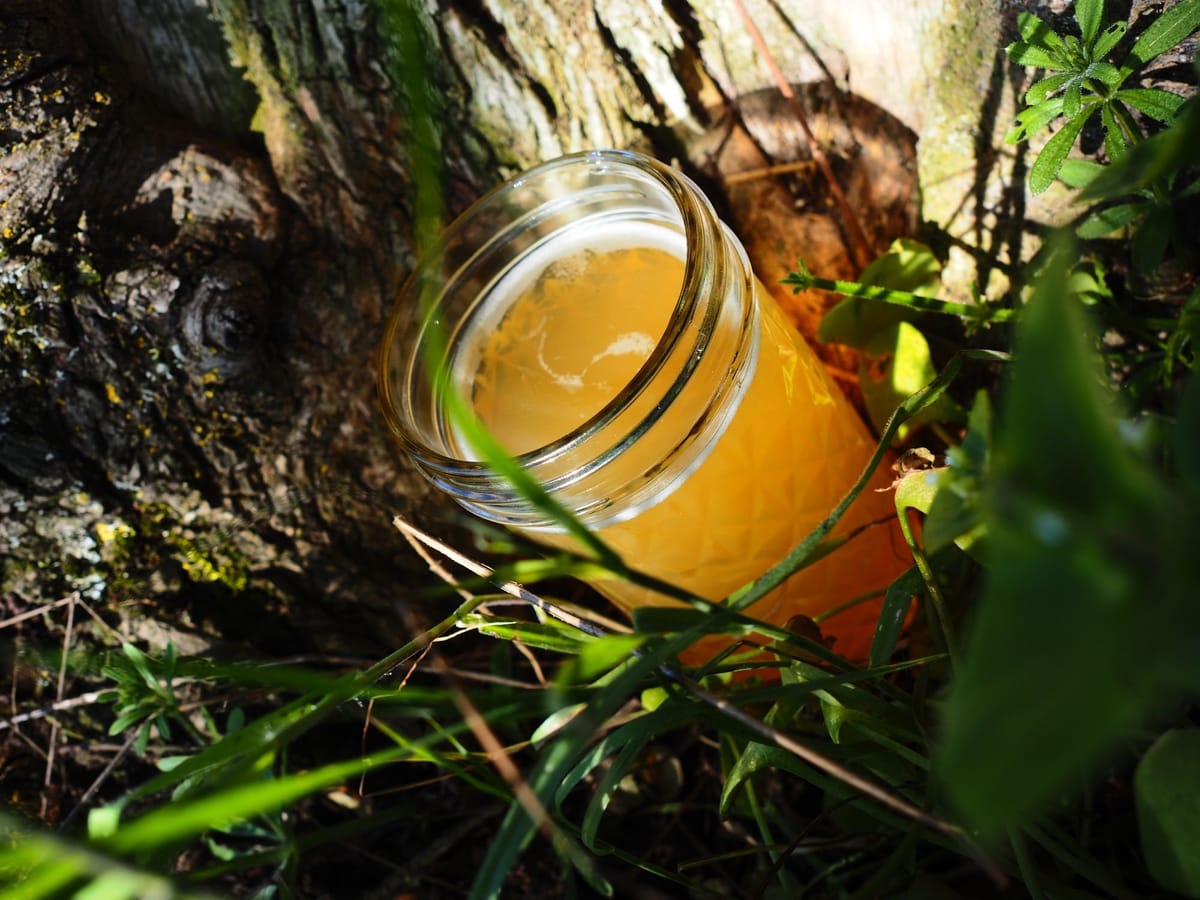
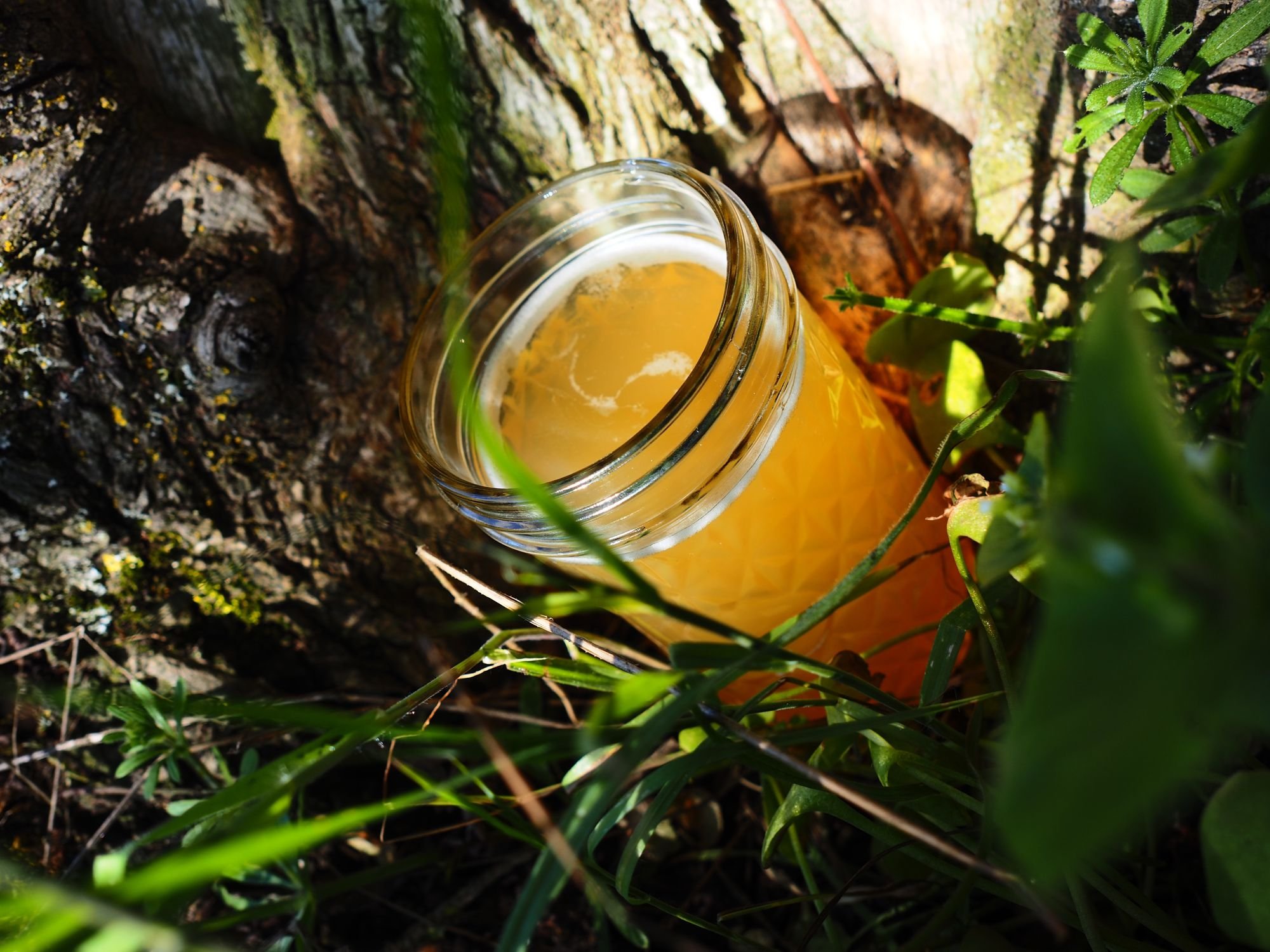
A glass of Chimacum Valley Grainery’s unfiltered IPA nestles close to its roots tucked away at Finnriver Farm & Cidery. Beacon photo by Derek Firenze [/caption]
As far back as anyone knows, Keith Kisler’s ancestors have been growing grain. Now, you can toast that long lineage with a glass of its latest creation.
Chimacum Valley Grainery is the newest company from Keith and Crystie Kisler, who also own Finnriver Farm & Cidery, and beer is their latest product.
Two years ago, the grainery started selling lines of bread and flour with locally grown grains. Just a few weeks ago, they shipped out their first kegs. But they have been growing one strain of grain or another on the property for twenty years in partnership with the Washington State University Bread Lab.
Keith is a 4th-generation grain farmer from Eastern Washington, and his European ancestors carried the tradition back even further. They came to America from Russia, but grain had already carried them across an earlier border.
“They were Germans called by Catherine the Great up there to grow wheat,” Keith’s wife and business partner Crystie said as she explained their journey to the farm on Center Road, which housed Finnriver’s previous incarnation. Those sprawling fields with Olympic views are now the grainery’s center of operations.
The pair first met in a different valley under different circumstances. Both were working in Yosemite Valley as nature educators and backcountry guides.
”He was not talking about farming,” Crystie said. “We were both really committed to a sort of environmental activism, but through wilderness immersion, direct connection to what we thought of as nature at that point.”
[caption id align="alignnone" width="2000"]
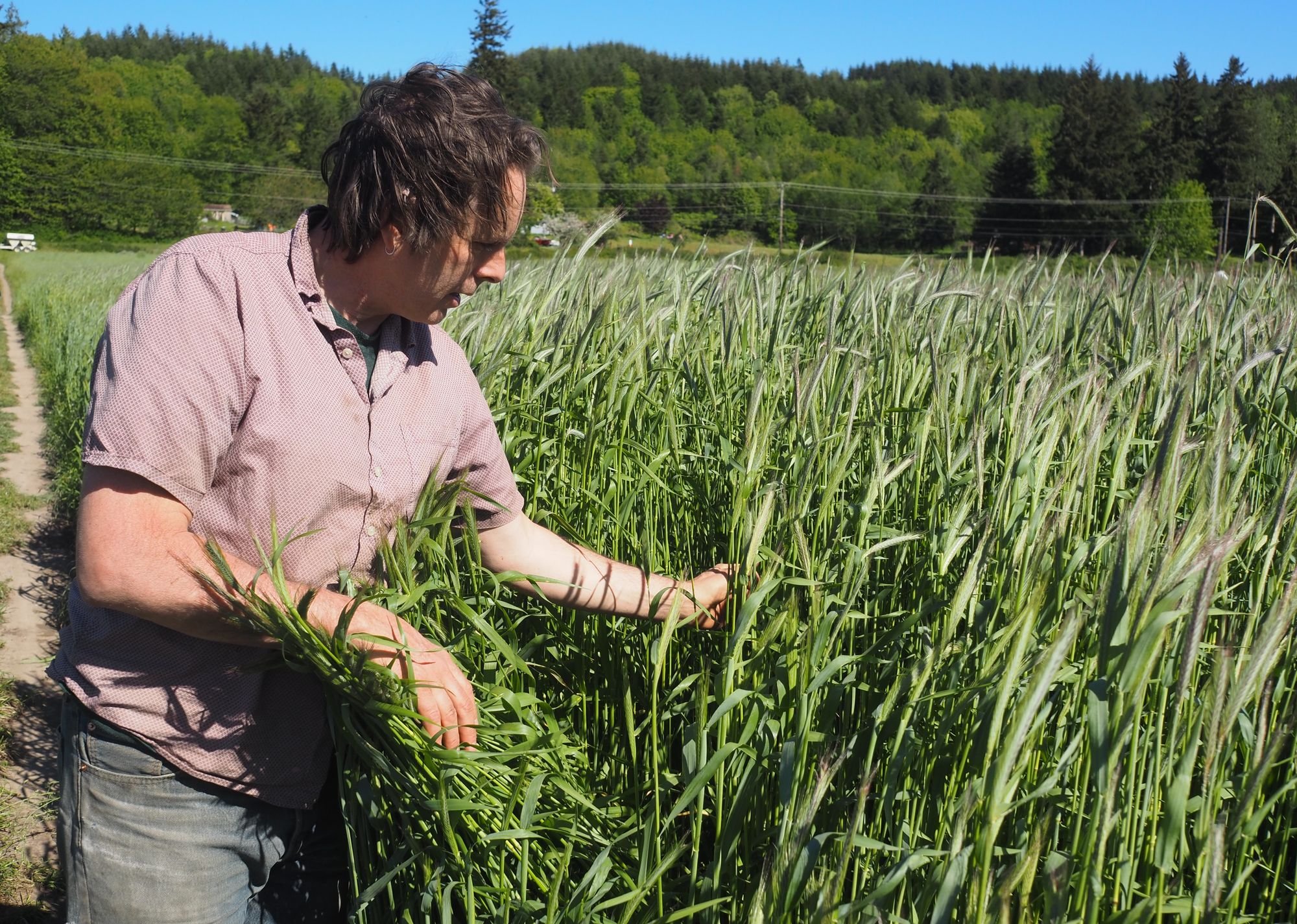
Keith Kisler amongst of field of rye he’s growing in Chimacum Valley that will eventually get turned into both bread and beer. Beacon photo by Derek Firenze [/caption]
Turning over soil and stories
Keith and Crystie spent years together reading Wendell Berry’s works and were particularly struck by The Unsettling of America, which caused them a revelation: “Food is nature.”
“Why aren’t we talking about food the way we talk about the wilderness? Obviously they’re different components of our relationship to the landscape, but less different at the time than we thought it should be,” Crystie explained. “If people thought about how they were eating as if they were eating of nature, you would have to treat the relationship differently.”
Their own relationship to the landscape is still evolving as they turn back to Keith’s roots while looking in new directions. They’ve worked hard on various farming business models already, from vegetables to cider, but grain is an unconventional choice for this area.
“There hasn’t been much of an Olympic Peninsula grain economy, barely a Western Washington grain economy,” Crystie said. “The prevailing habits and prevailing wisdom was that’s a thing you do on large acreage in Eastern Washington.”
“As we watched the food movement transpire, and people got excited about sixteen varieties of tomato and twenty-five varieties of apple – all of this diversity and restored sense of terroir – it felt like grain was not really included in that revelation. Flour was still just a commodity that you bought like toilet paper. There wasn’t really the same thought about all the different grains.”
[caption id align="alignnone" width="4149"]
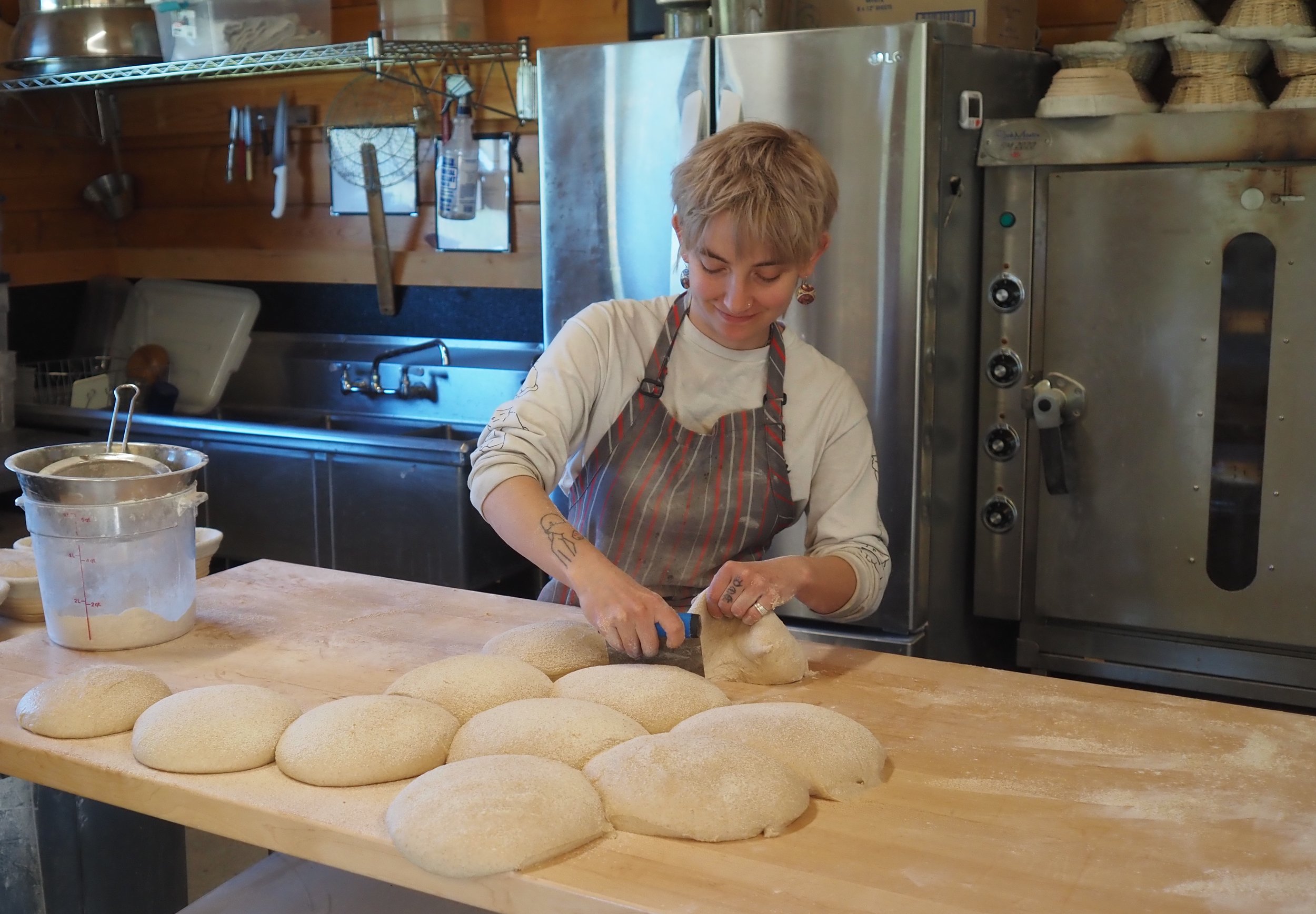
Caitlyn Faircloth readies loaves of Chimacum Valley Grainery’s Farmstead Sourdough made from grain grown within sight of where she stands. Beacon photo by Derek Firenze [/caption]
Growing new connections
They found a community of like-minded individuals asking these same questions at the WSU Bread Lab. Working with Dr. Steve Jones and Dr. Kevin Murphy, they began experimenting with stocks of grain from similar climates around the world, creating hardy blends and unique varietals.
“They are centering the idea of restored nutrition, flavor, and resilience, and that hit the nail on the head for us,” Crystie said.
In early experiments, the grain ended up sitting in piles before going into things like chicken feed. They soon realized they ought to get a mill and start making flour. That, of course, led to bread making, which was something of a revolution from Keith’s upbringing.
“Here’s a guy who grew up on a grain farm but never made bread from the 2,000 acres of wheat out his window. He went to the supermarket for bread. The grain got loaded in a tanker or truck and went across the sea,” Crystie said.
Of course, once they’d had a bite of their fields in Chimacum Valley, they wanted to see what else was possible. Beer was the next choice since it was something Keith already enjoyed. It was time he tried drinking his fields.
As they scaled up from experimental plots of grain to larger acreage, they turned to grant funding to help with the expensive upfront infrastructure costs needed to plant, harvest, and process the grain. Getting a grant to brew beer, however, was an unusual ask.
“We couldn’t quite make the argument that that was a necessary part of food system resilience,” Crystie said. “But it is a necessary part of the business model because in order to keep it close, we need to have this diversity of products.”
Keeping things close has been a focus of the Kislers. Food system and community resiliency is at the core of all their businesses, and you don’t have to look far to see it exemplified. From field to fermentation tank, the grain moves around a mile at most. From there it goes down a couple roads to be sold at Finnriver Farm & Cidery in Chimacum and at the Pourhouse in Port Townsend.
[caption id align="alignnone" width="2000"]
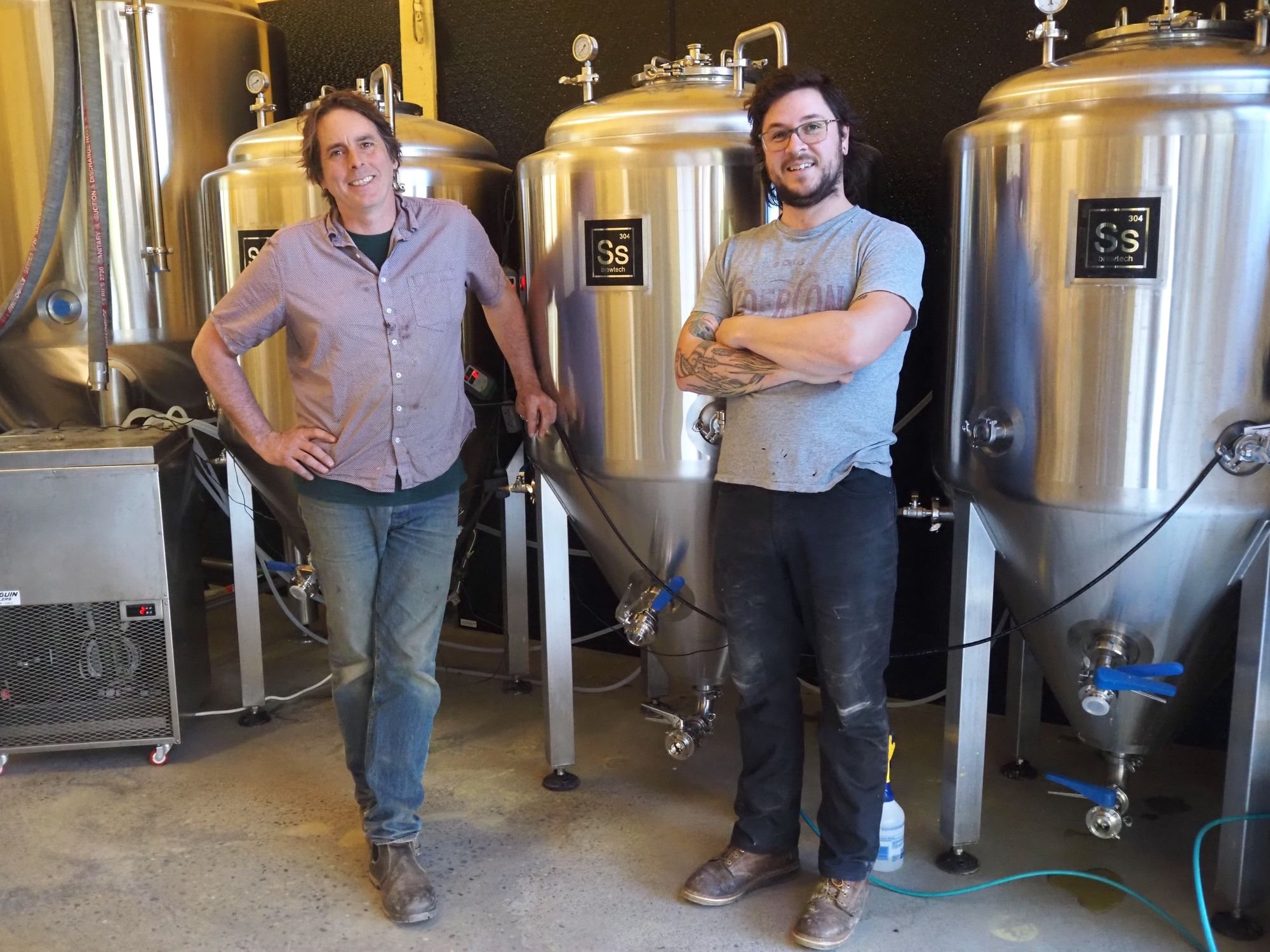
Keith Kisler and Sam Dressler work side by side to brew beer at Chimacum Valley Grainery. Beacon photo by Derek Firenze [/caption]
Brewing back through time
Before it can make it into your glass, the grain goes from field to floor.
Barley is the chief grain component of beer, and after Keith began growing it, it needed to get processed. That’s when they turned to Sam Dressler.
“Sam grew up in Quilcene and ended up working at Finnriver back when the cidery got started,” Crystie said. While he worked well with them in the past, one thing was missing. “We always knew he liked beer best,” Crystie joked.
“I’d make beer at home, and we’d drink it after work,” Dressler said as he recalled those cidery days.
Though Dressler had brewed at home, there was another step he did not have experience with to get from the field to the fermentation tank. Before barley can be brewed, it must be malted.
So Dressler traveled far afield to Maine for a week-long class specifically on malting through Montana State University. There, he learned the ancient art of floor malting, a process rarely used in modern-day brewing operations.
Using that time-tested technique requires yet one more step before the barley hits the floor. It first gets steeped in a tank of water from the well on the property.
[caption id align="alignnone" width="2000"]
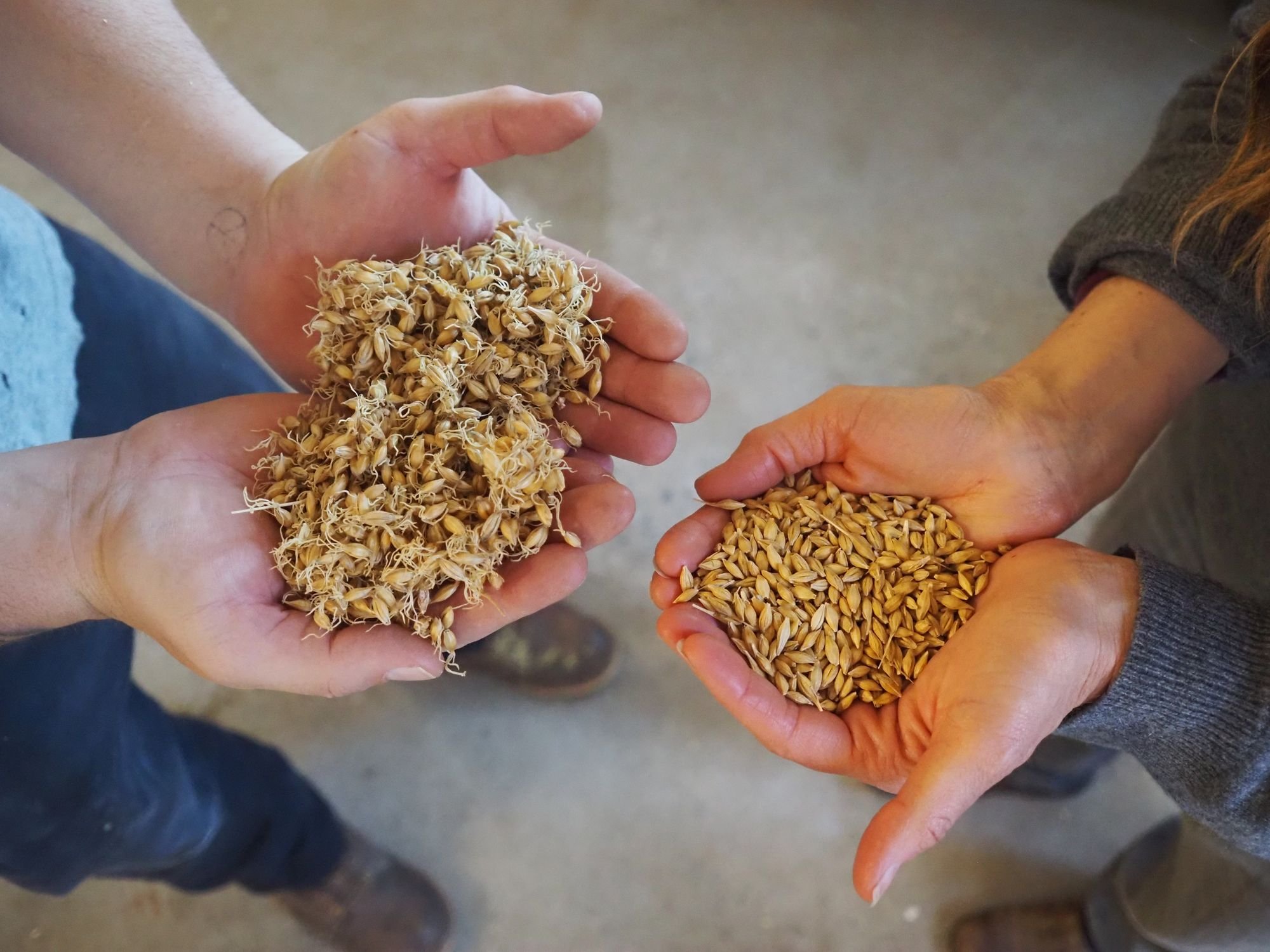
Barley grown on the property gets floor malted on site to cause the seed to sprout. Beacon photo by Derek Firenze [/caption]
“We’re pretty much tricking it to think it’s growing in the ground,” Dressler said. They emulate rain in the tank, then dry it on the ground where it begins to sprout.
Once sprouted, the sugars within the grain emerge, and the brewing process can begin in the room adjacent to the malting floor. Their current goal is to repeat these steps often enough to produce around 20 kegs of beer a week.
It takes painstaking effort to take a seed and turn it into an adult beverage. To honor that work, they leave their beers unfiltered which keeps as much of the essence of the grain intact as possible.
In addition to barley, they’ve added rye and oats from their fields to certain batches to deepen complexity. They also plan to try a wide variety of styles as they continue to evolve, from fruited farmhouse ales to barrel-aged stouts.
One ingredient they’ve been using that is not grown on the property, however, is hops. Those they get from Yakima, but that may change next year.
This future possibility would also be another return to the past.
“We have a picture from the historical society of that property where the cidery is. It used to be a hop farm,” Keith told me as we toured the brewing facility. “There were Native people standing there with these huge hop vines behind them.”
As I stood with Keith and Sam surrounded by the silvery fermentation tanks, we could still see the green fields through the window, and I felt compelled to ask how it felt to be returning to his roots.
“It feels like it’s probably baked into me somehow,” he joked. “I love this feeling of lineage and carrying on past ancestral work,” he added, though he doesn’t get too deep into the “touchy-feely parts of it.”
He did, however, note that what he is doing today is not how things were done when he grew up. Instead, he’s “farming and doing things more like my great-great-great grandparents were doing it.”