Grief Forms: The Death Mother Archetype and Healing Through Loss

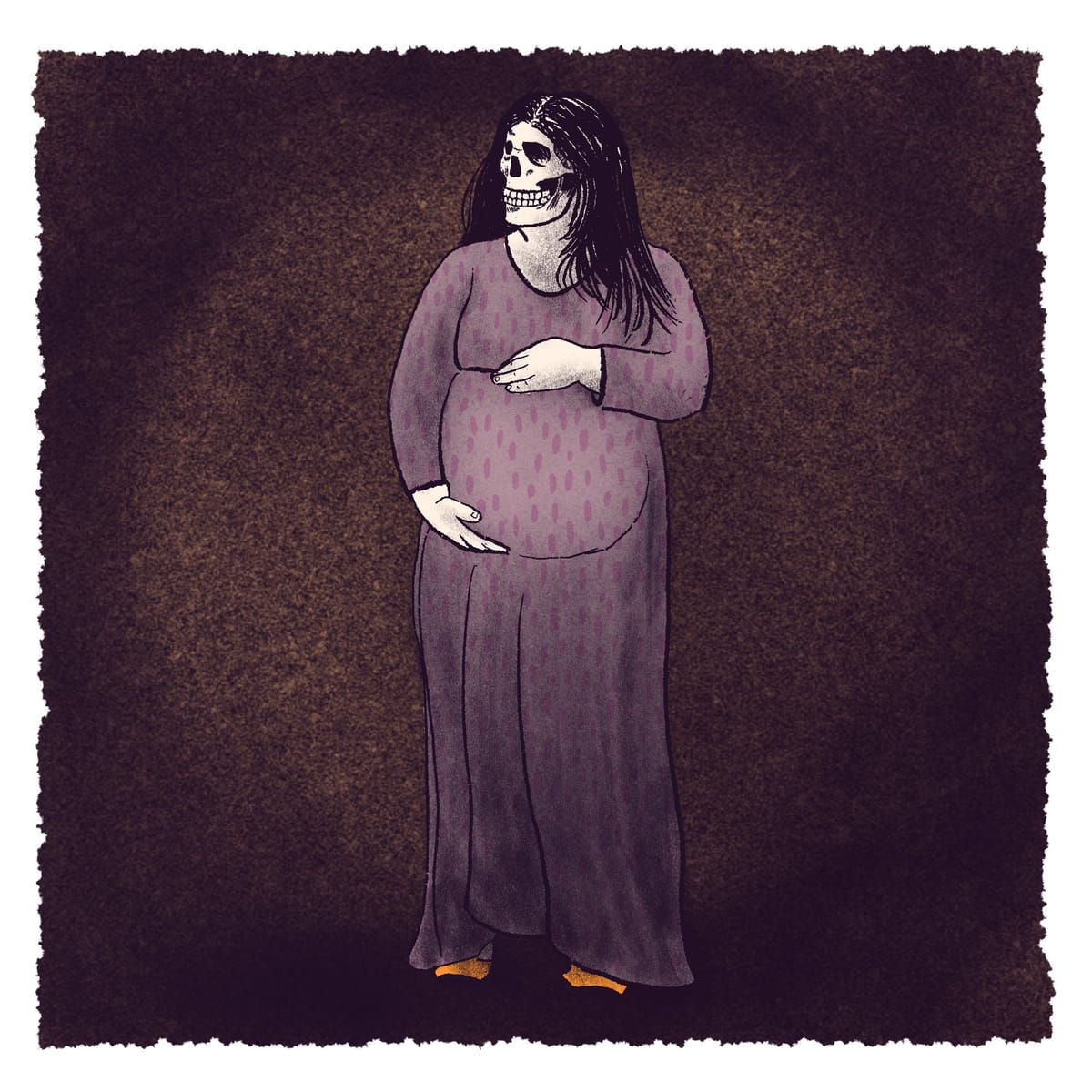
[caption id align="alignnone" width="2048"]
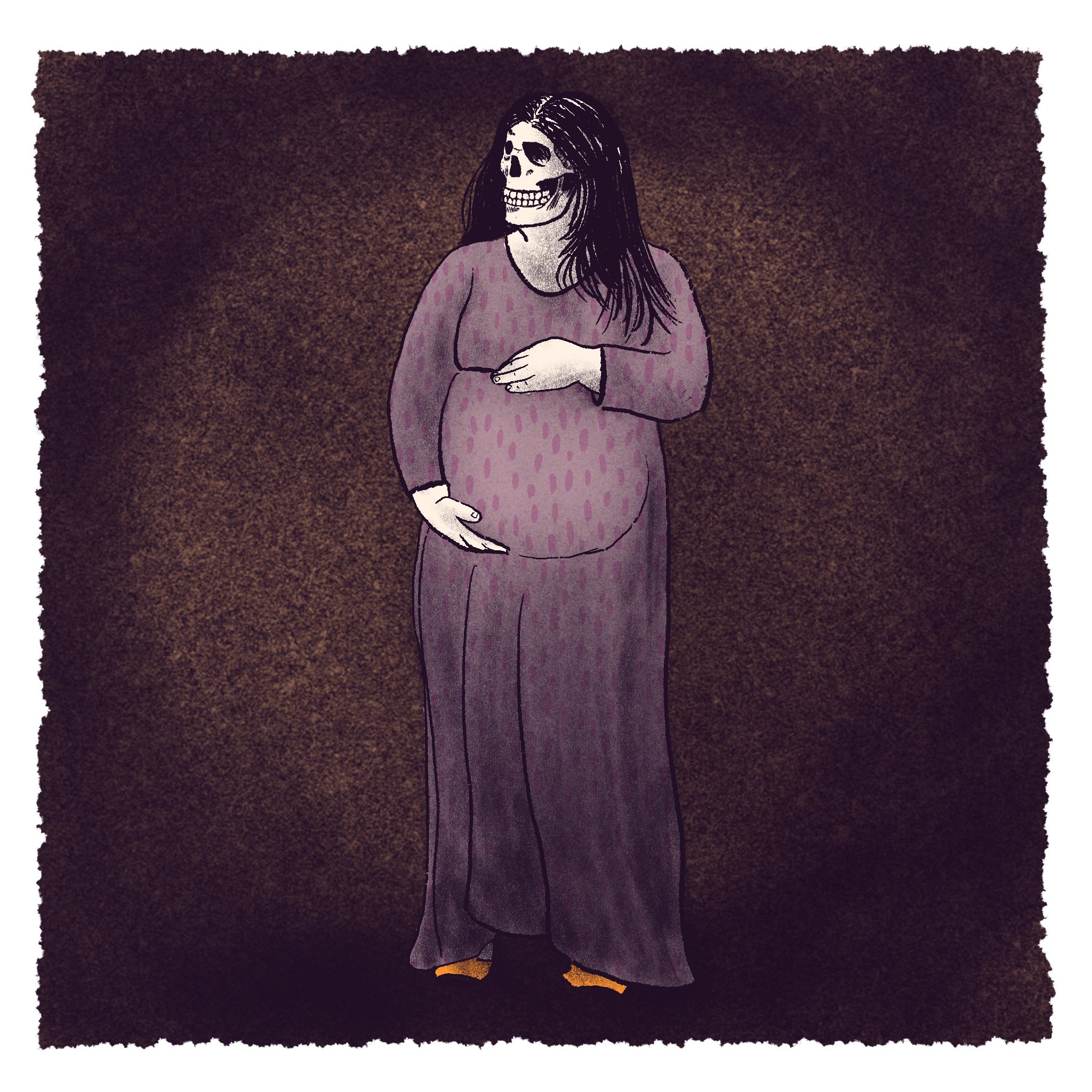
Illustration by Nhatt Nichols [/caption]
A column on grief by Angela Downs
It is a natural law that embryos, infants, and young are a vital source of nutrition and prosperity for our earth, like the many fish and turtle eggs, or fawns and calves who do not survive into reproductive years.
Our lineages are flush with women suffering the loss of a child to ensure the survival of others. The mother leaving the sickest or weakest behind as the nomads left for winter, the girl who chewed Queen Anne’s Lace seeds to interfere with her premarital pregnancy for her own safety, or the mother who went hungry so her children could eat, causing the fetus inside her to starve.
This is the archetype of the Death Mother. The mother who suffers the loss of their child, and the mother who consumes their child.
Natalie Davey is a Somatic Womb Work Practitioner and Menstrual Cycle Advocate. Her womb continuum work connects uterus carriers to the mysterious and spiritual world of the feminine. She also focuses on healing cultural amnesia and the wounds of the colonial mindset.
Davey asks the question, “What if Death Mother was an essential piece of our cultural lexicon?” Using grief as a cultural repair to reshape the patriarchal overtones, we might help the next generation connect with the living process of encountering and rising from death.
“Having a womb, the built-in process of bleeding and unfurling, gives us a direct doorway to grief. Particularly through the access point of being in connection with cycles, “ Davey said. “Grief is a spiraling force that allows us to move in more than up and out and to find rest. It is a physiological portal to experience life and death at the same time.”
“I felt the implant the night of conception. My body signaled weeks later with tender breasts and morning sickness, but there was no sign of life when I met with my doctors. At eight weeks, I started bleeding. That night, I went into labor and squatted in the shower. Flesh and clots came out of me. There was a pile of human material next to me. And then came the sack. I held it and examined it, feeling the hard edges, and cried,” said a mother of her release experience.
Like many mammals, miscarriage and even stillbirth can be very common. Some mammals pause their pregnancies for a time with more resources, and while it is not always as clear a choice for some women as for wild mammals whose releases occur when conditions are unsuitable for life, physically or emotionally.
Miscarriage is the most common complication of pregnancy in the United States, occurring in 15–20% of clinically recognized pregnancies, or 750,000–1,000,000 cases annually.
“Miscarriage postpartum psychological reality is the same change as a full birth experience except at an accelerated rate,” Davey said. Advocating for those suffering from miscarriage to have postpartum rights under the Pregnant Workers Fairness Act. Yet, it is culturally so rare for even those who have a living birth to have long, nourishing, celebratory postpartums.
The history of women, and especially women of color, in the medical system is a horrific reality to face. And even the less violent secular focus numbs the experience of release. “Repeated abortion as birth control is removed from the grief process,” Davey said, connecting Western Medicine with the wisdom of mythology.
These lessons of non-linear cyclical time, deep listening, and relating to the seasons brought to us through menstruation heal us of our dissociations from self and environment. Fitting our stories into the fabric of human survival helps to lift the shame in loss, and incorporating ancient myth supports our grief process as we encounter death again and again.