Harvesting Resilience: Local Farmers Share Their Refelections as Winter Approaches

By Hudson Gardner
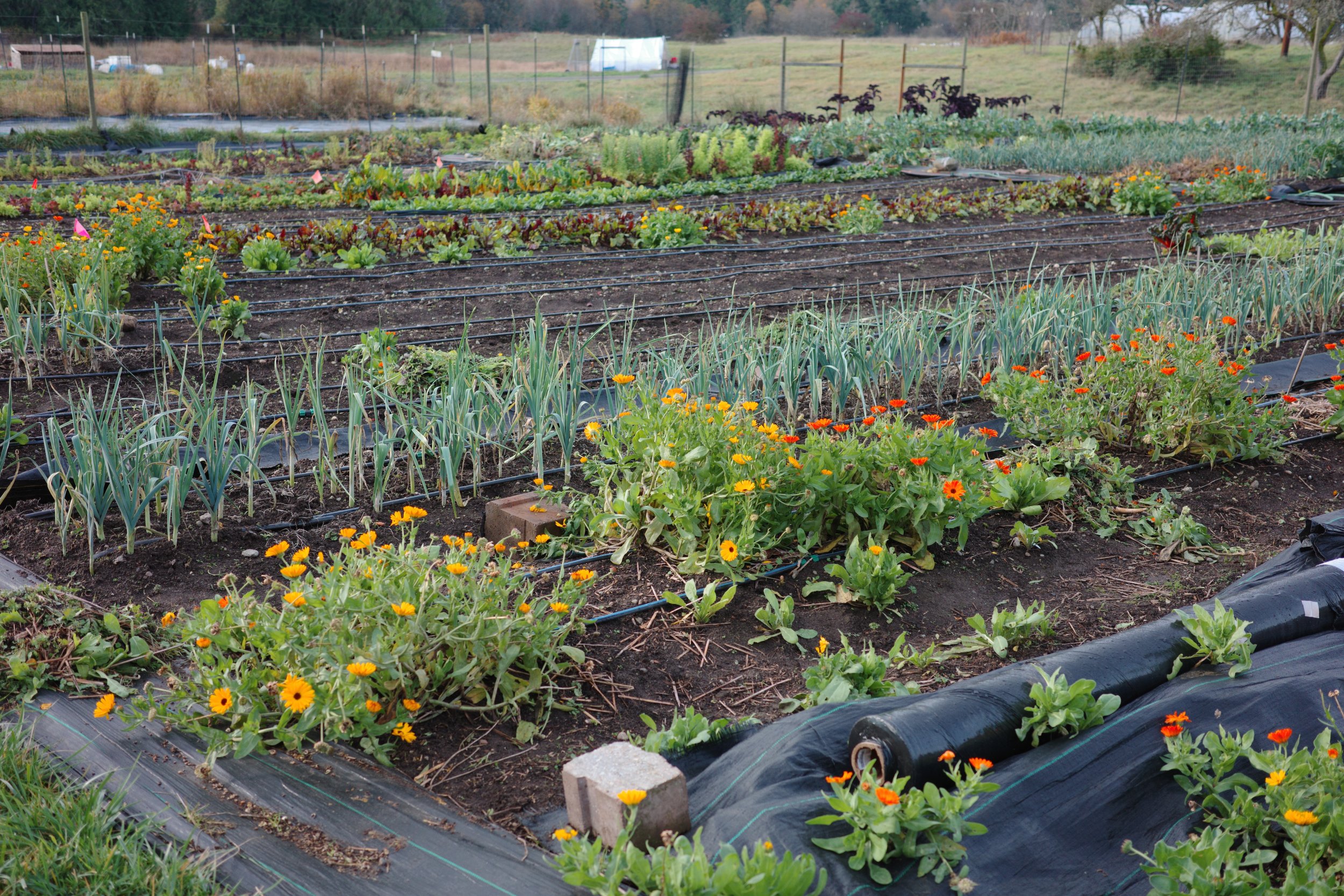
As the season winds down and winter begins, peninsula farmers are taking stock of the last season. Staying small, efficient, and productive while balancing life and work is a challenging equation. And yet, many local farmers renew their commitment to food and the health of the community, year after year. It takes a creative mind and a lot of hard work.
Hopscotch Farm began as a series of small plots spread out over Port Townsend, totaling about a ¼ acre—thus the name! Six years later, Meghan Mix is finishing her fifth year at Natembea, a farm collective project just outside Port Townsend.
[caption id align="alignnone" width="5929"]
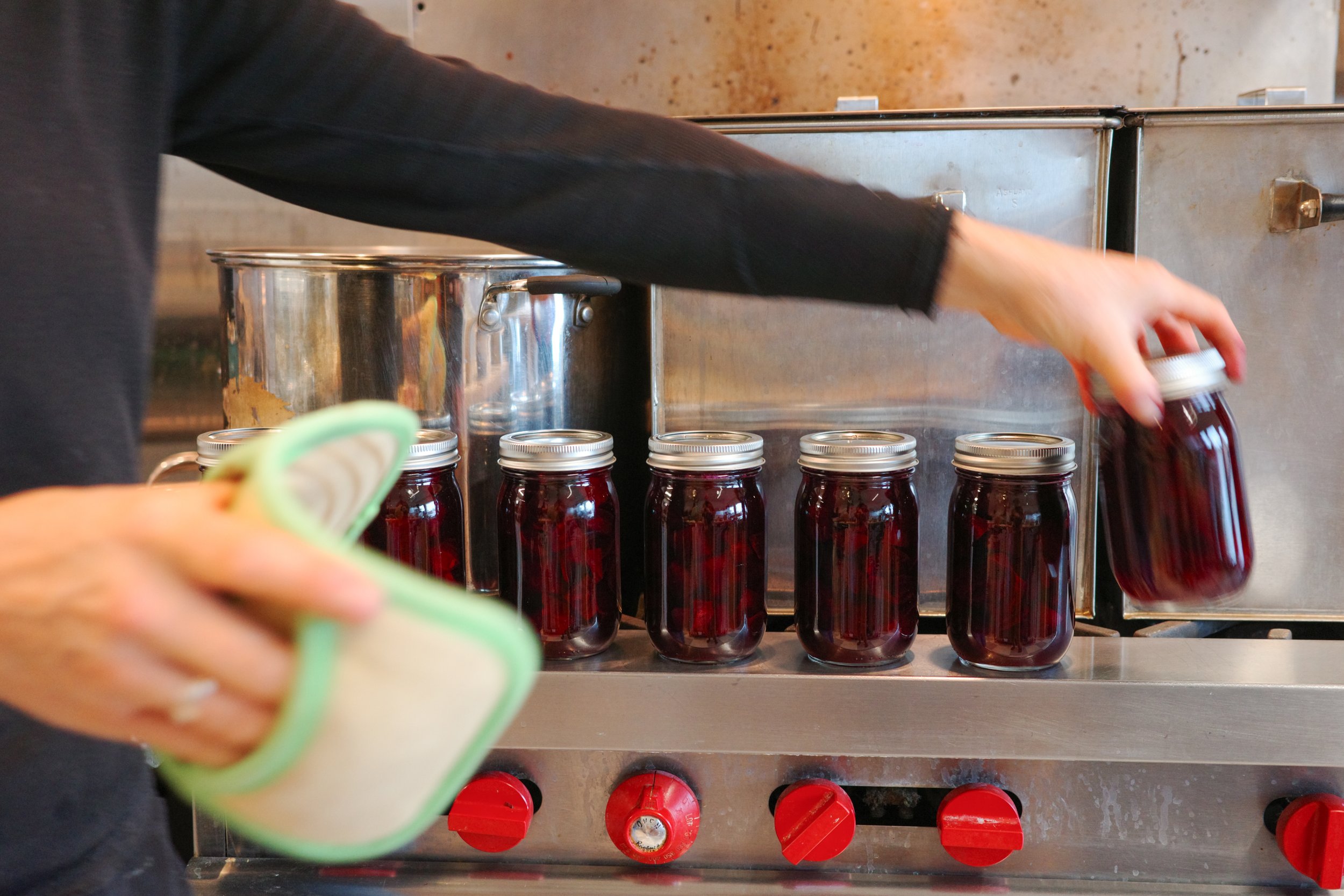
Megan Mix specializes in value-added products, like these canned beets. [/caption]
On a blustery day, Mix was washing beets at an outdoor station near her plot. Surrounded by an eight-foot-tall deer fence, she farms a quarter acre in the Northeast corner of the farm. In spite of the cold, wet weather, she was joyful and energetic when talking about the season.
It has been a cooler, wetter season than in recent years, and despite that, her vegetables mostly flourished—especially the onions, which are sensitive to temperature swings. Even in the late-Autumn season, there continue to be green plants poking through the ground, including the leaves of frosted spinach, which becomes sweeter as the temperatures drop.
In talking about challenges this year, Mix mentioned the ever-present balance of money, time, and effort. "I don't have an expansionistic mindset. People tell me: you have to expand. But why would I do that?" She sees expansion as one of the colonialistic tendencies we’re surrounded by—and for her, that path would generate more activity but not more contribution or meaning.
[caption id align="alignnone" width="3850"]
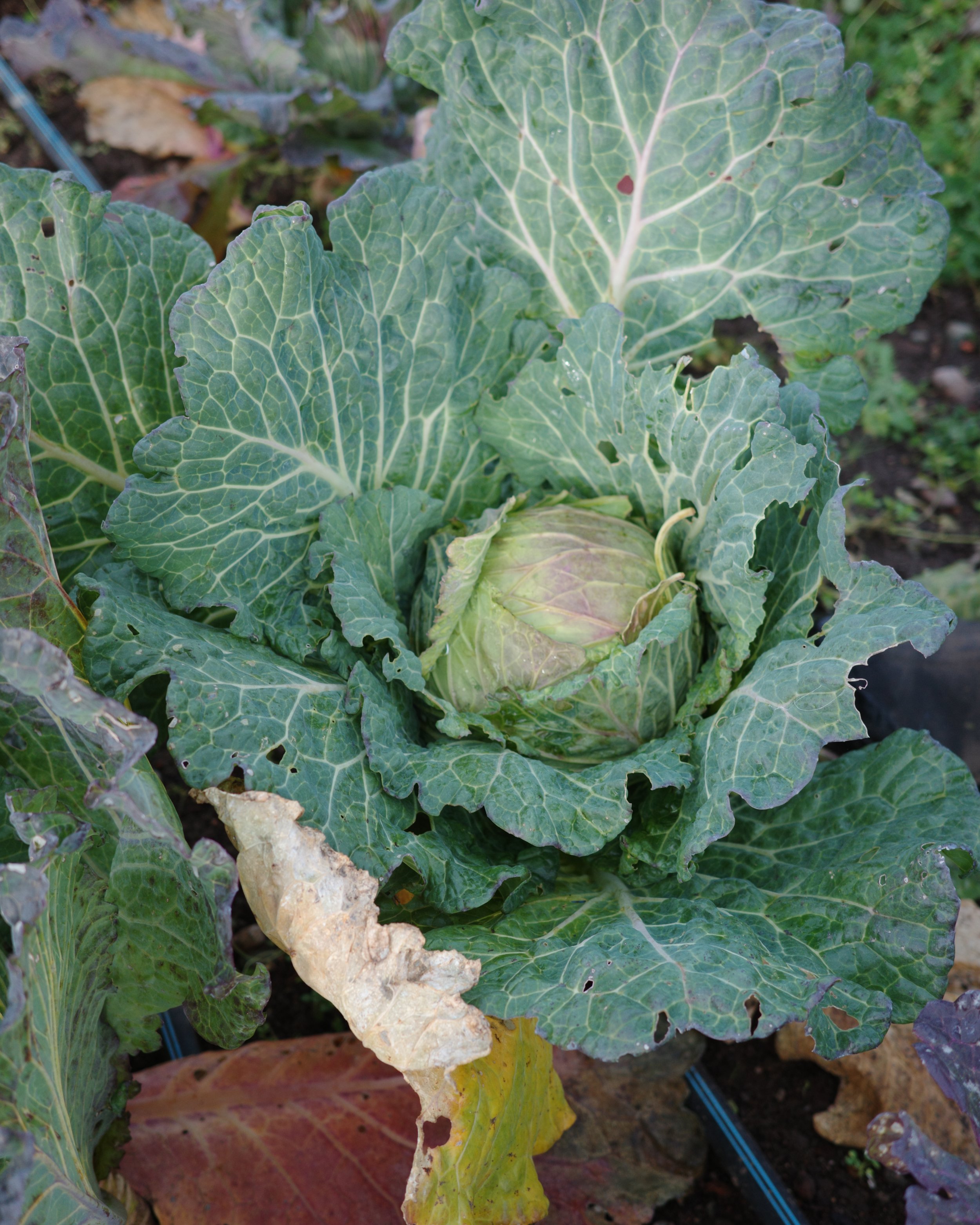
Majestic January Kings on Hopscotch Farm. [/caption]
Mix expressed concern over how the price of food does not reflect the actual cost. And how the balance between the two often keeps her from focusing on personal projects—"I just had a lot of stuff [this fall] that I wanted to do on a personal basis, like preserving food for myself. I was like, how do I balance that with all the tasks for my business? I think I'm still figuring that out."
Her business is unique. She grows, harvests, preps, pickles, and cans thousands of pounds of produce every year—a farm-to-jar business. She then sells this at local Farmers Markets and grocery stores.
As Mix walked back to the wash-pack, she stopped to point out a row of cabbages in the back corner of her plot. Called January King, they are meant to be harvested in winter, even as late as January. “I grow them because I love cabbage,” she said, smiling. Apart from that, most other crops on her farm have been harvested, and the ground is headed toward a quiet, restful winter.
Hopscotch Farm shows just how much effort it takes to grow the food we eat every day—and how, without the infrastructure of trucks and roads, we'd have very little to choose from.
Due to the recent glass recycling policy change in Jefferson County, Mix wants to remind everyone that she is happy to take your used jars back! If possible, please wash them beforehand.
Located in Quilcene, Midori Farm is run by Marko Colby and Hanako Myers. They have been running the farm together since 2008, initially farming on rented land in Port Townsend. Then, in 2013, they purchased the land in Quilcene that they currently farm.
To Colby, the climate this season felt like a return to normal. Quilcene is often 20° warmer than Port Townsend, allowing for heat-loving melons and sweetcorn outdoors, crops he is happy to offer at his farmstand—which has been very successful in recent years. He feels it is an asset to the community to have the farmstand in an otherwise difficult place to find much fresh or high quality produce. Quilcene only has small markets, and the drive to the Corner Stand or QFC is about 25 minutes one way.
This year, they opted to not sell at the markets in the area, and yet the farm stand proved up as a reliable source of income.
In terms of housing and employment, Midori pivoted after Covid and began to employ locals. They did this by scaling back, needing fewer people. And yet the challenge of a living wage as a farmer remains. "Some people want to, and should, live in an actual house, with heat and plumbing. But oftentimes [because of the cost of housing], people end up in a trailer. The cost of housing far exceeds wages. We'd love to pay people $30 an hour, but with our model and the price of food, that's just impossible."
And yet Midori has shown remarkable resilience and commitment to farming—offering jobs (12 employees this year) and healthy food to their community in Quilcene.
[caption id align="alignnone" width="4658"]
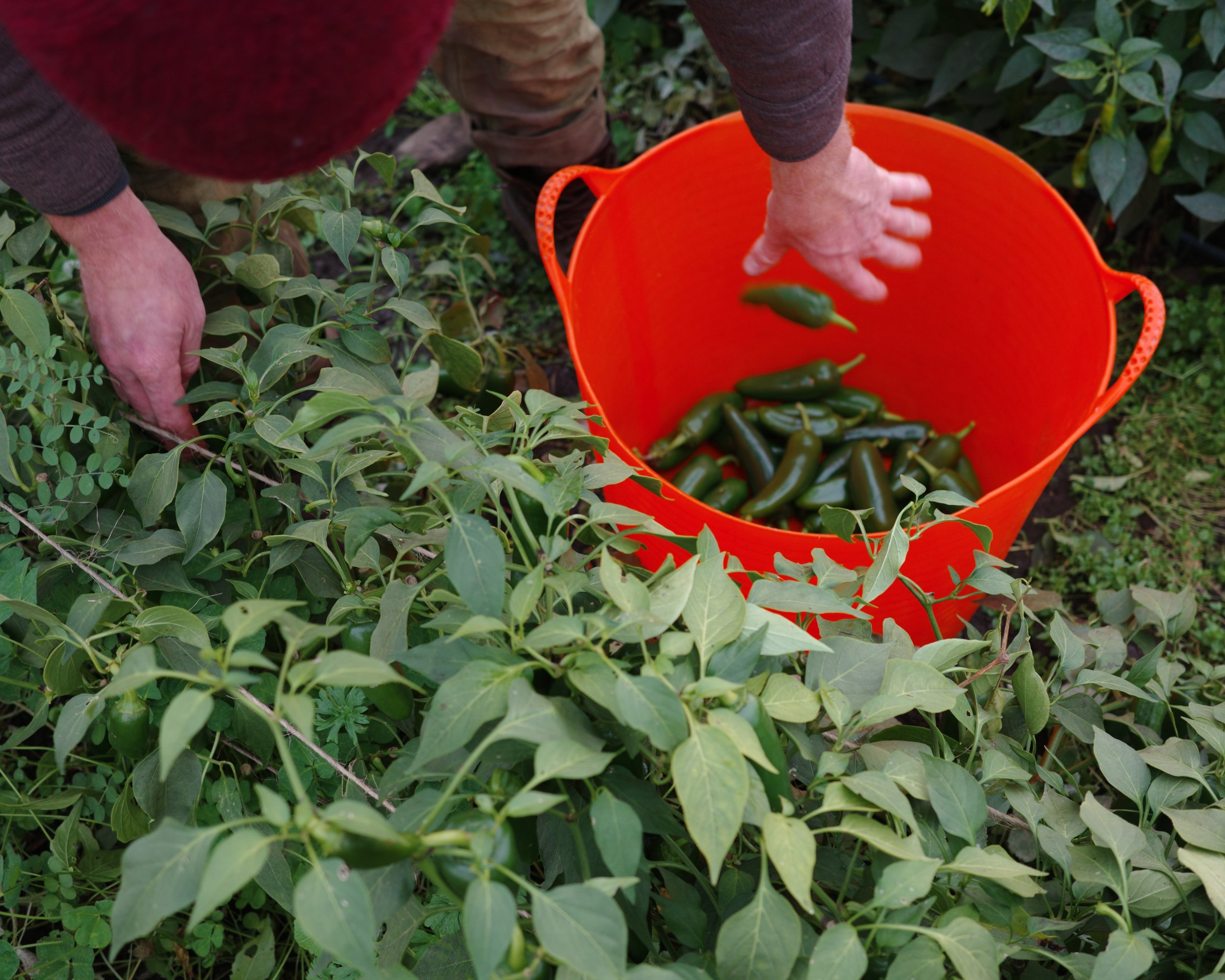
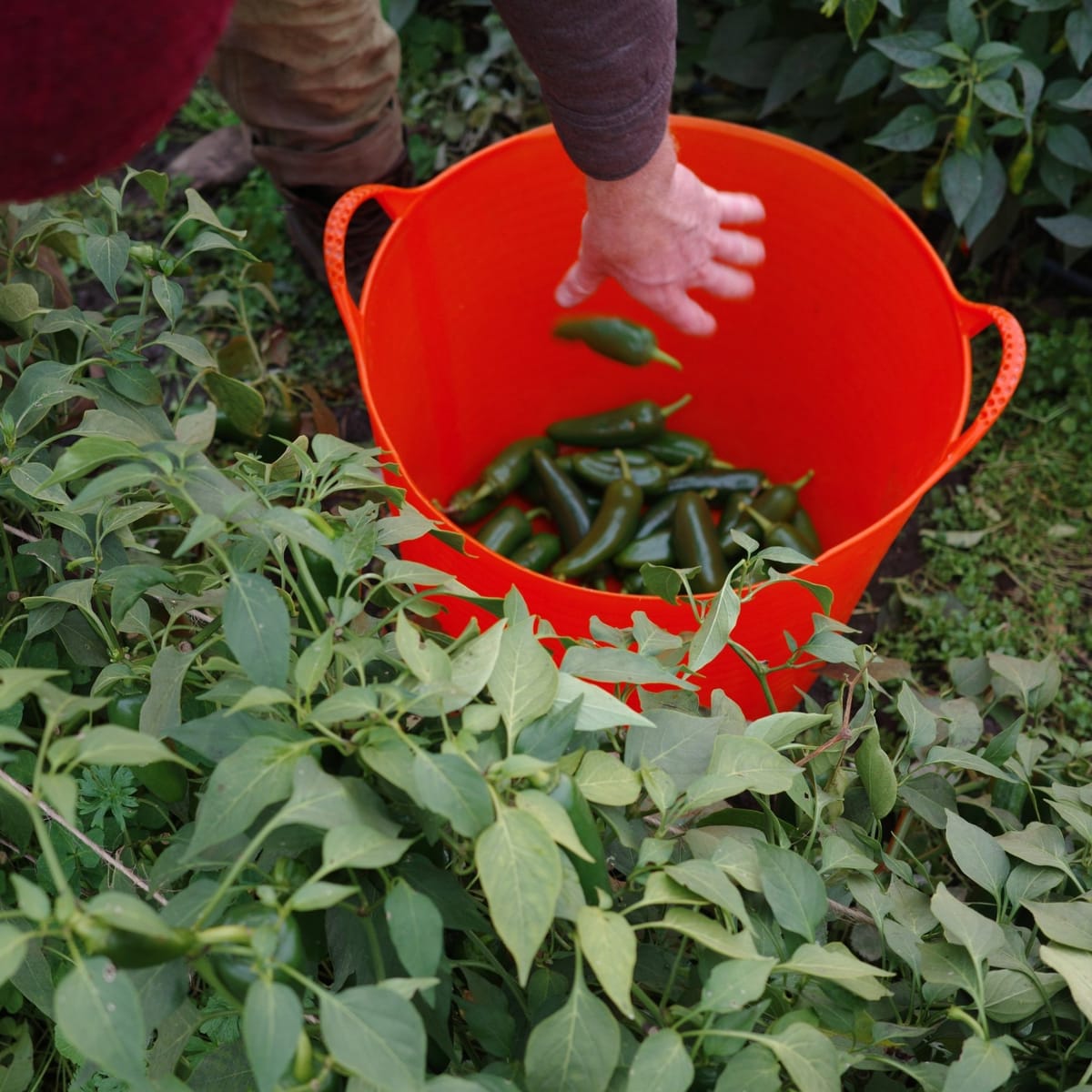
Pierce Kennedy harvests peppers on Soft Step Farm. [/caption]
Soft Step Farm is also located at Natembea, just outside Port Townsend. Pierce Kennedy's plot is surrounded by small rises in the ground above a pond, where he first encountered the namesake heron that graces his logo.
[caption id align="alignnone" width="4800"]
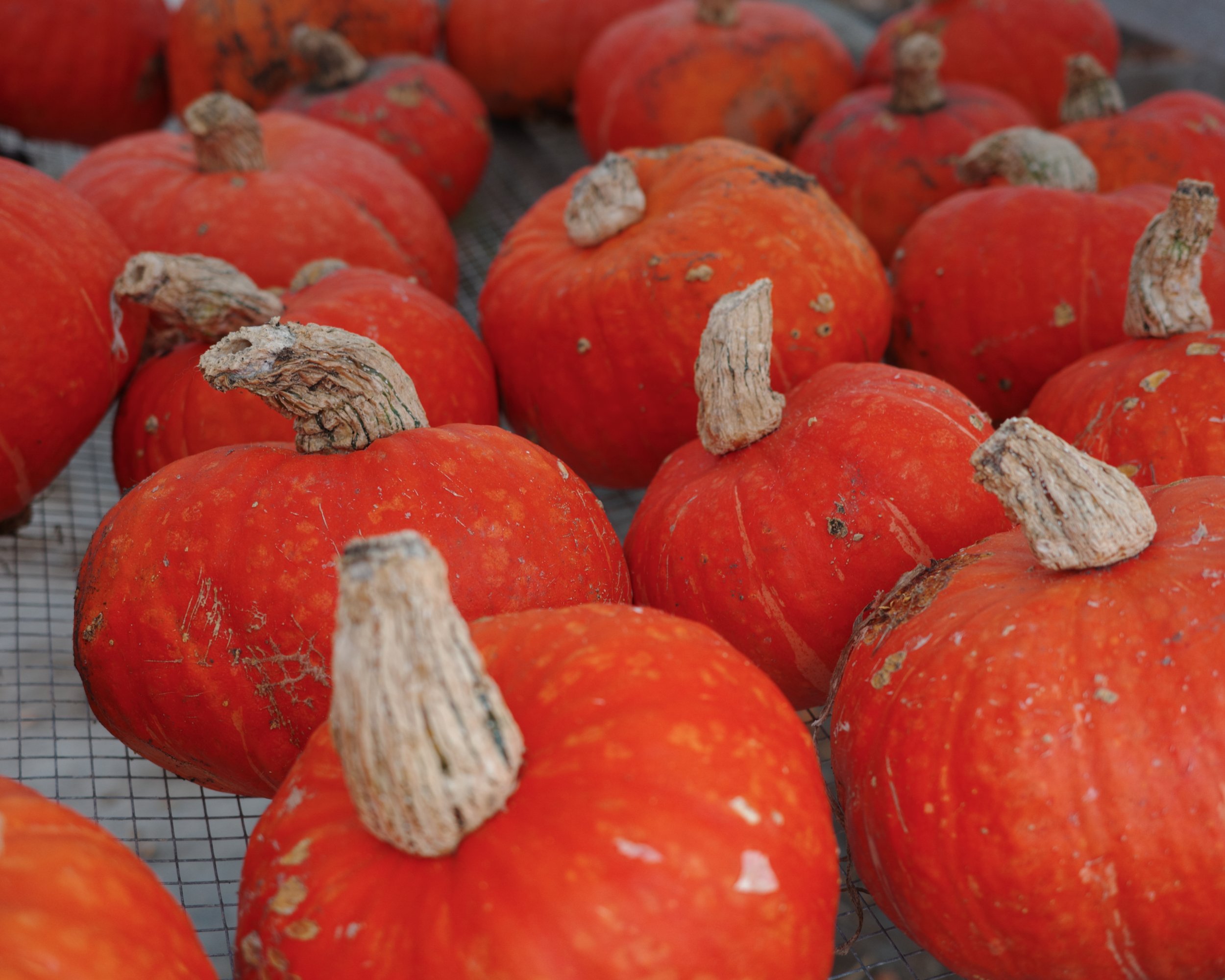
Winter squash curing at Soft Step Farm. [/caption]
Above his greenhouses you can see the ridges, foothills, and heavy snow that has already covered the tops of the Olympic range in the distance. On a calm, overcast day Kennedy harvested the last of this year's peppers in the greenhouse. Like Hopscotch, Soft Step Farm is a solo operation; Kennedy is soley responsible for all aspects of growing, harvesting, and selling.
Overall, it was the best year yet—but since the farm has only been going for four years, he takes this in stride as a natural outcome of a new farm. On the other hand, his efficiency and systems are highly effective, allowing him to run his business without working more than 40 hours a week.
Working alone is not without its challenges though—in the long term, solo work like this, as well as running the markets, doesn't seem sustainable, he says.
But like other farmers around here, Kennedy has begun to branch out into other avenues, such as education. He taught two classes at the Chimacum Corner Stand this year, even amidst his busy season. He's looking to add value-added products to his lineup, such as salsas. And this spring, instead of a CSA, he offered a Pay It Forward program through a Market Card. The Card allowed people to pay $100 upfront during his slowest season, to then get 15% off produce for the rest of the year.
This year, he had 15 signups for the Market Card, and next year, he's hoping for more.
[caption id align="alignnone" width="5000"]
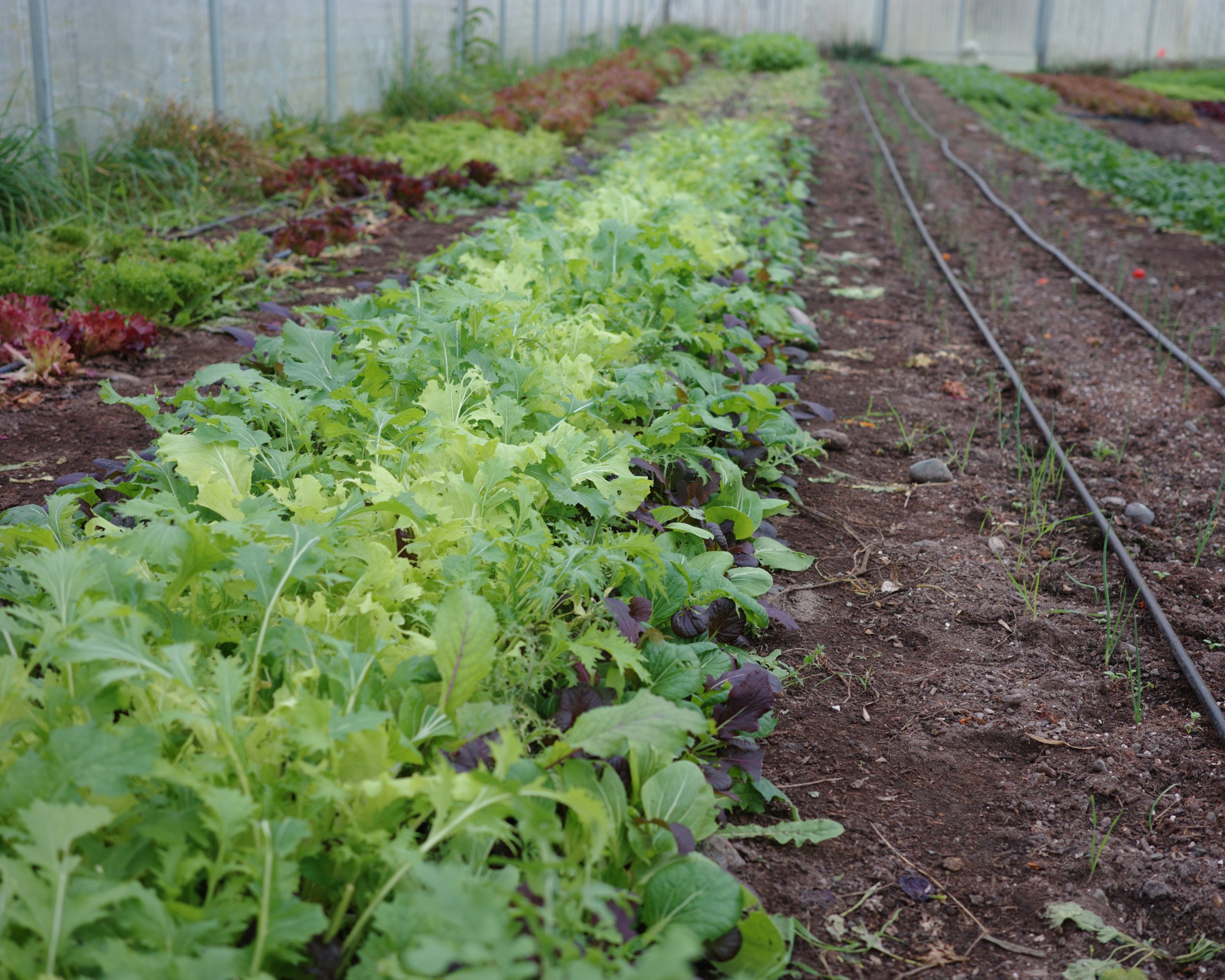
Fall greens on Soft Step Farm getting ready to be harvested. [/caption]
Kennedy's main challenge this season is the same quandary most farmers face, which is that it's hard to balance the equation of work to pay.
The most profitable crop is always lettuce, and it takes only 50 days from seed to harvest. Compare this to tomatoes, which are also profitable but take 70-100 days in this climate to bear fruit.
The realities of growing season length, time to harvest, and the challenges of money are important to remember for everyone. It's easy to walk into a store and expect perfect produce of any kind at all times of the year—yet this is not the reality. Blemished, small, or just “different” looking produce often goes unbought, leading to a lot of waste.
Often, grocery stores will label tired produce at a discount. Remember to check that section at your local market, and if they aren’t doing this already, ask them to!
Kenedy's model is a market garden—thus, his main income source is the local farmer's markets. He wants to remind people that Farmer's Markets aren't just a hobby; he and many others rely on them for their business. For more information about Jefferson County Farmers Markets, head to https://jcfmarkets.org/markets
All photos are by Hudson Gardner