Surgery as service to self and others: Local trans community thrives through mutual aid

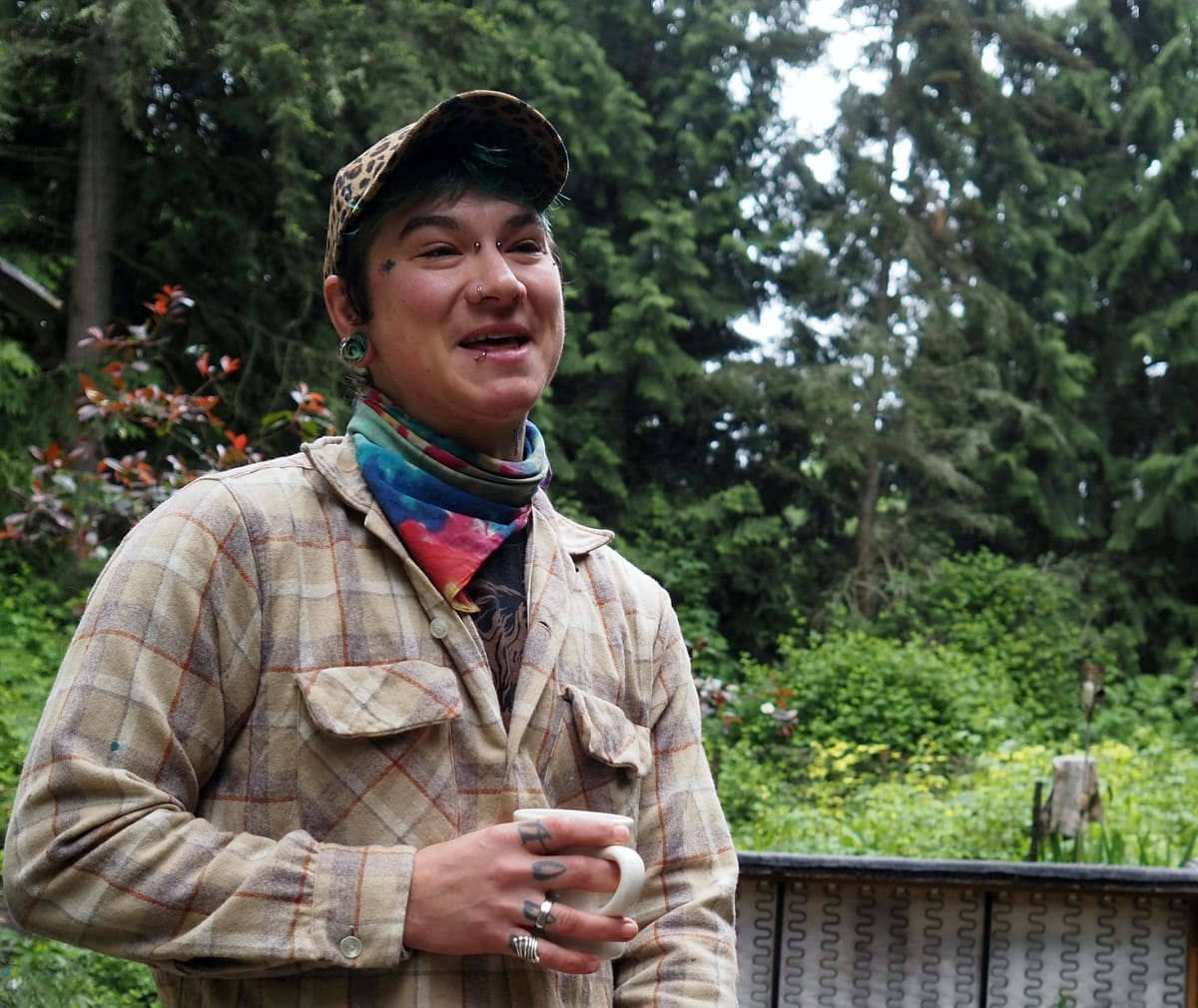
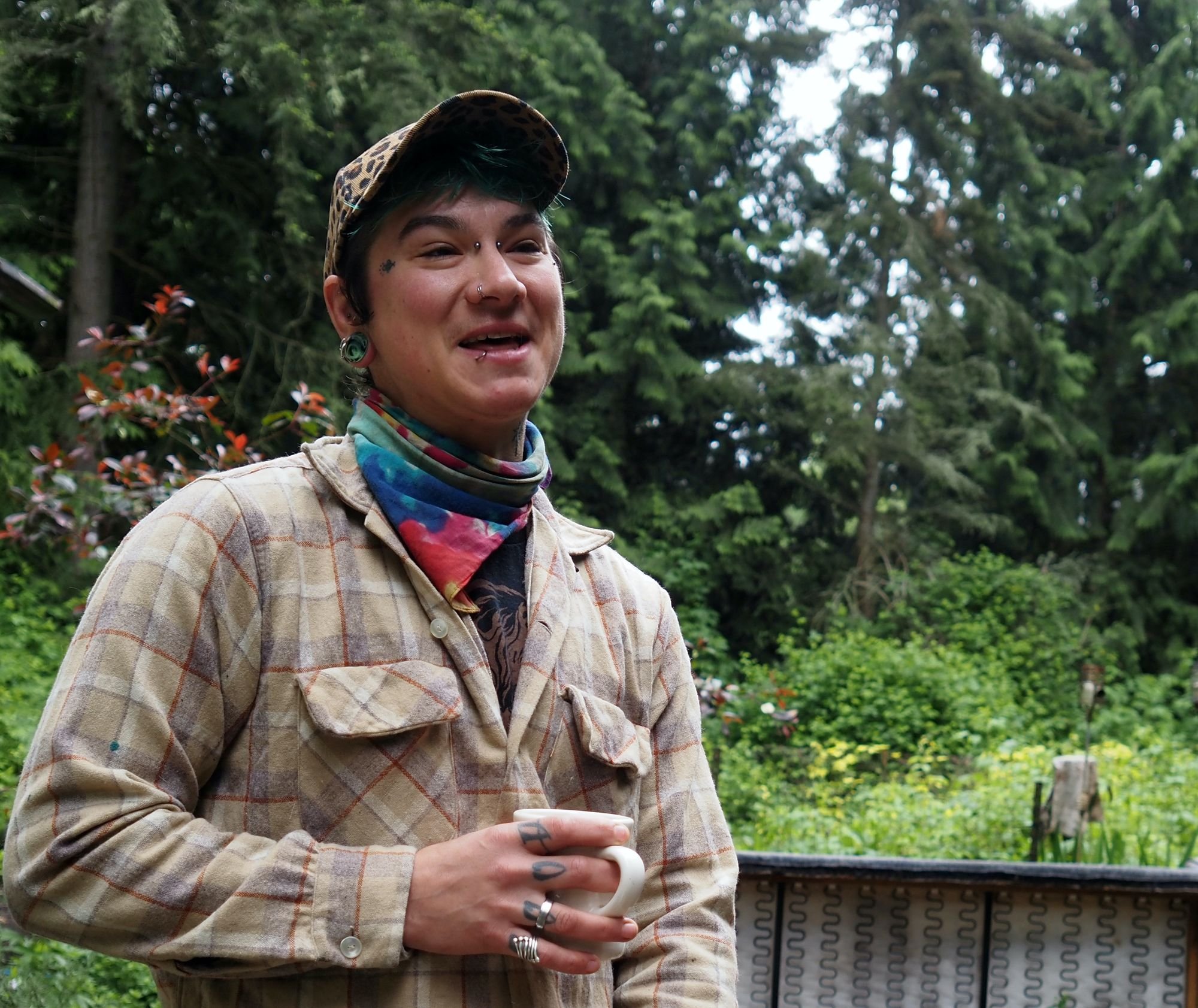
Lou Geraghty lives just outside Port Townsend where he’s recovering post surgery. Beacon photo by Derek Firenze. [/caption]
“Being of service” and “self-care” are concepts so commonplace that the power they bely can be forgotten. Not so, though, for a group of locals undergoing gender-affirming top surgery who are finding support amongst themselves to be transformative.
Local craftsman Lou Geraghty is one month in and hopefully halfway through a hiatus from work to recover from his own surgery. Thankfully, he’s not alone.
“Recently, there have been quite a few of us who have topped-off,” Geraghty told me during a recent interview. “It’s been a succession of people closely together getting these surgeries done.”
Top surgery, also known as chest reconstruction, is a surgical procedure by which a transgender or non-binary person’s physical appearance is changed to align with the gender with which they identify.
This shared experience is passing through the community in a chain of aid.
“Prior to my surgery, I’ve had two friends within the last year and a half that I knew close enough that I felt comfortable being involved in,” Gerhaghty said. He described his acts of care for them which included “spending time, maybe picking up some groceries, going and sitting beside their bed and laughing for an hour.”
Even more recently, another experience offered Geraghty direct insight in the lead-up to his own operation.
[caption id align="alignnone" width="2000"]
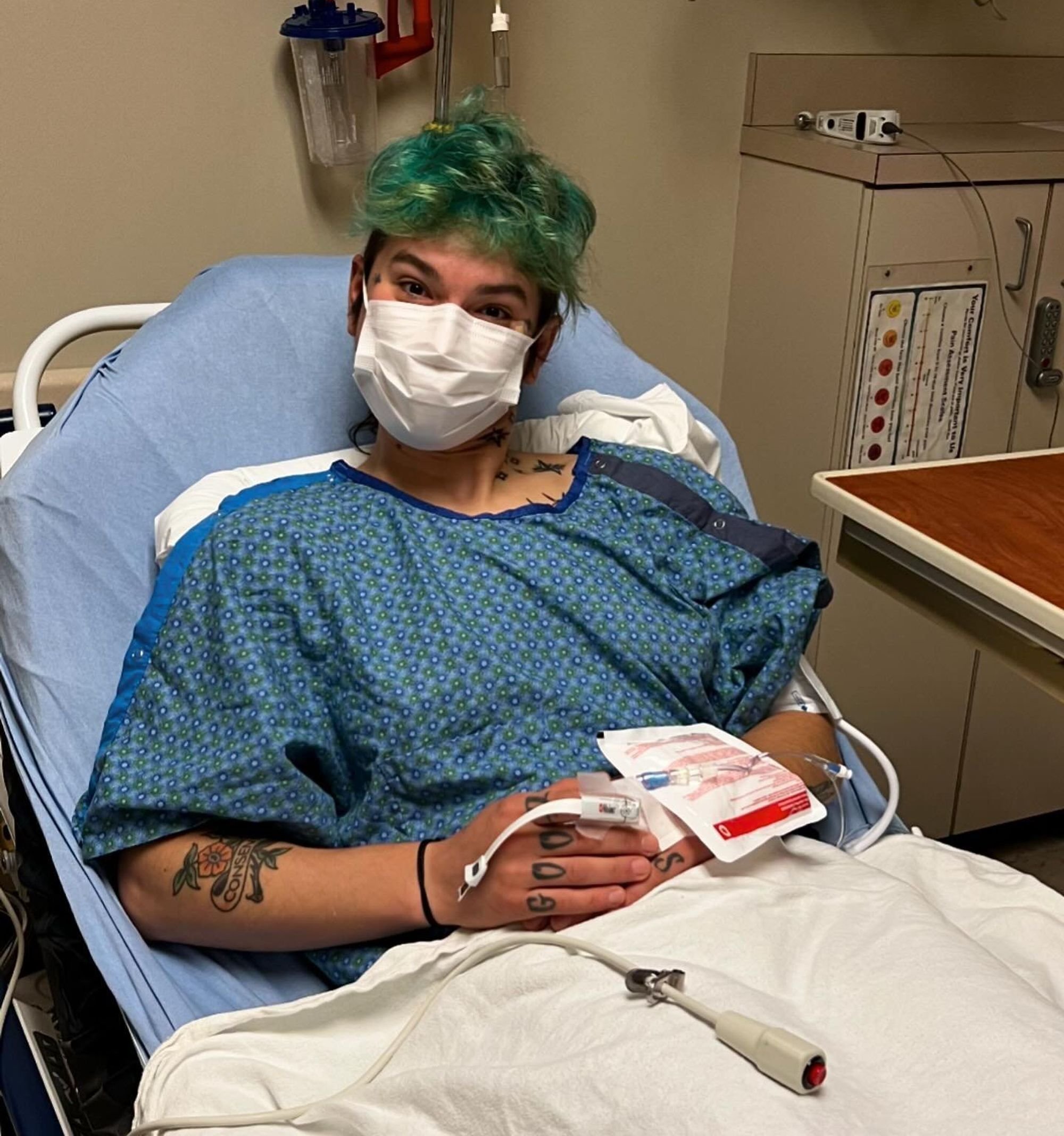
Across the water at the Swedish Hospital in Edmonds, Lou Geraghty managed to find a doctor who would take his insurance. Photo courtesy of Lou Geraghty [/caption]
“One person was twenty days ahead of me, so he was able to share with me a bunch of stuff that he had learned going through the process and tools that he had,” Geraghty said.
“It’s this beautiful network of folks,” he added.
To help with the time off from work, Geraghty launched a successful GoFundMe campaign which covered his expenses, but there have been forms of support other than financial.
One of the most challenging aspects anyone faces after a major surgery is staying stuck on the sidelines.
“I like staying busy, I like working, and I like being a part of community,” Geraghty said. “My number one job now is to stay home and heal, and it’s been slightly challenging for me, but I have received a lot of help.”
“The meal train has been a good thing for me to have because every day, or every couple days, somebody comes to check in now that I’m caring for myself,” he added.
While he still can’t lift his elbows above his head, it’s an improvement from the days immediately following the operation when he required full-time care.
“I had three different folks taking turns staying here with me, making sure I got my meds, got out for walks, and didn’t do things I wasn’t supposed to,” Geraghty said, noting he couldn’t lift anything more than five pounds.
In addition to recovery, Geraghty was driven to and from the operation by another friend who also had the same surgery.
“The person who took me to my surgery had surgery a year and a half ago, so I knew that they would be able to be in the right headspace,” Geraghty said.
Jefferson Healthcare does not currently offer top surgery, so Geraghty was forced to take the Edmonds ferry six times for pre- and post-op appointments in addition to the surgery itself, which required staying overnight in advance of the operation for an early morning appointment.
Our local hospital does, however, have two doctors who specialize in these operations. With the hospital and its services soon to be expanding, it’s possible others may not have to travel so far.
Jackie Levin, the Transgender Care Navigator for Jefferson Healthcare said, “In speaking with Jefferson Healthcare’s Dr. Asif Luqman, OB/GYN, he shared that there is interest in providing this surgery and there are several components to consider in getting a new surgical procedure.” In an email correspondence, she told me that Dr. Luqman, “anticipates that once the new surgical center is completed, he can work through the processes to determine if we can offer the procedure, which includes the wrap-around services needed from pre-operative education, training the surgical team, ordering surgical supplies and equipment and patient care through the post-operative recovery period.”
While Geraghty had to travel many miles for the operation, his journey goes back even further.
“I’ve known for as long as I can remember that I didn’t want to have female breasts,” Geraghty said.
Last July, he began taking testosterone as a first step toward medical assistance to affirm his truth. He started with a low dose to test the waters.
“I had wanted to stay on a low dose for a while because I wasn’t sure what physical changes I was going to like. Once things started changing, I really felt at home with what was happening and slowly increased the dosage,” he said.
At the end of the summer, he took a trip to Norway to reconnect with friends and volunteer at a festival he’s attended over the years. That time overseas helped bring him back to himself.
“Always around that time of year, I re-ground with a bunch of my spiritual practices, and when I came back, I was like, I need to get this done. I need to get top surgery.”
While controversial to some, medical treatments like this have been studied for many years and can be life-saving. Since 1975, more than 2,000 scientific studies have examined gender-affirming care. Supported by over 30 leading medical associations, including the World Health Organization and the American Medical Association, gender-affirming care has also been shown to be effective at reducing suicide rates amongst a population that faces a much higher risk of suicide than the general population.
Transgender people all too often face aggression from society in both the micro forms like pronoun misuse to the macro forms of transphobia, as well as barriers to health care which can include a lack of provider knowledge and sometimes even refusal of care.
“It’s about perception,” Geraghty said. “Before having the gender-affirming top surgery, walking around as a person who identifies one way and can present in other ways—identifying as a transgender person but still sometimes presenting as a cisgender female—at times is very uncomfortable and not authentic to the way that I felt on the inside. To have the gender-affirming care for me was a way to take steps towards presenting more authentically.”
And now that he’s been through it, he wants to carry what he’s learned forward to others.
“It was this really beautiful experience for me to pull from community and know who to call on for certain things,” Geraghty said. “Letting people show up for me, that’s a hard one because I resist asking for help because I’m fiercely independent. Now I know what it took, and I’m able to show up a little bit more for myself and others.”
“For people who are going to be having surgery after me, I have my own experience that I can share, and I feel a lot more confident showing up for people who need the care and support because I’ve been through it, and I can be a little bit more sensitive now to what folks are going through.”