How an Appeal from Homeowners Could Derail Port Townsend's Housing Plan
Affordable housing may take longer than originally anticipated.

News by Rachael Nutting
PORT TOWNSEND, WA — Teachers, nurses, law enforcement and firefighters are still struggling to find homes they can afford in Port Townsend. The city has a detailed, years-in-the-making roadmap to fix it. But the new group called Affordable Hometown Port Townsend (AHPT) may get in the way of that plan with a state appeal, raising the question: affordable for whom?
Now, city staff have confirmed the appeal will consume precious staff time and may push affordable housing work off the schedule.
The $17 Million Math Problem
To understand what's at stake, you have to understand the numbers. Port Townsend Public Works Director Steve King put it bluntly: the city faces a "deficit of investment of $17 million a year" to build the 85 units of affordable housing needed annually. A community this size can't write that check.
So, after two years and more than 60 public meetings, the City Council passed a new 20-year Comprehensive Plan in December 2025, as required by Washington State law. The city’s strategy is to allow higher density by changing restrictive zoning rules as the first step. Discussions about implementation of affordability measures were set to follow this month.
The goal is to reduce the required public subsidy from an impossible $17 million to a more manageable $5 or $6 million by letting the market help carry the load. To achieve this goal, the city refers to tools outlined in the 2023 White Paper.
The 2023 White Paper
Before the Comprehensive Plan was even drafted, city staff laid out a menu of options in a 2023 White Paper on Infill and Attainable Housing. This document revealed the specific tools that are now at risk of being delayed or abandoned by the AHPT appeal.
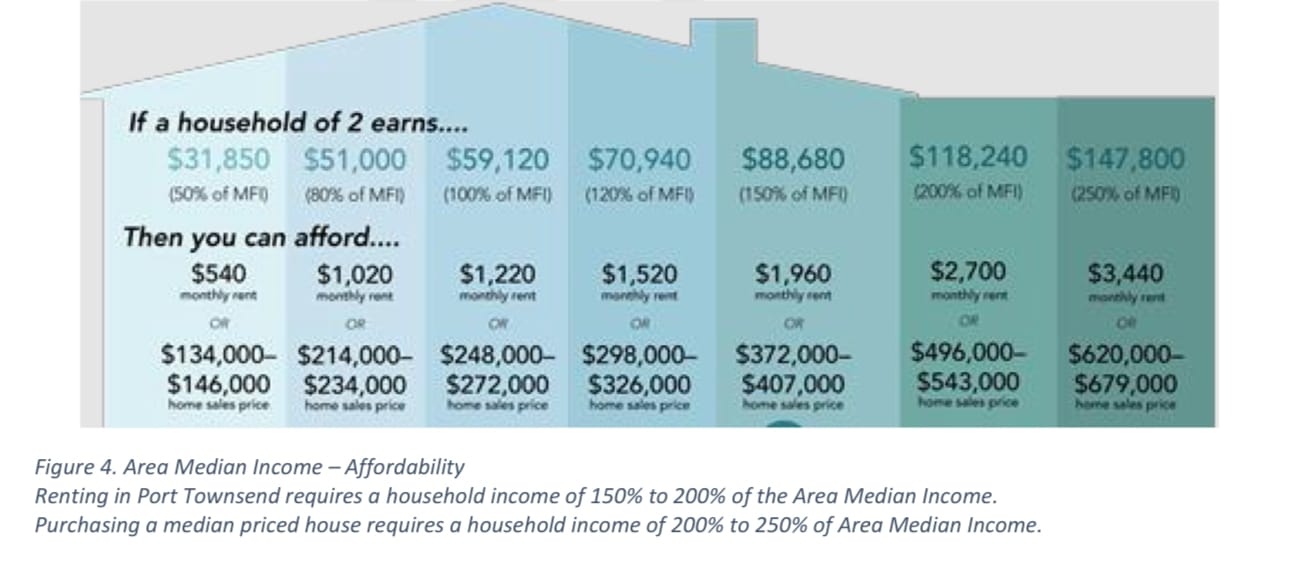
The White Paper called for an "assertive recipe" of financial tools and zoning reforms to tackle the crisis. Among the key recommendations:
- Zoning Reform: The paper was blunt about what was needed. "Zoning reform that transitions a minimum lot size model to a maximum lot size coupled with a prohibition against building across lot lines is imperative to successfully achieve housing attainability goals." This zoning reform would allow for an increase in density.
- Expanding the Multifamily Tax Exemption (MFTE) Program: The city already has a MFTE program, adopted in 2018, which offers a 12-year property tax break to developers who set aside 20% of units as affordable. The program targeted mostly commercial and R-III (Medium Density Multifamily) zoning districts. But the White Paper noted the program “has not been used yet" and recommended expanding it to the R-II (Medium Density Single-Family) zoning districts; precisely the kind of density that the new Comprehensive Plan enables and that AHPT is now challenging.
- Fee in Lieu of Attainable Housing: The White Paper explored a system where developers who do not include affordable units could pay into a fund instead. Revenues from these fees mitigate the impact of constructing attainable housing, and they would be applied to help fund affordable housing development projects. This funding mechanism could generate money for affordable units without requiring every single project to carry the full burden.
- Local Facilities Charges (LFCs): The paper recommended using LFCs to create a revolving fund for infrastructure. This would allow the city to front the money for water and sewer extensions, then recoup those costs as properties develop.
- Housing Incentive Fund: Perhaps most significantly, the White Paper called for creating a dedicated fund to offset fees and infrastructure costs for attainable housing projects. The paper estimated this could cost the city $50,000 or more for each project while being “far less costly than public housing costs which still should be supported with other sources."
A procedural wrench
Enter Affordable Hometown Port Townsend (AHPT). The group filed a petition in February with the state Growth Management Hearings Board, seeking to challenge the zoning changes.
On paper, the appeal is about process. The 13 questions raised by AHPT ask whether the city adequately planned for housing across all income levels, addressed displacement and met public participation standards. Board president John Watts, a former Port Townsend city attorney, argues that the city council "chose to pass a plan lacking any" affordable housing measures and that density without requirements for affordability will not work.
But the city maintains the plan is valid and will remain in effect during the review.
Pushing other potential mechanisms off the docket
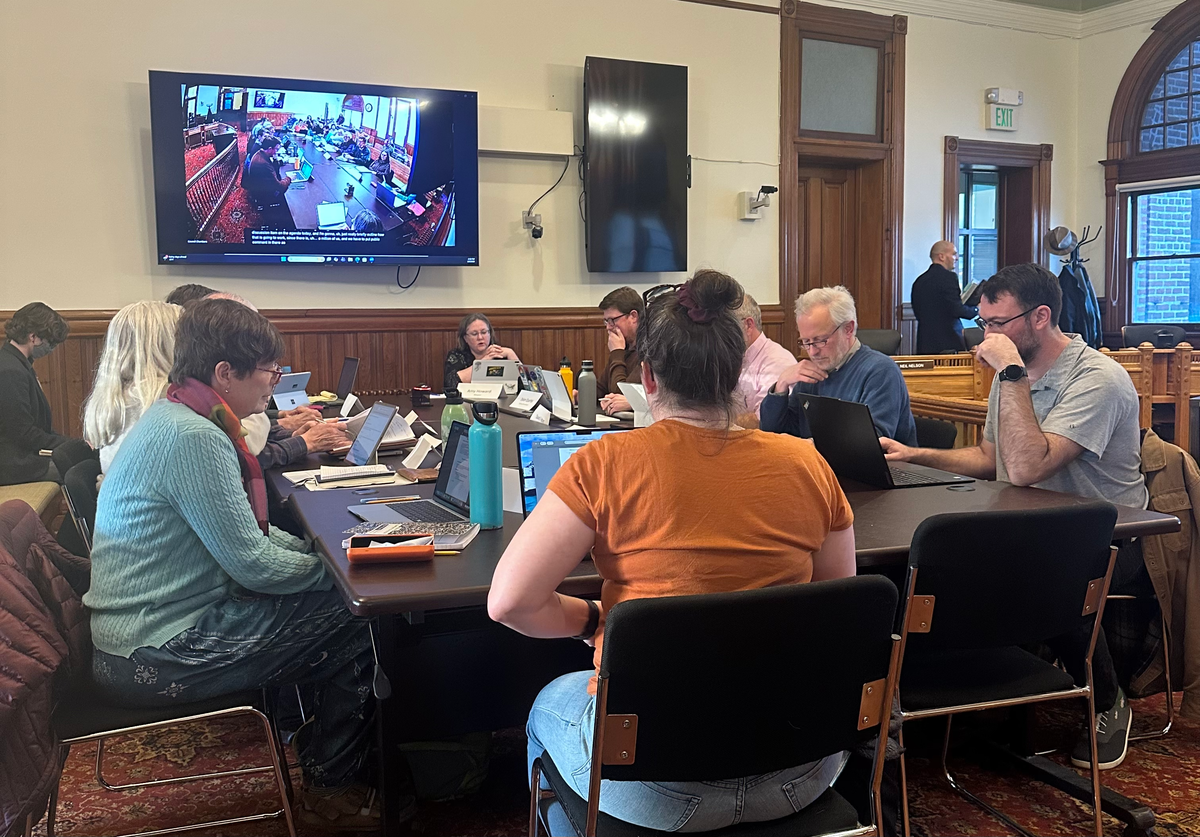
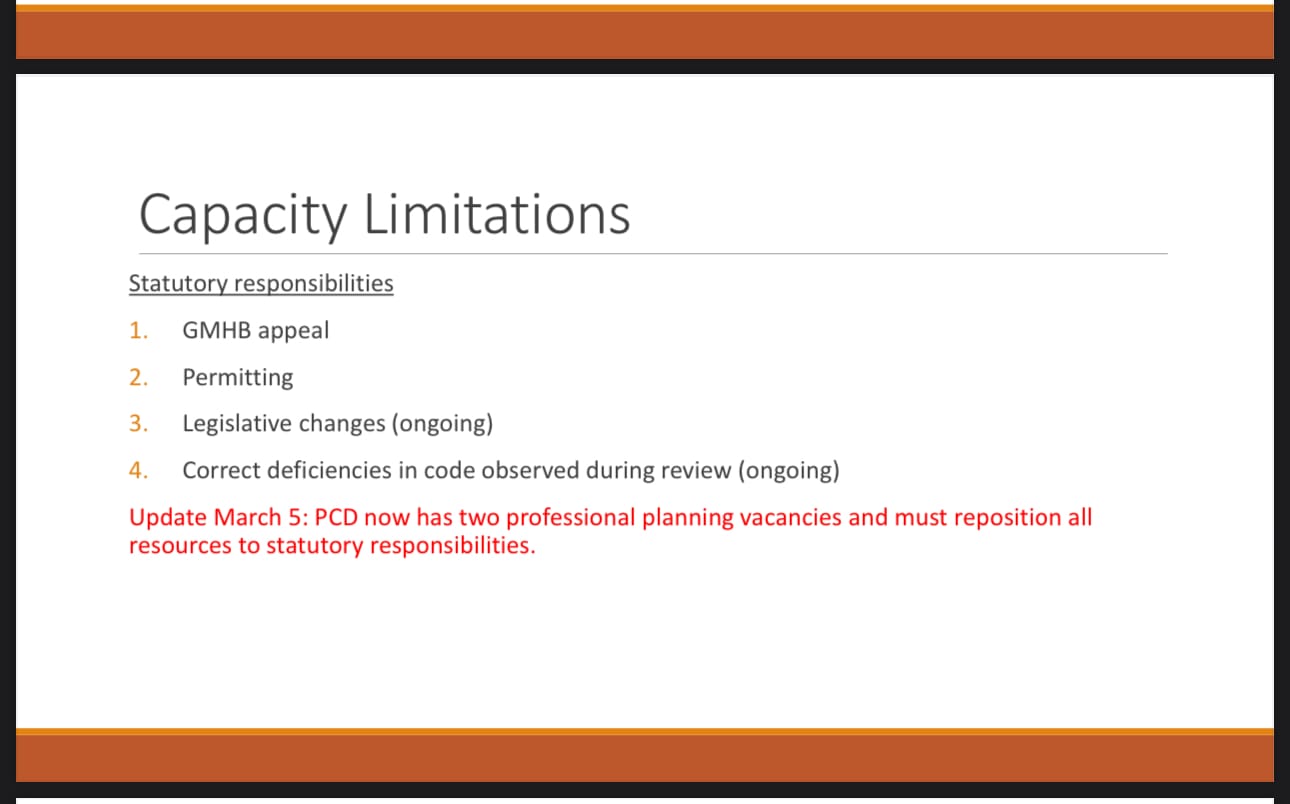
At a joint workshop between the City Council and Planning Commission on March 9, the true cost of the appeal became clear. Planning and Community Development Director Emma Bolin walked the joint body through the 2026 docket, explaining that the department is operating with two professional planning vacancies and facing a series of state-mandated deadlines. Factoring the appeal into the year’s docket cast a bleak tone for the discussion.
The list of work the city had hoped to accomplish this year included expanding the MFTE program and exploring other affordability strategies from the White Paper. But those items are now in jeopardy.
The frustration was palpable. Planning Commissioner Dylan Quarles put it bluntly, "For me, it's a bit disheartening to look at the docket and see that an appeal about a lack of affordability is the only thing that mentions or addresses affordability, and that appeal is pushing other potential mechanisms that could be explored off of the docket."
Council member David Faber went further, suggesting that if the appellants were genuinely interested in affordability, they would drop the appeal.
"If the appellants are actually interested in addressing affordable housing, and aren't just cynically abusing the process here," he said, "they’d recognize that dropping the appeal is the best way to get affordability to our Comp Plan, because that's what we want to be working on.”
Council members and planning commissioners alike urged city staff to find a way to still prioritize affordability for the 2026 docket.
The questions they wouldn't answer
The Beacon reached out to three of the AHPT petitioners, president John Watts, treasurer John Capps and secretary Todd McGuire, with eight specific questions about their vision for affordability, their proposed solutions, and their personal financial stake in the outcome.
Only Watts responded.
In an email, Watts declined to answer the questions directly, instead referring to the group's petition and website affordablehometownpt.org. "Our concerns and positions are set forth in our Petition to the Growth Board and on our website," he wrote.
He reiterated that the city "failed in the end to meet its GMA mandate to identify how the comp plan addresses affordability for different income segments." He added that AHPT "supports greater density, if combined with guarantees that some new units will in fact be affordable for middle and lower incomes."
He did not provide any alternative policy proposals for how to build the 85 units needed each year, any funding mechanism to replace the $17 million annual gap or any response to questions about the personal financial interests of the petitioners.
The other two petitioners contacted did not respond by press time.
The donations and the donors
AHPT is asking for donations on their website to fund this legal fight. This raises the question of who is funding the effort to hinder density. Watts did not disclose how much money has been raised, if any of the donors are involved in real estate or who the major donors are when asked.
The four individual petitioners listed on the appeal are John Watts, John Capps, Todd McGuire, and Mary McCurdy. They are all homeowners in Port Townsend's R-II zones. Together, their properties have increased in value by over $4 million between 1999 and 2018, according to public records. Their combined real estate assets are now worth upward of $6.7 million.
What happens next?
The state hearings board has scheduled sessions throughout 2026 until August. While the legal process drags on, the housing crisis doesn't pause.
Watts, in his email, suggested the burden should be on the city. "That is the city’s responsibility, not ours. The city has resources. We don't. The city should have done this work before adopting the sweeping zoning changes that do not even address affordability."
But the city's roadmap, the 2023 White Paper, contains dozens of pages analyzing affordability tools, funding mechanisms, and policy options. The question is whether that roadmap will now gather dust while the legal battle plays out.
The 2023 White Paper can be read here.