How Our Most Vulnerable Are Being Pushed to the Brink— and Finding Nourishment and Connection

[caption id align="alignnone" width="7321"]
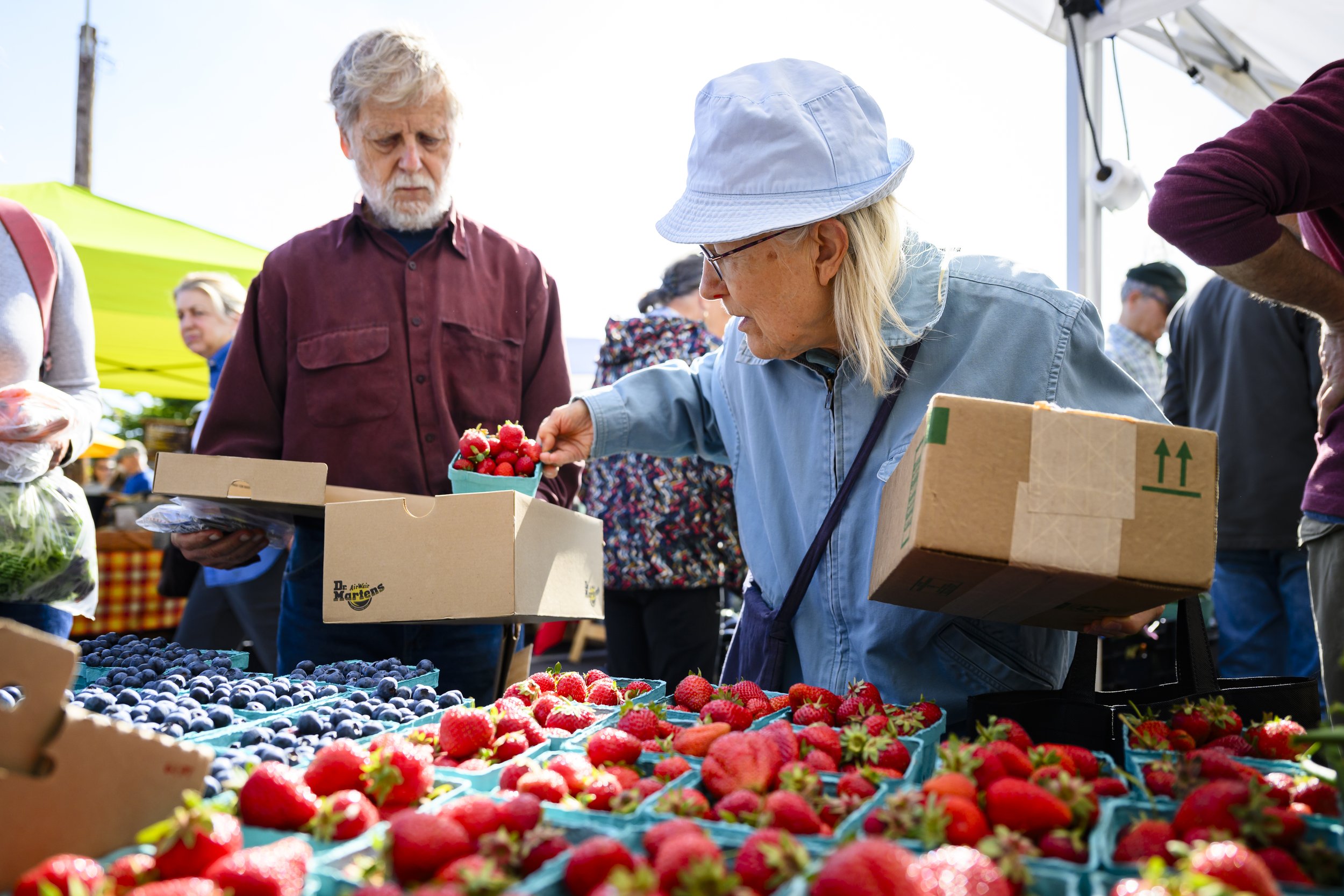
Judy Dobkevich hands fresh strawberries to her husband, Michael Dobkevich, at the Port Townsend Farmers Market. The Dobkevichs use food access programs to help supply their pantry with fresh fruit and vegetables. Photo by Heather Johnson [/caption]

Sowing Resilience: Rural communities across the country are grappling with food insecurity. Schoolchildren, seniors, grocers and even farmers face a food crisis compounded by government cuts and soaring costs. These 9 stories reveal how communities are navigating — and reimagining — the systems that have left them hungry.
News by Scott France
The bounty that the seas and network of small farms produce masks an omnipresent reality in Jefferson County — food insecurity.
Nearly 4,960 county residents lack consistent access to nutritious food each day—just under 15 percent —a rate similar to the state average, according to an Associated Press analysis of U.S. Census Bureau and Feeding America data.
However, people and organizations across the county are working to meet the needs of the food insecure by building upon and refining approaches as government assistance dwindles.
Farmers markets, food banks, small farms, a cafe providing food for recovering alcoholics and a program geared to feeding non-white People of the Global Majority (PGM) are pitching in to help fill the need and the bellies of county residents.
[caption id align="alignnone" width="7744"]
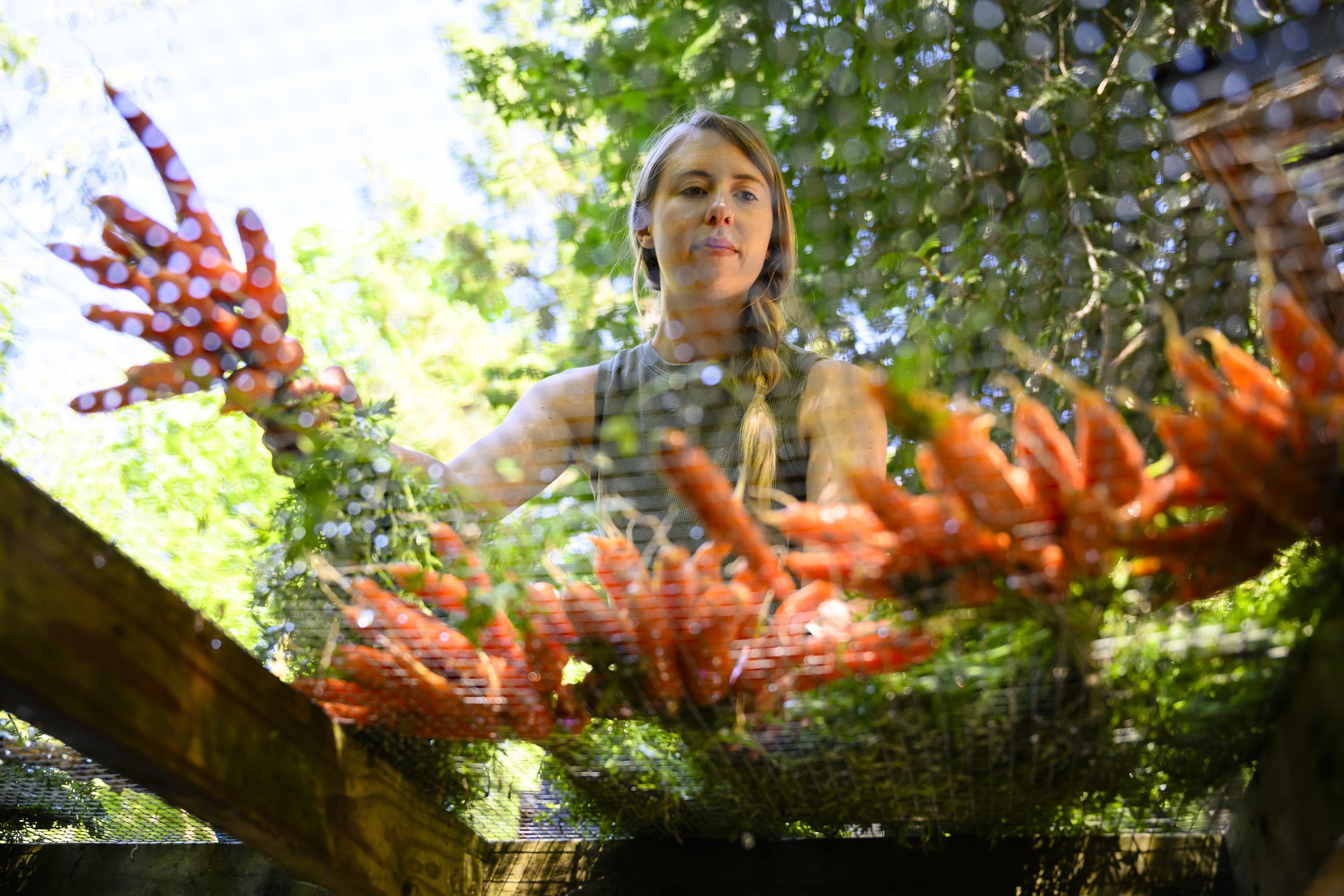
Grace Thompson washes freshly harvested carrots at Kodama Farms. Thompson and her brother, Ben Thompson, own and operate the 45-acre farm. Selling primarily at the Chimacum Farmers Market, the Thompsons estimate that 10-25% of their revenue comes from food access program recipients. Photo by Heather Johnson [/caption]
The Jefferson County Farmers Markets in Chimacum and Port Townsend participate in multiple federal food security programs: the Supplemental Nutrition Assistance Program Market Match (which doubles the value of SNAP purchases at farmers markets); Senior Farmers Market Nutrition Program (SFMNP); and the Women, Infants and Children (WIC) program. SNAP, SFMNP and WIC are funded through the U.S. Farm Bill.
The farmers markets also partner with the Washington State University (WSU) Jefferson County Extension and Clallam County Extension offices. Sallie Constant, Farm to Food Bank Coordinator for WSU Extension says that she is “not only connecting people in food access, but also educating, as well as working on systems, environments and policy stuff that can make it easier for folks and food banks to more consistently access that produce.”
“We are reaching people who really need fresh food, and don’t otherwise have access to it,” Constant said “We’ve been a supporting partner helping source fresh produce from local farms to help fill the pre-packed box option for people who don’t have access to a farmers market, especially in the farther flung communities like Brinnon and Forks.We’ve gotten a lot of interest from the Brinnon and Forks food banks where they don’t have much supply of fresh produce,” Constant said.
This year, the SFMNP is serving 1,070 seniors in Clallam and Jefferson Counties, a 62% increase over 2023.
Many older rural residents live alone, with poor mobility, fixed incomes and limited access to grocery stores. SFMNP enables seniors to pick up a $80 benefit card at a farmers market in either Port Townsend or Chimacum, as well as an additional $30 towards farmers market produce courtesy of community donations and small grants. This $110 may be used to buy a fresh local produce share at the food bank nearest their home from July through September. The share includes six weeks of fresh, seasonal, local and Washington state produce, three weeks of fruit and three weeks of veggies.
An alternative for Jefferson County seniors is to sign up for a program that allows them to pick up the equivalent value of a fresh produce share at a local food bank. The Jefferson County Food Bank Association (JCFBA) operates food banks in Port Townsend, Chimacum, Quilcene and Brinnon, as well as a pop-up site in the Coyle.
“I want to foster ways in which community members are empowered to buy from local farms, and bring home local food, regardless of their income,” said Amanda Milholland, executive director of the Jefferson County Farmers Markets.
As a result of recent federal legislation dubbed the One Big Beautiful Bill Act, SNAP recipients will see decreases in their benefits of between $25 and $146 per month beginning in September, according to Milholland. She noted that state and federal funding of the SNAP Market Match program will drop by 60% in 2026, and support for the program's administration will end, leaving a gap of tens of thousands of dollars per year for staff time and printing vouchers, cards and tokens.
According to the Food Research and Action Center, a Washington, D.C. organization that fights hunger, “SNAP is not only a poverty alleviation tool — it also acts as a powerful economic multiplier. Every $1 in SNAP benefits generates up to $1.80 in economic activity. In rural America, where small businesses operate on thinner margins, that support is often the difference between staying open and closing down.”
Nourishment Through Food and Connection
More than 20 seniors gathered outside the Port Townsend Food Bank well before the 11:30 a.m. opening time on a recent Saturday, the designated day for seniors. “The food bank is about food security, as well as socialization and survival,” said Ellen O’Shea, a regular food bank recipient. “We share resources with each other.”
[caption id align="alignnone" width="6709"]
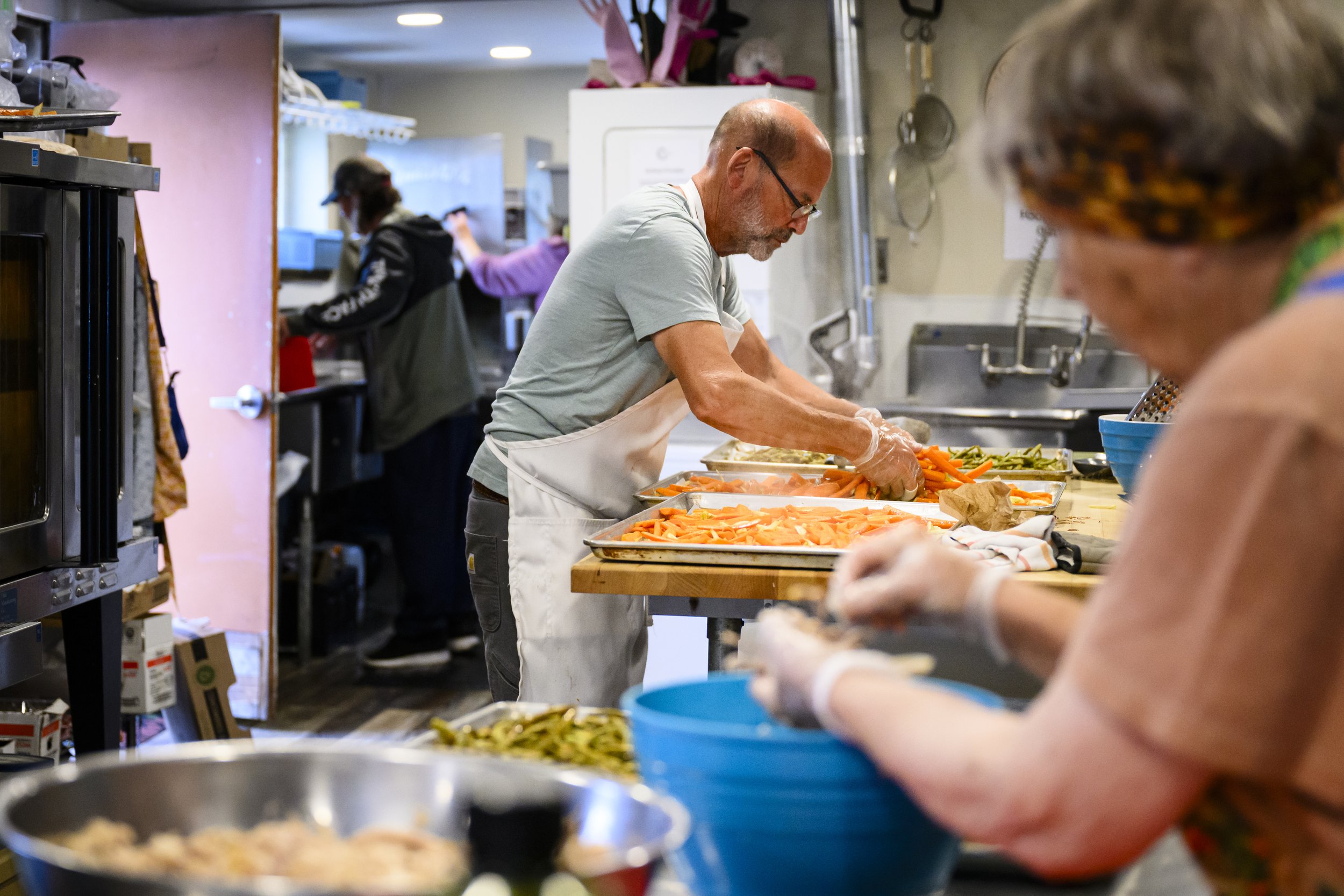
Steve Levi (left) and Kathy Ryan volunteer at the Recovery café, cooking free meals for community members. They source ingredients from local farms when possible. Photo by Heather Johnson [/caption]
“There’s such knowledge and understanding here that older people have lots of health issues,” O’Shea added. “So they can choose from fresh fruits and vegetables and protein. My husband and I find it hard to afford protein. It’s hard to be at this stage of our lives where we need good food, and if we can’t get it, we’re not going to survive.”
The food bank fills several rooms with tables and racks of food at the Mountain View Commons building, where clients can walk through and select what they want. The food bank dedicates one room for clients with special needs, such as those who are homeless and don’t have cooking equipment, or need some other assistance. A volunteer accompanies the individuals through the room to ensure that they are getting the food that suits their situation, as well as any other necessary items such as propane, utensils or personal hygiene products.
Toby Sheffel volunteers at the food bank and receives its food. “I have MS, which is debilitating, making it a big deal to go to the grocery store, and this is so convenient,” Sheffel said. “A lot of us get therapeutic benefits working here. It has helped my MS through the exercise, positivity and love everyone has.”
Jefferson County Food Bank Growers network provides huge support to the food bank association. The most recent data available indicates that the network supplied over 13,700 pounds of produce through the first nine months of 2024, according to Patricia Hennessy, executive director of JCFBA. Additionally, JCFBA receives fresh food from gardens tended by individuals, schools and local farms, including grocery stores, restaurants, bakeries, small farms and organizations including the PT Gleaners. The Gleaners are teams of volunteers who pick fruit from backyard sources to give to schools, food, banks, nonprofits and senior centers. Additionally, Hennessy estimates that 25% of food bank customers are proxy shoppers who collect food for homebound family, friends and community members.
To reach the many seniors who are either homebound, unaware of the benefits for which they qualify or have been reluctant to take advantage of them, JCFM has developed a Food Access Ambassador Program. Seniors are trained and paid a small stipend to reach out to their peers and help them access the application or explain how the program works.
“It helps reduce some of the stigma of food access programs if your friend tells you about it,” Milholland said. “Some food ambassadors have gone to low-income housing and signed up everybody in the building for the program.
“There are people who are living in remote areas or don’t have access to transportation that are able to get this fresh produce they couldn’t have before,” added Milholland. Although Clallam County has a mobile food service that goes to several senior low-income housing centers and community centers where food can be picked up, Jefferson County does not have the resources to provide that service, she said.
Emotional Element of Food Insecurity
For some people, food insecurity can prompt an emotional response. “There is a lot of stigma in asking for food,” said Joey O’Bryan, an advocate with the Recovery Cafe in Port Townsend. The cafe’s mission is to foster a beautiful, safe, warm, drug- and alcohol-free space for everyone, O’Bryan added. It serves approximately 65 meals a day, Tuesday through Friday, to people in recovery.
[caption id align="alignnone" width="8256"]
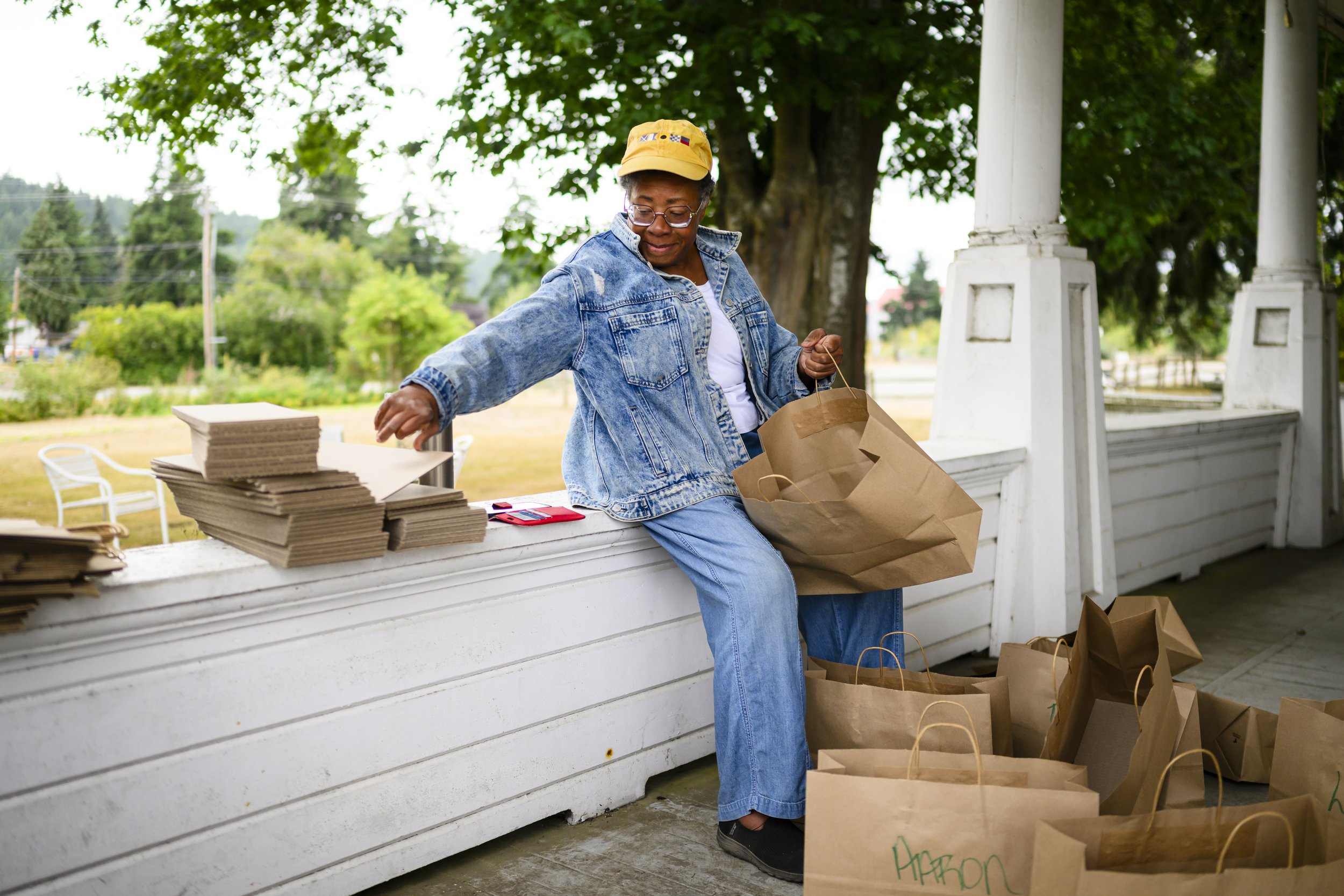
Oceana Sawyer prepares bags at the Nourishing Beloved Community distribution site at Finnriver Farm & Cidery. The program packs and distributes food purchased and donated from local growers and producers, with a goal of producing food by and for people of the global majority (PGM). Photo by Heather Johnson [/caption]
Brian Richardson, program manager at Recovery Cafe, said that the meals are an equalizer and an engagement tool to build community. “We’re getting a surge of seniors, and more women with mental health challenges,” Richardson said. He is appealing to community members for donations.
Oceana Sawyer started Nourishing Beloved Community in 2024 to build food literacy through growing food and hosting Sunday potlucks for People of the Global Majority (PGM), non-white people of African, Asian, Indigenous, Latin American and mixed-heritage backgrounds. The organization purchases food from PGM growers and producers.
Sawyer says that food acquisition and the shopping experience are frequently not safe or comfortable for many of these people. “Our number one hurdle is getting people to take food,” she said. “There’s shame about receiving food.”
Sawyer informed The Beacon that it recently lost its primary source of funding, a Washington State Department of Agriculture Food Resiliency grant. She is appealing to community members to think of NBC when considering organizations worthy of their donations.
Cuts are happening across the US for a variety of reasons. The U.S. Department of Agriculture will stop collecting and releasing statistics on food insecurity after October 2025, saying the numbers had become "overly politicized."
The decision comes in the wake of federal funding cuts for food and nutrition safety net programs nationwide.
A Relentless Need for Funding
Sixty percent of the food that the Port Townsend Food Bank receives is what Hennessy calls “food rescue,” which comes from supermarkets, restaurants, bakeries, etc. “My call to the community is, ‘Cash is king,” Hennessy said. “$250 feeds a family of four for a week.”
Milholland is concerned that the country is relying heavily on nonprofits to run vital programs. “How do we make sure that people have access to food? If we as individuals have enough, what can we do to make sure that our neighbors also have enough, and it’s not just on the shoulders of those who work at nonprofits to figure out how to get there?”
Associated Press data reporter Kasturi Pananjady contributed to this report. This reporting is part of a series called Sowing Resilience, a collaboration between the Institute for Nonprofit News’ Rural News Network and The Associated Press. Nine nonprofit newsrooms were involved: The Beacon, Capital B, Enlace Latino NC, Investigate Midwest, The Jefferson County Beacon, KOSU, Louisville Public Media, The Maine Monitor and MinnPost. The Rural News Network is funded by Google News Initiative and Knight Foundation, among others.
Corections: an earlier version of this article had the farmers market matching fund amount incorrect.