How to transform: One woman’s Path
[caption id align="alignnone" width="2400"]
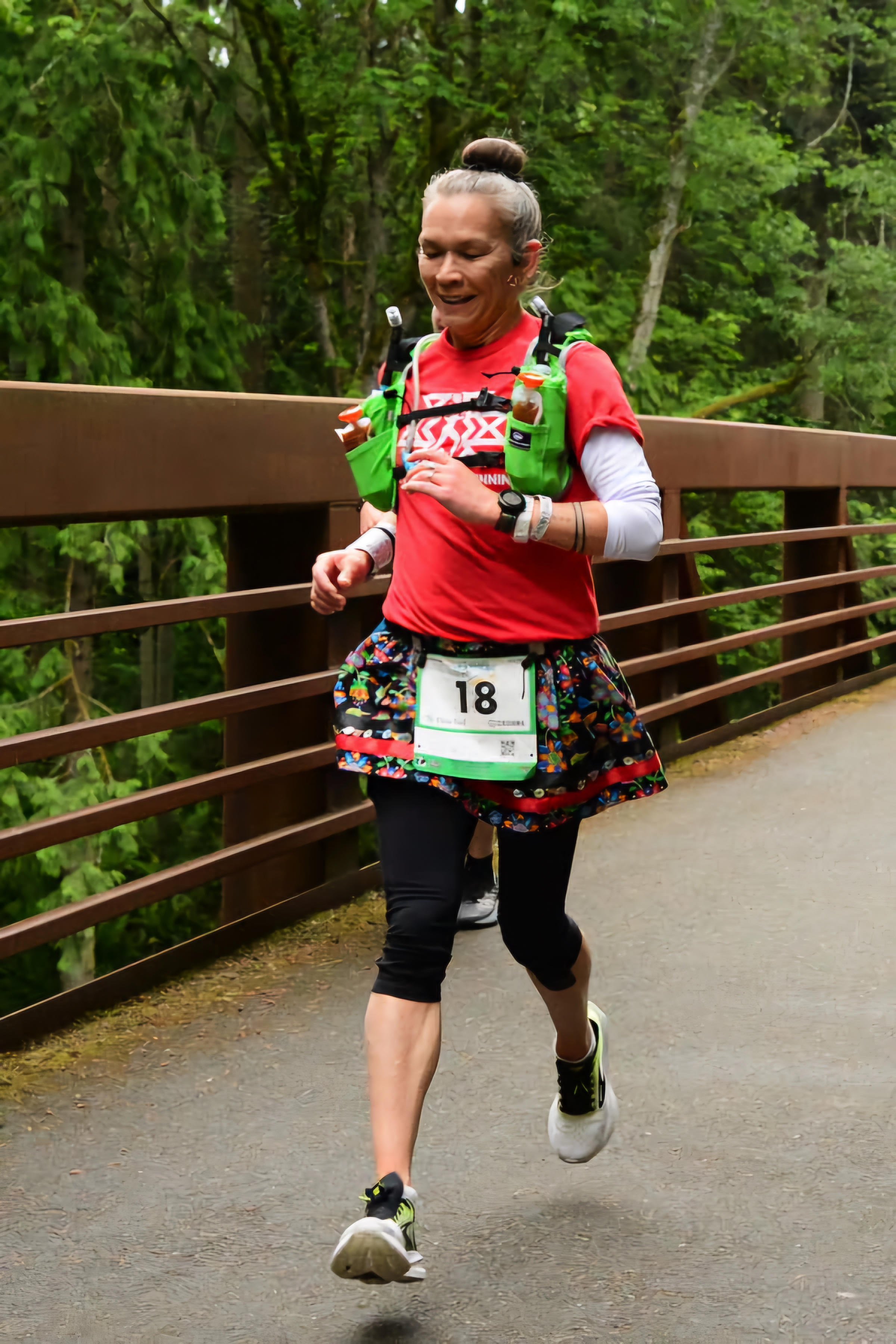
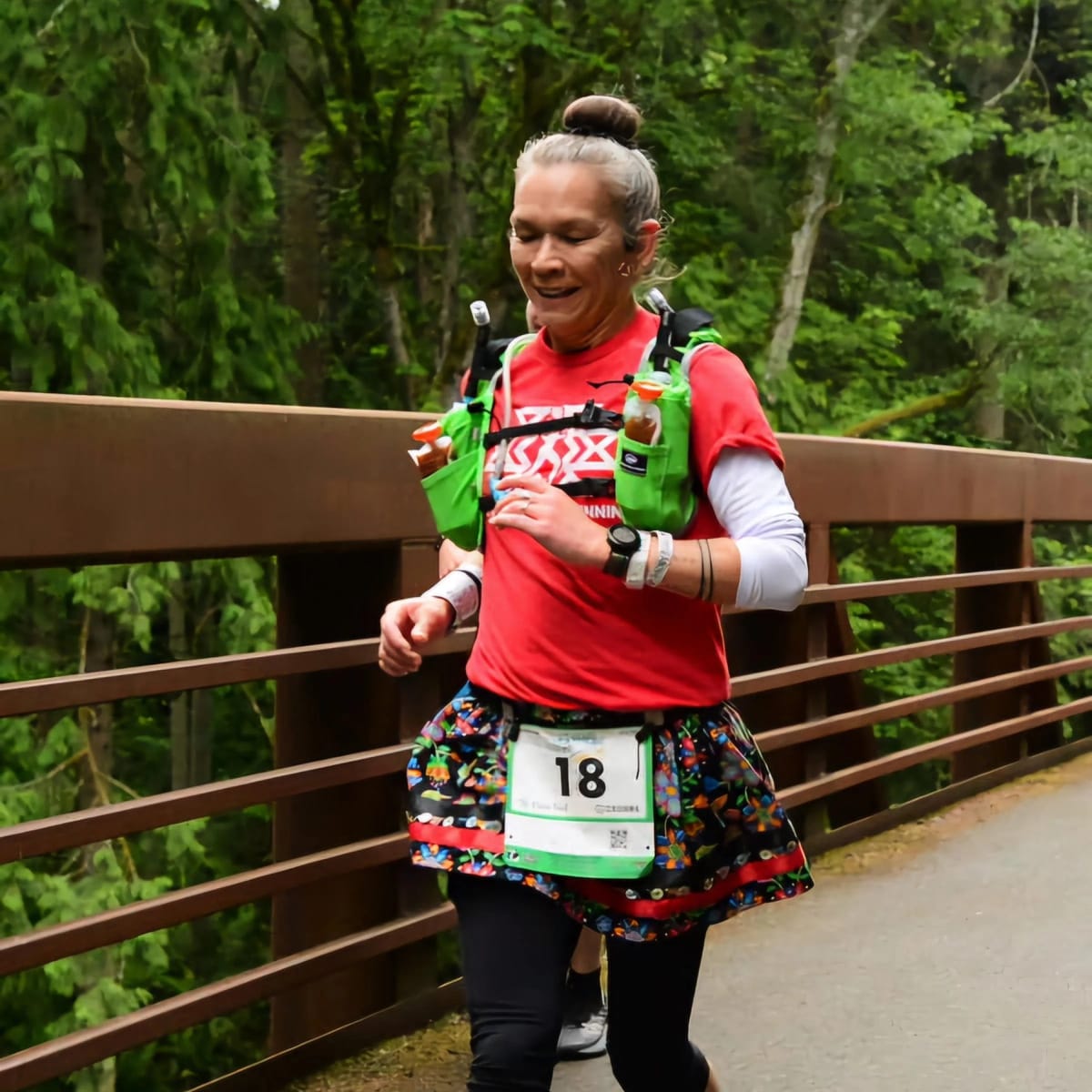
Sabrina McQuillen Hill crosses one of bridges on the North Olympic Discovery Marathon route in June 2024. photo courtesy of Sabrina McQuillen Hill. [/caption]
News by Diane Urbani de la Paz
Sabrina McQuillen Hill knows that feeling of “What am I doing here? Should I be standing here?”
It used to overtake her when she walked up to the starting line of a foot race — be it a 5-kilometer run or something longer.
“I’m surrounded by white men, and they’re tall, lean and fast,” the 5-foot-4 Hill would think.
Hill has since gotten over impostor syndrome. It took a long time, she said.
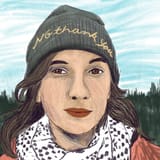
Hill is a member of the Makah tribe who lives in Port Townsend. She is also part of a worldwide network of Indigenous women — thousands — who cheer one another on in running and in life. Native Women Run, founded by Navajo tribal member Verna Volker, is a nonprofit organization supporting women as they run, train and triumph on their own terms.
“Community is medicine. We rise together,” Volker writes on NWR’s Instagram page, which has 36,000 followers.
“Showing up as a Native runner is powerful. Your presence is a reminder: We are still here. We always have been.”
“There are runs when I’m smiling, and there are runs when trauma and grief comes out.”
— Sabrina McQuillen Hill
Hill, for her part, did not at any point in her life see herself becoming a runner. Sure, she lifted weights, cycled and took walks with her children, but jogging was never in the picture.
But there came a tragedy, followed all too fast by a global pandemic.
Hill’s brother died by suicide in 2019. Grief and trauma fell on her like weights, so heavy that people in Hill’s life didn’t know how to be around her. The arrival of the coronavirus deepened the isolation. Hill searched social media for fitness groups and connection — and found both on NWR’s page.
“I noticed in the stories that all of these women are like me: They’re not elite athletes running 4-minute miles. They’re in their 30s, their 40s … they looked like me. They were struggling like me.”
By this time, it was early 2021, and Hill learned that a run was coming up on May 5, the National Day of Awareness of Missing and Murdered Indigenous Women.
The MMIW movement seeks to draw attention to the disproportionately high rates of disappearances and murders of Native people. According to the Human Rights Research Center, there were 5,487 cases of missing Native American women and girls in the United States in 2022, with the majority of missing persons cases involving girls 17 and younger. These numbers were reported by the National Crime Information Center.
At the same time, the rates of rape, murder and other violent crimes against Native Americans markedly surpass the national averages in the non-Native population.
“The ongoing crisis of MMIW in this country is something that’s hit close to my heart for a very long time now,” Hill said. She has spoken up at community gatherings about the underrepresentation of Native women in the media and in police reports, and sought to bring the MMIW issue forward.
[caption id align="alignnone" width="2248"]
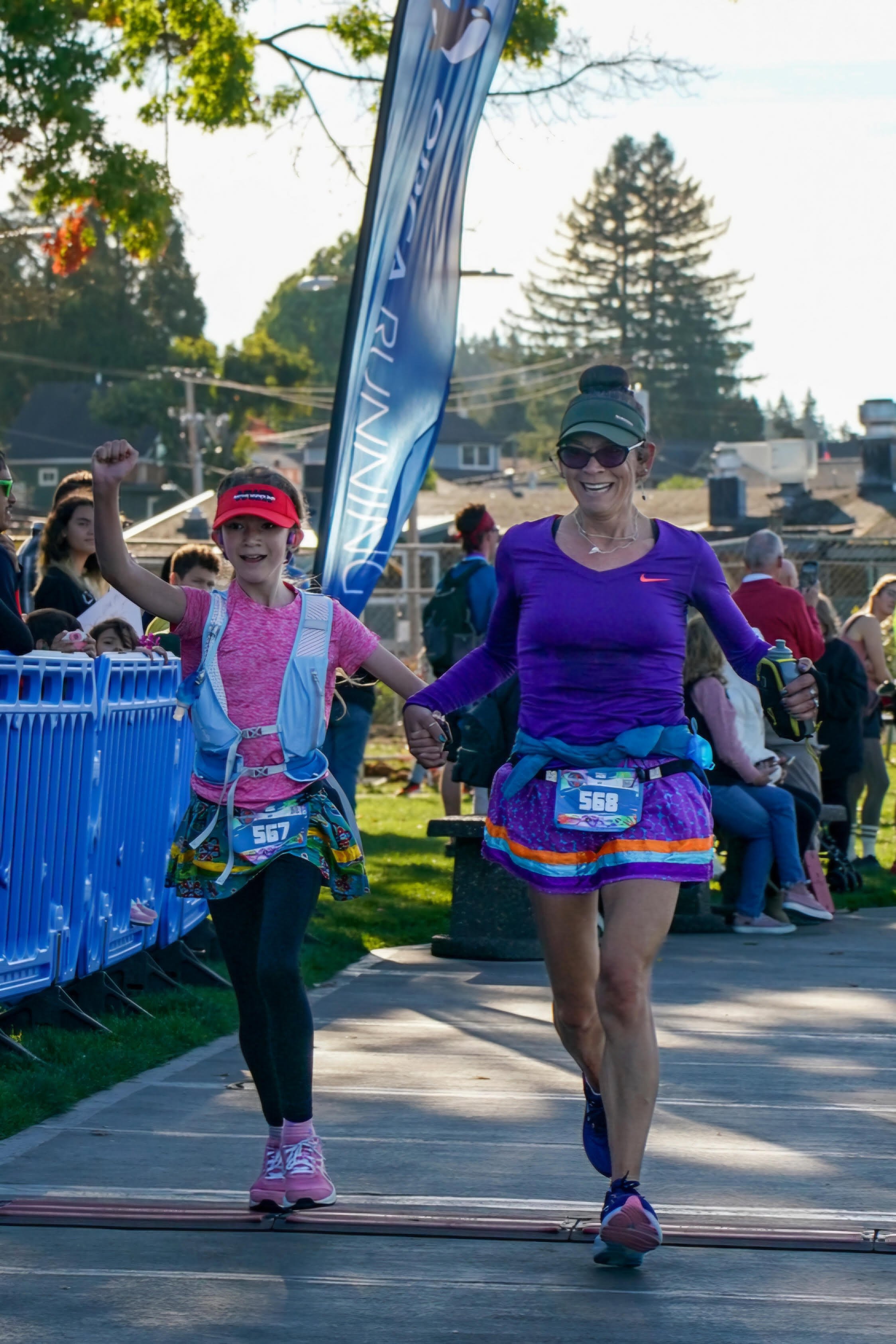
Sabrina McQuillen Hill and her daughter Mary, 12, cross the finish line of Mary’s first 10K race earlier this year in Poulsbo. Photo courtesy of Sabrina McQuillen Hill. [/caption]
In the late winter of 2021, Hill stepped onto a new plane: She began using her body to build awareness of Native women’s rights. She embarked on a different path toward fitness, and she downloaded a couch-to-5K app on her phone.
Hill followed its regimen of walking intervals and running intervals. Gradually her walks got shorter as the runs stretched out longer, and 12 weeks later, she completed her first 5K race.
Hill transformed herself into a daily runner, all the while posting on Instagram about it and reminding people where to donate to support NWR.
Across the country, NWR sponsors Native women’s entry fees in races, and posts their photos and words of encouragement to one another on Instagram. There is no formal membership in the group; any woman runner is welcome to connect and apply for race sponsorship.
For Hill, running and her connection to NWR have changed everything.
“The rhythm, the consistency of moving your body: It’s a nervous-system reset,” she said, adding that running cleanses, via tears.
“There are runs when I’m smiling, and there are runs when trauma and grief comes out,” Hill said.
“What I didn’t know I would find,” she said, “is healing. It comes in buckets full.”
In June 2024, Hill completed the North Olympic Discovery Marathon from Sequim to Port Angeles, with her family and her friends cheering her on. She also enjoyed a 199-streak of daily runs, until a bout with a nasty virus kept her home.
Now Hill runs five days a week, including Saturday outings with her friend Tristan Marcum. He teaches music at Salish Coast Elementary School in Port Townsend, and got to know Hill via her work with Since Time Immemorial, the state’s tribal sovereignty curriculum. As a contractor with the Port Townsend School District, she works with Native students and puts together family nights with movies, art projects, exercise with Powwow Fit videos, and sharing meals.
This fall, Marcum and Hill were part of the team that brought musician and activist Supaman to Port Townsend, where the performer shared his message of inclusion and Native pride in student assemblies and two public performances on Nov. 20.
Year-round and especially in winter, Marcum’s Saturday runs with Hill keep him accountable for his fitness, he said.
“There was a day when I used to be faster than her. Then one day she was faster than me,” he added.
“We talk while we run. And sometimes, we get quiet on a very steep hill,” Marcum said. These days, despite the fact that he is taller, the two run stride for stride.
Hill and Marcum are on a relay team they call Slug Life, and plan to run the Frosty Moss Relay from the Sol Duc River to Blyn on March 14.
“I’ll do a 30K in April — that’s only 18.5 miles,” added Hill, “and then the Rhody Run in May.”
Whatever the distance, running transports her, body and soul.
“My spirit has been uplifted by running,” she said.
“Every time — every time, there’s a deep sense of self-congratulatory satisfaction. You’ve gone out and done the hard thing.”