Inclusionary Zoning in Port Townsend: A Contentious Path to Affordable Housing


News by Rachael Nutting
Port Townsend is in the process of course correction regarding density and what that means for affordable housing. As longtime residents are priced out and the local workforce struggles to find affordable homes, city leaders and community members are searching for effective solutions.
Inclusionary zoning (IZ)—a policy that requires developers to include affordable units in new housing projects—has emerged as a focal point in this debate, highlighting both the urgency of the problem and the complexity of potential solutions.
Over recent years, rising housing costs have forced many longtime Port Townsend residents to leave, while essential workers face severe challenges securing stable accommodation. This has put pressure on local businesses, schools, and healthcare providers, all of which rely on a stable workforce.
The city’s 20-year Comprehensive Plan, mandated by the state and adopted at the end of 2025, has been the main vehicle for addressing these issues. The question of whether to adopt inclusionary zoning was at the heart of this planning process.
The Case For Inclusionary Zoning
Supporters of IZ argue that the city is missing a critical opportunity to leverage new development for the public good. With proposed citywide rezoning to allow higher-density housing—such as permitting up to six units on a standard 5,000-square-foot lot—advocates see IZ as a direct mechanism to ensure that increased density translates into more affordable homes.
Residents have urged the city council to consider IZ, contending that upzoning (zoning changes that allow for apartments or townhomes) without affordability requirements means “leaving a lot on the table.” The sentiment among proponents is clear: if developers benefit financially by being allowed to build more units, the community should gain a commitment that some of those units will be affordable. Without IZ, they fear that density changes will primarily result in high-end, unaffordable housing, further displacing service workers and middle-income families.
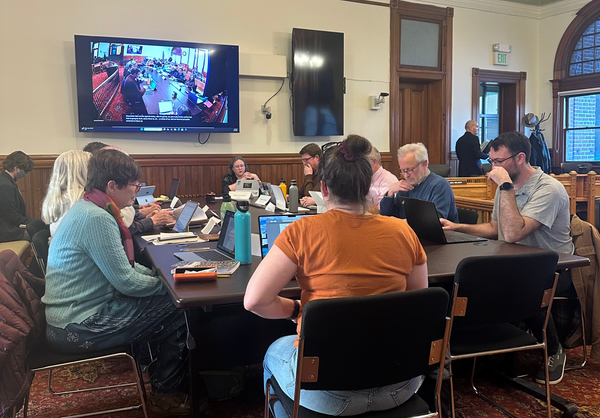
The IZ topic was revisited at the January 9th “Coffee with Mauro” event, attended by 35 people. The gathering was considered largely attended compared to previous dates, as residents used it as an opportunity to further discuss the Comp Plan and how inclusionary zoning should be implemented.
The Case Against Inclusionary Zoning
City officials and planning staff are wary of IZ, citing Port Townsend’s unique economic constraints. Former mayor David Faber had warned that affordability mandates could make small-scale projects—the type most commonly built in Port Townsend—financially unviable. This challenge is compounded by the city’s low Area Median Income (AMI), which means that legally “affordable” rents and sale prices may be lower than the actual construction costs.
Council members, including Libby Wennstrom, cautioned that a poorly designed IZ policy could result in “nothing ends up being built.” If affordability requirements are set too high, developers may be discouraged from building altogether, shrinking the supply of new housing that the city desperately needs.
Council member Neil Nelson had characterized IZ as a form of subsidized housing, noting that the cost “will ultimately be paid for by the community,” whether through higher prices for market-rate units or a reduction in overall housing development.
Mandatory IZ Can Slow Growth
Chicago, Illinois, experienced a sharp construction slowdown after imposing mandatory IZ. After the city increased affordable unit requirements from 10% to 20% in a 2021 update, approved housing units dropped sharply. In the 16 months after the change, the city approved just under 6,900 units, compared with over 14,000 in the 16 months before.
In New Haven, Connecticut, two and a half years after adopting its mandatory IZ law in 2024, zero affordable apartments had been created under the program, despite over 50 units being approved. Developers said the IZ requirements themselves were manageable but high interest rates and construction costs are the primary reasons for delays.
There Are Successful Examples
Key differences for success include whether inclusionary zoning is mandatory or offers funding to offset builder costs.
In nearby Poulsbo, it’s incentive-based, offering density bonuses for developments of five or more units if affordable housing is included. This approach suits small to mid-size projects, which aligns with Port Townsend’s need to support financially feasible development on small lots.
In 2017, Portland, Oregon, implemented mandatory inclusionary zoning. Despite this effort, the city’s requirements for affordable housing initially resulted in far fewer affordable units than anticipated. In 2024, Portland responded by funding its inclusionary zoning program with a 10-year tax exemption that applies not just to the affordable units, but to the entire building. This approach helped offset the financial impact of offering below-market-rate housing. After the program received full funding citywide in 2024, data indicated an increase in housing construction. Still, developers continue to express concerns that the 10-year tax exemption may not be sufficient to cover rising inflation costs over time.
P.T. Strives for Informed Decisions
Given the risk of unintended consequences, the Port Townsend City Council is taking a measured approach. Rather than immediately implementing IZ, council members have decided to study the policy in depth before taking action. They have directed city staff to include the exploration of IZ and other affordability strategies in the city’s formal 2026 work plan, with the goal of conducting a thorough market analysis before making any commitments.
While the debate over inclusionary zoning continues, Port Townsend is pursuing several alternative strategies to expand affordable housing:
· Density Bonuses for Religious Institutions: The proposed plan would grant religious organizations a 20% density bonus if they build income-restricted housing on their property.
· Expanding Housing Types: Port Townsend is amending its codes to allow more diverse housing types, including becoming one of the first cities in Washington to permit Tiny Houses on Wheels as accessory dwelling units.
· Direct Public Investment: The city has purchased the 14-acre Evans Vista property with state funding, aiming to develop 100-150 workforce housing units in partnership with other agencies.
Inclusionary zoning in Port Townsend remains an aspirational policy, emblematic of the city’s desire to ensure that growth benefits all residents, though the practical realities of a small, high-cost housing market complicate its adoption.
As the city moves forward with its Comprehensive Plan update, the outcome of the 2026 study will be crucial in determining whether IZ becomes a pillar of Port Townsend’s affordable housing strategy or remains a contentious idea on the sidelines. Ultimately, the debate reflects broader tensions between urgent community needs and the economic constraints facing small cities.