Jefferson County Braces for the Unknown: Will ICE Roll Into the Quimper Peninsula?
With tensions high all over the US, what can we expect from federal immigration enforcement, and how can we prepare to help our neighbors?

News by Scott France
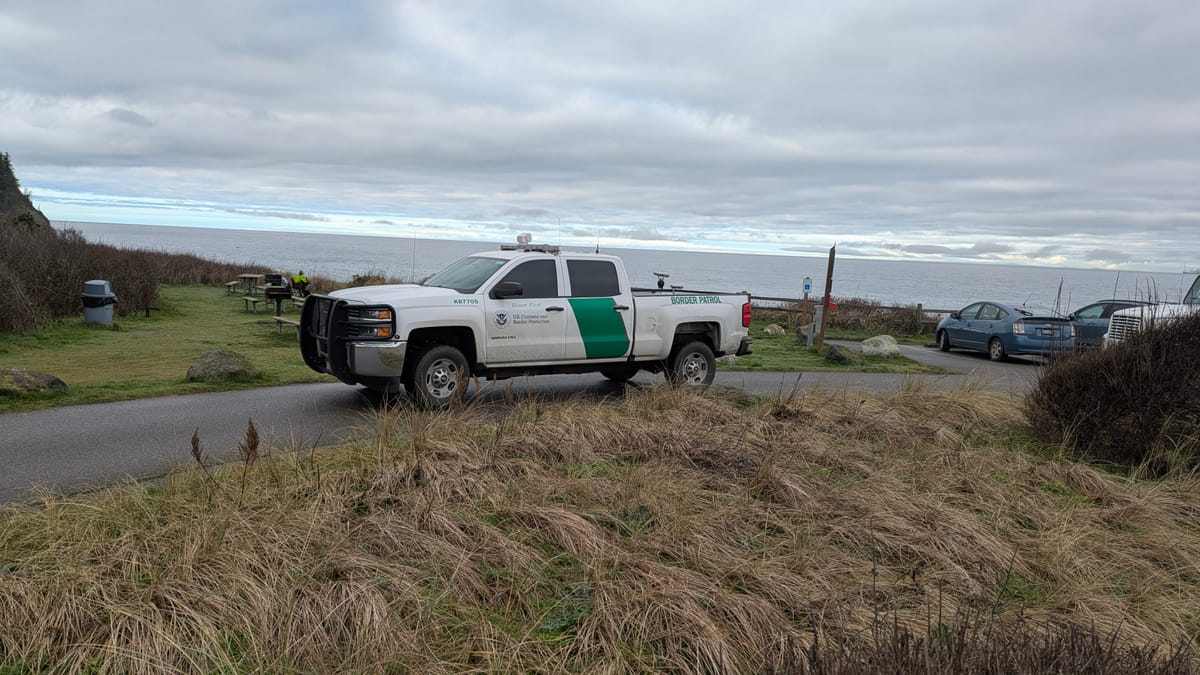
JEFFERSON COUNTY, WA — In recent weeks, conversation in Jefferson County has turned to national immigration enforcement. Events ranging from a sighting of two U.S. Border Patrol vehicles at Fort Worden on January 14, to the killings of two citizens in separate incidents by federal agents in Minneapolis have ratcheted up concerns and fear across Jefferson County.
The horrifying images of the Minneapolis killings accompanied by denials and lies by President Donald Trump and leading federal officials prompts a persistent question in Jefferson County: could U.S Immigration and Customs Enforcement (ICE) or Border Patrol agents disrupt normal life here?
What's driving concerns in Jefferson County
ICE operations that began in Chicago, Los Angeles, Minneapolis and other cities in 2025 are being conducted with much higher aggression and visibility than how ICE has traditionally operated.
This manner of operations is designed to create a spectacle and stoke fear, says Masha Gessen, a New York Times columnist and author of The Future is History: How Totalitarianism Reclaimed Russia.
President Trump and Homeland Security officials encourage federal agents in the streets to provoke and incite, and then film their operations as recruitment tools and fodder for their political base, says Gessen. The intended effect of these actions is to scare and intimidate people, and it is working in Jefferson County even though there have been no discernible ICE or Border Patrol operations underway.
“What makes a democracy is institutions and laws and norms functioning in public, transparently,” Gessen says.
The behavior of agents of these federal agencies flouts these traditional conventions. The Trump administration, for example, has parted from the American tradition of affording places of worship, freedom from intrusions by police or other forms of government oversight.
Understanding ICE and Border Patrol: Traditional roles vs. recent actions
To help understand the traditional jurisdiction and mission of these agencies:
- The U.S. Border Patrol was created to secure the nation's borders—primarily within 100 miles of international borders and coasts. Its main job has been to prevent unlawful crossings, not to conduct interior law enforcement far from the border. It is not unusual for Border Patrol agents who process international ships here to be mistaken for ICE agents.
- ICE has two primary missions: investigating cross-border criminal activity and enforcing Federal immigration laws within the interior of the country. Historically, interior enforcement focused on serious criminal offenders who posed public safety risks.
What has shifted in the past year is the visibility and scale of interior enforcement actions, and the frequent targeting of individuals without serious criminal records.
What about here, in Jefferson County?
There is no credible public evidence at this time that ICE or the Border Patrol is planning a targeted enforcement sweep in Jefferson County.
But the images reaching Jefferson County citizens—especially the immigrant community—pack a punch. “People are scared,” says Katie Franco, founder of Jefferson County Immigration Rights Advocates (JCIRA).
Franco says that the concerns and fears are real, and JCIRA, as well as local city and county officials, are responding with statements to the community.
“We have had no communication with federal agencies about immigration enforcement in Jefferson county,” said County Commissioner Greg Brotherton, “We’re committed to creating standard processes for county staff to use to respond to federal agencies.”
Franco said that although ICE and Border Patrol have not been active in the county, she expects that they will bring their methods here.
“I definitely see a high level of fear among the immigrant community,” said a JCIRA board member, who chose to remain anonymous, “And I think they are being brave and living their lives and showing up for each other in a cool way during a difficult time.”
To Prepare and Respond
Port Townsend School District (PTSD) has prepared a message to staff and families that begins with the statement, “We are aware of reports of increased Immigration and Customs Enforcement activity in the area.” Superintendent Linda Rosenberry said that she has not received any verified reports of ICE in the area.
The message states: “ICE agents are not permitted on school property or allowed to contact students without presenting a valid judicial warrant.”
The PTSD message includes a resource with guidance for talking with students about immigration enforcement and safety.
Jefferson County Sheriff Andy Pernsteiner weighed in with a direct message: “If you see masked men who are armed, call the Sheriff's Department, or if you are in the city, call the Port Townsend Police Department.”
In response to the new administration policy of entering places of worship, the Jefferson Interfaith Action Coalition signed on to A Covenant to Protect the Sanctity of Sacred Spaces. It says, “These agents have been instructed that it is now acceptable to pull the faithful from prayers, children from classrooms, and the sick from hospital beds and emergency rooms. We do not, must not, and will not accept this.”
To better prepare itself and the community for possible federal agency operations here, JCIRA is conducting trainings in the next few weeks.
JCIRA’s Rapid Response Team will hold a training on February 13 to add more citizens to the dozens of current team members.
The Rapid Response Team responds to calls from the public about sightings of ICE in the community. The line at 360-531-2958, is set up to receive voice messages. Someone on the team will promptly return the call to gather specific information such as the time, location, and a description of the sighting. Then they will go to the site and document the situation by video, without including any immigrants.
JCIRA also follows up with the families of immigrants involved in these situations. Additionally, the group is working on a process of informing the public after such incidents, said Katie Franco.
A second training is a De-escalation workshop at the Unitarian Universalist Fellowship on January 30 from 6-8 p.m.
The JCIRA board member encourages people to live their lives as normally as possible. “People should do what they can to check on their neighbors and have their basic needs met like food and that quality of life needs are met,” they said.
JCIRA offers mental health services, up to 12 free therapy sessions for Spanish speaking immigrants.
JCIRA’s website is: https://www.jcira.org
The website for Jefferson Interfaith Action Coalition is: https://www.jeffersoninterfaithaction.org
Correction: an earlier version of this article claimed that a message had already gone out from PTSD.