Jefferson County's Glass Recycling Woes Raise Call for a Bottle Bill

By Nhatt Nichols
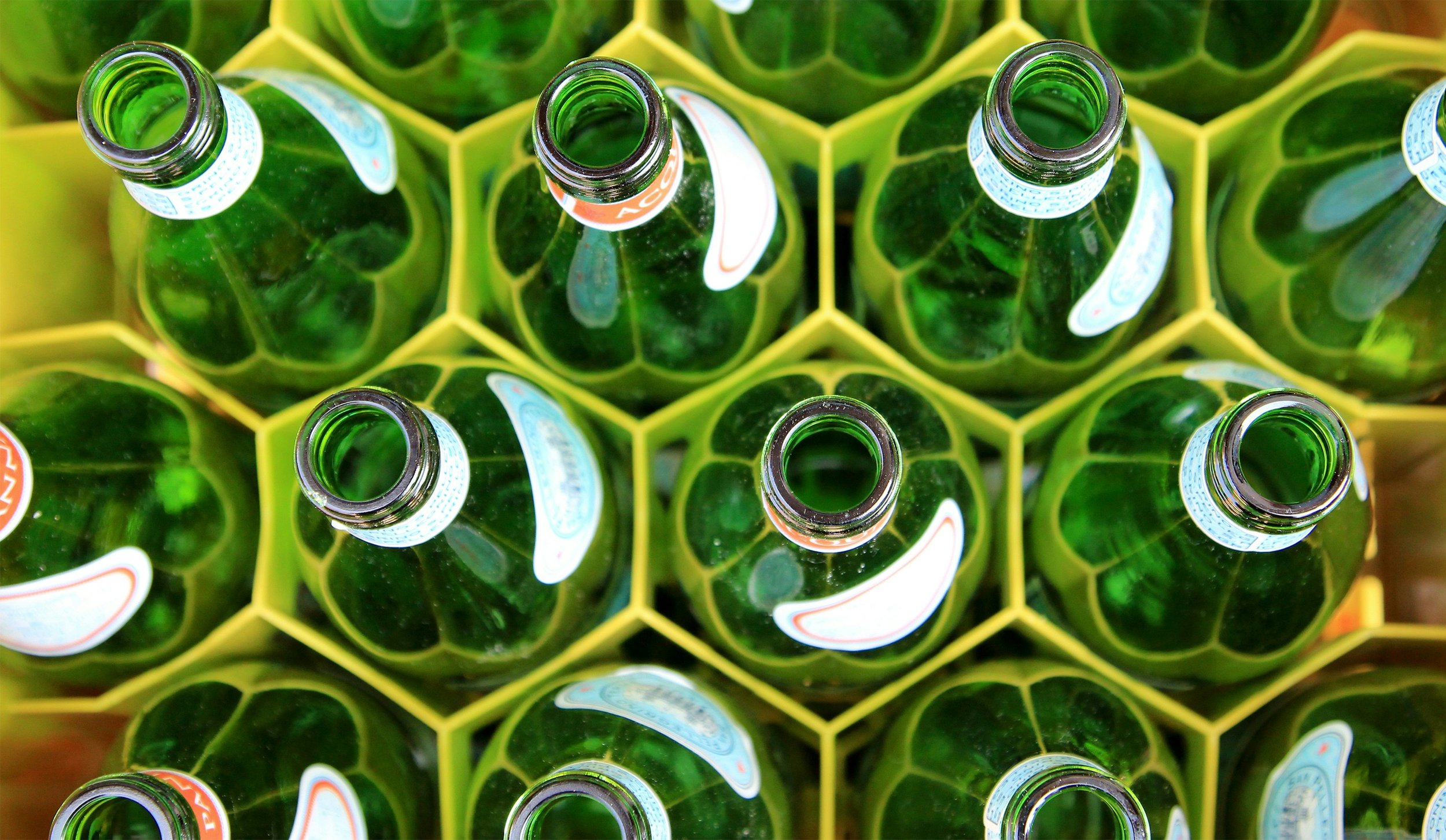
Jefferson County will no longer be able to collect glass bottles for recycling at the end of this month.
The county transfer station reached holding capacity on Oct. 1 and has been shipping the collected glass to the landfill at a monthly loss of about $10,000.
The situation arises from the indefinite closure of the region's main recycled glass supplier. Seattle’s Ardagh Glass has stopped producing wine bottles out of recycled glass, citing a lack of demand for its products due to the availability of inexpensive bottles from China, an industry subsidized by the Chinese government.
With no new market for glass on the horizon, Jefferson County joins other Puget Sound counties by no longer accepting glass for recycling beginning on Dec. 1. For the foreseeable future, glass will be headed to the landfill alongside our other garbage.
This change doesn’t mean a permanent end to glass recycling, though it could take a long time for an alternative to the landfill to be possible.
Glass Crushing Proves Economically Difficult
Though the idea of being able to process our own glass is an exciting idea, the reality is that it’s difficult to do any kind of recycling on such a small scale.
Gallatin, Tennessee, is one of a handful of cities that have purchased a glass crusher to turn bottles into sand and small glass chunks. With help from a state grant, the city bought the crusher in 2017 and planned to use the crushed glass in construction projects.
But according to Gallatin Public Works Coordinator Dianna Witsman, their estimation of how many people would want the crushed glass didn’t live up to reality.
“Our thoughts were that we were going to have more of the public and community members wanting it,” Witsman said. “We thought that organizations might use it for aggregate and larger jobs, and that hasn't been the case. But we still have a glass pile out back that's available for the taking.”
Closer to home, Thurston County also crushes its glass into sand, using Tumwater-based Concrete Recyclers. They have ended up with the same issue: Despite working with the county to provide the sand for road maintenance and construction projects, the company is creating far more sand than the county can use.
The Answer Could be a Bottle Bill
If repurposing bottles into building materials isn’t the most effective way to solve our recycling problem, then what is? A bottle bill, according to Laura Tucker, the education and outreach specialist for Jefferson County Public Health and Public Works.
“We are the one state in the whole West Coast that does not have a bottle bill,” Tucker said.
A “bottle bill” is a law that requires consumers to pay a small refundable deposit on beer, soft drink and other beverage containers to ensure a high rate of recycling or reuse.
“When I buy a six-pack of beer, let's say I put a deposit on that,” Tucker explained. “It's 10 cents a bottle in Oregon, so I pay 60 cents for these six bottles. I bring them back to the store or the recycling facility, and I get my 60 cents back.”
The returned bottles are then taken to Glass to Glass in Portland, where they are turned into new bottles.
Thanks to its bottle bill, Oregon has a 90.5% return rate, meaning that nearly all bottles sold in Oregon go back to be recycled. And consumers who return the bottles get their money back. The 10 cents for every bottle that isn’t returned, which is only 9.5% of all bottles sold, funds the entire recycling program.
Why Doesn’t Washington Have a Bottle Bill?
Over the past several years, there have been a few attempts to have a bottle bill signed into law, including one attempt brought forward by Port Townsend High Schoolers.
In 2017, participants in the high school Students for Sustainability program traveled to Olympia to speak with lawmakers about passing a bottle bill. Unfortunately, despite bottle bills appearing in the capitol in a variety of forms, including the WRAP act, nothing has passed. Grocery store lobbyists have been fighting them.
Zero Waste Washington, a nonprofit dedicated to helping set environmental policy, is still working to enact bills that keep waste out of landfills. It recommended that you reach out to your state legislators if you would like another bottle bill brought forward.
For those of us in Jefferson County and the 24th Legislative District, those legislators are Rep. Steve Tharinger, newly elected Rep. Adam Bernbaum, and newly elected Sen. Mike Chapman. Bernbaum and Chapman take their seats in January.
Keep Purchasing Items in Glass, and Don’t Lose Hope
A solution may be several years away, but it’s still important to buy items made of glass instead of plastic. Jefferson County’s Laura Tucker, a lifelong scientist and educator, understands the frustration people feel at having to throw away items they know should be recycled. But she emphasizes that it is still worthwhile to buy items in glass bottles.
“People genuinely want materials that are recyclable to go somewhere good. And when that doesn't happen, people get upset about it,” Tucker said. “It kills me to put glass in the garbage, but I am not going to quit buying food in glass, because plastic does excrete carcinogens and hormone disruptors into your food.”
She also wants to remind people that even though we’ve lost our glass recycling, we’re still ahead of the curve in other ways.
Jefferson County is the last county in Washington to source-separate, meaning that our transfer station separates all of our different types of recycling and gives it to Skookum, who provides jobs and training to people with disabilities. It then finds markets for our recyclable materials; most notably, it has found a way to recycle cardboard locally.
“The great thing is, they take trucks to the paper mill with cardboard,” Tucker said. “It goes a mile from the transfer station to the paper mill.”
Beyond our top-notch recycling of other materials, there are other reasons to stay positive about glass in Jefferson County.
Turner points out that the Food Co-op accepts jars with lids that can be used for bulk food shoppers and that Finnriver Cidery in Chimacum doesn’t simply recycle its glass. It also reuses it with the aid of an on-site bottle washer.
It’s always better to find ways to reuse rather than recycle, and perhaps this most recent recycling hurdle can be the start of local reuse innovation and a chance to push through long overdue legislation.