Jefferson PUD works through difficult funding and policy conditions to build community-based digital inclusion and economic transformation

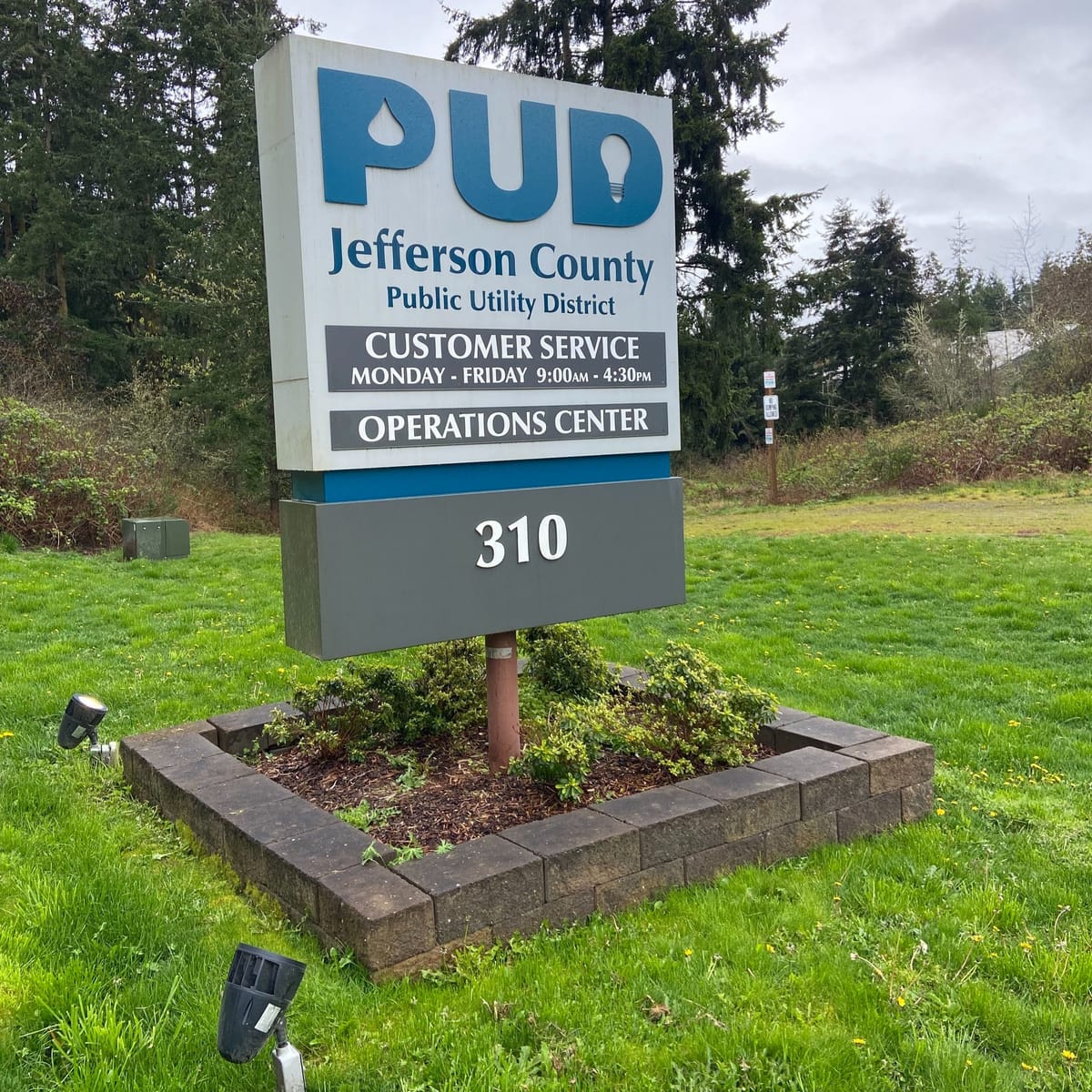
[caption id align="alignnone" width="3024"]
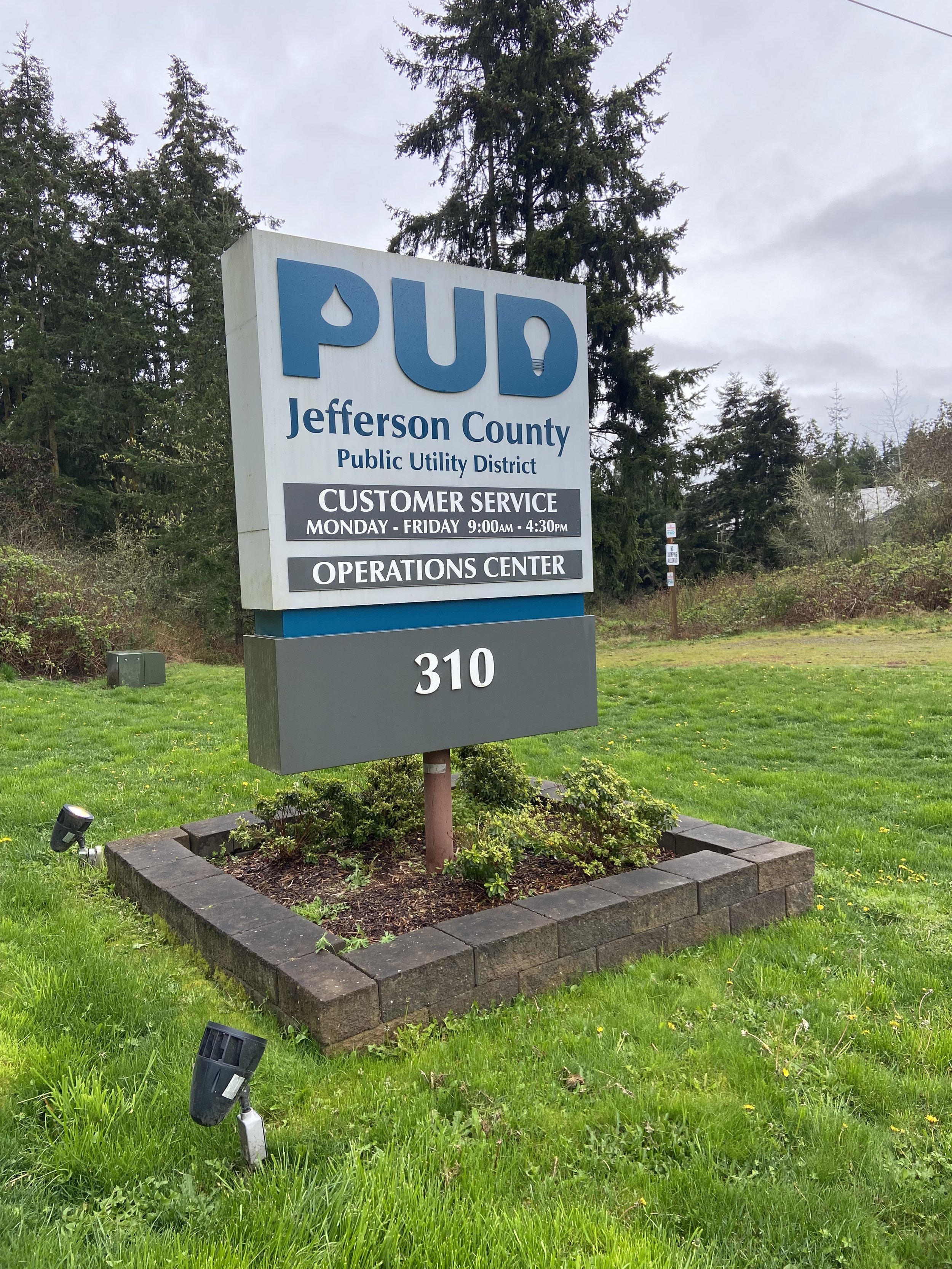
Photo by Nhatt Nichols [/caption]
News by Scott France
Despite the likelihood of cuts in federal funding for building broadband infrastructure in rural areas in the United States, the current build-out of the fiber optic broadband internet network in unserved and underserved Jefferson County should continue until it completes all of the areas targeted by the Jefferson County Public Utility District.
A Supreme Court hearing on March 26 of a suit challenging the constitutionality of the Universal Service Fund (USF) that helps rural areas across the United States build internet networks is likely to be rejected, most Court observers say, though Justice Neil Gorsuch expressed concern, characterizing the fund as "a tax that's unlike any other tax this court has ever approved." A decision is expected in late Spring or early Summer.
The PUD has received grant funding from federal and state governments but not from the USF on which the Court is deliberating. The USF is a U.S. program that funds critical programs that help rural communities and their health care clinics, schools, libraries and low-income households connect to the internet.
The PUD is applying its grant money to build over 500 miles of high-speed fiber optic lines to more than 4,000 homes in the most remote areas of the county. Jefferson PUD is the first among Washington's 28 PUDs to offer public retail broadband services directly to residents.
All but one of the seven project areas has been funded, according to Will O'Donnell, director of broadband for Jefferson PUD. O'Donnell is in the process of applying for a federal grant for that final project area. The fiber build-out began last year and is expected to be completed within the next three years.
Jefferson PUD‘s grant application to the Broadband, Equity, Access and Deployment Program (BEAD) to fund that last project area could encounter difficulty because the Trump administration has proposed changes to BEAD that would favor Low Earth Orbit (LEO) satellite connectivity over the faster, more reliable fiber optic technology. The administration is promoting what it calls “technology neutral” infrastructure choices as a rationale for its changes. The Wall Street Journal reports that the proposal would make it easier for Elon Musk’s LEO satellite business, Starlink, to claim funds for rural broadband development.
After the last of the project areas is completed, the PUD will focus on procuring funding to lay fiber to the rest of Jefferson County. “We will look at various funding models,” O'Donnell said. He said that one likely candidate would be a combination of loans with development of Local Improvement Districts (LID's). LIDs are a method of financing specific public infrastructure projects within a defined geographic area.
Though broadband can be obtained through other technologies including satellite, cable, and wireless, fiber optic cable is widely regarded as the best technology to deliver internet services. The cable transmits data using light signals through thin strands of glass or plastic fibers, offering higher bandwidth and data transfer speeds compared to traditional copper cables.
Fiber optics provide the fastest, most reliable service of these technologies. It offers upload speeds many times that of satellite providers and is less vulnerable to weather and electromagnetic interference, as well as to jamming and hacking than satellites are. Fiber enables much greater control and customization for communities, businesses, and residences than any other broadband technology. For example, it allows the PUD to monitor its electric and water systems to respond to outages and malfunctions quickly, according to O’Donnell.
The PUD has an open access model, in which it owns the infrastructure upon which local internet service providers may offer services to residential and business customers.
Because these companies are locally based, customer service is usually more available and responsive than with multinational telecommunications companies.
The PUD open access model supports critical services such as remote education, telemedicine, and access to government services, all of which are increasingly dependent on reliable internet.
The PUD considers reliable high-speed internet access to be a public utility, and is thus focused on serving the community rather than maximizing profit. A federal program that reduced internet rates for low-income residents ended last year, so Jefferson PUD has expanded its low-income program to a two-tier system based on income level.
Because we are entering an era in which technological innovations will be much more digitally based, the combination of publicly owned broadband and a fiber optic network with its superior capacity for the expansion of digitally based innovations will provide greater opportunities for economic development, and education and healthcare enhancements.
Jefferson Public Utility District is joining hundreds of other communities around the U.S. to create powerful, digitally-based economic and quality-of-life transformation while the federal government attempts to restrict community-based autonomy in many ways. The PUD’s fiber broadband technology and ownership model promises to spur local prosperity and enhance community self-reliance for decades to come.