Jumping Mouse: Helping Children Find Their Authentic Selves through Play

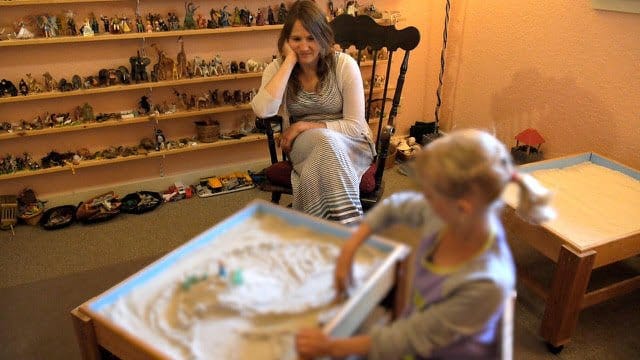
[caption id align="alignnone" width="640"]
At Jumping Mouse Children’s Center, former therapist Jean Scarboro spends time with a youngster. Photo by Scott France [/caption]
News by Scott France
The therapists at Jumping Mouse Children's Center seek to transform lives one session at a time, through what they call expressive mental health therapy — play time that supports the young person’s healing.
“The most important thing is that this therapy is a child-directed process,” said Mel Rose, Jumping Mouse’s Executive Director.
The play therapy Jumping Mouse offers children age 3 to 12 is widely recognized as effective treatment for children with adverse childhood experiences or ACEs, Rose noted.
Jumping Mouse accepts and evaluates requests for its services from teachers and parents, regardless of whether the child has been diagnosed with ACEs.
ACEs pose significant risks to a child’s emotional and physical development. They can be in the form of things that happen to a child such as abuse, neglect, bullying, or serious accidents or injuries. ACEs may also occur from things that happen around a child, such as household dysfunction, loss, instability, or community and environmental factors.
The People and the Process
[caption id align="alignnone" width="4560"]
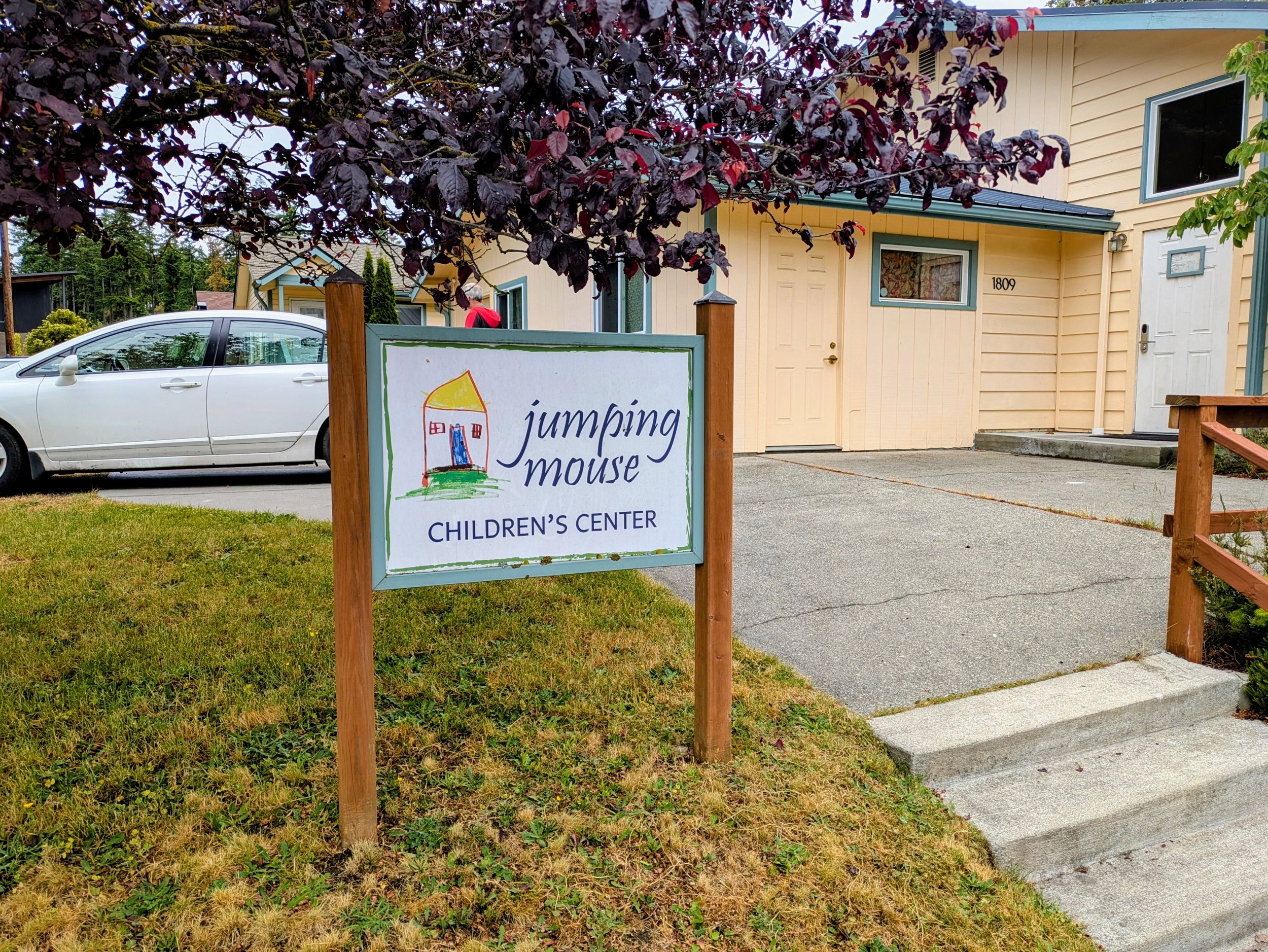
Jumping Mouse is on Sheridan Street in Port Townsend. Photo by Scott France [/caption]
Jumping Mouse therapists are formally trained in play therapy. They practice in clinical settings at both Chimacum Creek Primary School, Chimacum Elementary School and Brinnon Elementary School, as well as in one of several playrooms at the Jumping Mouse home office at 1809 Sheridan St. in Port Townsend. Since this office is just a few hundred yards from Salish Coast Elementary School, therapists can walk their young clients to the school and back.
“It’s a place for them to safely explore their authenticity, and be witnessed in it,” said John Borges, one of seven play therapists who work with children in the three locations.
The playrooms are a veritable dream world of play items: a sand tray, and shelves of hundreds of figurines in the form of animals, humans, heroes, cars, and a few cultural and religious symbols.
“When a child is wounded in some way, healing occurs not through skills or functioning,” Borges said. “The work is centered on the child, and is grounded in the relationship. Kids express themselves and learn through play.”
Gabe Van Lelyveld has witnessed his daughter’s development during a year while she was in kindergarten and first grade at Salish Coast. “It was very positive for her,” Van Lelyveld said. “There was a noticeable psychological and emotional improvement. The sessions helped her process things. It was something fun she got to do each week. The relationship with the therapist was fun for her.”
Borges spoke carefully while describing the therapy work, emphasizing the relational element. “Play is the mode of relating,” he said. He frequently referred to the theme of authenticity as a primary focus in the child’s development.
“We are helping children grow into how to be their authentic selves, to make decisions and regulate,” he said. “Every kid needs to feel safety in order to experience themselves more fully.”
Jumping Mouse, he said, “is a place where highly trained adults (the therapists) can recognize the process of the client growing into their authentic self.”
A cornerstone of the Jumping Mouse model is that the parents and therapist meet regularly. Van Lelyveld said that his daughter‘s therapist didn’t go into details about the sessions — confidentiality is practiced — but he said that the therapist would discuss themes that emerged in his daughter’s play. “She would offer very gentle reflections, [such as] ‘You could try this or that’,” Van Lelyveld added.
Together, the therapist and the parents determine when to graduate the child out of the therapy. The average length of time that clients work or play with the therapists is about a year and a half, with sessions typically once a week.
“The therapist’s job is to get out of the way, not to overlay expectations,” Executive Director Rose said. “What I have come to value over the years is the importance of early intervention. We are able to provide mental health support to children and their families earlier on, which hopefully will interrupt this cycle of kids who don’t receive this support earlier on needing more intensive support later on, which becomes more costly for everybody both emotionally and financially.”
Struggling with Diminishing Resources to Meet a Growing Need
Jumping Mouse’s seven therapists currently see 66 children, about one-third of those who need such therapy in the county, Rose said. It has closed its waiting list at 34 children, but it still receives calls almost daily from parents needing help. Jefferson Healthcare estimates that 14 percent of children aged 3 to 12 in Jefferson County have suffered ACE’s.
Eighty percent of clients have very low incomes and are unable to afford the tuition. They receive Jumping Mouse’s services at no charge.
Jumping Mouse’s $1 million annual budget has been supported in roughly equal measure by insurance (private and Medicaid), foundation grants, and donations. These revenue sources fluctuate. The organization now faces both a substantial drop in grant funding as well as uncertainties regarding Washington state’s ability to support Medicaid — even at previously inadequate levels.
The organization is embarking on a campaign to raise the funds to hire necessary staff and therapists to meet the ongoing need. There’s also a desire to restart an internship program that was discontinued in the wake of the Covid pandemic. Several therapists are also seeking to develop a regular radio show on general mental health topics.
The name Jumping Mouse comes from a legend about a young mouse who dreams of a new way of life. Compassionate and courageous, he journeys to unfamiliar places, facing scary challenges. Along the way, a magic frog gives him the gift of strong hind legs and the new name, “Jumping Mouse.” Throughout his journey, he befriends other creatures who help him, as he discovers his strengths and his spirit. In the end, he is transformed into a magnificent soaring eagle.
This myth, according to Jumping Mouse’s website, is a metaphor for the journey undertaken by a child at the center. Though they may face frightening experiences and emotions, through therapy, youngsters learn to trust their own inner strength and resilience. As they heal, they realize their ability to meet the challenges of daily life and relate positively to the world around them.
To learn more about Jumping Mouse and to participate in one of the center’s tours, visit https://www.jumpingmouse.org or phone the Port Townsend office at 360-379-5109.