Juneteenth Reminder of Racially Restrictive Housing Policies

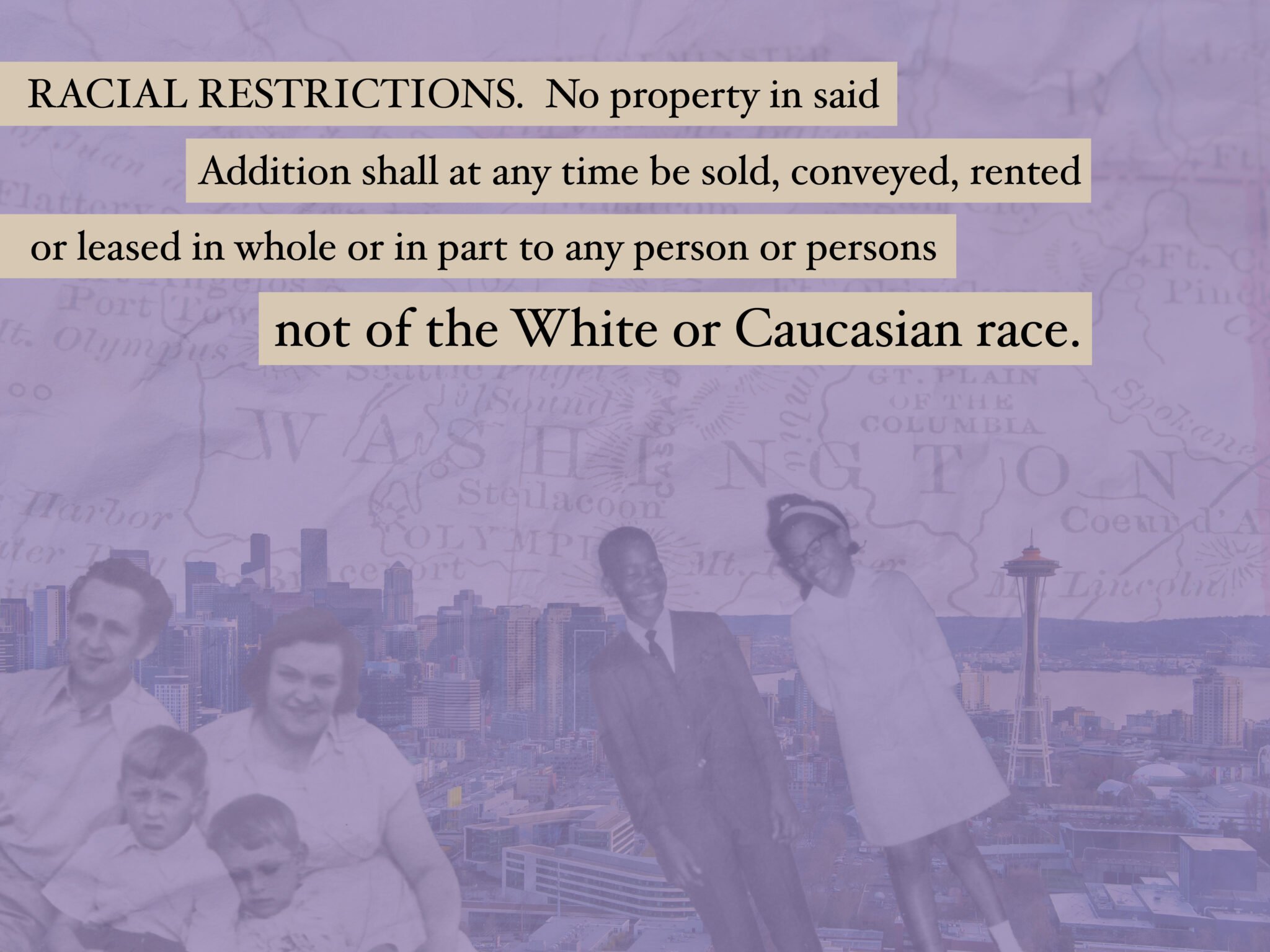
Image courtesy of National Fair Housing Alliance [/caption]
Each month, The Beacon invites a different housing organization to contribute a column on housing solutions in Jefferson County.
This month, the column is by Liz Revord from the Housing Solutions Network
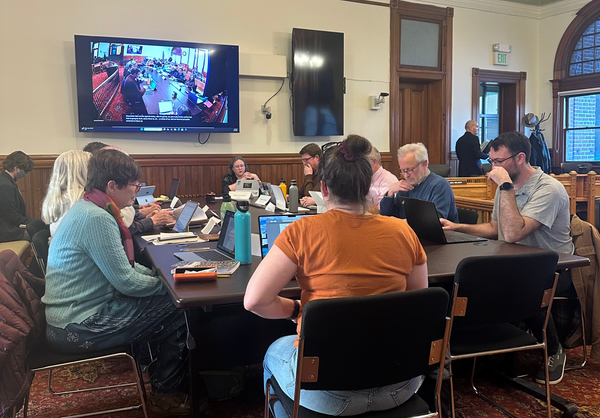
In April, Housing Resources Bainbridge Island held a presentation on the work being done at the University of Washington on the Racial Restrictive Covenants Program of Washington State. I asked the two people I knew who wouldn’t say no to taking a mini road trip over to the island- Olympic Housing Trust’s Kellen Lynch and Jefferson County Historical Society’s Kelsey Caudebec- and we piled into my car for our first ever Historical Housing Date Night.
[caption id align="alignnone" width="1024"]
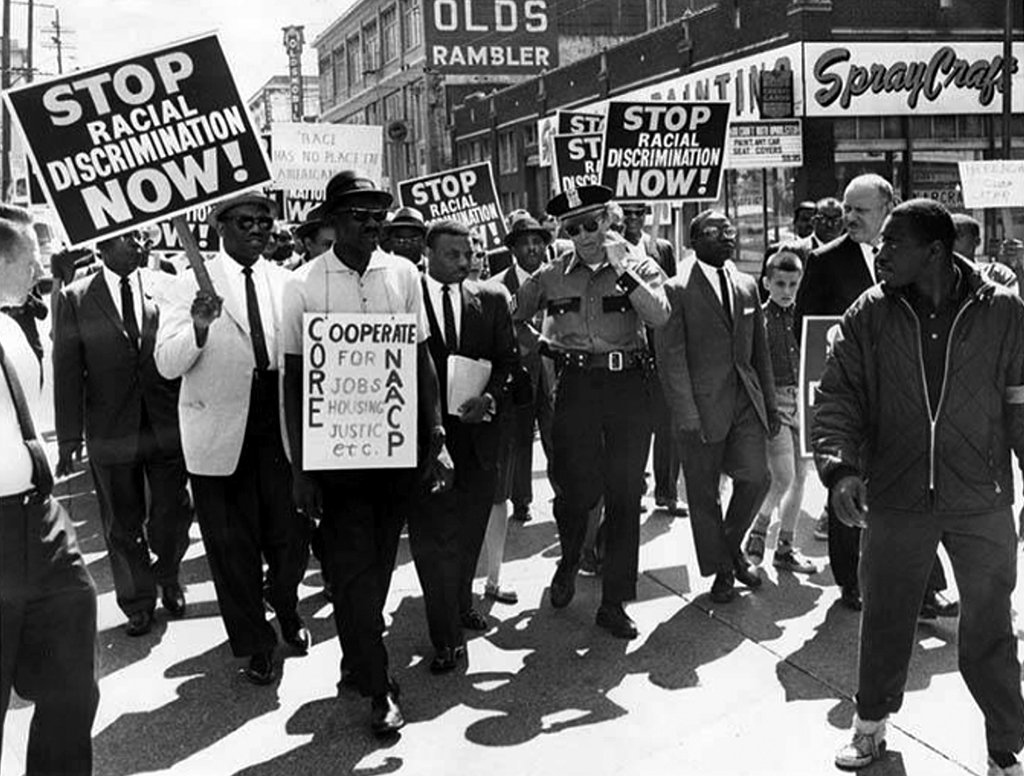
Image courtesy of historylink.org [/caption]
Historical housing policies, including restrictive covenants, have had devastating long-term consequences and impacts on marginalized communities. These policies prevented certain populations from buying or renting homes in many communities, hindering many families from establishing and creating generational wealth. Often, these types of restrictions were included in recorded plats, CC&Rs (Conditions, Covenants, and Restrictions), HOA bylaws (Homeowners Associations), petitions, or deeds. Many of these document types are still commonplace today, although racial restrictions only became illegal in 1968.
Since 1917, real estate professionals through the American Board of Realtors have heavily promoted and led the use of covenants, offering such covenants as a way to “protect” property, property rights, and, of course, property value. By the mid-1930s, redlining became a secondary practice, giving banks and mortgage lenders a visual of “safe” and “unsafe” areas for investments, where a red line determined “hazardous” communities.
With redlining, families and individuals were penalized in “hazardous” neighborhoods, while the Federal Housing Association (FHA) advocated for restrictive covenants as they often increased investment opportunities and successful funding rates. According to the work being done at UW, Seattle’s beloved Capitol Hill neighborhood had one of the best-documented efforts of restrictive racial covenants starting in 1927. Here, the Capitol Hill Community Club organized for three years, successfully campaigning 964 property owners to place a restrictive racial covenant across 183 neighborhood blocks, preventing African Americans from “owning, selling, conveying, leasing, renting, or being gifted land.”
Although Shelley v. Kramer (1948) ruled that covenants violated the equal protection clause of the 14th Amendment, it wasn’t until Congress passed the Fair Housing Act in 1968 that racial covenants became illegal. However, this did not prevent scare tactics and other forms of harassment, or worse, from happening in communities across the nation.
[caption id align="alignnone" width="1024"]
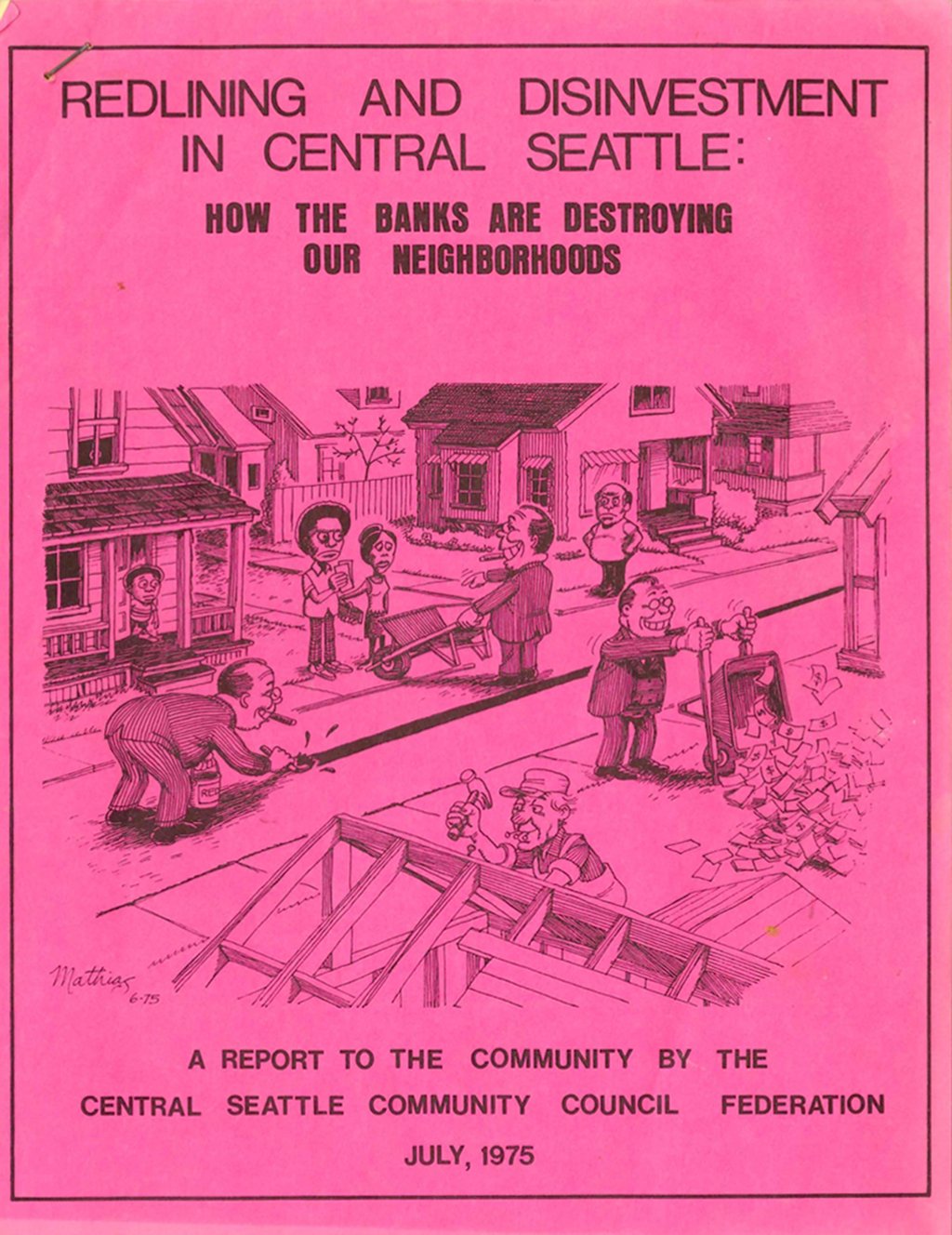
Image courtesy of historylink.org [/caption]
The research being done by the Racial Restrictive Covenants Project is being funded by 2021’s HB 1335, which will research neighborhoods across the State of Washington. Working from a previous project, the team has already viewed over 7 million property records across 9 WA counties and identified over 65,000 properties with racially restrictive documentation!
According to the WA State Department of Commerce, Jefferson County has seen an increase in cost-burdened BIPOC (Black, Indigenous, People of Color) households between 2014 (32%) and 2019 (47%). During that same time frame, there has been a decrease in cost-burdened White (non-Hispanic) households (from 35% in 2014 to 29% in 2019). We are one of only three counties in WA state that saw an increase for BIPOC families and a decrease for White families.
However, when it comes to homeowner numbers, Jefferson County appears to be on a better track. Commerce states that BIPOC homeowner rates have increased from 2015 to 2021 from 51% to 67%, but compared to White (non-Hispanic) households at 76% and 80% respectively, we still have much to do. For many of us working in affordable housing, we use Commerce’s projection of 4,000 units of affordable housing needed in JeffCo within the next 20 years (2044). These numbers are broken down by income levels ranging from our most vulnerable populations and homeless folks up to market rate incomes but don’t set goals by race or ethnicity.
As many Americans recently enjoyed a middle-of-the-week holiday in honor of Juneteenth, we should take a moment to reflect on the historical implications racial restrictive policies have had on our Indigenous and PGM (People of the Global Majority) populations and that still impact families today. Generational wealth is one way individuals and families have historically been able to purchase and keep homes. Without this foundational support of income, many are unable to create housing security for themselves and their children.
Kelsey, who manages programs at the JeffCo Historical Society, says his topic is particularly timely as JCHS is in the midst of reimaging its museum space and converting to a format where all exhibitions connect to an annual theme - the first one being “Home,” debuting in late 2025. More info on the project at https://jchsmuseum.org/rooted/
At HSN, we’ll be continuing to track the Racial Restrictive Covenants Program and look for the report out on Jefferson County. In the meantime, if you want to help support housing opportunities for BIPOC/PGM folks in our community, please consider checking out Longhouse For the People project, BLMJC in partnership with Well Organized, and Jefferson County Immigrant Rights Advocates.
Liz is the Executive Director for Housing Solutions Network, a Jefferson County focused nonprofit advocating for affordable workforce housing and facilitating a network of communication and partnerships between housing providers, governments, business and the community at large.