Leaders of Governmental Agencies Re-start Process to Build Economic Vitality
Building relationships and trust seen as vital to crafting an economic framework as the county’s economic viability hangs in the balance.

News by Scott France
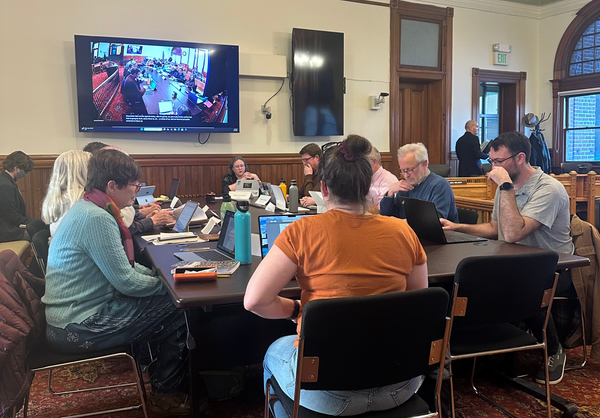
Elected officials of the county’s four primary government entities have launched the 2026 edition of its Intergovernmental Collaborative Group (ICG) process to collaborate on significant issues of mutual importance.
According to the ICG, those issues may include housing, jobs and the economy, infrastructure, broadband, climate change and food resilience.
The leaders are addressing these issues amidst a steady and growing drum beat of concern and fear from their constituent residents and employers struggling to find employees and keep businesses open, find affordable housing, and find service and trade workers, to name a few challenges to living with minimal comfort and sustainability in Jefferson County.
The ICG was formed in 2020 during the COVID-19 pandemic as a formal partnership between major government entities in the county. The collaboration emerged to coordinate recovery efforts and build long-term resilience across the community.
The ICG’s early accomplishments included: joint management and distribution of federal funds to support local businesses, public health and social services; vaccine and resource distribution; regional planning and economic development; and the implementation of specialized teams for mental wellness.
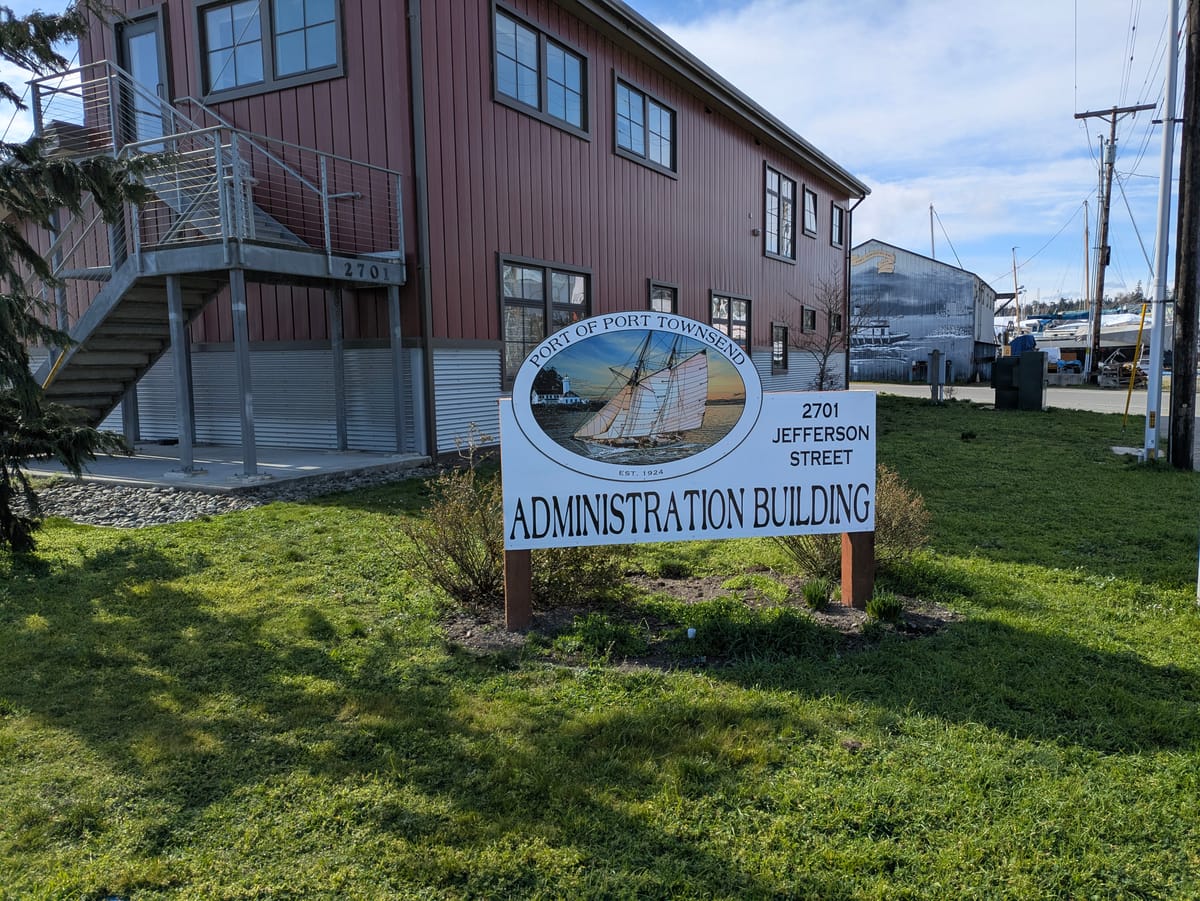
Over time, the group's role expanded beyond pandemic recovery to address broader regional issues and policy coordination. Its members are: Jefferson County, the City of Port Townsend, the Port of Port Townsend, and the Public Utility District (PUD).
Jefferson County's governance landscape is unusually complex for a county of roughly 33,000 residents. The ICG does not replace formal governance structures, but rather, it creates a strategic conversation space where leaders can coordinate priorities across jurisdictions.
On February 19, the ICG held the first of its four scheduled meetings of 2026.
A stew of disparate missions, historic mistrust, and emerging resolve
The Port of Port Townsend and the PUD are primarily focused on infrastructure and capital investments. Jefferson County and the City of Port Townsend establish land use policy, housing strategy and regulatory frameworks. The Port is the only agency of the four whose mandate includes economic development.
While the ICG does not directly implement projects, it aims to create the relationships and alignment needed for collaborative initiatives to move forward.
However, the group has struggled to make substantive progress, according to some long-time participants due to competing priorities and a lack of trust.
“We’ve halted the conversation about economic development by failing to build trust among the people talking about it,” said Jefferson County Commissioner Heather Dudley-Nollette.
She suggested that the region needs to slow down and rebuild trust before trying to implement major economic initiatives. “Economic development cannot move forward effectively without strong relationships among government entities, organizations and residents.”
“How do the four public entities of the ICG come together and build a trust among each other so that it breaks down the siloed perspectives,” said Patty Schmucker, a Board member of the North Hood Canal Chamber of Commerce.
“The ICG must build trust that supports courageous conversations to determine the type of economic framework that we want to create—to invite the right people to the table, and that it’s inclusive so the framework represents all aspects that trigger economic vitality—housing, water and food systems, electrical grid capacity, emergency preparedness,” Schmucker said.
Schmucker and County Commissioner Heidi Eisenhour were encouraged by what they saw as an ICG meeting that was more inclusive than most past meetings.
The Jefferson County Economic Development Council’s (EDC) Executive Director David Baliff participated in a framing exercise at the first 2026 ICG meeting on February 19. The EDC’s mandate includes business recruitment, business retention and expansion, workforce and entrepreneurial support, and economic data and planning perspectives.
The EDC is funded and supported by the same government entities that sit on the ICG. This means the ICG helps provide policy alignment and regional backing for the EDC’s work.
Other entities that Schmucker would like to see participate in the discussions include the Port Townsend and Chimacum School Districts, Jefferson Health Care and the Jefferson Community Foundation.
Jefferson County’s structural fragility
Baliff, Port Townsend City Manager John Mauro, and others spoke to the many barriers to generating sustainable progress. These include: an extremely old population, expensive housing, geographic distance from many vital resources, and a lack of working age population, especially those with needed skill sets.
Employers throughout the county have increasingly been told by prospective employees who had accepted job offers that they were forced to decline because they could not find affordable housing.
“Housing and economic development are two sides of the same coin—you can’t really have one without the other,” Baliff said.
A housing affordability analysis presented at the February ICG meeting by Karen Affeld, Executive Director of the North Olympic Development Council states that a price to income ratio of three or below is generally considered affordable. Jefferson County’s ratio of 7.1 means that median-income households need more than seven years of total household income to purchase a median-priced home.
“If people don’t have a place to live, they can’t start a business and can’t be engaged in the local economy,” said Port Townsend City Councilor David Faber, who, along with the rest of city council, represents the city on the ICG. Faber sees local economic and community resilience tied to this continual attrition of worker talent across a broad swath of skill sets and occupations.
Mauro notes that the City’s 1968 Comprehensive Plan stated that the median age of a city resident then was 27.8 years and it is now 60.8 years, according to Census Reporter.
“While they do bring their wealth and what not, they don’t bring their working, right,” Mauro said. “So we have seen a hemorrhaging of local jobs in the past couple decades within the city limits. I’m not trying to make an ageist statement, but if no one‘s got a job and no one‘s contributing to the local economy, that’s just not sustainable.”
Building on community assets
Balif emphasized that economic development efforts must balance support for small businesses—the core of the county’s economy—with efforts to attract medium and larger employers to improve resilience.
He said that Jefferson County could strengthen its role in maritime innovation and workforce training, leveraging the boatyard and regional maritime expertise.
Schmucker agrees, saying, “building our light manufacturing fits with our maritime industry, and the beauty of it is that it is exportable, domestically and internationally, and brings in money.”
The Glen Cove Industrial Area just south of Port Townsend could represent an area of growth, primarily for light industrial businesses, but zoning restrictions on building height, septic rules, and more remain an obstacle.
Pete Langley, owner of the Port Townsend Foundry, says that he and other Glen Cove businesses have been thwarted from expanding their businesses due to zoning rules and sometimes arbitrary implementation.
The county’s zoning is also making it difficult for the Port of Port Townsend to facilitate the conditions necessary to enable development of light industrial businesses adjacent to the airport.
Mauro says that economic development is fundamental to the long-term sustainability of the community, not just about jobs but about the entire civic system. “If we’re going to be successful as a community in the future, we need living-wage jobs and a sustainable local economy.”
The ICG meetings are open to anyone. Information about the ICG may be found at: https://www.co.jefferson.wa.us/1491/Intergovernmental-Collaborative-Group-IC
Correction: an earlier version of this article didn't clarify that all of city coucil works with the ICG