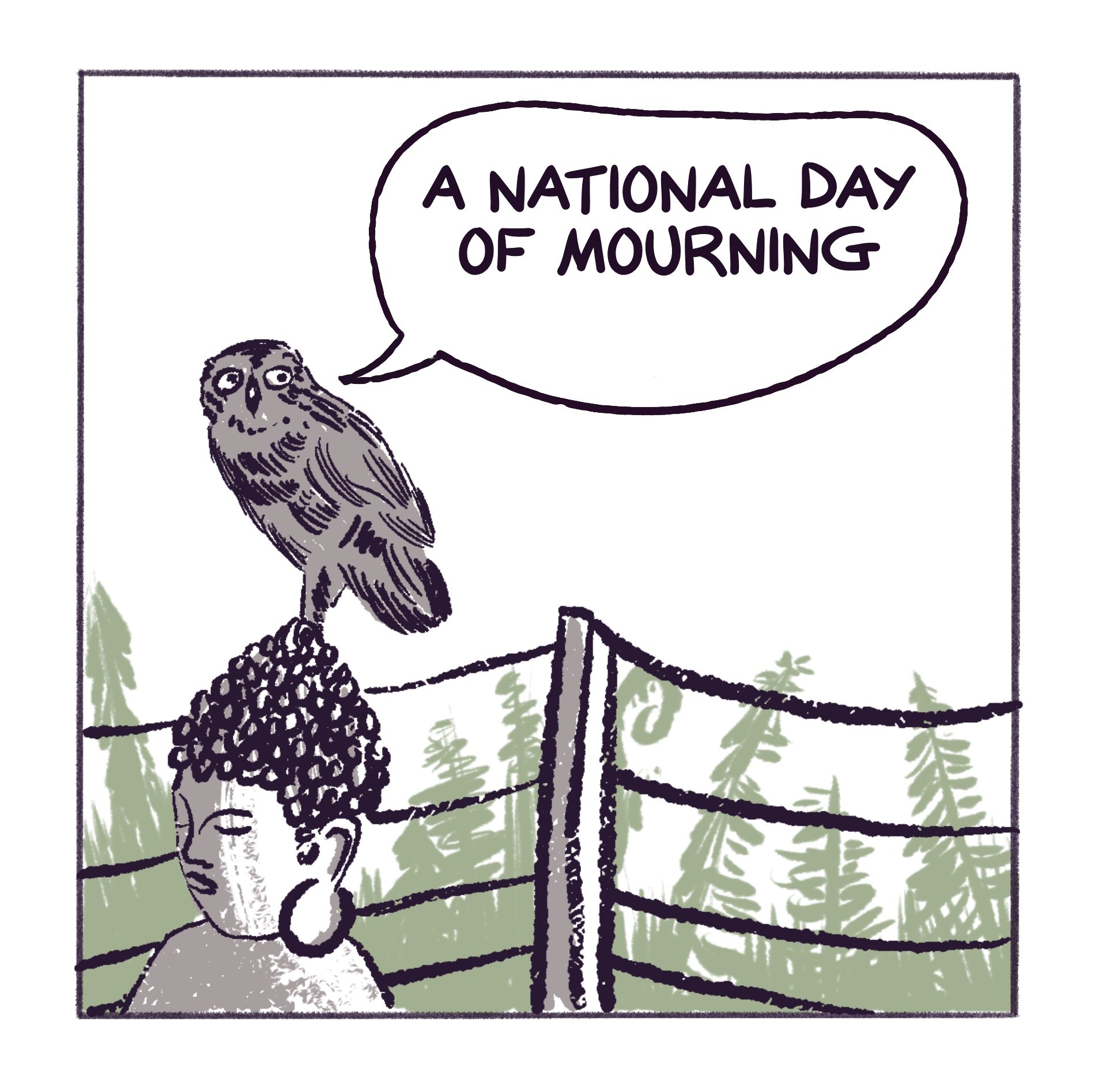
Letter From the Editor: A National Day of Mourning

Dear Readers,
For my entire childhood through my 20s, Thanksgiving was my favorite holiday of the year. I love food, especially celebration food. I want funfetti cake on my birthday, hotdogs on the fourth, and pumpkin pie and cranberry sauce straight from the can on Thanksgiving. Please withhold your judgment on the cranberry sauce; I’m a fancy adult, but I was a very basic kid, and some things you never grow out of. The suction noises of cranberry sauce being decanted from its can still makes my heart flutter.
One thing I did grow out of is the belief that Thanksgiving should be celebrated as an uncomplicated celebration of peace between Indigenous tribes and pilgrims. From the one account that we do have of the first feast itself, it appears that there was bounty and harmony, but what settlers have brought to Native Americans since then requires somberness and reflection.
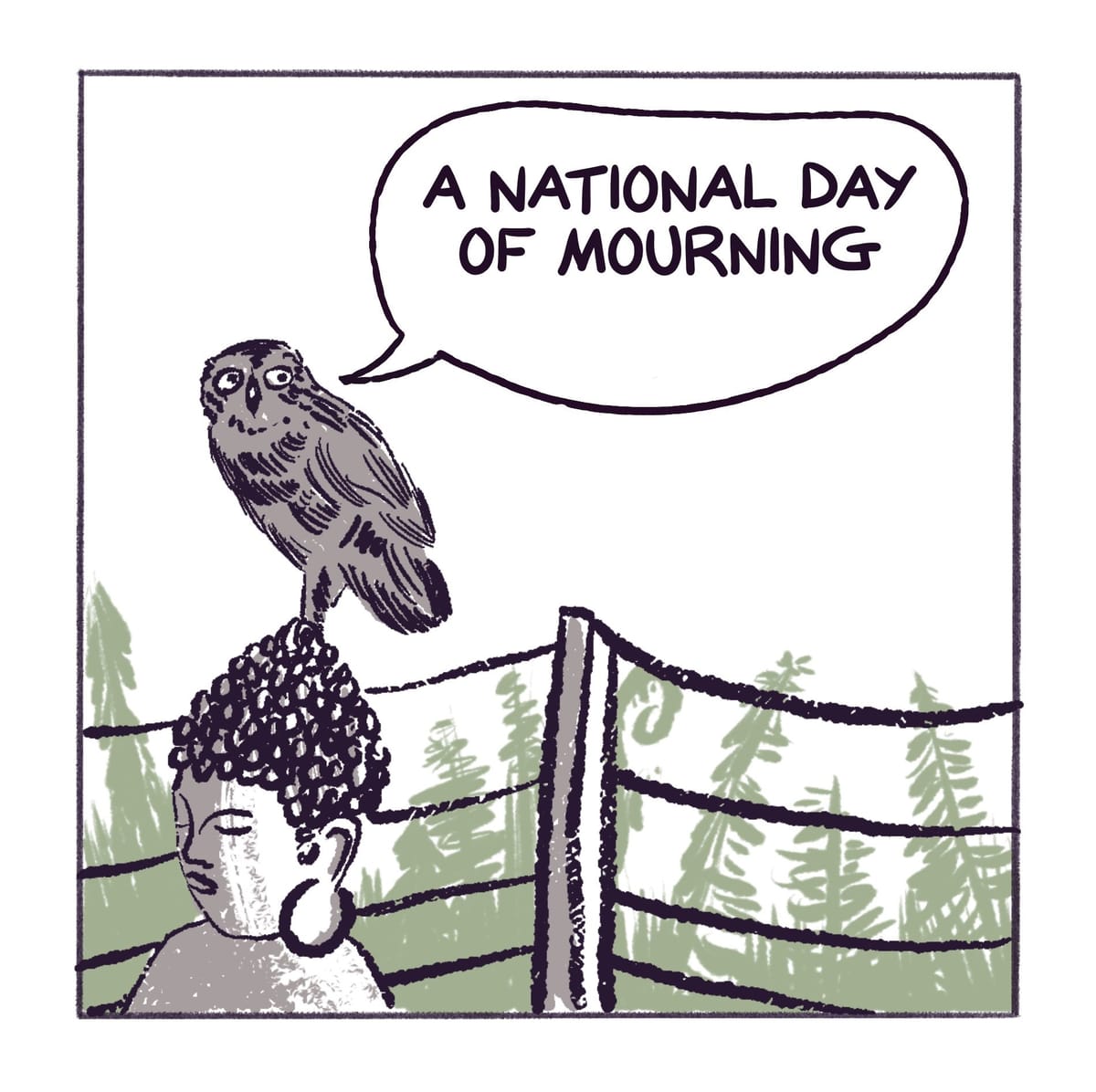
Since 1970, Indigenous people and allies have commemorated a National Day of Mourning on the same day as the US Thanksgiving holiday. For many Indigenous people, the arrival of the Pilgrims isn’t a reason to celebrate, and Thanksgiving is a reminder of the historical genocide and oppression that they have faced at the hands of settlers.
It isn’t just historical oppression that is reflected during the National Day of Mourning. The last residential school in Canada closed in 1996 while I was still in High School. In the US, after hearing accounts of horrific child abuse, Congress finally passed the Indian Child Welfare Act in 1978, giving Native American parents the legal right to refuse their child's placement in a school for the first time.
These practices ended in most of our living memories, and many people who suffered through those institutions are still alive today. For them, thanks might not be the primary emotion they are experiencing on the fourth Thursday in November.
And, of course, we are still experiencing an epidemic of Missing and Murdered Indigenous Women (MMIW). Native grief is not in the past, and it shouldn’t be swept aside to prevent White discomfort.
So how do we square so much suffering with a day traditionally seen as a time for celebrating with family? I’m going to be frank here: I’m still trying to figure that out. I don’t want to pretend I have any of the answers, but I feel like humans can simultaneously hold multiple things in our hearts, and I’m doing my best to both mourn and celebrate.
This Thanksgiving I encourage you to donate to the Longhouse for the People in Chimacum and to spend time learning about the people who owned the land you are celebrating on. A simple land acknowledgment is a good start, but without also making reparations, it reads as an empty promise.
After taking time out for mourning, I plan on sharing a meaningful meal with people I care about. This is the right balance for me: an acknowledgment, reparations, and a celebration of the things I’m thankful for with the people I love.
If you have found your own way to balance the holiday, I would love to hear about it in the comments below.
Fiercely yours,
Nhatt Nichols,
Editor