Life is sweet on “Calle Málaga”
Diane Urbani de la Paz shares her latest big screen movie review.

Big Screen Views by Diane Urbani de la Paz
I’ve met the woman I want to be when I grow up.
She is Maria Angeles, and she lives in noisy, color-spattered Tangier, Morocco. The operative word is “lives,” because this Tangerois knows how to move through her city with exquisite grace and relish.
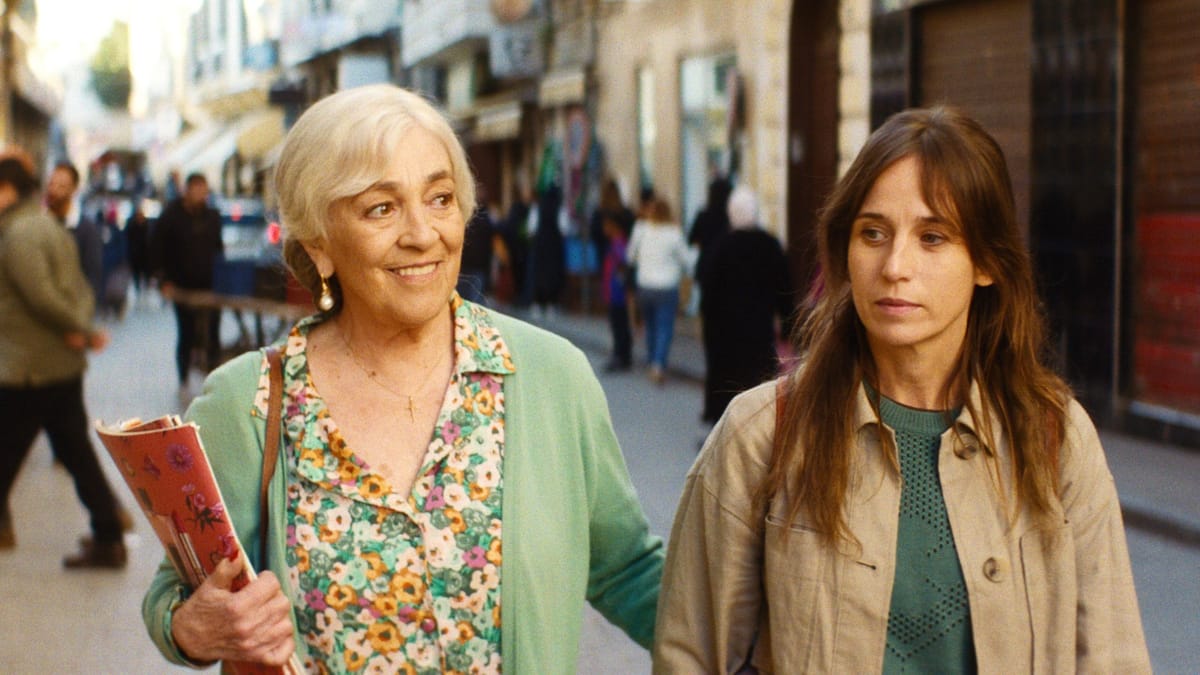
The Spanish actor Carmen Maura, 80, portrays Maria Angeles in “Calle Málaga,” a film that begins with the luscious sights of the Moroccan neighborhood market. Brown cinnamon, gleaming red peppers, tortillas de patatas—the aroma virtually wafts from the screen, intoxicating the viewer.
When the movie, in Spanish with English subtitles, premiered last summer at the Venice International Film Festival, it was given the Spotlight section’s Audience Award.
We follow Maria Angeles as she walks through the market in her joyous, bright-patterned dresses. She pins her hair up elegantly during the day, and lets down her long, silky tresses at night.
Now hold on. There is one person in Maria Angeles’ life who is not on her side. “Calle Málaga,” directed and co-written by Maryam Touzani, is also the story of a mother evicted from her lifelong home by her own daughter.
Daughter Clara (Marta Etura) lives in Madrid and is in the midst of a bitter divorce. She needs the money from the sale of the flat where her mama lives. The deed is in Clara’s name, so she informs Maria Angeles that she must leave and move into a senior residence, aka an old folks’ home.
A generation as wide as the seven seas seems to lie between Clara and Maria Angeles. The only explanation I can think of for Clara’s cruelty is that divorce has a way of making people do insane things.

Our heroine is wily, though, and this is no tragic tale. Maria Angeles loves her neighborhood and is not afraid to ask for help—and naturally she does it in her creative way. As we are swept up and placed in the middle of her world, we get to watch as she eludes her captors, develops an illegal enterprise—“business is business,” she declares in English—and has the most romantic of liaisons with an unlikely partner.
His name is Abslam, and he’s an antiques dealer, played with understated panache by the Moroccan actor Ahmed Boulane.
The scenes Maria Angeles and Abslam share are as delicious as honeyed Moroccan pastry. And when she confides in her friend Sister Josefa (Maria Alfonso Rosso) about their intimate pleasures, the movie has its gently humorous moments.
Seriously, though, of course Maria Angeles is not too old for those erotic interludes. They’re just another part of her zestful life. How refreshing to spend time with a woman who treats herself well and who is treated well by others.
Through it all, we know all good things will come to an end. Maria Angeles herself is well aware of this: She visits the cemetery with a bouquet of long-stemmed red roses and lays them, one at a time, on the gravestones of people who might otherwise be forgotten.
“Calle Málaga” is a picture about joy, loss, community and dignity. All of these together shine out to us from Maria Angeles’ brown eyes.