Margaret Killjoy to Read New YA Trans-Witch Novel at Gray Coast Guildhall
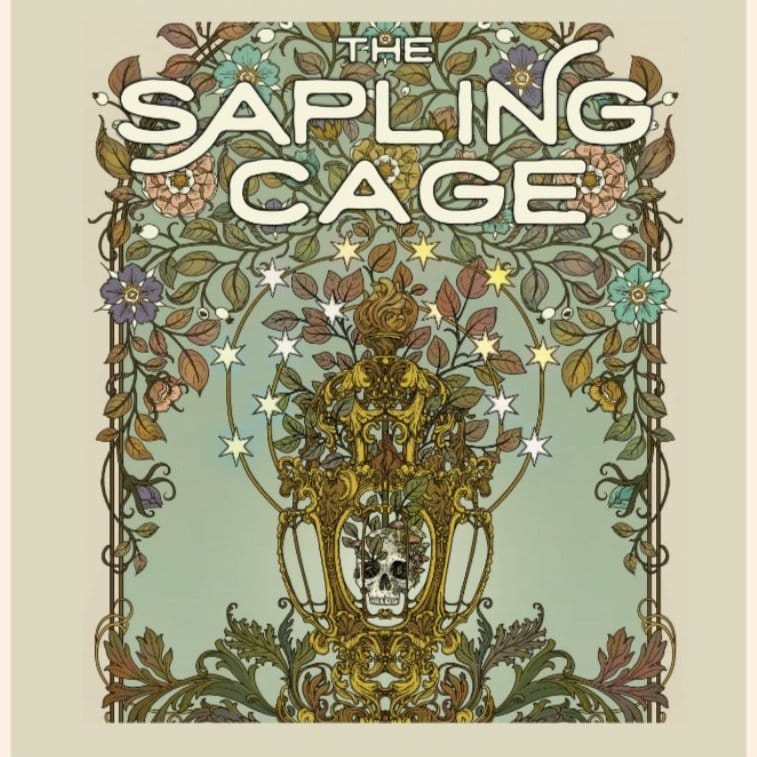
Editor Nhatt Nichols spoke with Margaret Killjoy about her new book, The Sapling Cage, a tale of earth magic, power struggle, and self-invention in an own-voices story of trans witchcraft.
Killjoy is a transfeminine author, musician, and podcaster. Some of her other books include The Lamb Will Slaughter the Lion, A Country of Ghosts, We Won’t Be Here Tomorrow, and Escape from Incel Island. She is the host of the radical history podcast Cool People Who Did Cool Stuff and the individual and community preparedness podcast Live Like the World is Dying.
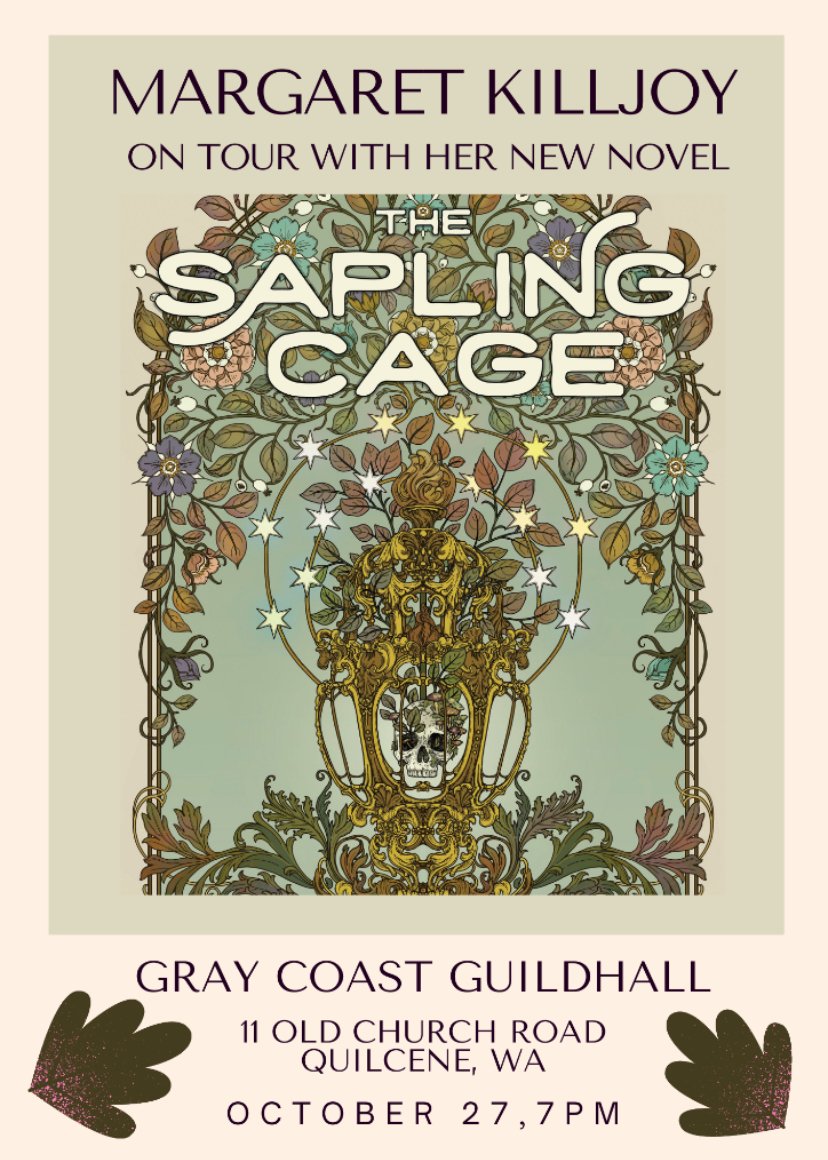
She’ll be reading from The Sapling Cage at The Gray Coast Guidhall in Quilcene on Sunday, October 27th at 7 pm.
Nhatt Nichols
I love The Sapling Cage, but it's very different from your other work because it's written for a different audience. Why was it important to you to write something for young adults?
“Being afraid of books is just abject cowardice.”
— Margaret Killjoy
Margaret Killjoy
I wrote The Sapling Cage for young me. That was my purpose going into it; I wanted to write the book that I wanted to read when I was in elementary and middle school. I wanted to write a book about a trans girl, especially a trans girl who doesn't start the book certain that she's a trans girl. She starts out certain that she wishes she were a girl but sees those as different things. I myself did not come out as a trans woman until my mid-30s, but I spent all of my 20s being named Margaret and wearing women's clothes, and just being too nervous to come out and call myself trans.
NN
It's a great story about witches and a magical world, but at its heart, it's about owning your own identity and learning how to live communally. There's a lot of figuring out friendships and what it's like to be in a community and be true to who you are. It's about making that jump, not just to yourself but also to the people that you admire and that you're close to.
MK
Yeah, I think it's interesting because at the same time as I say, this is a book about a trans girl, and it is not about transness. The setup is about transness. The plot of the book is a transparent climate change metaphor and about the problem of people consolidating power by destroying the natural environment. I think the themes of the book are about trying to fit into community as an outsider, but how that's still possible and doable and desirable, even for someone who is, you know, both an outsider because of how she was born, but also a little bit by temperament. She's someone who observes rather than participates a lot in the world,
NN
A lot of people are looking for the message that we're going to get through the poly crisis by working together and by forming these relationships.
MK
One part that comes up is that we need to work together in broad coalitions, including coalitions that cross ideological lines when dealing with overwhelming levels of crisis; figuring out who is working towards the same thing as you and how to work with them.
NN
You host two non-fiction podcasts that look at things that are very based in the real world. Can you tell me a little bit about taking these ideas and bringing them into a fantasy world?
MK
When people study how oppression works in the real world, they're more likely to write engaging fiction about it. I used to think most activist fiction was kind of bad, and then I realized I had too limited an idea of what counted as activist fiction because I was looking for fiction by activists. There's this thing with activist fiction, readers might lower their bar of what counts as good because they agree with the message. And then if you're not a part of that sort of inner group, you look at it and you say, ‘Oh, this isn't very good.’ And so you tend to think, Oh, activist fiction isn't very good.’ But there are probably people who don't like Ursula Le Guin’s writing. But none of them are going to say Ursula Le Guin doesn't know how to craft fiction. They might just disagree with her ideas.
I think one of the problems with a lot of fiction is that people will imagine the most fantastic magical systems and demons, but they struggle to imagine that people can engage with each other in different ways than we currently do, even though anthropology and history is full of people with different ontological, theological, economic, and organizational systems.
Currently, my main advice for young writers is to live an interesting life, go out and do things and meet people and talk to people from different backgrounds, and be engaged in political struggle, so that you have an understanding of what it feels like when there are stakes involved in what you're doing.
NN
We've hit a moment with technology where more people are capable of having both free time and the resources to write. So, there's a new ability for people with different experiences to write and be published.
MK
[caption id align="alignnone" width="4096"]
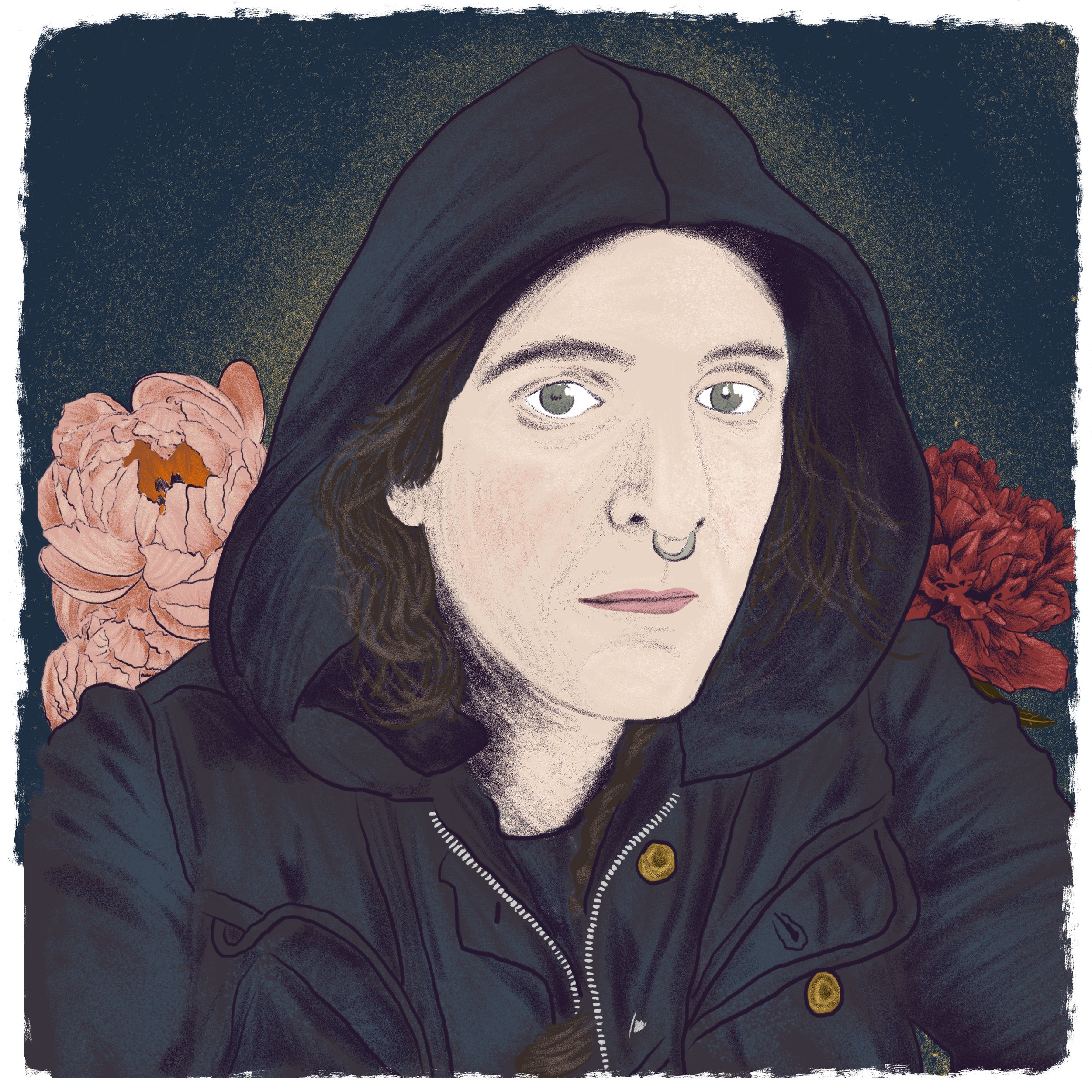
Margaret Killjoy, illustration by Nhatt Nichols for Rural Assembly [/caption]
We are in this kind of golden era of genre fiction for exactly that reason. One of the whole points of genre fiction is being able to see from someone else's point of view. One of the problems is that people can imagine being a farmer on Mars but can't imagine being a girl. And if they do imagine being a girl, it's mostly to stare at their own boobs in the mirror or something. The people who are doing that gatekeeping were often coming from real specific biases for a very long time, and we're starting to get past that.
NN
Why is it important for books like The Sapling Cage to be available to young people?
MK
When I was in fifth grade, I found some books on my teacher's shelf in my public school, a series called Song of the Lioness by Tamora Pierce. The first book is called Alana The First Adventure, and the cover has a girl wearing plate armor and holding up a sword, and it immediately called out to me. That book is about a young girl who wants to be a knight, but she's not allowed because she's a girl. And her brother is supposed to be a knight, and he wants to be a wizard, so she dresses up as him, and goes off and crossdresses her way through being a page and a squire and a knight in court. It blew my mind because she was the first young knight protagonist that I related to. This idea of needing to hide who you are, and understanding who you are, mixed with these tropes of fantasy knighthood really spoke to me and comforted me, and at the time, I didn't even know why.
I didn't conceptualize myself as a trans girl. I only conceptualized myself as wishing I was a girl. And so getting to escape into being this girl who's also hiding who she is was so important to me. I am just grateful that it was available and that my parents never filtered my reading, even when they hated what I was reading, which happened occasionally. They would say, don't leave that book in the living room, but they couldn't bring themselves to say, you can't read that book. Being afraid of books is just abject cowardice. Allowing people to see the perspectives of other people does not turn them into those people.