Marrowstone Residents Express Concerns Over Proposed Conservation Burial Ground

News by Angela Downs
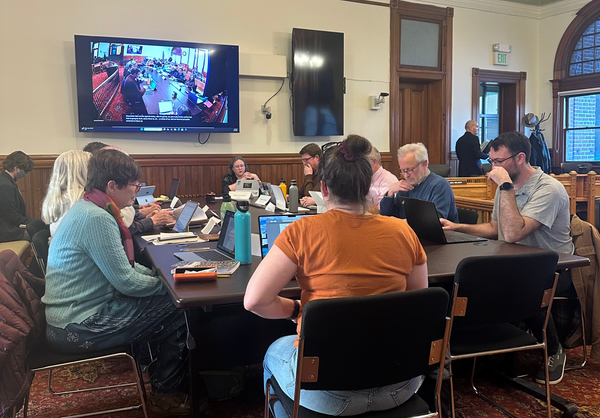
On Tuesday, Jan. 21, the Marrowstone Island Community Association (MICA) held an educational and informative meeting on the proposal of a stewarded Conservation Burial Ground on a Marrowstone privately owned north-end property. Led by Erik Kingfisher with the Jefferson Land Trust, the proposal naturally raised concerns, but there wasn’t just above-average attendance; there was also a lot of suspicion and fear, with 87% of the residents disapproving of the proposed Conservation Burial according to a poll on NextDoor.
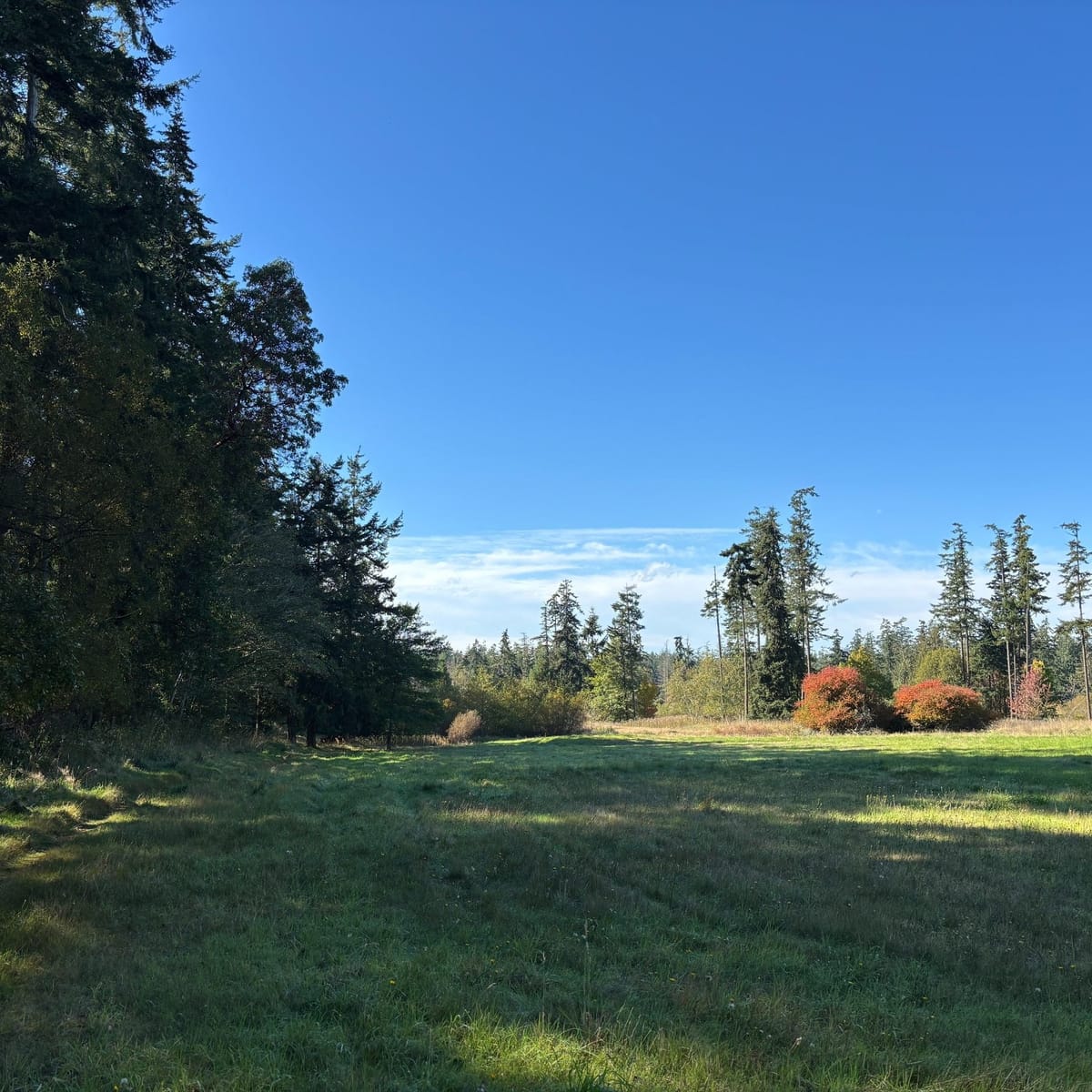
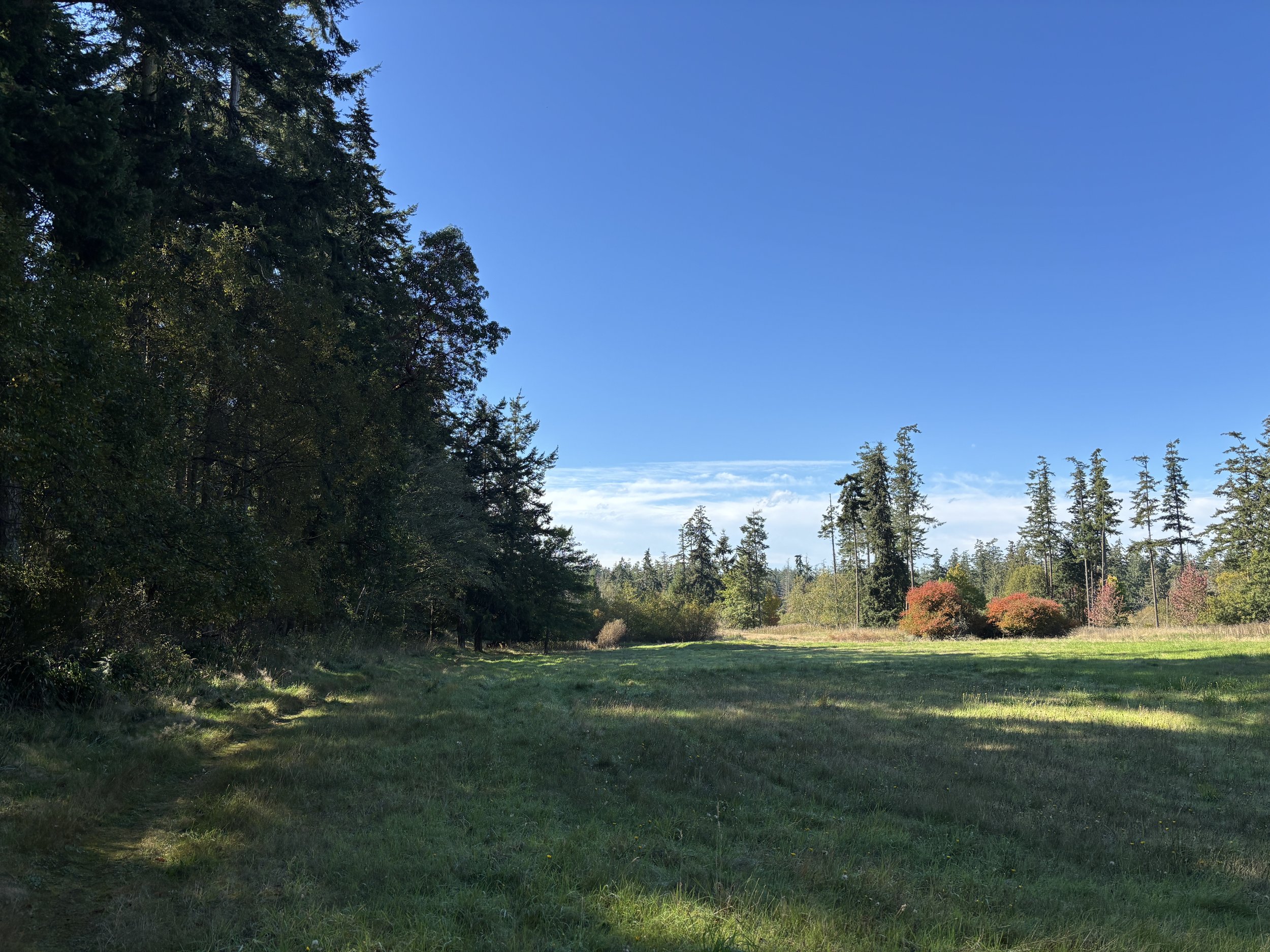
The land had been previously logged in the 1990s for Morning Tide Golf Course, requiring the land to undergo the addition of sand and dirt, irrevocably altering the natural conditions of the last 1,000 years. The golf course declared bankruptcy. Annie Mize took ownership in 2016, intending for the public to walk and quietly recreate.
The Land Trust purchased a conservation easement from Mize in 2019, permanently protecting the land. But if Mize chose to sell, the next owner could fence it off, and the public would lose access to the meadows, running water, and pockets of old-growth trees that remain.
From the loss of trees in the ’90s, this 36-acre parcel is vulnerable to invasive plant species, requiring regular management of the poison hemlock, scotch broom, thistles, and blackberries. The landowners are the caretakers. Mize, working with the Land Trust for the last six years, developed ideas on how to maintain this property in a way that is appropriate for public use and prioritizes the land’s restoration and conservation.
In their research, Mize and the Land Trust were led to “conservation burial grounds” and felt like, out of the many options investigated, it was the best choice for their shared values.
However, the residents of Marrowstone Island have not been convinced it’s as good a fit for them. With concerns about water sanitation and smells, there was vocal pushback from the audience, declaring they were unhappy and it did not feel good for the residents.
The health and resiliency of the environment is the Land Trust’s priority, and they intend to take a full year of land evaluation and research to ensure their choices for the burial plots are the safest and wisest of options.
With the subsidiary of Olympic Wildland Burial Grounds, LLC in place and have applied for a Conditional Use Permit with the county, the research efforts can begin with the support of their board of management, water specialists, habitat biology group, geohydrologist, and a Bremerton-based water quality firm.
[caption id align="alignnone" width="5712"]
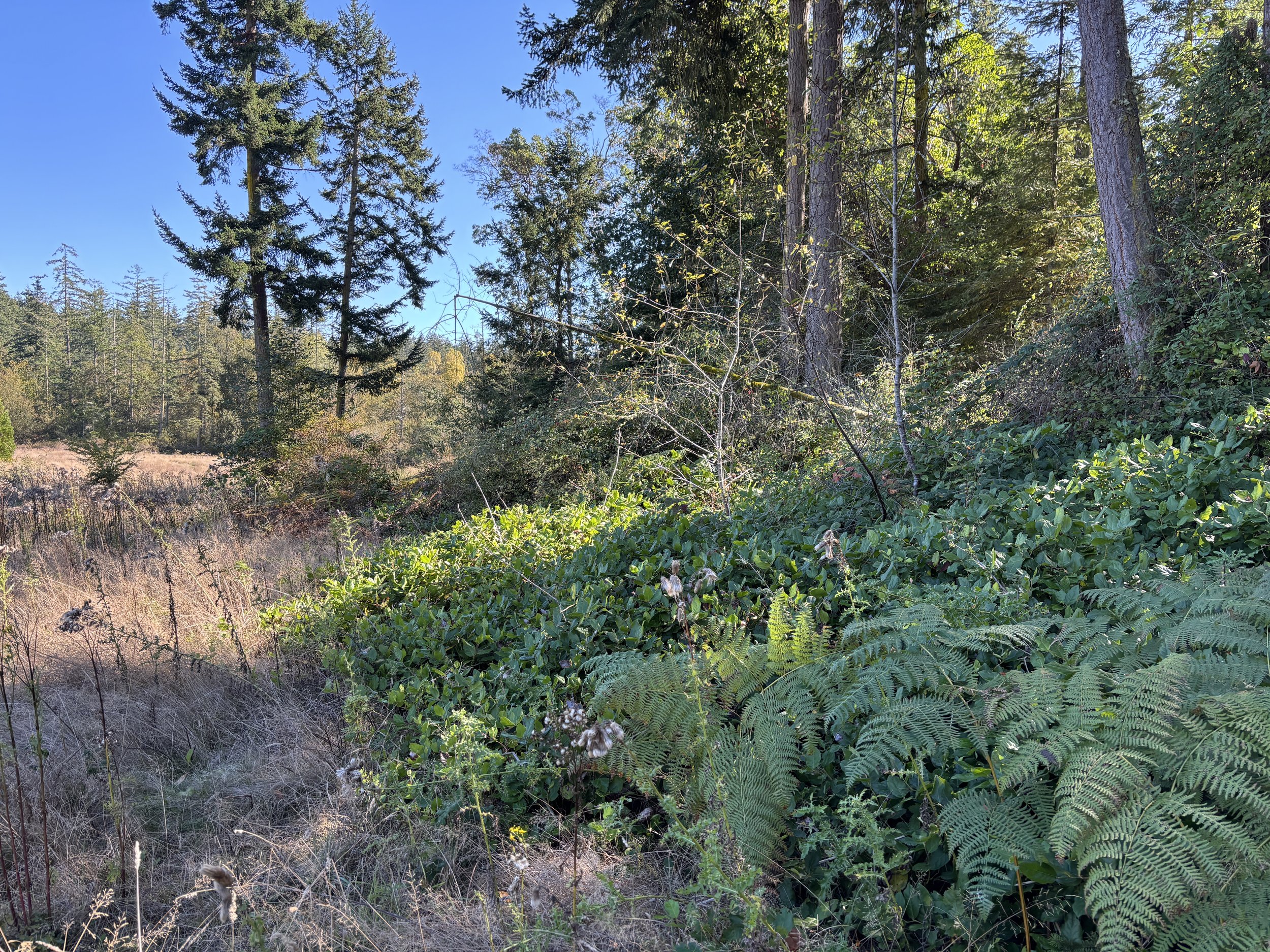
Photo curtesy of Erik Kingfisher and the Jefferson Land Trust. [/caption]
The team will conduct boundary surveys and ecological studies to determine the safest areas to place human remains and focus conservation efforts on supporting wildflower meadows for the local pollinators through prairie restoration and the gentle expansion of the remaining old-growth forest.
With guidance from the Conservation Burial Alliance and the Green Burial Council, as well as input from conservation burial grounds around the nation, the program will have a strong community of resources.
According to the Land Trust, the 12-15 burials a year will not only build the soil's nutrients, they will also pay for the cost of maintenance on the land, thus working hand in hand with the conservation values and intention to keep the land publicly accessible. It’s not about getting as many burials as possible; it’s about value and access. The Land Trust expects the burial ground to generate enough revenue to cover the cost of restoring and caring for the property. Any additional revenue will go to support other Land Trust properties.
It’s not just the impact on the water and neighboring property values that have the residence tense, but the very real safety concern about increased traffic on the 15-wide Schwarts Road bordering the northeast side of the property. While The Land Trust has proposed a modest parking area for visitors, this doesn’t account for potential emergency personnel or the additional recreation the site is bound to bring.
With the likelihood of development on neighboring plots along the road, it was noted during the meeting that an infrastructure update could be suggested to the county as a preventative measure for future conflict.
During the question portion of the evening, one resident commented that they were excited about green burial on the island and asked when they could reserve their plot.
Other questions included the depth of bodies placed (3-4 feet, in the aerobic zone), pollution risk of chemicals remaining in bodies (low to no risk), what happens if they do not get approval or it fails (Mize will likely have to sell), and if there is a limit to how many can be buried (it will take 150 years for the land to fill to capacity). The projected date for the first burial is in 2027.
The permit application is now in its public comment period, and the Land Trust is actively seeking community input to ensure all concerns are addressed.
You can also send to the county planner, David Wayne Johnson, at djohnson@co.jefferson.wa.us
Visit the Jefferson Land Trust Conservation Burial Q&A, the Green Burial Council, and the Conservation Burial Alliance for more information.
Corrections:
An earlier version of this article didn’t identify the source of the survey of Marrowstone residents.
The landowner's name was written as Annie Wise. The Land Trust purchased a conservation easement from Annie Mize (she did not purchase it from the Land Trust).
The organization name was written as Olympic Wildlands Burial Grounds LLC
The Land Trust has applied for a Conditional Use Permit from the County, not a SIPA.