2025-30 Homeless and Affordable Housing Services Plan: Preparing for Increasing Support for Unhoused and Underhoused


[caption id align="alignnone" width="2500"]
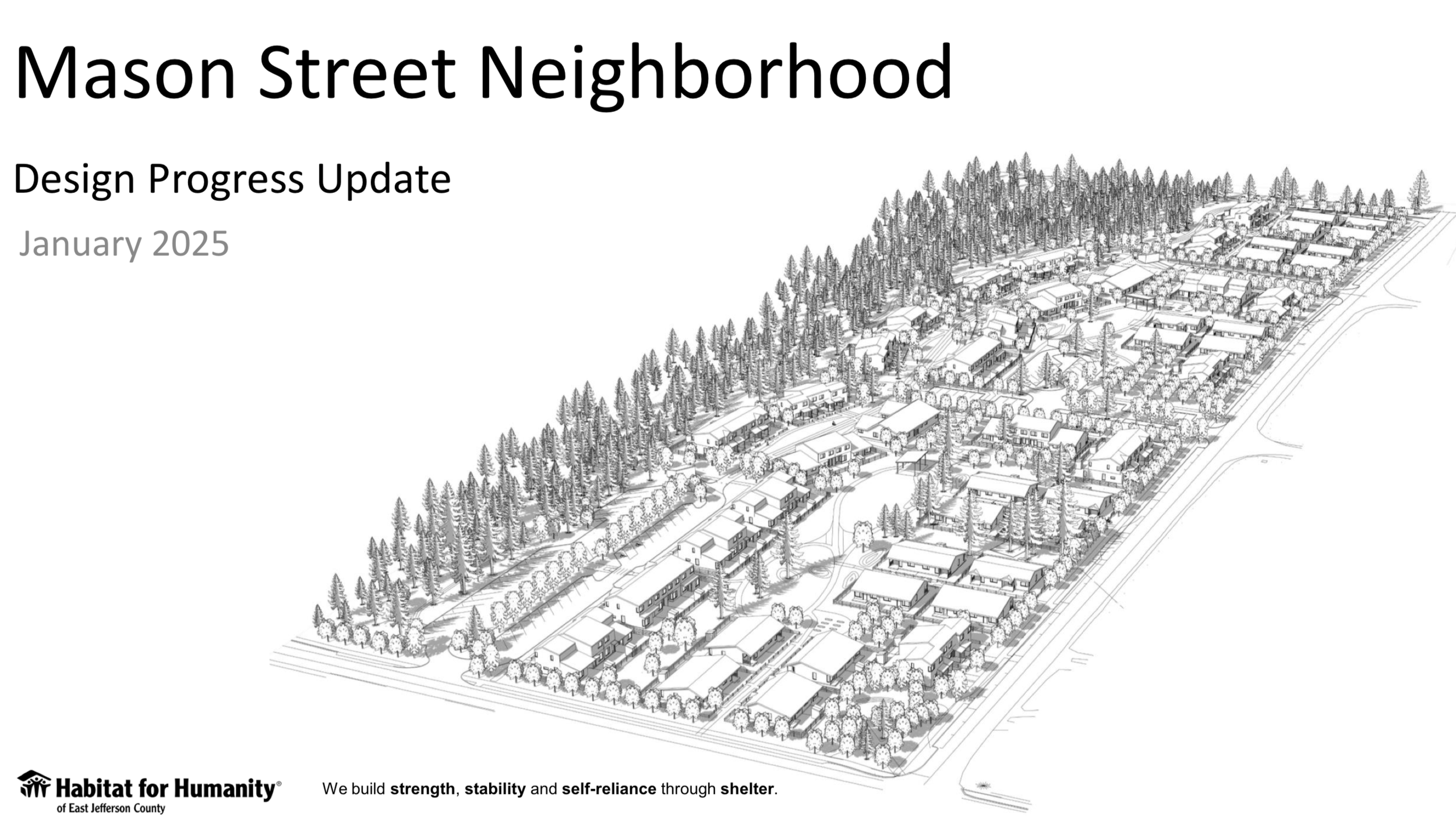
Habitat for Humanity of Jefferson County is making a difference by creating an entire neighbourhood affordable housing. [/caption]
News by Scott France
For the rising number of people struggling to find an affordable, decent home in which to live, potential solutions often boil down to a local government or community nonprofit offering help in the form of a lottery-like system. Jefferson County appears to have an abundance of motivated people working to increase capacity to address homelessness and the local affordable housing crisis.
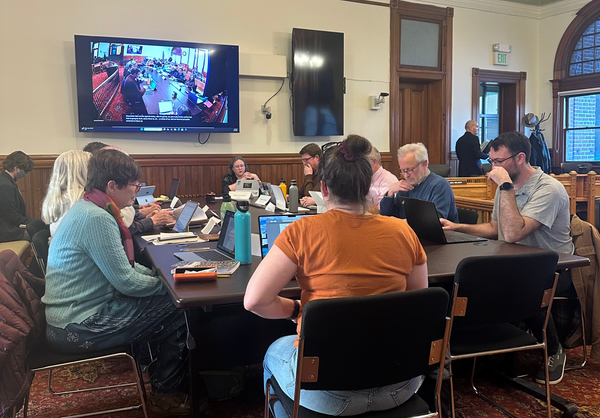
The visibility of these efforts is increasing, as evidenced by recent listening sessions to inform the 2025–2030 Jefferson County Homeless and Affordable Housing Services Plan. Over the past two weeks, the Housing Task Force has held two listening sessions: one for individuals experiencing homelessness and another for housing services providers. The Housing Task Force is composed of 17 persons, including lived experts and representatives from local government, service providers, and community organizations.
A Challenging Landscape
Bayside Housing and Services Executive Director Gary Keister noted the changing nature of need among Bayside’s clients. “When we first started 10 years ago, most people who came in needed a roof over their heads, food and clean clothes,” Keister said. “Within two weeks, they had a job and they were out the door, and within 90 days they had a car and they were gone. That’s not the case now. Most of these people are stuck. They don’t have the capability of working.”
In Jefferson County, the average number of persons experiencing homelessness at some point during a six-month period has remained fairly stable since 2018 at just over 500 people, according to the Department of Commerce’s Snapshot Reports of Homelessness.
Factors contributing to homelessness include housing affordability, mental health, substance use, healthcare access, poverty, and sometimes domestic violence or family breakdown. Governments tend to silo these issues — housing agencies build units, health agencies fund clinics, social services handle benefits — but homelessness lives in the overlap between them. Coordinating across departments, funding streams, and political jurisdictions is extremely challenging.
The Housing Services Plan is focused on five objectives:
- Strengthen the homeless service provider workforce
- Promote an equitable, accountable and transparent homeless crisis response system
- Prioritize assistance based on the greatest barriers to housing, stability, and the greatest risk of harm
- Prevent episodes of homelessness wherever possible
- Seek to house everyone in a stable setting that meets their needs
Searching for Solutions
Kathy Morgan, the executive director of Olympic Housing Trust, has experience in the service provider realm. “Even if you’re able to successfully get them into housing that they can afford, the mental illness rears its ugly head,” she said. “They have no support because now they’ve left the service provider, they lose their housing and it starts all over again. It’s a continual cycle.”
Viki Sonntag, a member of the Port Townsend Planning Commission and the Housing Fund Board, champions an integrated service delivery model. “I think the positive thing is that we are seeing spaces develop where people can go for resources,” she said. “OWL 360 The Nest, where people can go for holistic support. Dove House’s Recovery Cafe, which tons of people are using.”
The Coordinated Entry Advisory Board (CEAB) and the Shelter Coalition were formed to advance coordinated service delivery. The CEAB helps people experiencing or at risk of homelessness, excess housing, shelter and supportive services. The Shelter Coalition is providing operational focus for service delivery to unsheltered and emergency housing plans by bringing together service providers from across service sectors
“It used to be that service providers didn’t know what the others were doing,” Sonntag said.
As providers continue to meet and become more acquainted with other service providers in the county, they will know to whom to send clients, thereby facilitating better continuum of care.
Relentless Funding Challenges
“We’re trying to connect people all along the housing continuum — from emergency to transitional housing, then to more permanent arrangements,” Sonntag said. “But even getting into rental housing isn’t necessarily the end of the road as there could be insecurity due to their funding possibly getting cut.”
Keister says that local housing service providers need new revenue sources. “Eighty percent of our donations come from people who are over 75 years old,” Keister said.
The lack of affordable, stable housing means that people with modest incomes have limited options. When something disrupts their housing (job loss, rent increase), they easily slip into precarious or “hidden” homelessness.
The Housing Services Plan states, “In Jefferson County, there are also a significant number of underhoused individuals, persons whose homes are officially inadequate, for example, with no running water or electricity. There is no good way to count under housed individuals (who are technically homeless) as many of them do not consider themselves homeless or seek Homeless Response System or other services.”
Meeting the Underhoused
Jefferson County Habitat for Humanity Executive Director Jamie Maciejewski said that the organization “is not traditionally seen as doing homeless housing, but we are addressing that risk of homelessness. We are housing many people who are at risk because of mental health issues. Their stability is increased by not having a landlord who says they need to leave. But we do need to understand better how to access some of that help for them so that they can be more successful with neighbor relations and their own stability.”
Habitat also provides financial management education and credit counseling to its renters.
Sonntag says that “this plan is a more client-centered delivery system, and not about prescribing services, but listening to people and applying a more holistic approach.”
Editor’s note: Scott France is on the steering committee of the Housing Solutions Network