Port Townsend Faces Water Management Challenges: Collaborations and Conservation Strategies for the Future

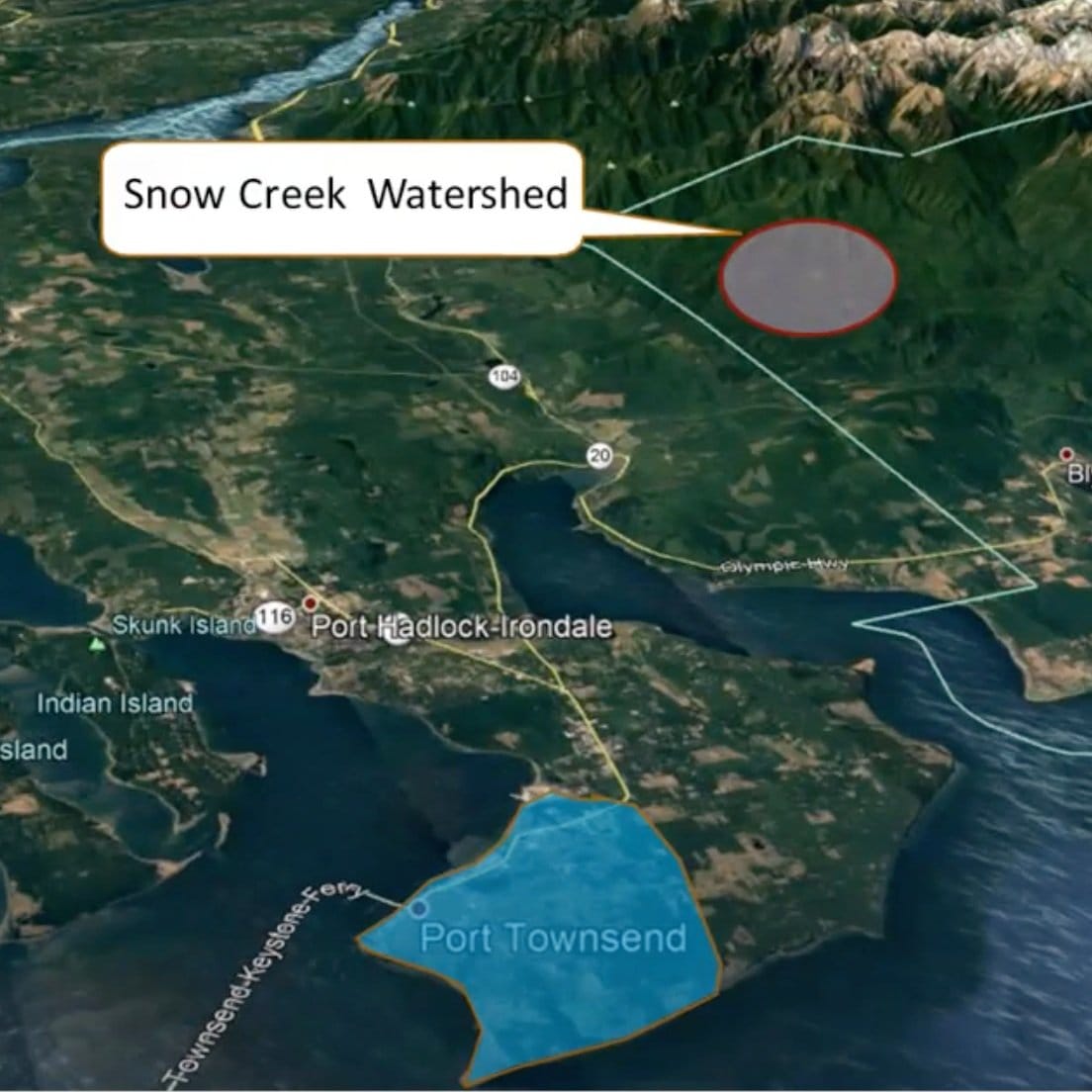
[caption id align="alignnone" width="1760"]
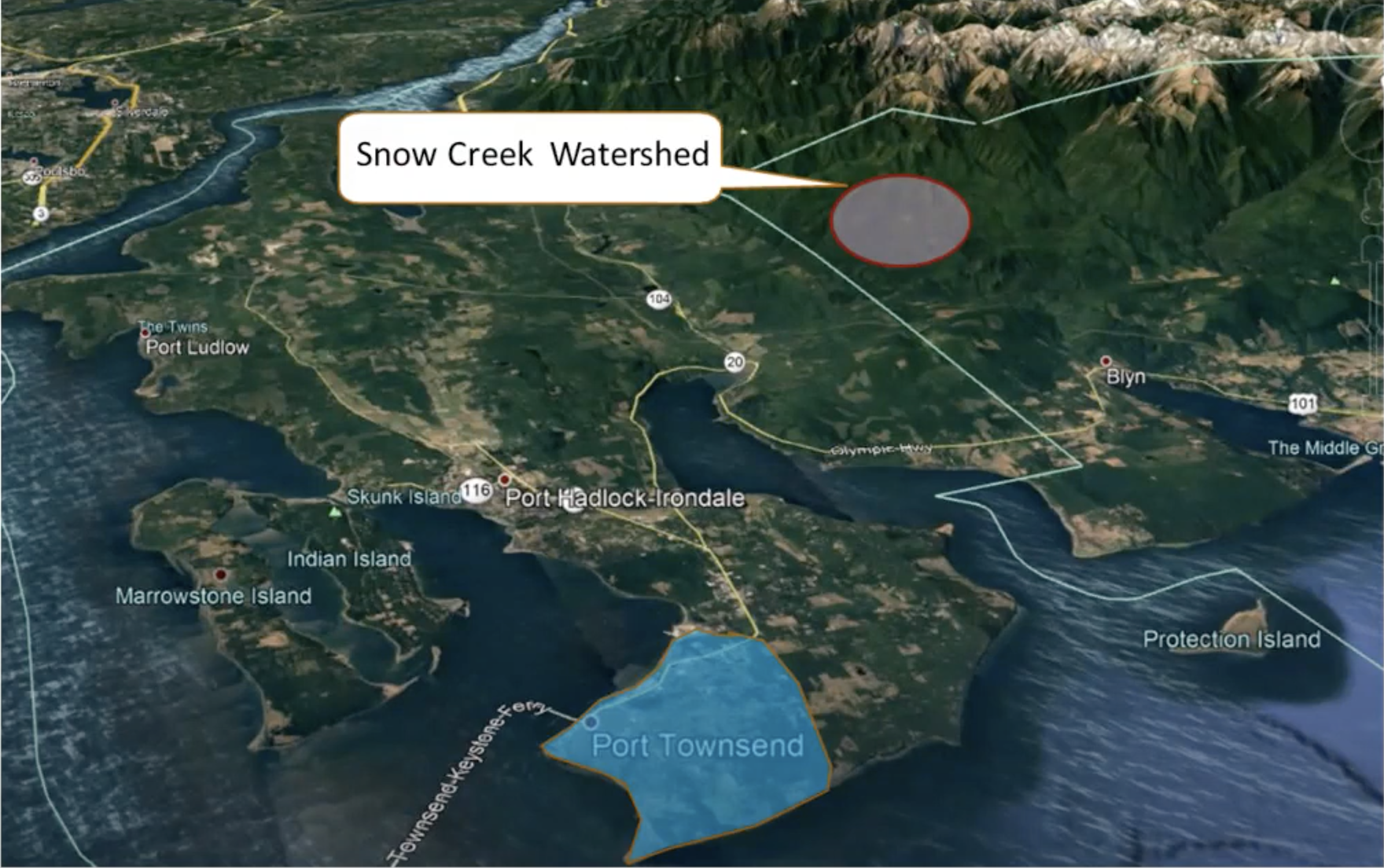
Port Townsend’s watershed. Photo courtesy of the City of Port Townsend. [/caption]
News by Angela Downs
The water out of a tap in Port Townsend travels 30 miles through the Olympic Gravity Water system (OGWS), from the Big Quilcene River watershed to the homes and businesses within the city. Water is also provided to Port Townsend Paper Corporation, Glen Cove, and parts of the unincorporated area west of town.
The History of Port Townsend’s Water Supply
In most parts of Washington State, settlers claimed rights to water from streams or rivers by posting a sign of ownership before a comprehensive state water law was developed in 1917.
With no streams or rivers, Port Townsend did not have a source of good drinking water until 1927-28, when the City issued a bond with the Port Townsend Paper Corporation to build the OGWS.
The OGWS replaced the Snow Creek water system, provided by the Spring Valley Water Company (SVWC), originally pulling from a well near a pond at F Street and San Juan Avenue.
[caption id align="alignnone" width="999"]
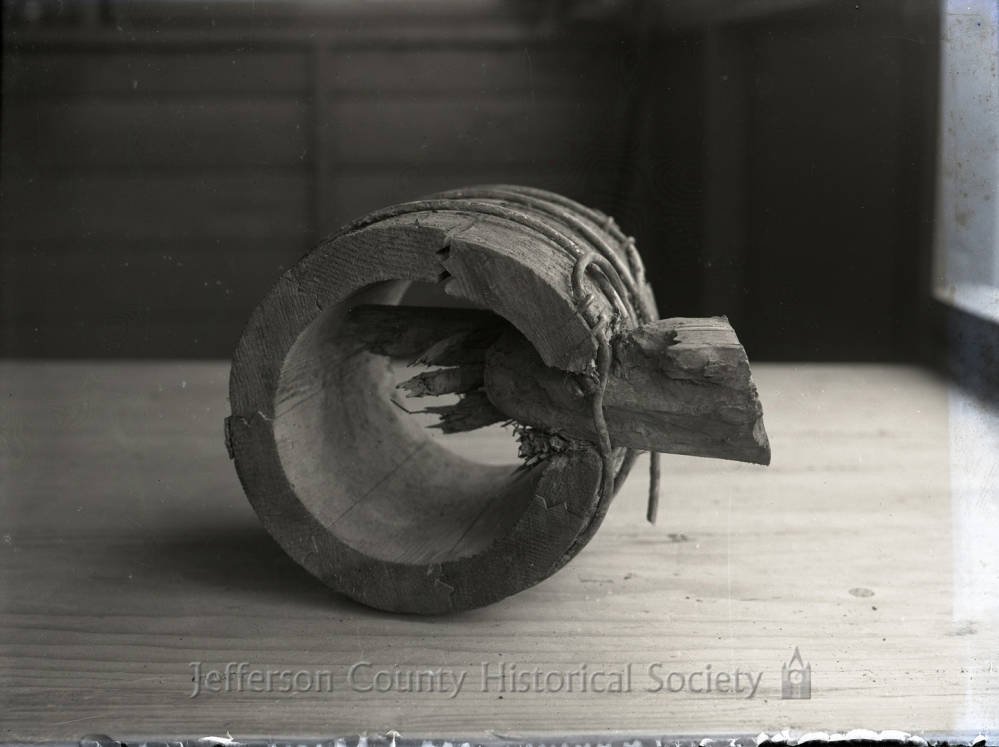
The original wooden stave piping. Photo courtesy of Jefferson County Historical Society. [/caption]
In 1904, the City acquired SVWC and constructed the Snow Creek Diversion, a 20-mile wood stave pipe built with tongue and groove joints at staggered lengths.
The Mill was constructed in 1927, and it quickly exceeded the water system's capacity. The City and Mill collaboratively built the OGWS in 1928, pulling from the 37,361 acres of pristine watershed in the Olympic Mountains that drain into the Big Quilcene River watershed.
Providing an average daily flow of twelve million gallons per day, the system's design includes the City Lake outlet system, a 144 million gallon raw water equalization reservoir, and is one of Washington’s oldest water systems.
Between the 1950s and 70s, the OGWS was improved by replacing the wood stave with steel pipe. By 1956, they installed the Little Quilcene Diversion, a one-mile pipeline to the Lord’s Lake Reservoir, which provides 500 million gallons of raw water storage.
Current Water Challenges
Today, rehabilitation of the Big Quilcene Diversion is necessary since much of the system is reaching the end of its design life.
“We worked through an agreement in 2021 that really substantively changed how we and the Mill think about both the operation of the line and investment into the future,” City Manager John Mauro said.
[caption id align="alignnone" width="1382"]
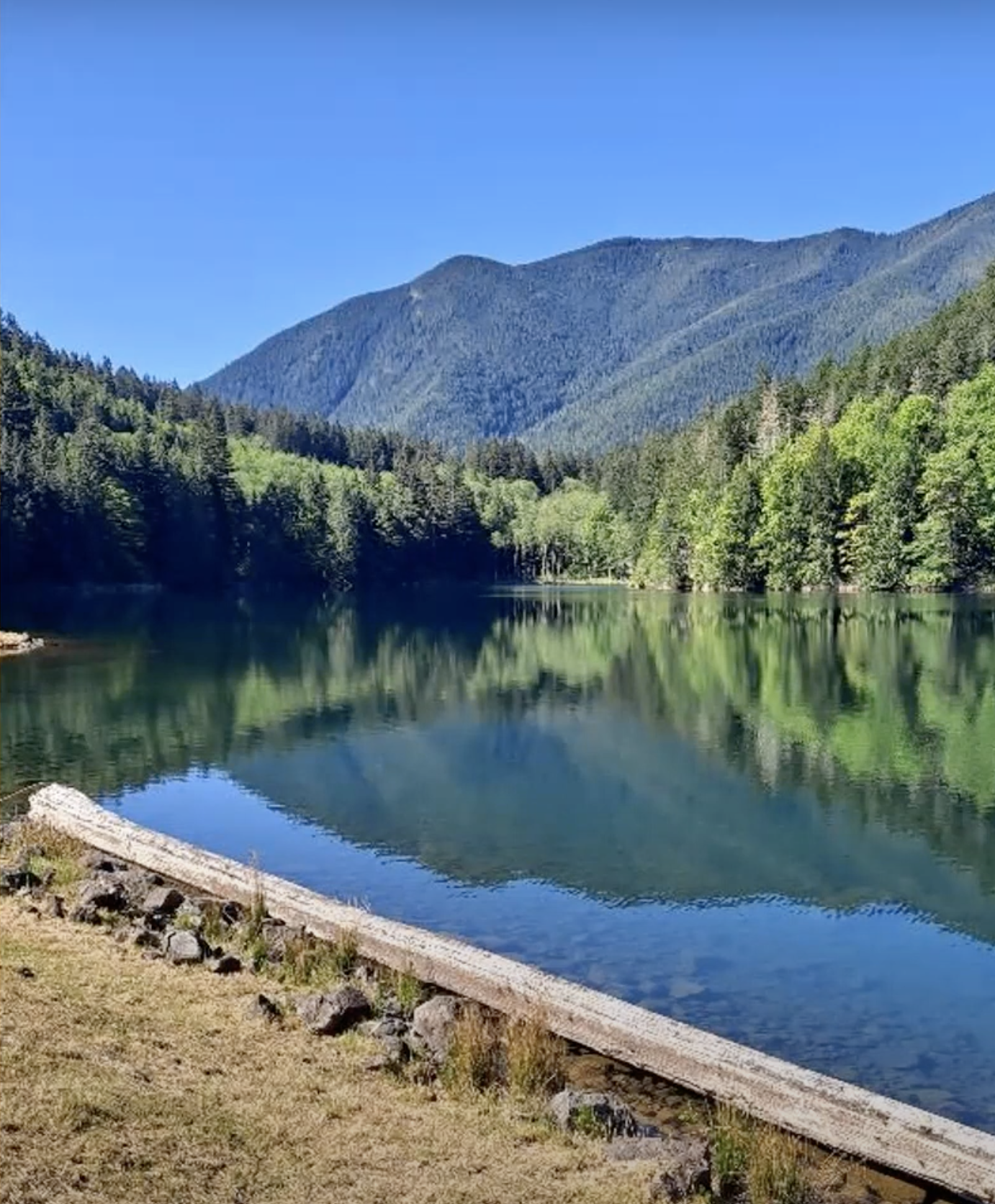
Lord’s Lake Reservoir when it’s full. Photo courtesy of the City of Port Townsend. [/caption]
The City and the Mill’s considerations focus on a management and replacement strategy for the next 100 years. “Negotiations focus on developing an operations and capital cost sharing agreement in order to ensure reliable, high-quality, and affordable water is available for the residents, businesses, and the Mill,” according to the White paper Water Supply Agreement, as the City and Port Townsend Paper Corporation.
Currently, the OGWS provides 10 million gallons of raw water to the Mill for industrial purposes and one to two million gallons to the pressurized membrane ultrafiltration Water Treatment Facility for public use, treating water through a synthetic membrane system.
In 2021, a preliminary estimate of the work needed to maintain the pipeline system over the next 40 years, is approximately $161 million.
“We've had an enduring, fantastic partnership with the Port Townsend Paper Company at the Mill, but we, nor the Mill, never really paid into the replacement of the line. And I believe the last substantive negotiation of the contract was 1956,” Mauro said.
One of the City’s main considerations is how to maintain such a large and complex pipeline if the Mill closes. Built for far more than City water needs, shutting down diversions and abandoning a third of the pipeline have been options in the brainstorming process. A reclaimed water system has also been proposed, but that option presents many expensive obstacles.
“The point here is it is so overbuilt for just municipal needs. If we wanted to just have water for our population, residences, businesses and visitors, we wouldn't need 12 million gallons a day,” Mauro explained.
Drought is a concern every year. The City Lake and Lords Lake reservoirs provide essential storage when stream flows decrease during the dry season. Water use in the city goes from one million gallons per day to two million gallons per day during the dry period of the year.
Low stream flows during late summer and early fall were a concern for the Washington State Department of Fisheries in the early 1940s.
The Mill is required to shut down if there is a water shortage. In the drought of 2015, the Mill shut down one paper machine, and almost needed to curtail their operations again during the drought last year.
Director of Public Works Steve King stressed that while there isn’t a risk of a water shortage for Port Townsend residents, that doesn’t mean it isn’t important to be cautious with the supply.
“It makes sense to conserve water when we can,” King said. “We are continually looking for conservation of water, and irrigation is the number one source that could be conserved in the City limits.”
“If the mill is going to take some of their operations down for preservation of drinking water for the population, the city should be chipping in,” Mauro said. This partnership with the Mill gives an opportunity for the City and residents to imagine their conservation contributions. Increasing water demand for new residents and a strong community interest in increasing local agriculture put some pressure on the Quilcene-Snow watershed.
Use of water for small-scale urban agriculture is expected, but “If the water is used for agricultural purposes, it would be very expensive water compared to most irrigation systems typically designed and operated for large scale agricultural operations,” King said. Water used in the City for agriculture is filtered and treated with chlorine which makes it even more expensive.
Port Townsend does indeed have a profound water source, making it one of our highest assets. And where there is water there is growth, making the growers another of our greatest assets. But there are some inherent contradictions to having a rural “city”, which can make it very complex for the managing personnel to help steward urban agriculture.
When making decisions, they consider watershed protection, fire preparedness, and meeting mandatory conservation targets. One target the City is proud of is the low leak percentages throughout the pipeline.
The City sees focusing development within existing infrastructure, and densifying development to avoid sprawling, as some of their main responsibilities towards climate resiliency.
There will also be the implementation of a climate change adaptation strategy to rehabilitate the Lord's Lake dam, which hopefully will raise the water level by three feet.
“The focus of the City is to work to preserve this water supply for many generations to come,” King said.
Mauro noted that water is an essential factor in planning for the future of Port Townsend.
“A healthy, vibrant city that is environmentally minded is one where people can walk, bike and get around without dependence on vehicles, where there is affordability at all ranges, and there's a vibrancy in the economic environment. That really speaks to environmental stewardship, and it wouldn't be possible if we were unsure of what our water supply was.”
You can find the last three years of Annual Drinking Water Reports here: https://cityofpt.us/publicworks/page/port-townsend-annual-drinking-water-report
The report is released every May to the community.