Op-Ed: Fast, Reliable, and Publicly Managed Internet is Coming to Jefferson County

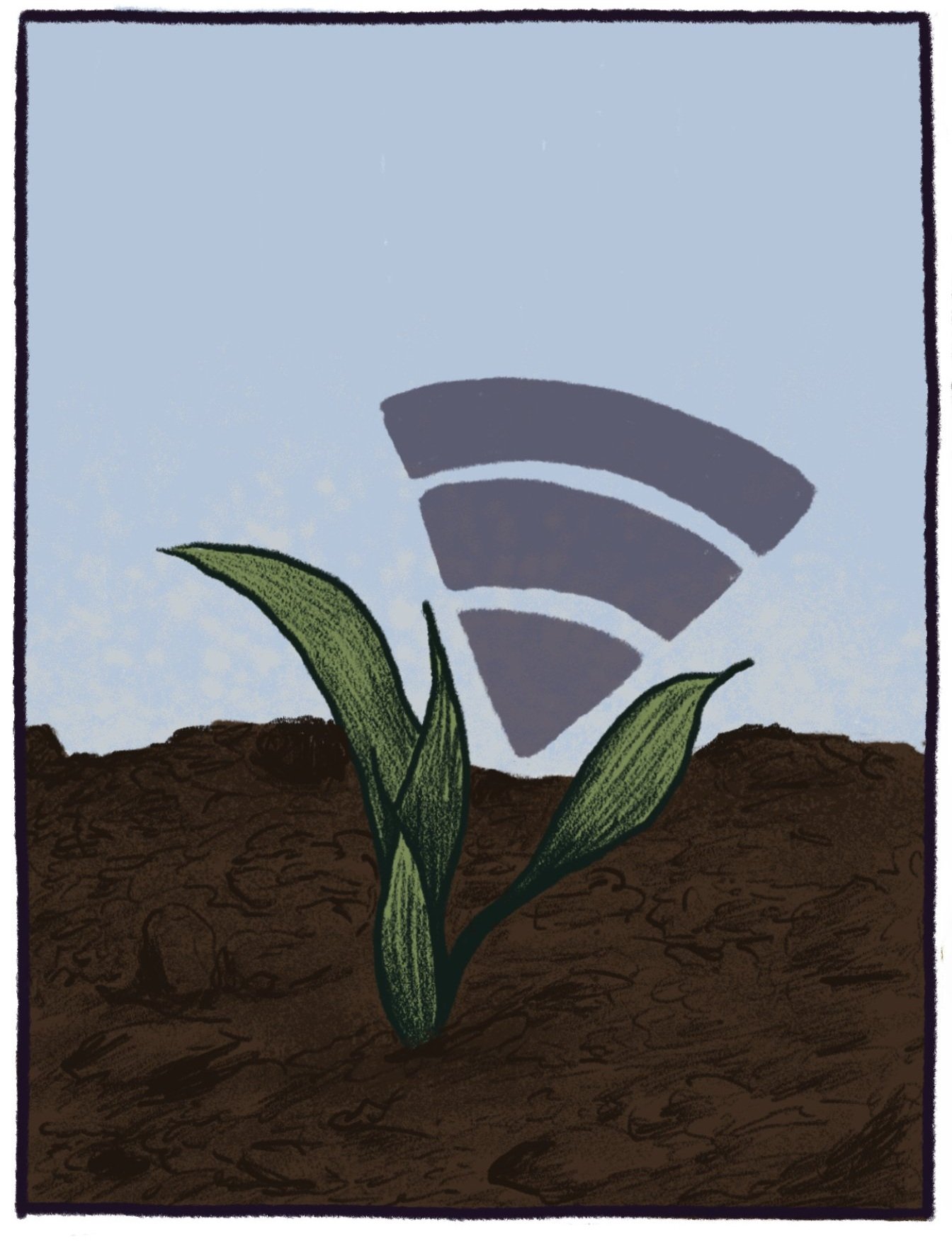
Illustration by Nhatt Nichols [/caption]
By Will O’Donnell, Broadband and Communications Director at Jefferson County PUD
For the last few years, I've been putting most of my energy into creating a publicly owned fiber optic network that will reach rural residents in Jefferson County. It's been a big lift, and to date, Jefferson County Pud #1 has secured more than $55M to make it happen. While planning and funding efforts have been ongoing since 2021, construction finally began this spring. Since then, our contractors have installed over 100 miles of fiber, starting at the northern base of Mt Walker and running up to Gardiner and Chimacum. We've brought fiber to the outside wall of almost 500 homes. Next week we begin bringing that fiber inside the home. From here forward, we plan to start connecting 30-50 homes per week with internet service that will far surpass what is available to residents of most major metro areas.
The work to build fiber to our rural residents will continue over the next four years. In that time, we expect to connect to over 4,000 homes and businesses and will install over 500 miles of fiber. This is the largest expansion of a utility service in our county in many years and reminiscent in many ways of the rural electrification push in the 30s and 40s. Electricity was available at the time, but only to areas where convenient, and often at high prices and with low reliability. We are in a similar situation today. While high-ish speed internet is available in the denser areas of our county, outside of those zones, our residents and business owners are piecing together connectivity solutions through multiple providers that, even in sum, don't always get the job done.
On Friday, Aug 2nd, a construction contractor working for a private company (not the PUD, despite what some are reporting) hit one of the PUD's fiber lines deep underground along Ness's Corner Rd. The contractor destroyed thousands of feet of fiber, and the internet went out to much of the county. This fiber was the fiber that connects to another fiber (not owned by the PUD) that leaves the peninsula across the Hood Canal bridge. It not only carried PUD internet traffic, but also Astound internet traffic, and fed other carriers, and cell phone towers, etc. Internet went out to much of the county for 12 hours on a Friday afternoon and evening. Though we were able to replace the fiber and restore service, the incident brought to light a number of issues that we will be working to resolve in the next week and months. Primary among them is how this even happened to begin with? Not the fiber damage part, unfortunately that happens all the time, but how did we end up with most of the internet traffic for the county on that one line? How is it that none of the other service providers had a backup? And why did the backup that the PUD pays for fail to materialize?
As some of you may know, the path to becoming a publicly owned internet provider has not been without struggle, and is not an endeavor that our PUD has taken on lightly. But we did it because our citizens demanded it, because they deserve high quality, reliable, affordable service, and because no one else could do it at scale. And we did it because of situations like the fiber outage yesterday. It's not enough just to provide the service. It has to be reliable and resilient. As we build fiber across the county, we are building redundancies, failovers, and rings to be able to reroute services in case of fiber breaks, which are a somewhat unavoidable occurrence. Our buildout is only in the beginning stages, however, so this will take some time.
One of the fun parts of all the work that we've been doing for the last few years is just how good the service is going to be.
I am not sure that people are quite prepared for it. In fact, I know they aren't because most of their technology isn't going to be able to utilize what we are providing initially. We are building an internet service that has the capability to deliver up to 10 gigabits per second up and down to every home on our network. Even your newest phone is unlikely to be able to work at speeds of 1 gigabit per second. Same with the average computer, especially over WiFi. And even if you pay for 1-gigabit internet, unless you are on a fiber connection directly to the home and likely already connected to the PUD network, you'll almost never see that speed or anything close to it.
But it's not just how fast PUD fiber internet will be; the other amazing thing about fiber is its reliability. Fiber internet comes via a lightwave shot through a hair of glass enclosed from end to end. Despite being glass, those hairs are incredibly strong, and many are encased in a Kevlar jacket. They will break when drilled or dug into, as we have seen, but their signals won't be slowed down by overhead tree cover, fog or rain like satellite service, they won't be interfered with by radio frequency interference like cable internet or copper DSL. The speeds provided are the same for uploads and downloads, so you won't find a situation where you can stream a movie ok, but trying to use the video feature when working from home causes the screen to freeze. And you won't get a weird lag between what you say and when someone else hears you like you might with satellite. The quality of service made available from the fiber network is an evolutionary and exponential upgrade.
So is the access. I don't know what the opportunities will be when all of rural Quilcene, Discovery Bay, Gardner, and a good portion of Chimacum have gigabit fiber to the home. But I am excited to see. I'm sure there will be some downsides as well as upsides, but what I am most excited to see are the things I won't expect. The interesting ways people will use the technology, the innovations and surprises. Jefferson County is nothing if not creative after all.
Last point and I'll step off the soapbox. The miracle of rural electrification wasn't just making electricity available, it was making it affordable. Affordability is nearly as big a part of access as bringing the wires down the road. You can't use a service you can't afford. Basic service from the PUD starts at $65/mo ($20 less for low-income customers). Gigabit internet starts at $75. That price might be higher than some pay for cable, hotspots, or other services. But it's an honest price and doesn't come with data cap overages, hidden fees, gotcha contracts, or surprise end-of-term price hikes.
PUD prices (we call them rates) are set by publicly elected officials in public meetings that any member of the public can attend and speak at.
Our prices cover a service that, as I said before, I think customers aren't quite prepared for. So many rural customers I talk to are paying for three subscriptions to three separate companies to get barely mediocre and frequently unreliable connections. Hundreds of dollars a month sometimes. With fiber they will have 10 times the bandwidth and reliability for a fraction of the cost.
And yes, Starlink is cool, but it costs way more than our service and only delivers the speeds of our most basic package. And it has outages too.
Also, if you don't like the PUD, you can use a different company to provide your monthly service on our fiber. Because our fiber is publicly owned, we are committed to providing as much safe access to our public assets as we can.