Op-ed: Food Sovereignty and Security
[caption id align="alignnone" width="2316"]
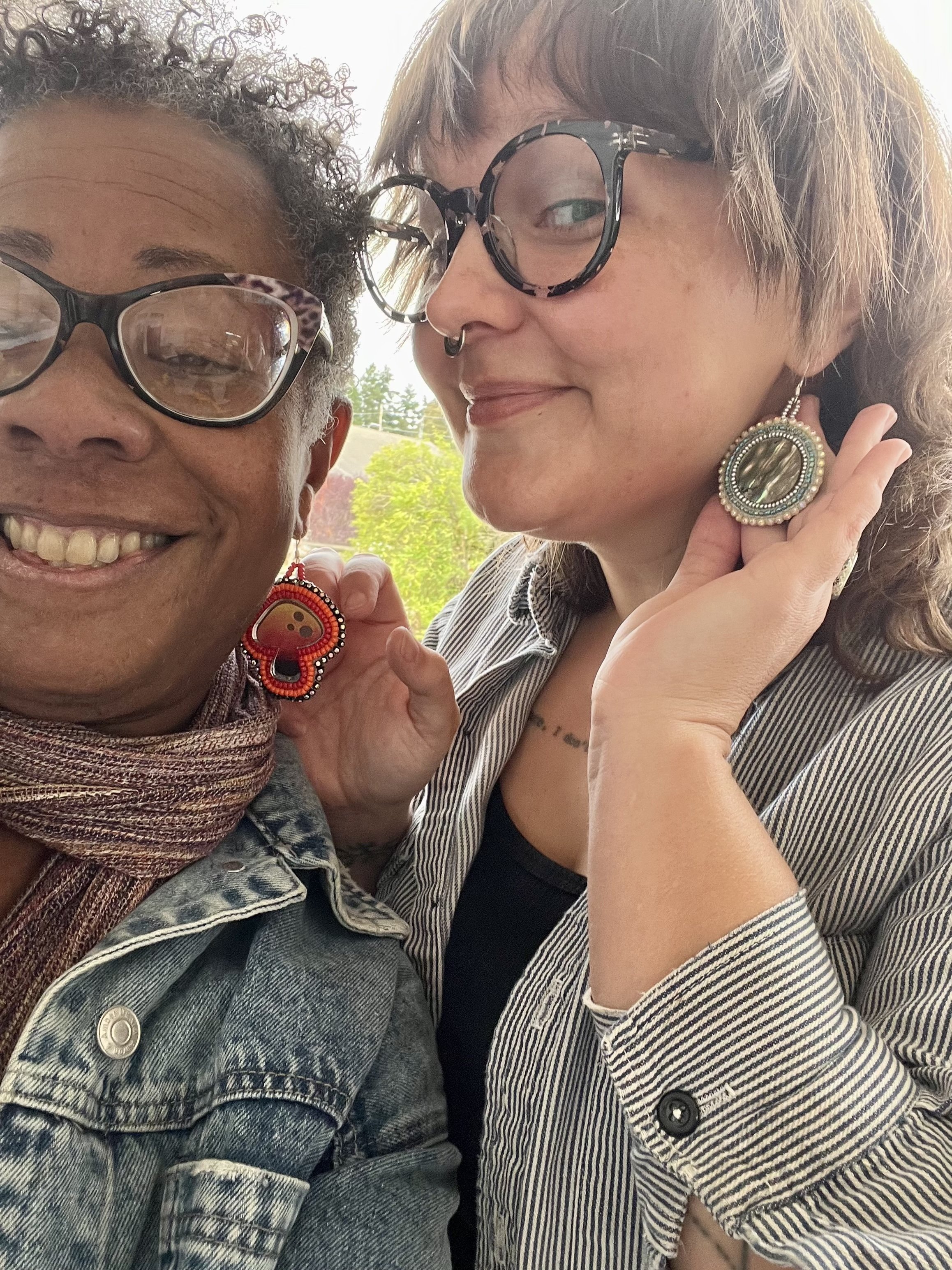
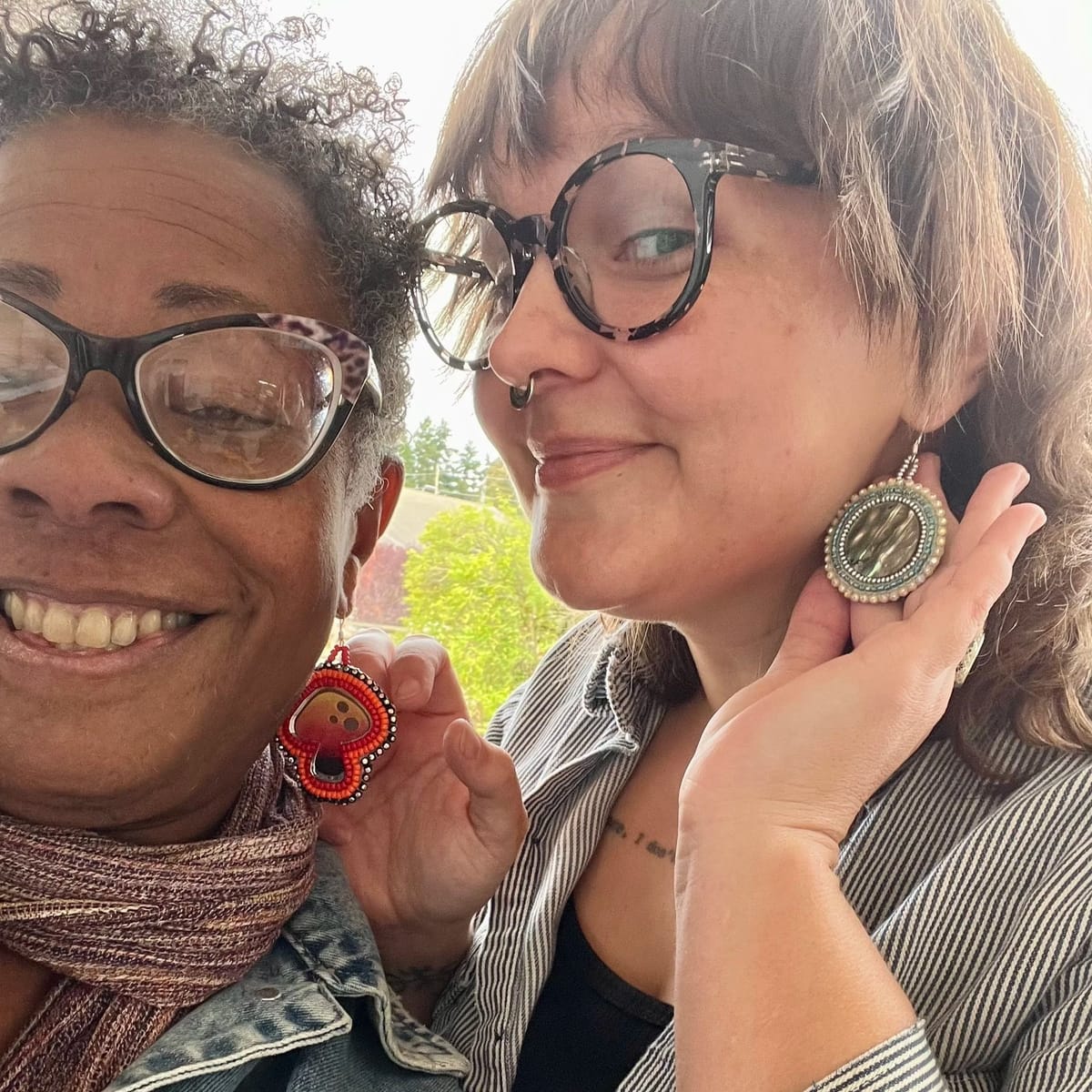
Oceana Sawyer and Cendre Hunt, The NBC team. [/caption]
Opinion by Oceana Sawyer, Program Director, Nourishing Beloved Community
What is food sovereignty? Particularly, what does it mean for people of the global majority to have agency in how we feed and care for ourselves in a region where we mostly feel invisible?
“Food sovereignty is the right of peoples to healthy and culturally appropriate food produced through ecologically sound and sustainable methods, and their right to define their own food and agriculture systems. It puts the aspirations and needs of those who produce, distribute and consume food at the heart of food systems and policies rather than the demands of markets and corporations.”
– Declaration of Nyéléni, the first global forum on food sovereignty, Mali, 2007
What does food sovereignty mean for people of the global majority here locally? The Nourishing Beloved Community program of Well Organized of Jefferson County has been asking and answering the question for ourselves for the past three years.
Actually, our initial question was much simpler - What would it look like to feed ourselves and build a PGM (aka BIPOC) vibrant community that has sovereignty and agency? Three years ago, an experiment began with a small team - one regional Indigenous person and one person of African descent. We started holding a weekly Sunday potluck of just PGM and family. Very quickly, a core of multigenerational Black and Brown folks formed around growing food in private gardens and gathering on Sunday afternoons to share food that was often culturally familiar, hugs & laughter, as well as useful information and care.
In the second year, we received our first round of funding from the United States Department of Agriculture (USDA) via the Washington State Department of Agriculture (WSDA). It was enough to create infrastructure and purchase food from regional PGM producers, which allowed us to give weekly bags of fresh organic produce and other value-added goods to an exclusive list of PGM recipients.
This was a huge step in our quest to realize food sovereignty as we began to feed ourselves healthy, sometimes culturally specific foods that were organic and “produced through ecologically sound and sustainable methods . . . .”
We continued to support private gardens through the third year of the NBC program. Another round of WSDA funding allowed us to move into the third phase of our strategic plan, which involved experimenting with a community garden headed up by a recent graduate of the Master Gardener program, one of our own. All the while, our recipient list was slowly growing from 50 bags (households) to approximately 70 households each week.
In this context, recipients are also participants, which creates agency and undercuts the sense of being dependent and therefore at the effect of dominant cultural structures. Generally speaking, as a community endeavor, the same people who receive bags are also volunteering to assemble and deliver the bags as well as support the food growing effort. Each step deepens relationships and fosters care among a group of people who largely experience the weight of racialized oppression daily.
This year, the third year, we also began including our 2SLGBTQIA+ kin due to increased targeting and hardship being doled out by our current government. This social and relational solidarity has served to strengthen our sense of generative community.
Alas, like many other government-fundedgovernment funded institutions with socially forward-leaning goals, we lost our funding this summer. NBC did not receive a third round of WSDA funding that we had hoped to enjoy. That necessitated a hard pivot, cutting staff in order to make it through the end of the season. Fortunately, we were able to acquire support from donors through the Jefferson Community Fund, which allowed us to continue purchasing food through the end of the major part of the growing season.
This little experiment in feeding ourselves and growing community has wildly exceeded our initial expectations. Yet, it feels like we are just getting started, feeding ourselves with food grown by people who look like us, offered with community love and care.
Purchasing the food, receiving the food, bagging up the food and handing out the bags have become weekly acts that have deepened our experience of being part of something bigger than our individual selves as well as being a vibrant part of the Jefferson County food systems.
We need your help to continue this social and economic experiment. On Giving Tuesday, I hope that you will consider contributing to the NBC program on the Just Give platform. This will enable us to continue stabilizing through another year as our roots get stronger in this soil that is Jefferson County.