Op-ed: How Collaboration Feeds Community

Opinion by Crystie Kisler, Director of Nonprofit Services, Jefferson Community Foundation
How can we live in communities where all are fed what they need? That’s always a critical question and one that became even more amplified last month when the government shutdown caused a suspension of SNAP food assistance programs. The question can feel overwhelming, especially if asked in isolation. But the answer is together. We feed community together.
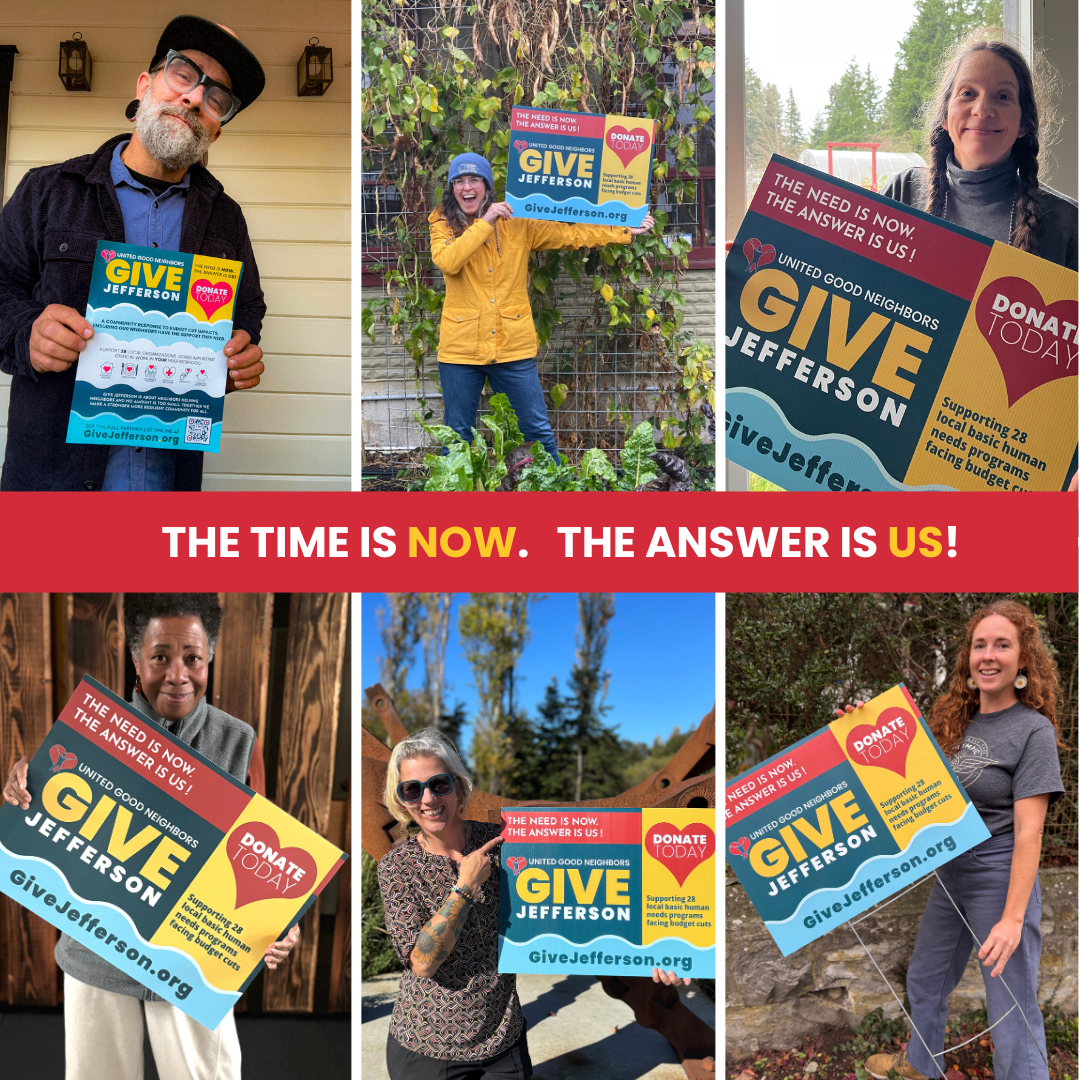
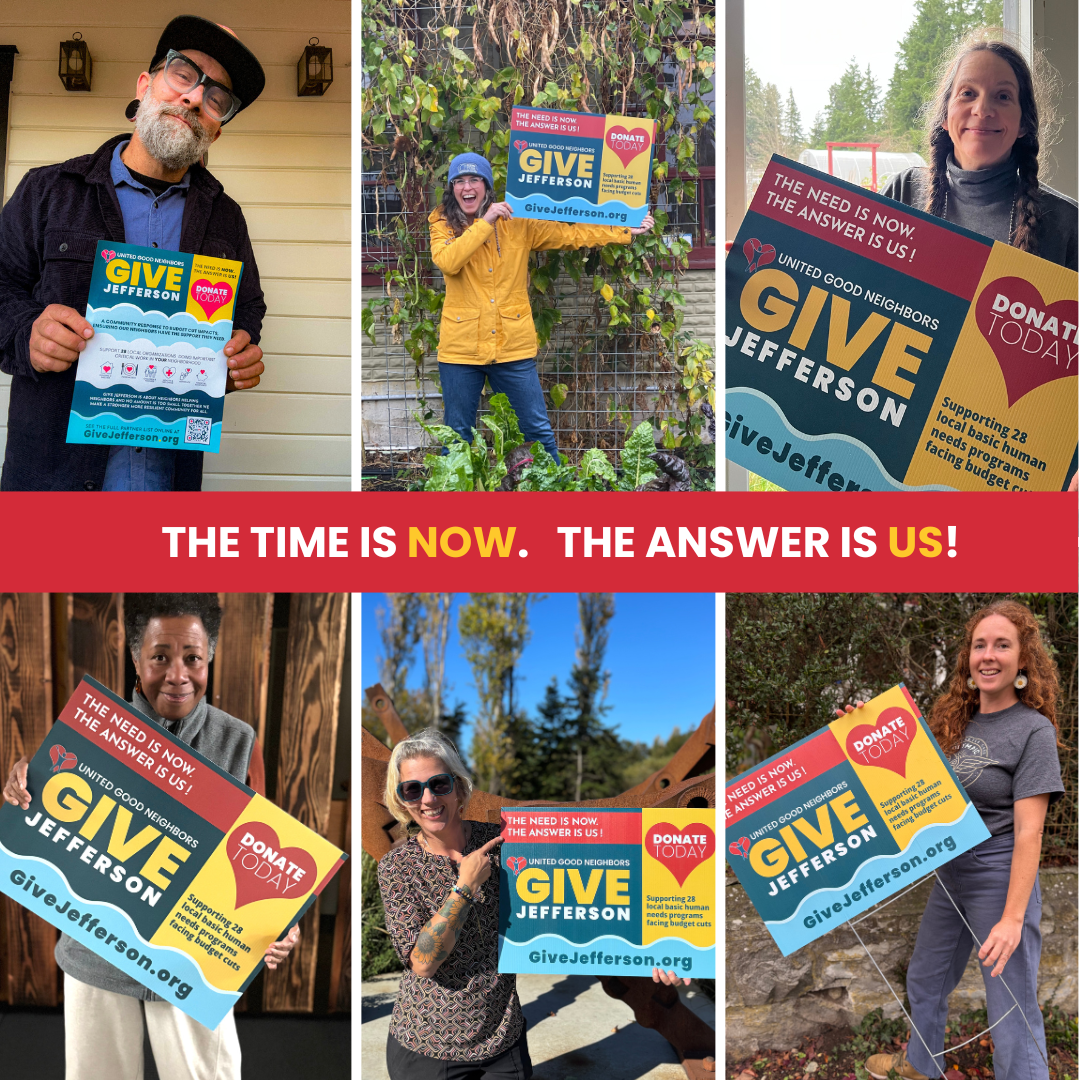
We live in a community where great generosity and collaboration are at work and these powerful instincts have been amplified in recent weeks as hundreds of people have stepped up to contribute to the annual Give Jefferson campaign. For 70 years, United Good Neighbors (a member of the United Ways of Washington) has helped ensure the small, often volunteer-run organizations that work on the most basic needs level have the support and resources required to help care for neighbors in Jefferson county. This year’s campaign features 28 local organizations that deliver essential services like food, housing and mental health services and they are all organizations that have been impacted by recent budget cuts.
This year, we wanted a campaign motto that spoke to current events and called upon our collective power. We landed on: The need is now. The answer is us! Give Jefferson runs through the end of the year and is a very concrete way to have a positive impact and to reduce suffering in our place. But navigating big challenges, like food security, and asking big questions, like ‘how do we grow a community where all feel belonging and feel possibility for their lives?,’ takes more than money. It takes coming together to make change.
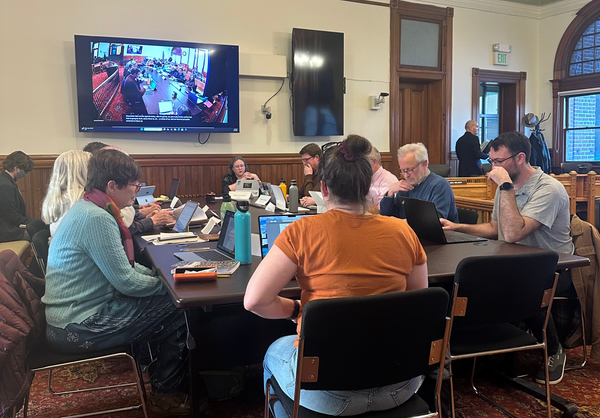
United Good Neighbors and Jefferson Community Foundation have been partnering in recent years to host a monthly network meeting for leaders of local food security organizations to collaborate. These gatherings create opportunities to meet, match faces to names, share information and updates, explore challenges and seed collaborative solutions. Here are a few examples of collaboration that have emerged out these gatherings, highlighting what we can do when we come together:
1. Food security partners convened weekly sessions through the recent SNAP suspension to share resources and ensure updated information was circulating through the community.
2. Food access partners from networks across Jefferson and Clallam counties, facing the funding ricochets of federal policy, came together to write and win a grant for a pilot project that will help school districts improve their farm-to-school capacity and infrastructure for sourcing locally grown food, while also reinforcing the emergency food distribution network in the North Olympic Peninsula. If successful, it could serve as a model for other rural communities across the region.
3. Network partners asked the question-- how would we build food security for the most vulnerable people in case of a natural disaster or other catastrophic disruption? Collaborators and community partners are launching a multi-organization effort to work on an emergency food response plan.
4. Network partners working on food security from multiple programs started exploring questions of long term local food sustainability as it relates to soil fertility and formed an emerging coalition called Olympic Soil Solidarity, exploring how to use local organic waste streams to create a source of nutrient rich compost, boosting regional self-sufficiency and building resilience.
5. During the covid pandemic, network partners realized that there would be a lapse in feeding schoolchildren and families that relied on school meals, and questioned how to bridge the gap. Leaders came together to problem-solve, pool resources, form new collaborative pathways and create school break food boxes that ensured those kids and families had nourishing food to eat over the holidays. This has evolved into the YMCA School Meals program, which continues to support families experiencing food insecurity during school breaks.
These are just a few examples of the kind of resilience and community strength that collaboration makes possible. Participating in this food security network has reinforced for me the power of coming together to care for people and place, and revealed more about the movement from networking to collaboration to community.
How can we feed all of our neighbors well? Support our food access organizations! Grow community! Collaborate together. Stay curious and engaged about how to shape change.