Op-ed: Local Food Insecurity and Community Gratitude

[caption id align="alignnone" width="3024"]
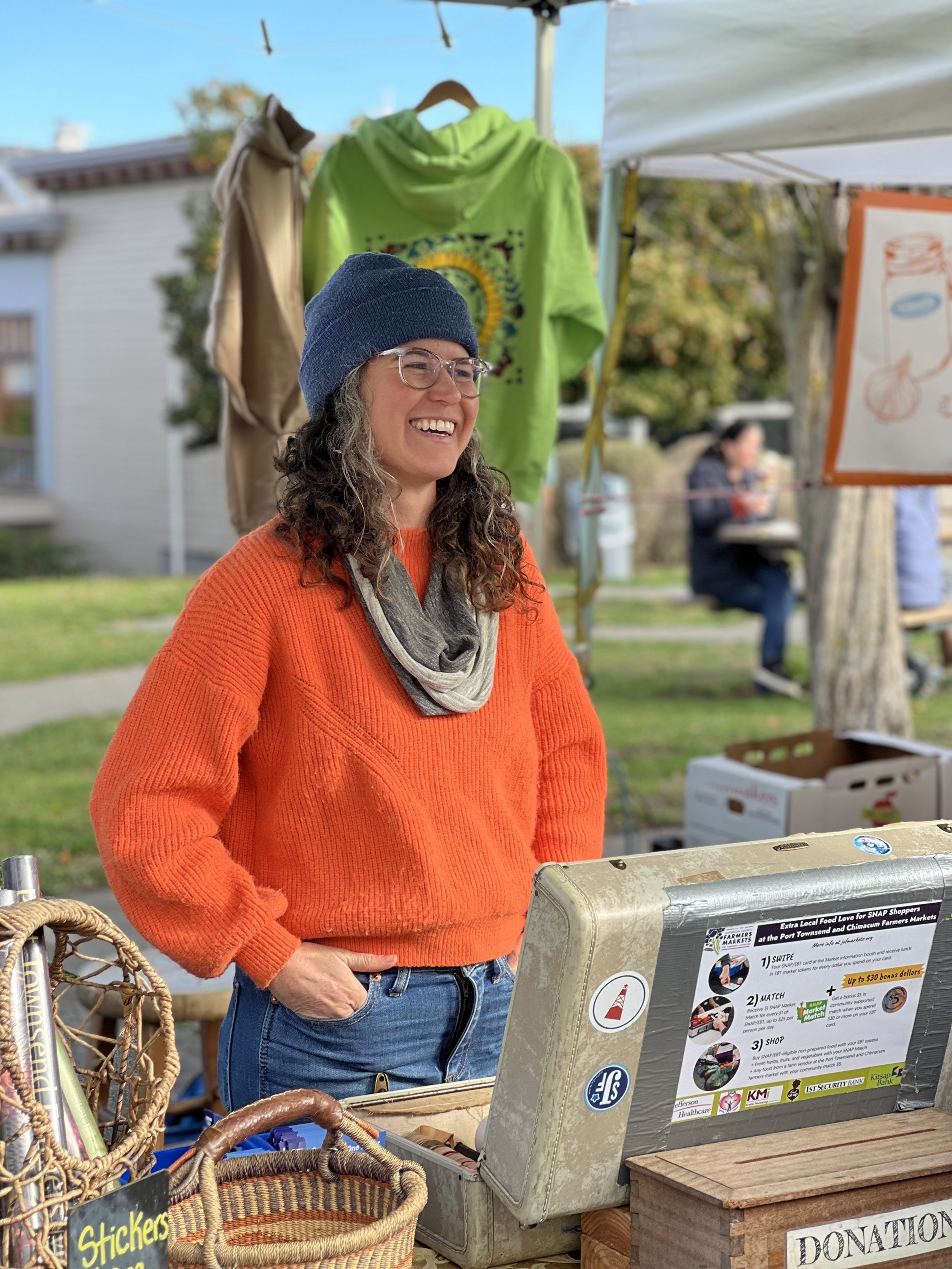
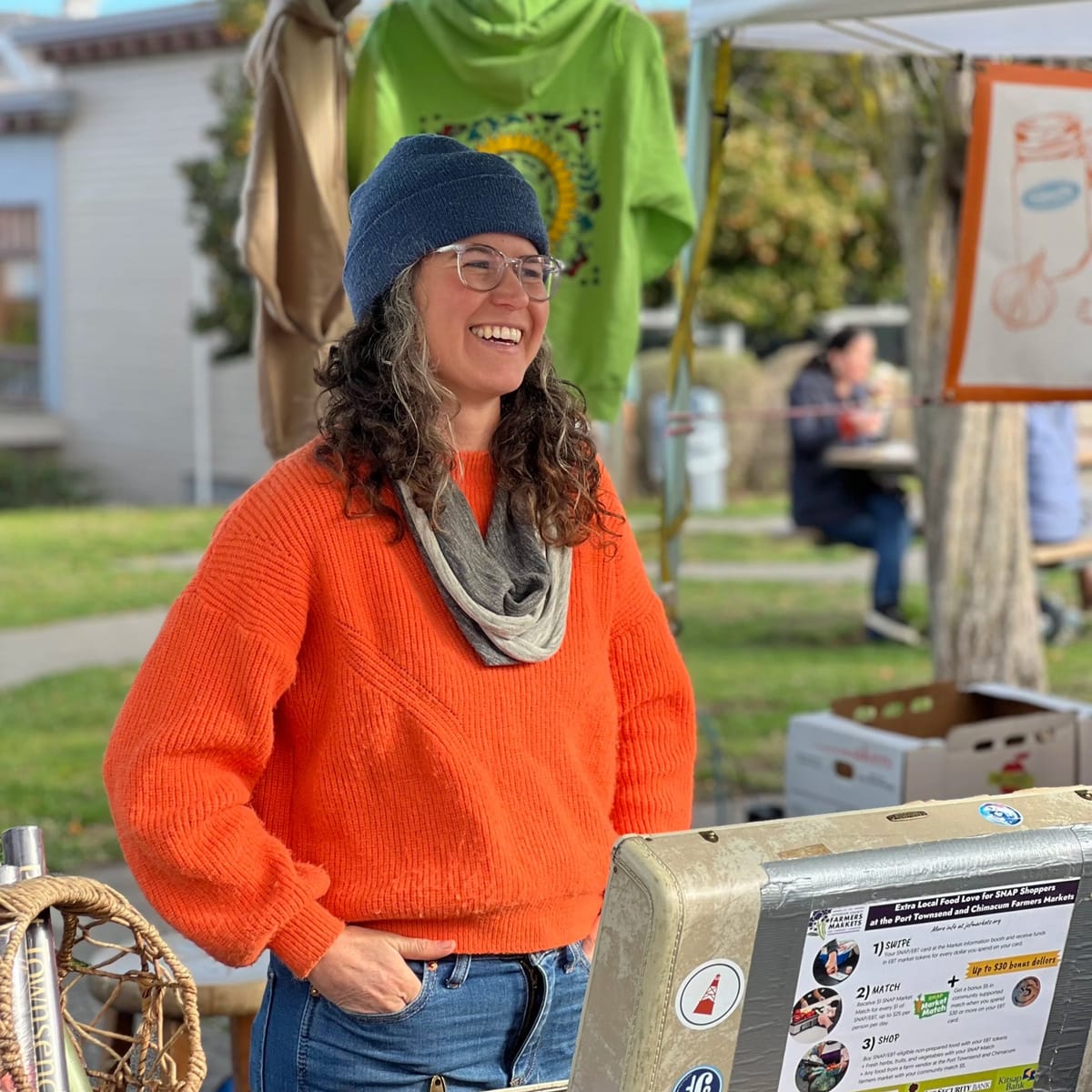
Amanda Milholland helps food insecure people navigate Farmers Market Programs at the market’s booth. Photo by Libby Pratt [/caption]
Opinion by Amanda Milholland, Executive Director, Jefferson County Farmers Markets
“There’s nothing left on my card,” Andrea said, holding up her Electronic Benefit Transfer (EBT) card at the Port Townsend Farmers Market Information Booth. She is one of our regulars at the Port Townsend Farmers Market and was there with her two daughters, Lily, age 6, and Rosemary, age 8*, both of whom were gently bouncing to the market music. The disruption of Supplemental Nutrition Assistance Program (SNAP) benefits in November left Andrea, along with 42 million other Americans, without grocery funds. Andrea looked at me with fear on her face while doing her best to keep the farmers market experience a joyful one for her kids.
“No problem, we are offering $15 weekly for farm fresh food at the market while SNAP benefits are disrupted, no purchase necessary,” I told Andrea, handing her $15 in our community-funded market currency. I also told Andrea about our farm vendors' pay-it-forward program, where shoppers can spend an extra $5 to help purchase groceries for another shopper. “Look out for the $5 vouchers at Red Dog and Soft Step Farm.” Throughout November, we have supported SNAP shoppers in accessing fresh, locally grown foods by utilizing funds raised locally from donations at our annual Farm-To-Table Benefit Dinner, through individual giving, Give Jefferson, and local business sponsorships from partners like KMi, Jefferson Healthcare, Kitsap Bank, 1st Security Bank, and the Food Co-op.
As the longest government shutdown in US history entered its second month, the majority of our SNAP shoppers arrived at the market with drained EBT cards. Farmers, many of whom are themselves low-income, rely on food access sales to make up an average 11% of their daily market sales, and they were feeling the pinch along with our shoppers. Use of our community food access dollars increased by 102% during the first three weekends of November compared to the same weekends last season. At the same time, disruption to SNAP brought new folks to the market, looking for ways to stretch their limited remaining SNAP benefits with our dollar-for-dollar SNAP Market Match program or utilize our Community $15 funds to bring home fresh food when their basic food budgets were spent.
This fall, our community faced many strikes to food security:
- The Women, Infants, and Children (WIC) Farmers Market Nutrition Program (FMNP) benefits ended a month early in September, rather than in October, due to a funding shortage. Shortly after this loss of funding for fresh market produce, WIC recipients were informed that they may lose their benefits entirely in November. With children under 18 making up the largest population living in poverty here in Jefferson County, and about 40% of those receiving SNAP benefits nationally, threats to WIC hit hard locally.
- On November 1, SNAP benefits were not loaded for the month, leaving recipients waiting with no clear information about when their basic food dollars would be reloaded.
- On November 7th, some Americans received their November benefits after a court order for the government to reinstate basic food support. The SNAP program was again put on pause the same day, with folks who usually have their benefits loaded later in the month told they may receive only half their normal benefit amount and that it may take weeks to months for their benefits to be restored.
While the government is now back in session, the crisis is not over. Millions of Americans will see reductions in their SNAP benefits or could soon permanently lose federal food aid as tighter work requirements and shorter time limits take effect next year. Also in 2026, the Port Townsend and Chimacum Farmers Markets, along with about 100 other farmers markets across the state, will lose about 60% of the federal funds that stretch SNAP benefits at farmers markets with matching dollars for fresh fruits and vegetables.
With Thanksgiving just days away, my heart is both heavy and full with the realities of food insecurity and community engagement here in Jefferson County. My deep gratitude goes out to the community members who have seen the losses of SNAP and WIC farmers market benefits as a call to action and stepped in with donations to the JCFM food access programs, our local food banks, or other local non-profit supporting basic food access. Community support has helped combat the hunger, isolation, and fear that our friends and neighbors experiencing food insecurity face. At the same time, poverty impacts about 12.6% of our county residents, the cost of living is rising, and basic food programs like SNAP are poised for funding cuts next year.
As we have seen over the last few weeks, community support is essential to combat hunger, support our local economy, and foster local resilience. As we gather with friends and family for shared meals this holiday season, may our communities of care extend beyond our dinner table to include our neighbors. May we find support in our friends and neighbors as we offer support where we can. This is how we foster local resilience.
Learn more about JCFM food access programs here: https://jcfmarkets.org/food-access.
*Names and details changed for anonymity