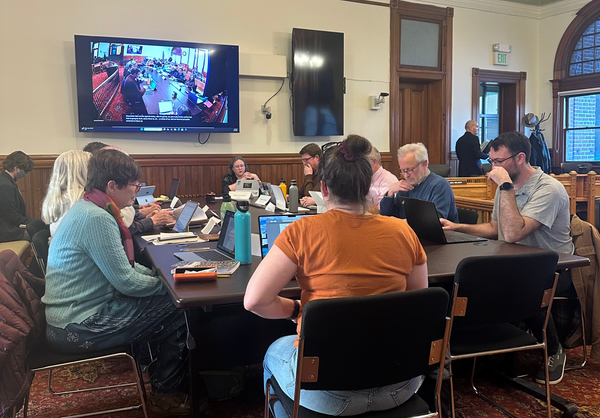
Op-ed: More Than Just a Comp Plan—A Timeline In Depth

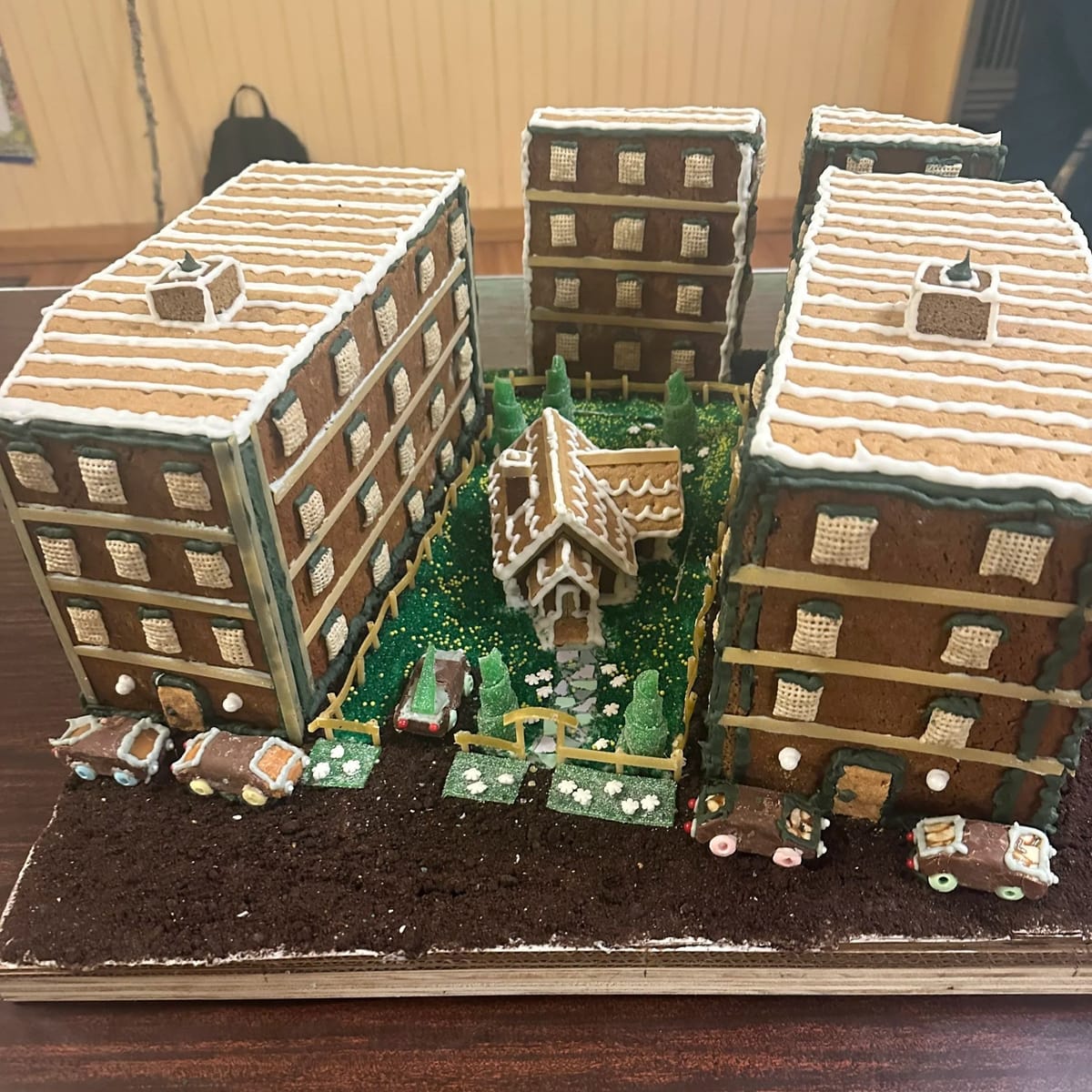
A gingerbread example of what opponents of the city’s comp plan fear development would look like. City staff took time at the Dec 15 meeting to show how this model is unrealistic. Photo by Rachel Nutting [/caption]
Opinion by Rachael Nutting
I miss when social media platforms were just digital places to connect with extended family and friends. Now, it's become the digital soapbox of choice, a breeding ground for confusion where complex plans are reduced to incendiary posts.
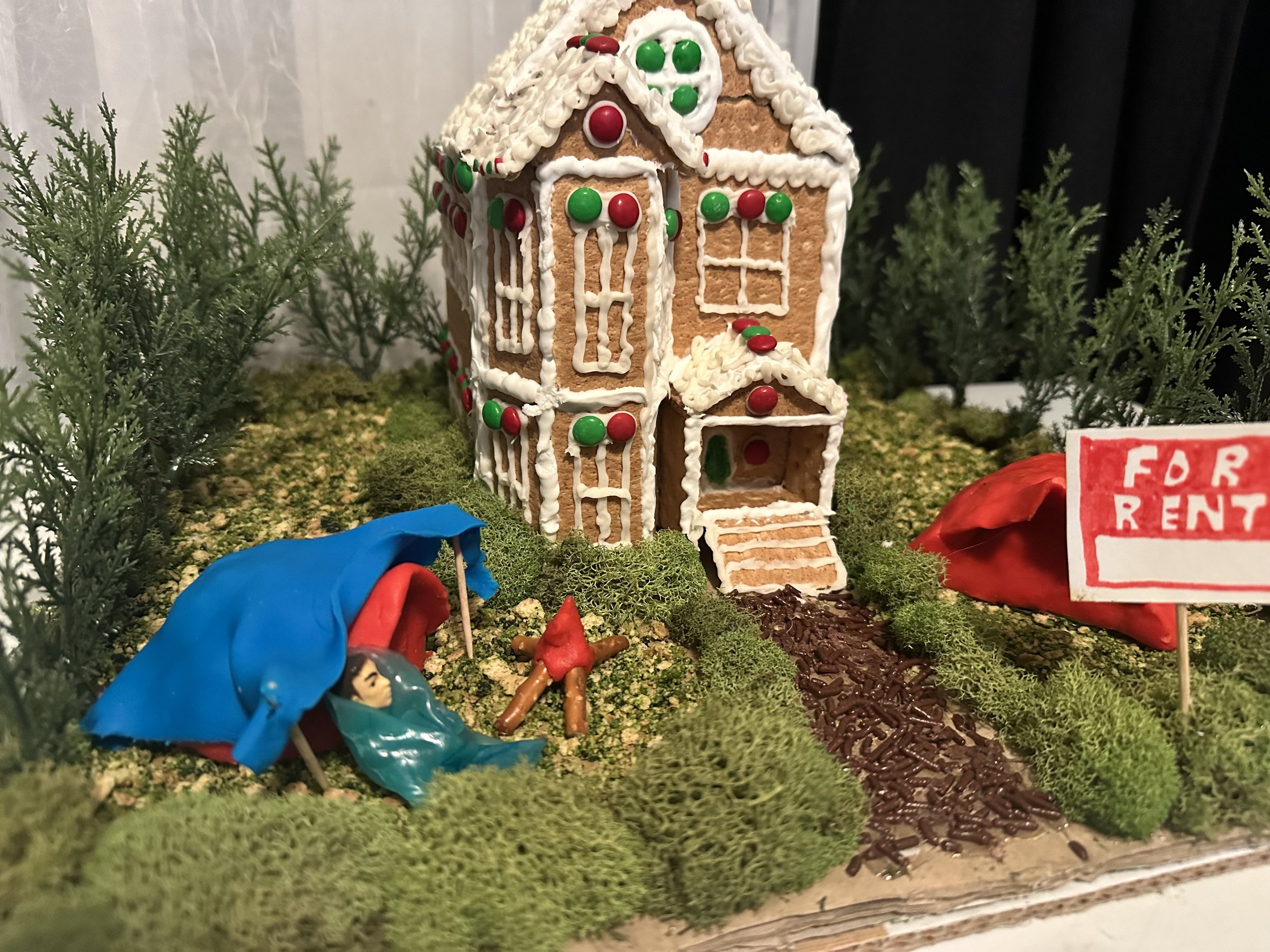
A critique of our current housing situation by the author. Photo by Rachel Nutting
The 2025 Comprehensive Plan has caused a lot of understandable pearl-clutching from all. The 900+ page draft was released for public review on October 23, though it was first presented to the city council in July.
Planning commissioners and city staff crafted the plan over the last two years with public input and it was comprehensive indeed. This was a plan dedicated to rapidly catching up with our housing crisis. Jefferson County ranks 38 out of 39 counties in the state for affordability, after all.
Nothing motivates quite like fear and outrage. After a slightly heated business meeting on November 17, select community members jumped into action. Despite many residents admitting they didn't read the full document (who doesn’t want to read a 900-page document?), a few social media posts, focused mostly on height restrictions, stirred these community members into action.
The Second Meeting
The November 24 city meeting was standing-room-only, with most of the room filled with our retired demographic. Upon introduction, many commenters shared how and when they found Port Townsend and chose to retire here. They expressed fear of losing the “small town character” by allowing drastic density within residential zones. At present, retired home-owning residents felt they were being unheard when the city council stressed the rapid loss of workers and families due to unavailable housing. The meeting was continued to December 8 for further comment and review.
Pitfalls of Social Media
The social media posts following the meeting on the 24th increased. Photographs of the newest development on Madrona Ridge were spread to highlight how unaffordable this new construction is. The unsightly homes feature listing prices of up to $500,000, which are still below market rate for the area.
While construction took place under the current elected council and staff, the permit for Madrona Ridge development was approved by a hearing examiner, not the city council, and the original permit for the development had been filed around 15 years ago. Current council members agreed that this example of sprawl is not wanted and that they prefer density to save on infrastructure costs and keep our environment intact.
Disgruntled Neighbors
A group of citizens calling themselves Accountable Port Townsend met on December 7, gathering the day before the city meeting. The call to gather was posted on social media hours after the creator got into a heated exchange of comments with the mayor over a chat they had at the farmers market the year prior.
The group met at the Quimper Grange and nearly filled half of the building. It turned into a group-think as it became clear that they did not understand the difference between zoning, codes and what had to be included in the Comprehensive Plan due this month for the Growth Management Act (GMA).
A community member brought what reminded many of a gingerbread replica of the movie “Up” to demonstrate how new proposals to zoning and the removal of the daylight plane (height restrictions) could produce their worst fears—restricted sunlight for their gardens.
After two-and-a-half hours, those who remained set their demands for the chambers the following day. They wanted to postpone the daylight plane issue, to include “small town character” verbiage reintroduced into city documents and a guarantee of affordability (since arguing about displacement wasn’t a good look).
The Third Meeting
The city chambers began filling 30 minutes prior to the meeting on Dec 8. I asked many working-class residents if they could show up in person, but many had work or family obligations. Still, the demographic of the room did have some younger faces. Many in attendance were not aware that there was more on the agenda than the Comprehensive Plan for the evening.
With the room at max capacity, we were patiently present as the city council, county commissioners, and the Affordable Housing & Homeless Task Force updated the Homeless Crisis and Housing 5 Year Plan. The information provided in the presentation, which used the most recent data from the American Community Survey, was grim.
Nearly 50% of renters are cost-burdened in Port Townsend. Rentals in the city have a 1% vacancy rate, which translates to a scarcity of available rentals. Around 42% of homes in the city limits have a single occupant, though 82% of housing units have two or more bedrooms.
Even if single occupants wanted to downsize to smaller units, nothing is available locally. Around 17% of homes in Jefferson County sit vacant. With roughly 6,023 housing units in PT and a growing population nearing 11,000 residents, this suggests that our housing problem may be more of an equity problem. This detailed and thorough plan to prevent further homelessness and tackle housing insecurity in Jefferson County faces a devastating hurdle—funding.
A key U.S. Department of Housing and Urban Development (HUD Continuum of Care) grant has been restructured, now penalizing programs for harm reduction and gender-affirming care while slashing funds for permanent housing solutions from over 80% to just 30%. The mayor labeled these new rules "thoroughly disgusting," noting they create "more stark headwinds than I think we’ve felt in a long time.” This directly threatens the plan's ability to fund its 48 action steps.
So, while the new 5-year plan aims to build a ladder out of homelessness, the rungs are missing: existing housing stock is not efficiently used, new units are unaffordable and now the money to fix the system is being cut. Still, the plan was unanimously approved.
After also approving the proposed budget for the city, the comprehensive plan was discussed again. A presentation by planning staff included some suggested solutions to “step back” hypothetical taller structures’ upper floors to alleviate potential shade in neighboring yards. The presentation also featured a slide discussing how the alarming gingerbread example was unrealistic, not to code and an example of hyperbole. Due to community complaints, the city council allowed an hour of public comment rather than 30 minutes.
When the matter was open to public comment, the creator of the gingerbread “Up” house ardently defended the example and brought it to the chamber for visual presentation. Demands for affordability guarantees for potential construction projects were raised, even though the reality of shrinking funding had just been discussed.
Many commenters expressed disdain for only finding out about the matter in the last month, despite public opportunities to be involved since 2024. I also made a public comment that night, sharing my perspectives as a working renter dealing with unstable housing. I shared, “While I’ve been listening to community concerns about sunlight for their gardens, my grandmother has told me of the nightmares she’s had of us living in tents.”
After expressing my lengthy concerns, I added, “The people that need housing are, already, here. We desperately need to change our land use policies, and ideally, it needed to happen decades ago. The next best time for that change to begin, is now.”
With unresolved concerns and high community engagement, the matter was continued, yet again, to December 15.
Neighbors with New Goals
On December 14, the oppositional group met again. With about 40 participants, individuals took turns speaking for about 3 minutes each over the course of two hours. The agenda was to organize the group’s “marching orders” for the city meeting the following evening.
The group narrowed in on nuances within the Comp Plan document, their issues with the process, and discussed how to delay the city from submitting the plan despite the GMA deadlines.
I chose to speak, focusing on how three-quarters of our emergency responders and medical staff live outside the county. I brought with me my own gingerbread house—a Victorian townhome featuring tents erected by unhoused individuals in the landscaped yard. The most memorable quote of the gathering, however, came from an older gentleman who said, “This is a retirement community,” so when “people are saying we need more young people, it’s like Trump saying we need more white people.” The rest of the group appeared unfazed by this comment.
In the end, the group resolved to request a postponement of the city's submission of the Comprehensive Plan. They emphasized that if their calls for delay were not heeded, pursuing legal action would become necessary. The group mentioned calling the fire marshal after maxing out occupancy to cancel the meeting. The group urged the public to “flood the chambers” on social media.
The Fourth Meeting
Community members began arriving 30 minutes early for the December 15 meeting. We were met in the lobby by officers with counting clickers, due to social media encouragement to attend the meeting.
After the room reached its maximum occupancy, people were simply turned away and encouraged to attend online. A community member passed around signs featuring the word “PAUSE” to be used during public comment. Again, the room sat quietly as items on the agenda were discussed and approved until the Comprehensive Plan.
City staff presented height options to the council, with thorough explanations. The council adopted 35’ max for R-II zones (5’ higher than before). Public comment had two recurring themes: affordability and many various last-minute reasons to delay.
I used my public comment to be a voice for those who could not be there. I shared about a dental clinic losing 5 of their eight employees, urging people to be patient when scheduling dental appointments. I shared how the prior weekend the line at Christmas for Children, a program by the Kiwanis for low-income families, consisted of people I went to school with. I voiced “that the community cannot delay any longer.”
Resident Cameron Jones also voiced the need for urgency. After explaining how this plan can clear the way for affordable housing, Jones said, “When inaction is the way to preserve comfort and predictability for those that are already housed, the result is displacement.” Everyone who wished to speak had the opportunity to do so.
Consequences of Delay
During the council and staff discussion, the staff brought to everyone’s attention that delay was not truly a choice. If Port Townsend were to fall out of compliance, not only could we lose funding and the ability to apply for grants, but a law also passed earlier this year would enact grave consequences.
Senate Bill 5148, signed into law in May, includes a provision called “The Builder’s Remedy” that would allow builders to move forward with housing projects automatically when a locality is found to be out of compliance with state housing law.
Council member Thomas dutifully voiced the concerns of the public that wished to delay the plan in its entirety. The council voted to remove the daylight plane, with only Thomas voting nay.
Thomas proposed removing the Community Opposition paragraph entirely from the document, as it used the acronym NIMBY (not in my backyard). The council unanimously voted to have it removed. Council member Nelson mentioned my November 25 social media post, “A Peasant’s Voice,” that urged the community to make space for working-class families in Port Townsend. That post had over 600 “likes”. Nelson referenced that it had more “likes” than all public comments submitted to the city website about the Comp Plan.
Nelson pointed out that though the dissenting group says their voice is the majority, that is not the case. The council decided that the community could not delay adopting the Comprehensive Plan, with only Thomas voting nay.
During a quick recess, the crowd quickly dispersed with verbal expressions of displeasure. Ironically, the last item on the agenda for the evening was setting what items were to be addressed during the 2026 Comprehensive Plan Amendment Work Plan, exactly what most of the present crowd insisted they were invested in and chose not to weigh in on after all.